Mango Mousse Recipe – Light, Creamy, and Refreshing

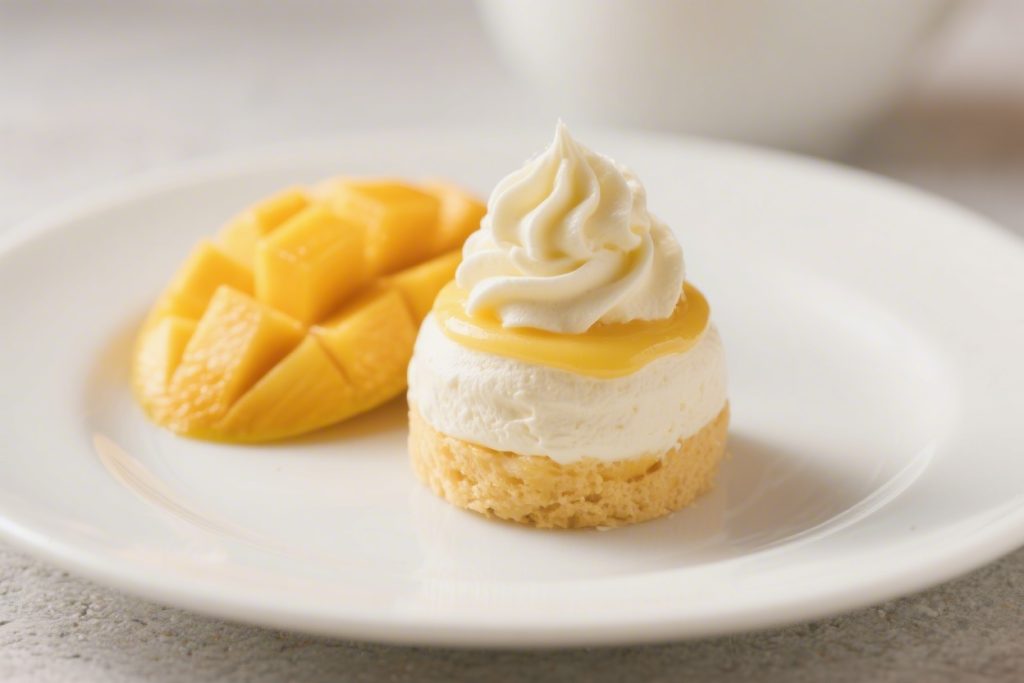
A good mango mousse tastes like summer in a spoon—bright, creamy, and not too heavy. This version is simple to make and uses just a handful of familiar ingredients.
You don’t need special equipment beyond a whisk and a bowl, and the result looks elegant enough for a dinner party.
Whether you’re serving it after a spicy meal or craving a sweet, fruity treat, this mousse delivers real flavor without fuss.

Mango Mousse Recipe – Light, Creamy, and Refreshing
Ingredients
- 2 heaping cups ripe mango chunks (about 3 medium mangos; Ataulfo or Alphonso are ideal)
- 1/3 to 1/2 cup granulated sugar, to taste (adjust based on mango sweetness)
- 1 tablespoon fresh lime juice (or lemon juice)
- 1 teaspoon pure vanilla extract
- 1 cup cold heavy whipping cream
- 1/2 cup full-fat Greek yogurt (or plain yogurt, drained slightly)
- 1 teaspoon powdered gelatin (optional, for a firmer set)
- 2 tablespoons cold water (if using gelatin)
- Pinch of salt
- Optional toppings: diced fresh mango, toasted coconut, lime zest, crushed pistachios, or a few mint leaves
Instructions
- Prep the mangos: Peel, pit, and chop the mangos. You should have about 2 cups of chunks.If using frozen mango, thaw fully and drain any excess liquid.
- Make the puree: Add mango, sugar, lime juice, vanilla, and a pinch of salt to a blender. Blend until completely smooth. Taste and adjust sugar or lime as needed.You want a bright, sweet-tart puree.
- Optional—bloom the gelatin: If you prefer a firmer mousse that holds shape longer, sprinkle gelatin over 2 tablespoons cold water in a small bowl. Let it sit for 5 minutes to bloom.
- Warm a portion of puree (if using gelatin): Transfer about 1/2 cup of the mango puree to a small saucepan and warm over low heat until just hot but not boiling. Remove from heat, add the bloomed gelatin, and stir until dissolved.Whisk this back into the remaining puree. Let the mixture cool to room temperature.
- Whip the cream: In a clean, cold bowl, whip the heavy cream to soft peaks. It should hold shape but still look smooth and billowy.Do not overwhip.
- Fold in the yogurt: Whisk the Greek yogurt in a separate bowl to loosen it. Gently fold it into the whipped cream until just combined.
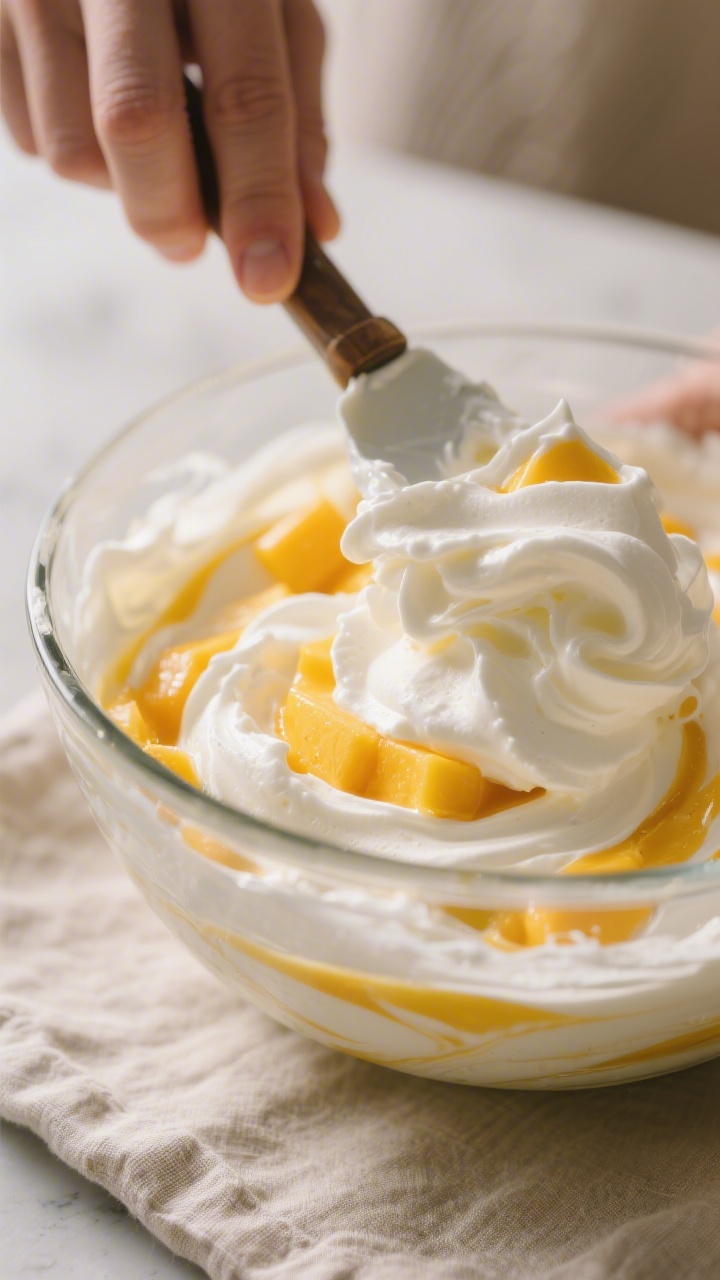
- Combine with mango: Add the cooled mango puree to the cream-yogurt mixture in two additions, folding gently with a spatula. Work slowly to keep the mixture airy.Stop as soon as it looks uniform.
- Portion and chill: Spoon the mousse into serving glasses, ramekins, or a single bowl. Smooth the tops. Cover and chill for at least 2 to 3 hours, or until set.For the best texture, chill 4 hours or overnight.
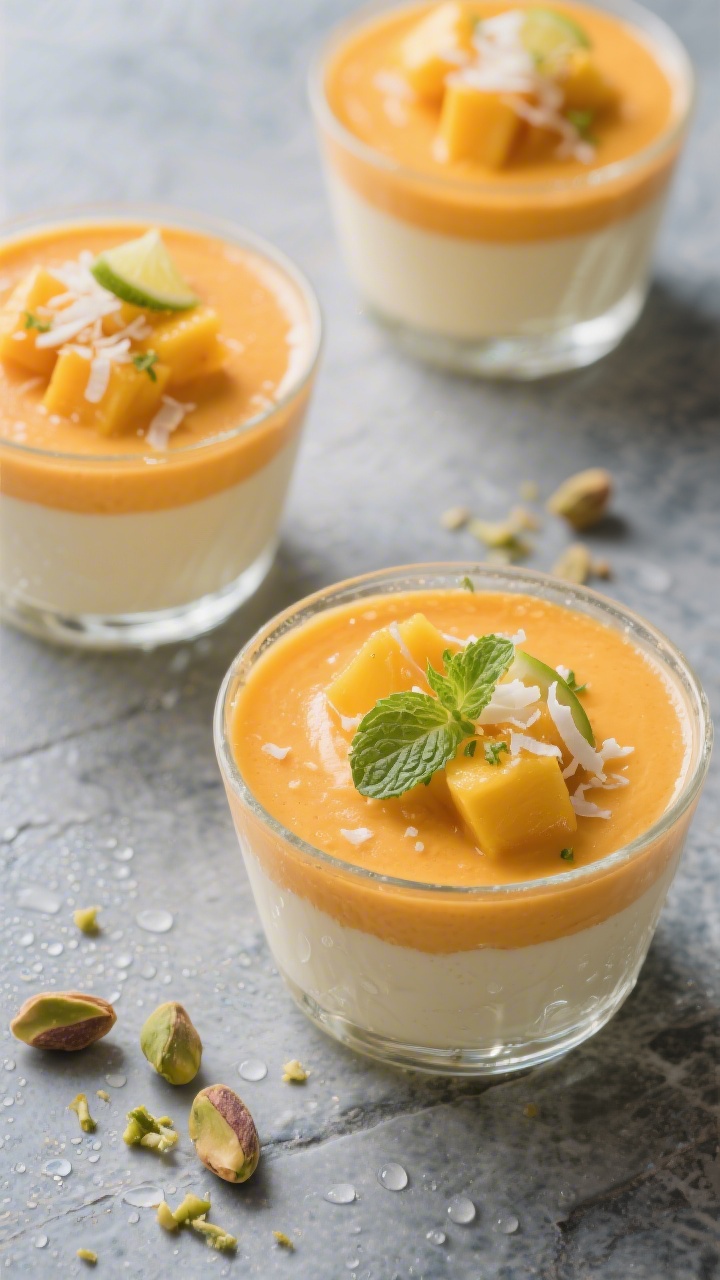
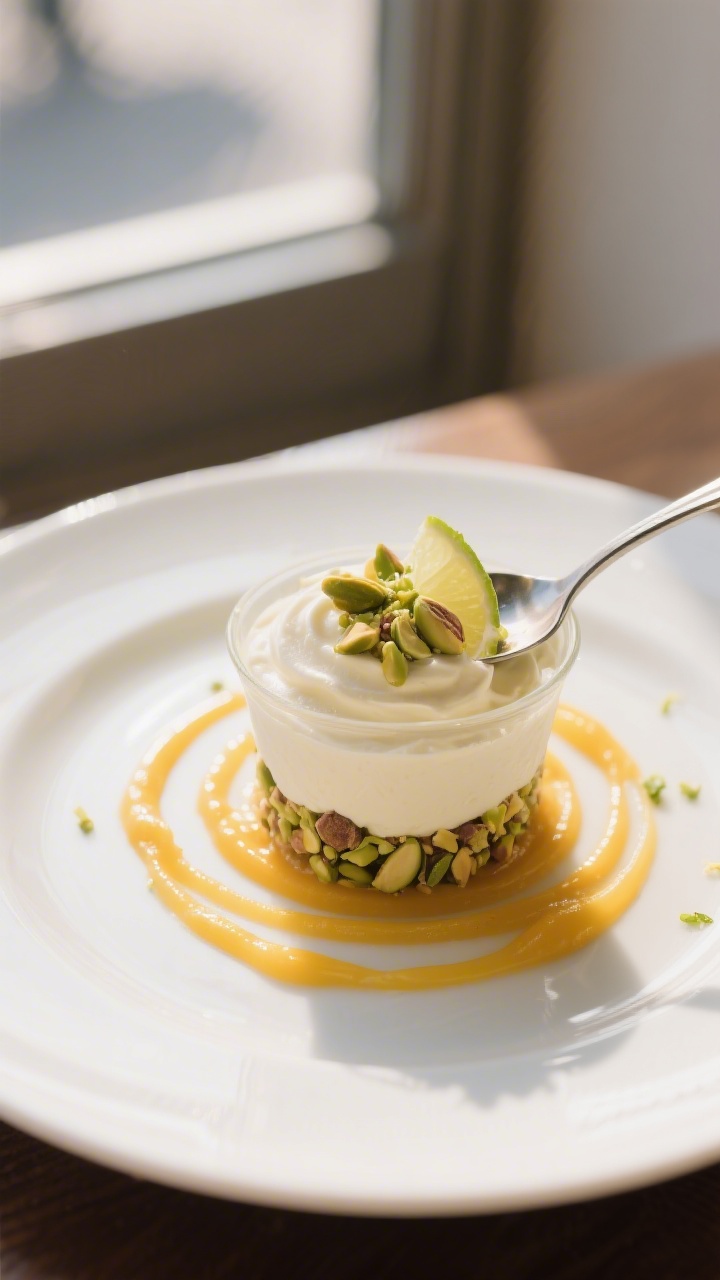
- Garnish and serve: Top with diced mango, a little lime zest, toasted coconut, pistachios, or a mint sprig. Serve cold.
What Makes This Recipe So Good
- Big mango flavor: Fresh mango puree is the star, with just enough sugar and citrus to make it pop.
- Light but satisfying: Whipped cream gives it a cloud-like texture while Greek yogurt keeps it balanced and not overly rich.
- No baking: This is a true no-oven dessert. Chill, set, and serve.
- Make-ahead friendly: Prepare it a day ahead and keep it chilled until you’re ready to serve.
- Flexible: Works with fresh or frozen mango, dairy or dairy-free swaps, and a range of toppings.
Ingredients
- 2 heaping cups ripe mango chunks (about 3 medium mangos; Ataulfo or Alphonso are ideal)
- 1/3 to 1/2 cup granulated sugar, to taste (adjust based on mango sweetness)
- 1 tablespoon fresh lime juice (or lemon juice)
- 1 teaspoon pure vanilla extract
- 1 cup cold heavy whipping cream
- 1/2 cup full-fat Greek yogurt (or plain yogurt, drained slightly)
- 1 teaspoon powdered gelatin (optional, for a firmer set)
- 2 tablespoons cold water (if using gelatin)
- Pinch of salt
- Optional toppings: diced fresh mango, toasted coconut, lime zest, crushed pistachios, or a few mint leaves
Instructions
- Prep the mangos: Peel, pit, and chop the mangos. You should have about 2 cups of chunks. If using frozen mango, thaw fully and drain any excess liquid.
- Make the puree: Add mango, sugar, lime juice, vanilla, and a pinch of salt to a blender. Blend until completely smooth. Taste and adjust sugar or lime as needed. You want a bright, sweet-tart puree.
- Optional—bloom the gelatin: If you prefer a firmer mousse that holds shape longer, sprinkle gelatin over 2 tablespoons cold water in a small bowl. Let it sit for 5 minutes to bloom.
- Warm a portion of puree (if using gelatin): Transfer about 1/2 cup of the mango puree to a small saucepan and warm over low heat until just hot but not boiling. Remove from heat, add the bloomed gelatin, and stir until dissolved. Whisk this back into the remaining puree. Let the mixture cool to room temperature.
- Whip the cream: In a clean, cold bowl, whip the heavy cream to soft peaks. It should hold shape but still look smooth and billowy. Do not overwhip.
- Fold in the yogurt: Whisk the Greek yogurt in a separate bowl to loosen it. Gently fold it into the whipped cream until just combined.
-
Combine with mango: Add the cooled mango puree to the cream-yogurt mixture in two additions, folding gently with a spatula. Work slowly to keep the mixture airy.
Stop as soon as it looks uniform.
-
Portion and chill: Spoon the mousse into serving glasses, ramekins, or a single bowl. Smooth the tops. Cover and chill for at least 2 to 3 hours, or until set.
For the best texture, chill 4 hours or overnight.
Subscribe to Cookwarely
Get updates on the latest posts and more from Cookwarely straight to your inbox.
- Garnish and serve: Top with diced mango, a little lime zest, toasted coconut, pistachios, or a mint sprig. Serve cold.
Storage Instructions
- Refrigerator: Keep covered and chilled for up to 3 days. The texture may loosen slightly after day two if you skip gelatin, but it will still taste great.
-
Freezer: For a frozen mousse dessert, freeze for up to 1 month.
Thaw in the fridge for several hours before serving, or enjoy semi-frozen like a soft mango gelato.
- Make-ahead tips: You can make the mango puree 2 days in advance and whip and fold in the cream the day you plan to serve.
Benefits of This Recipe
- Fruit-forward: Packed with the natural sweetness and aroma of ripe mangoes.
- Balanced richness: Cream gives it body, while yogurt adds a gentle tang and lightness.
- No-bake convenience: Perfect for warm days or when you want a quick make-ahead dessert.
- Customizable: Works with dairy-free or reduced-sugar options without losing its charm.
What Not to Do
- Don’t use stringy or underripe mangoes: They lead to a fibrous, bland mousse. Pick soft, fragrant fruit.
- Don’t add hot puree to whipped cream: Heat will deflate the cream. Always cool the puree before folding.
-
Don’t overwhip the cream: Overwhipped cream turns grainy and can separate.
Soft peaks are perfect.
- Don’t skip tasting: Mango sweetness varies a lot. Adjust sugar and lime until the puree tastes lively on its own.
Recipe Variations
- Dairy-free mango mousse: Swap heavy cream for chilled full-fat coconut cream and replace yogurt with coconut yogurt. Use the gelatin step or 1/2 teaspoon agar-agar powder (bloom and simmer per package directions) for a firmer set.
-
Silky mango mousse without gelatin: Skip gelatin and add 2 extra tablespoons of Greek yogurt for body.
Chill overnight for the bstset. - Spiced mango mousse: Add a pinch of cardamom or ginger to the puree. It adds warmth without overpowering the mango.
- Mango passionfruit: Replace 2 to 3 tablespoons of mango puree with passionfruit pulp for a tangy twist.
- Layered dessert cups: Alternate mousse with crushed buttery cookies or biscuit crumbs and a few fresh mango cubes for texture.
- Low-sugar version: Use very ripe mangoes and reduce sugar to 2 tablespoons or swap with honey or maple syrup to taste.
In Conclusion
This mango mousse recipe is fresh, bright, and wonderfully simple.
With a smooth mango base and airy whipped cream, it’s the kind of dessert that feels special without a lot of effort.
Make it ahead, chill it well, and finish with a few sunny toppings.
Subscribe to Cookwarely
Get updates on the latest posts and more from Cookwarely straight to your inbox.
One spoonful, and you’ll see why it’s a warm-weather favorite.
FAQ
Can I use frozen mango?
Yes. Thaw the mango completely and drain excess liquid before blending.
Frozen fruit is usually picked ripe, so it often has great flavor.
What’s the best mango for mousse?
Ataulfo (honey) and Alphonso are excellent for their sweetness and smooth texture. Kent and Keitt also work well. Avoid stringy varieties that don’t blend smoothly.
Do I have to use gelatin?
No.
Subscribe to Cookwarely
Get updates on the latest posts and more from Cookwarely straight to your inbox.
The mousse will set softly without it, especially after chilling overnight. Use gelatin only if you want a firmer, more sliceable texture or if you’re serving in warm conditions.
Can I make it ahead for a party?
Absolutely. Make it 1 day ahead, portion into glasses, and garnish just before serving.
It holds well and tastes even better the next day.
How do I fix a too-sweet mousse?
Whisk in a little extra lime juice to brighten it up, or fold in 1 to 2 tablespoons more yogurt to balance the sweetness.
Why did my mousse turn grainy?
It’s usually from overwhipped cream or adding warm puree. Whip to soft peaks and make sure the puree is cool before folding.
Can I make this with light cream or milk?
No. You need heavy cream’s fat content for the mousse to hold its airy structure.
Light cream or milk won’t whip properly.
What can I use instead of Greek yogurt?
Use regular full-fat plain yogurt drained through a sieve or cheesecloth for 30 to 60 minutes, or swap with mascarpone for a richer finish.