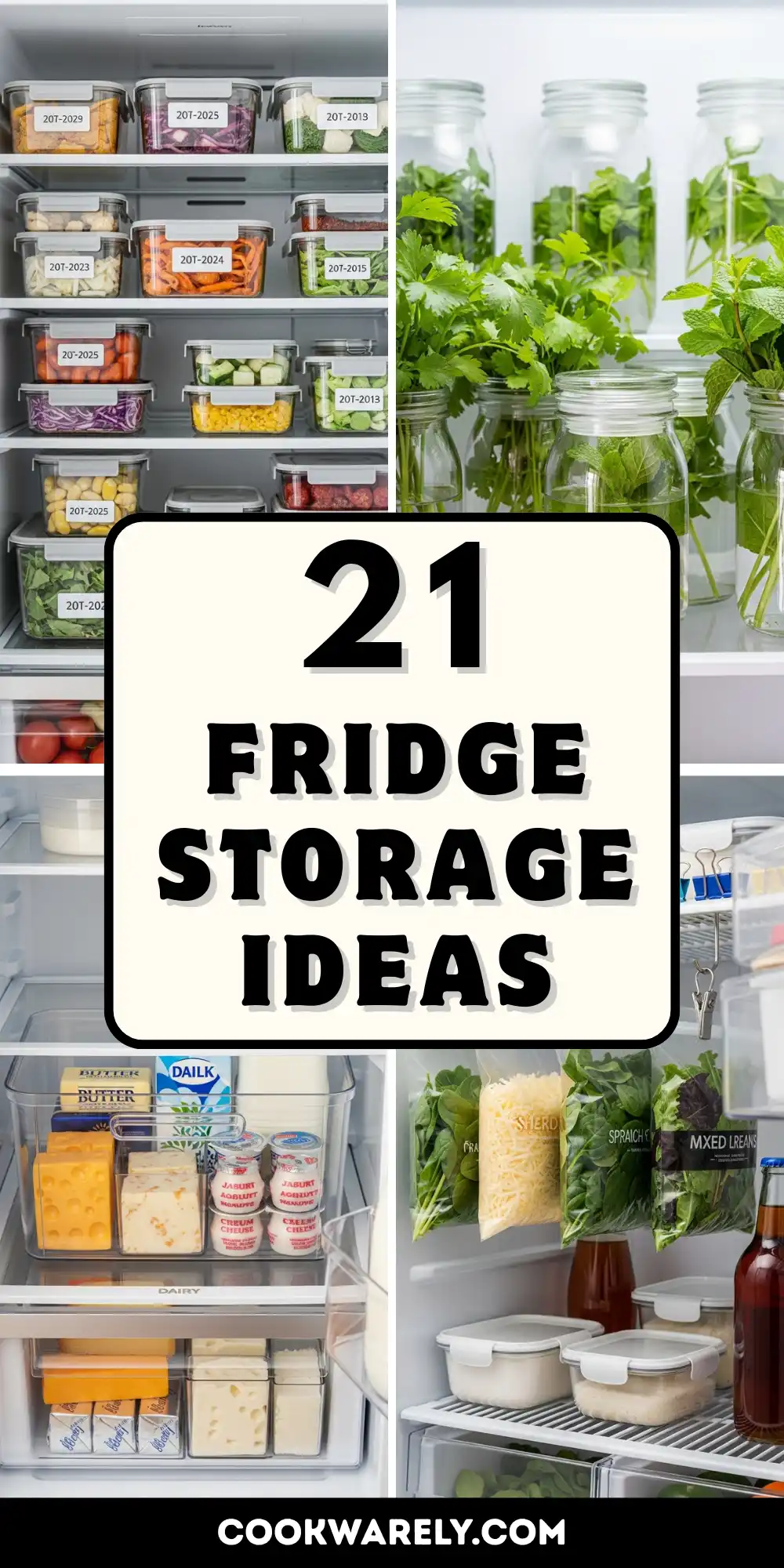
21 Fridge Storage Ideas: Maximize Space & Reduce Waste

Tired of a messy fridge? Try these simple fridge storage ideas to keep everything fresh, tidy, and easy to find.
An organized fridge doesn’t just look nice—it can actually make cooking easier, cut down on waste, and even save you money.
But with so many different foods, containers, and shelves to manage, keeping it all in order can feel overwhelming.
That’s where a little inspiration goes a long way. With the right storage ideas, your fridge can go from chaotic to streamlined in no time.
In this article, you’ll discover 21 clever fridge storage ideas that will help you maximize space, stay organized, and make your kitchen routine run more smoothly.
Why Organizing Your Fridge Actually Matters
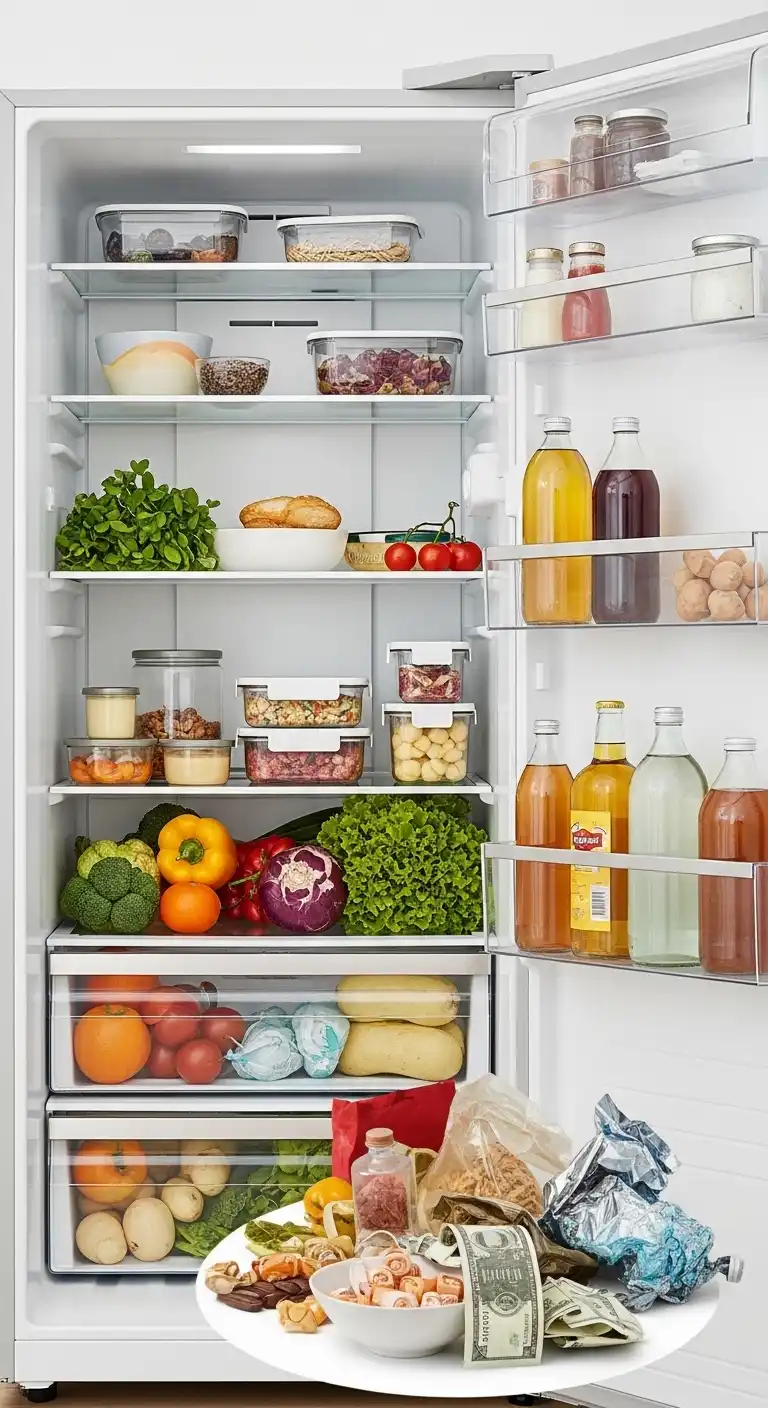
Your fridge isn’t just a cold box for food—it’s the heart of your kitchen.
A well-organized fridge makes a bigger difference than you might think. Here’s why:
- Less waste: You’ll see what you have before it expires.
- Saves money: No more buying duplicates of ketchup or forgetting you already have milk.
- Easier meal prep: Ingredients are visible and ready to grab.
- Better hygiene: Proper storage prevents spills, cross-contamination, and that mysterious smell you can’t quite place.
- Stress-free living: A tidy fridge makes cooking feel less like a chore.
Prepping Your Fridge Before Organizing
Before you dive into containers and bins, you’ll want to reset your fridge. Here’s a quick game plan:
- Declutter ruthlessly: Toss expired food, old leftovers, or mystery jars.
- Deep clean: Wipe down shelves and drawers with warm soapy water or a vinegar solution.
- Take inventory: Note what you already have so you don’t overbuy.
- Plan zones: Decide which areas will be for dairy, veggies, condiments, drinks, and snacks.
Once you’ve done this, you’ll be ready to maximize every inch of space.
21 Fridge Storage Ideas
1. Use Clear Storage Bins
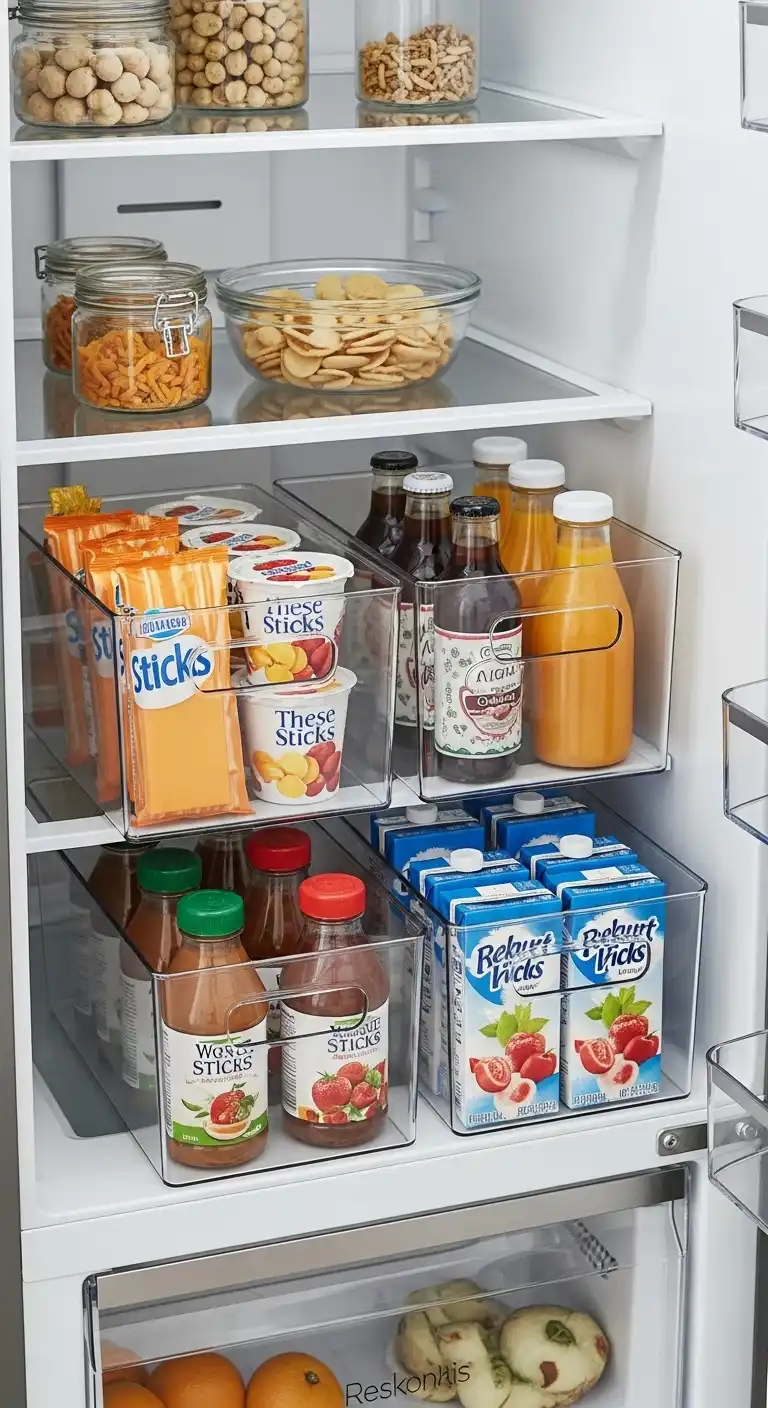
Clear bins are a game-changer.
Instead of digging around for the shredded cheese hiding behind the milk, you’ll have categories that make sense—like “snacks,” “condiments,” or “breakfast items.”
Clear bins let you see everything instantly, and they slide out like drawers for easy access.
Tip: Label each bin so no one in the house can pretend they “couldn’t find it.”
2. Invest in a Lazy Susan
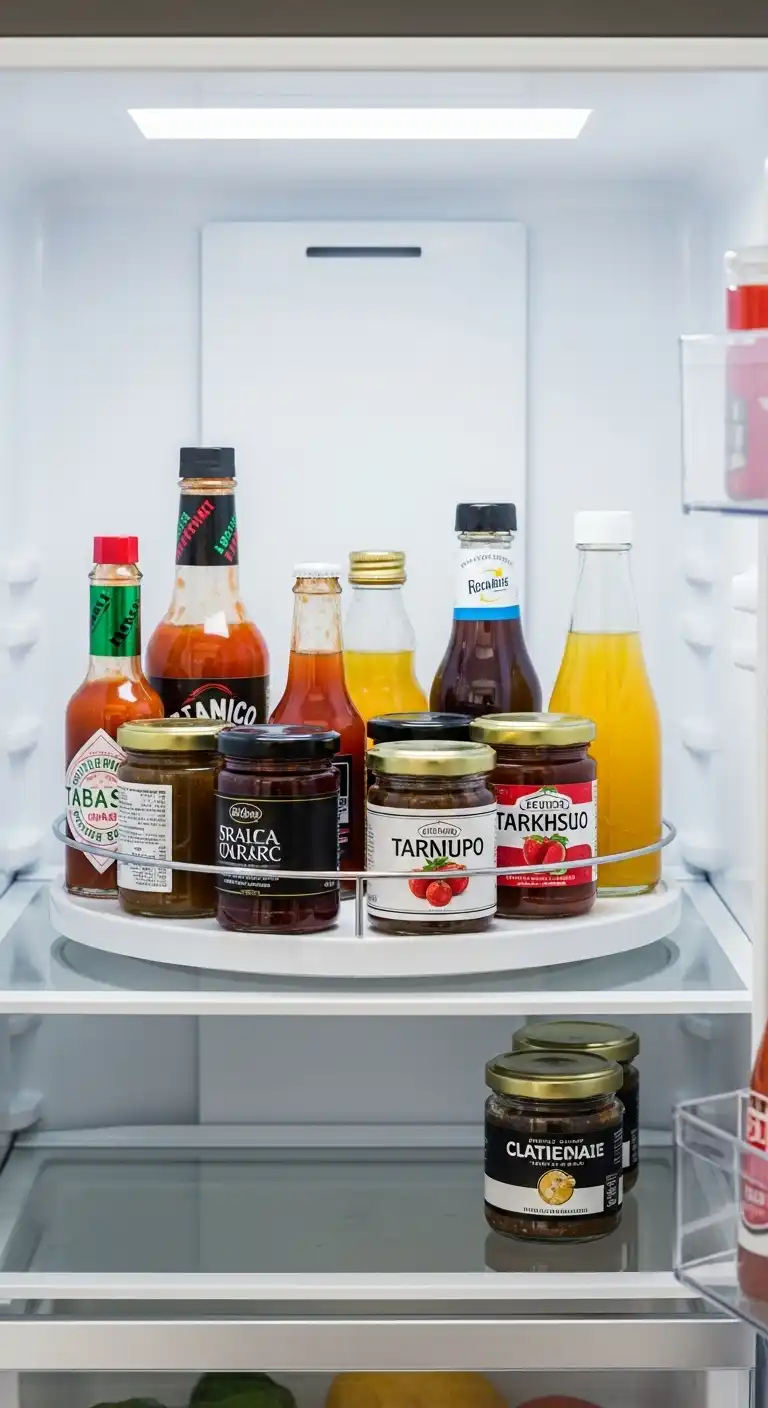
Yes, the same spinning organizer you use in pantries works wonders in the fridge too.
A lazy Susan keeps sauces, jams, and small jars from getting lost in the back.
With one spin, you can grab your hot sauce collection without knocking over everything else.
Best spot: Upper shelves where jars and bottles tend to cluster.
3. Store Drinks in Can Dispensers
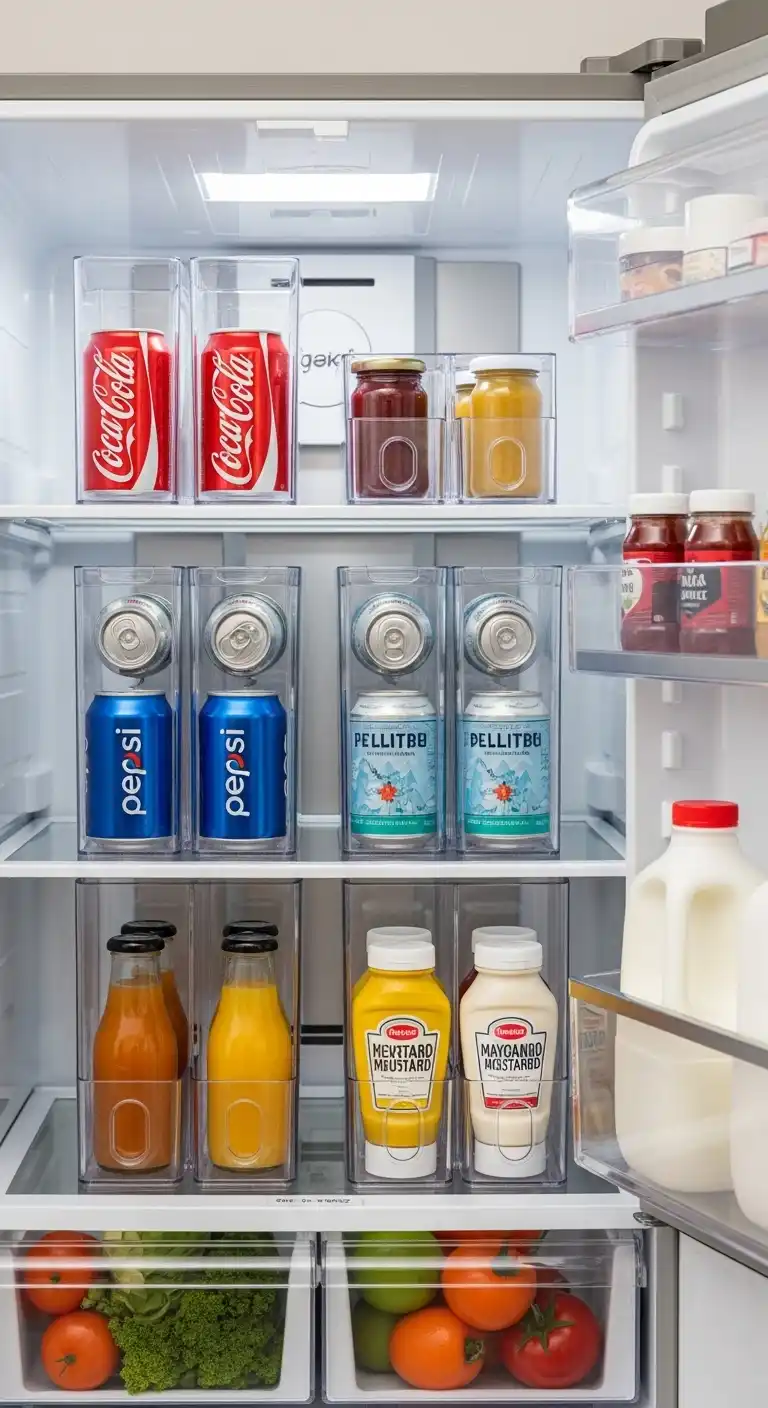
Instead of stacking soda cans in awkward pyramids that collapse, use a can dispenser.
These rack-style holders keep beverages neat and free up space for other essentials.
Hack: Use them for sparkling water, small juice bottles, or even mini condiment jars.
4. Use Egg Organizers with Lids
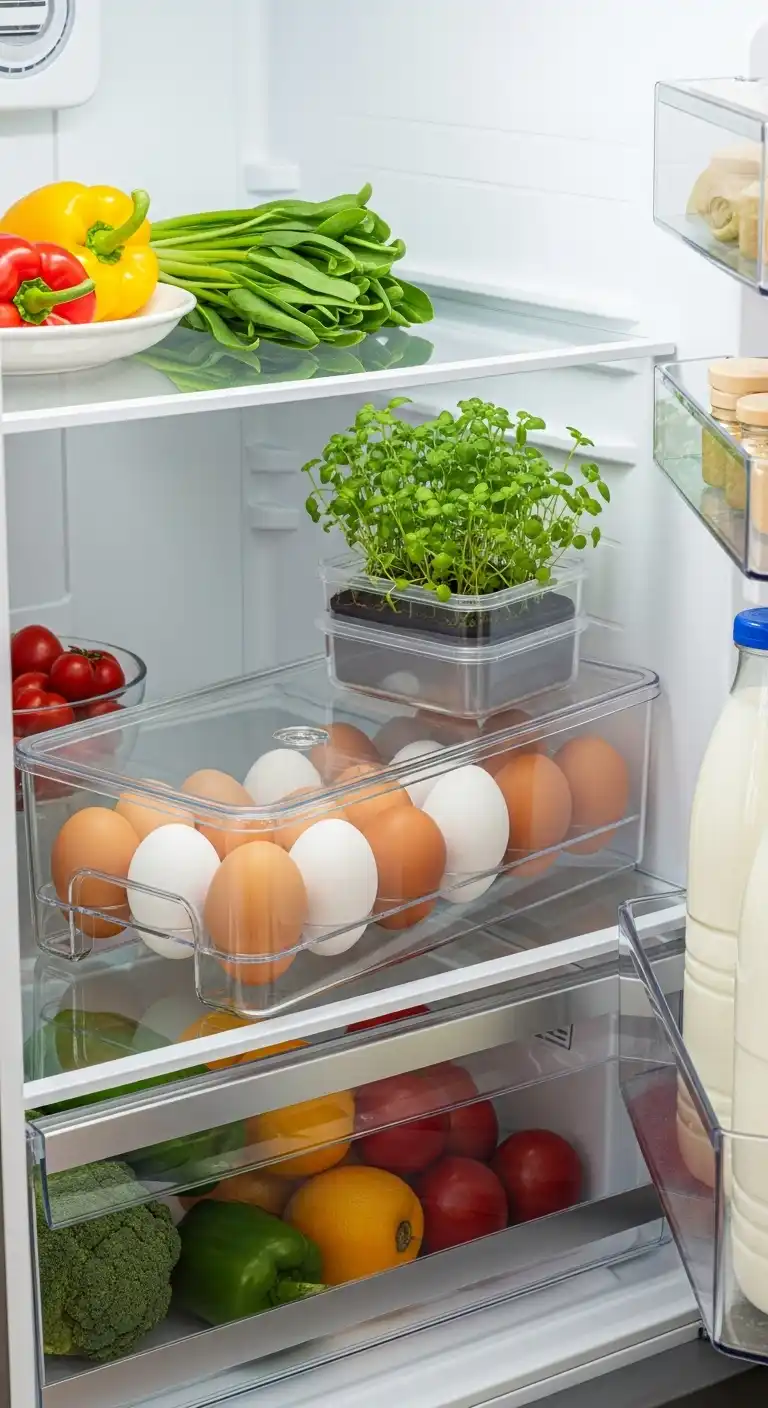
Ditch the flimsy cardboard carton and upgrade to a sturdy egg organizer with a lid.
It keeps eggs safe from breakage and allows stacking items on top—extra storage bonus!
Pro tip: Store eggs in their original carton if your fridge fluctuates in temperature—this helps keep them fresh longer.
5. Label Everything
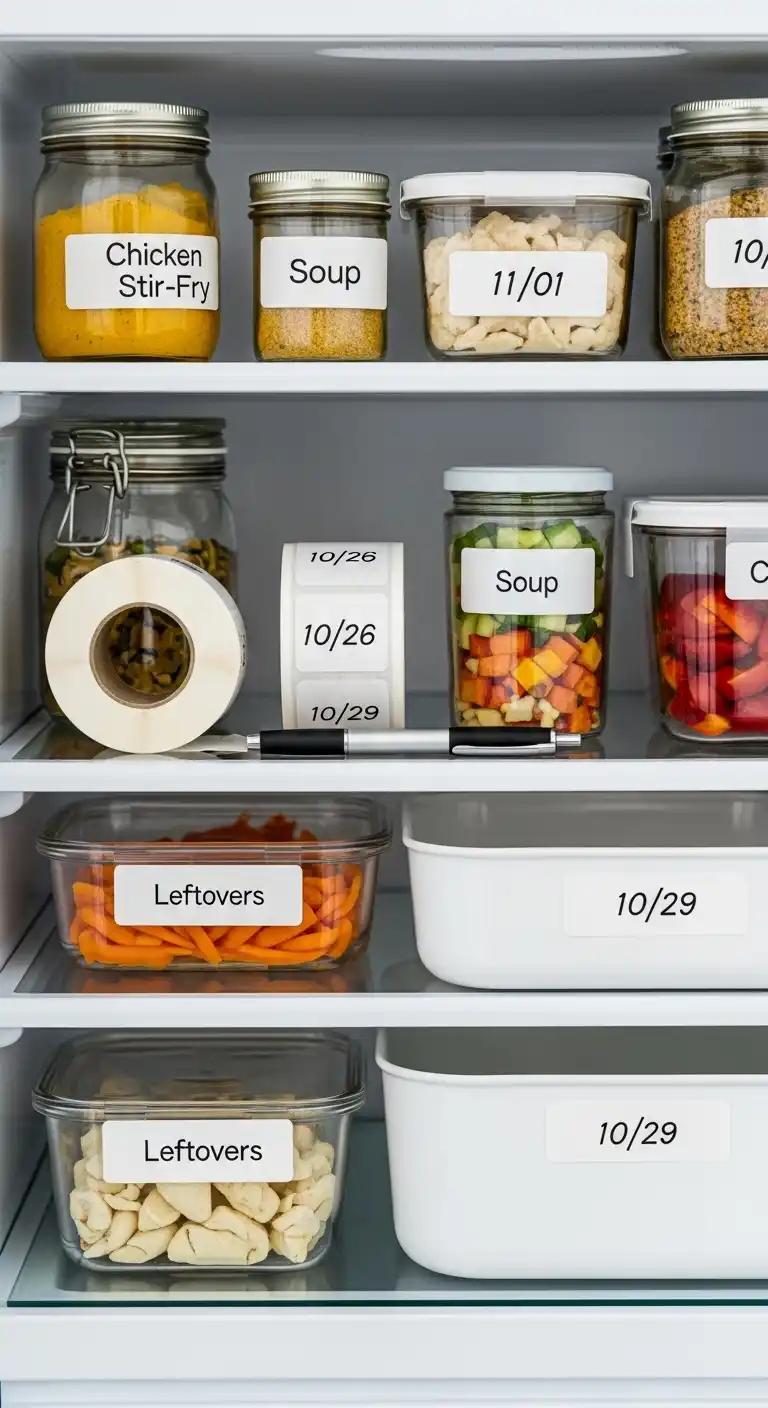
Labeling is one of those tiny steps that makes a huge difference.
Use removable fridge-safe labels for bins, jars, and leftovers.
Not only does it prevent mystery containers, but it also keeps everyone in the household accountable.
Bonus: Add the date you cooked leftovers so you know when it’s time to toss.
6. Create a Snack Zone
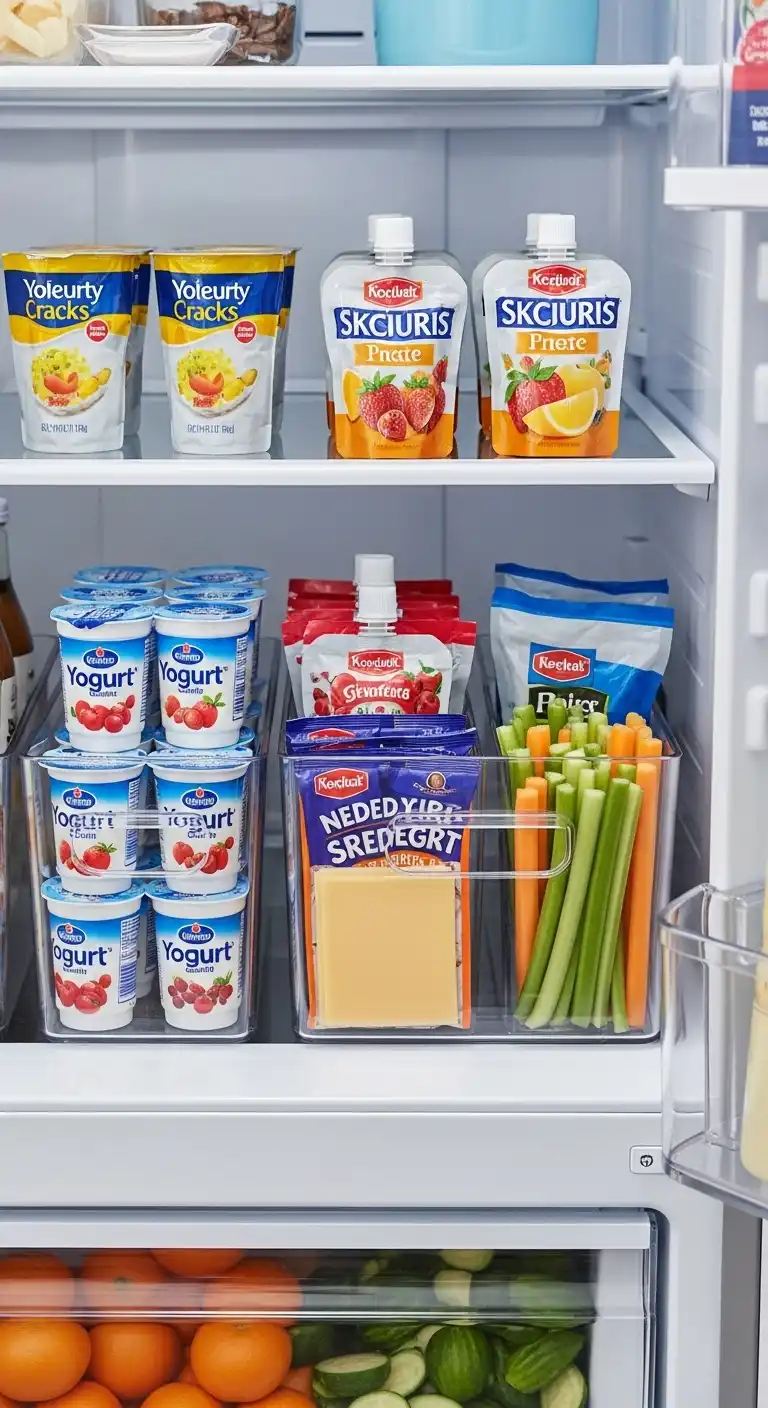
If you have kids (or snack-loving adults), set up a dedicated snack bin.
Fill it with string cheese, yogurt cups, fruit pouches, or veggie sticks.
This makes healthy snacks easy to grab and keeps people from rummaging through the fridge like raccoons.
Trick:
Keep the snack zone at eye level for kids, so they naturally reach for the good stuff.
7. Store Meat on the Bottom Shelf
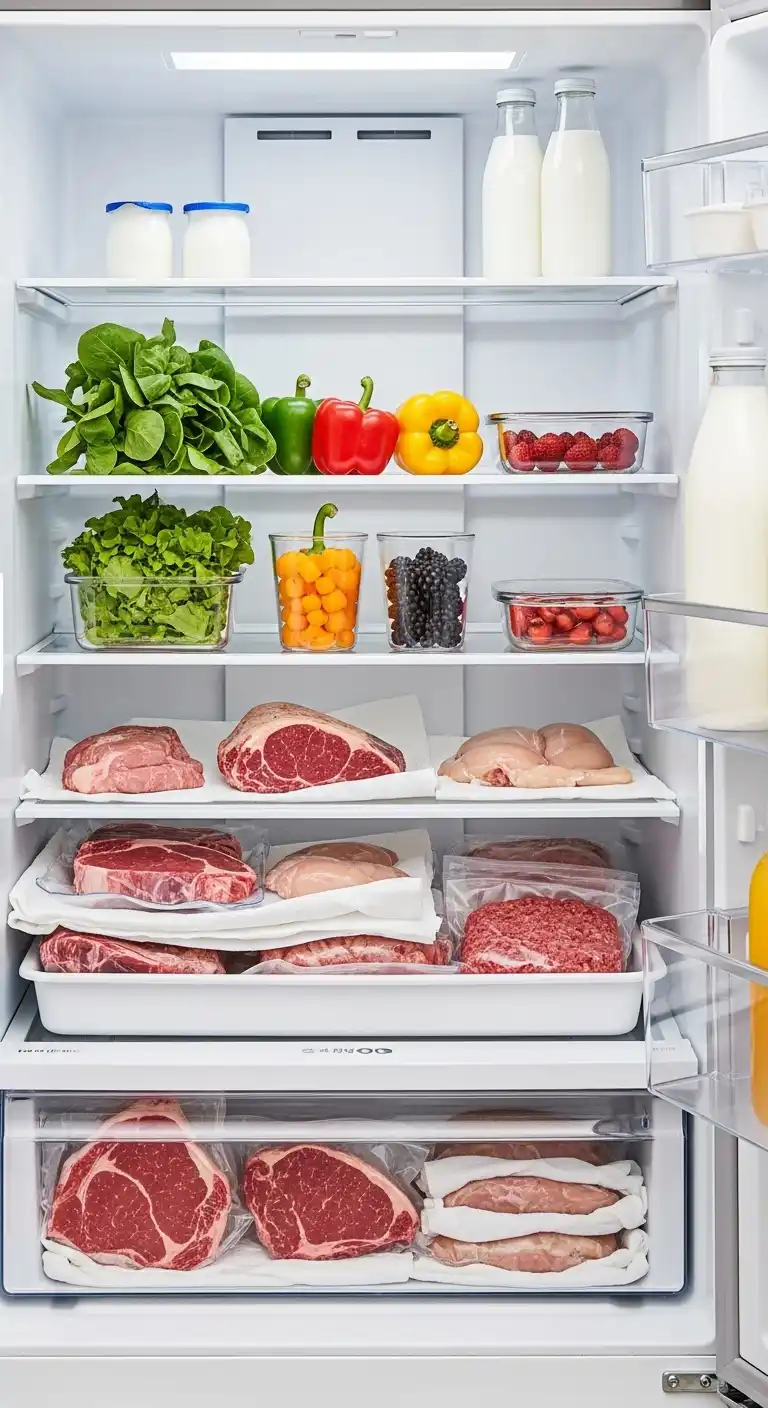
Raw meat should always live on the lowest shelf to prevent drips contaminating other foods.
Place it in a designated bin or tray to contain leaks.
This simple move keeps your fridge safer and easier to clean.
Extra: Line the tray with paper towels to catch extra moisture.
8. Use Drawer Dividers for Produce
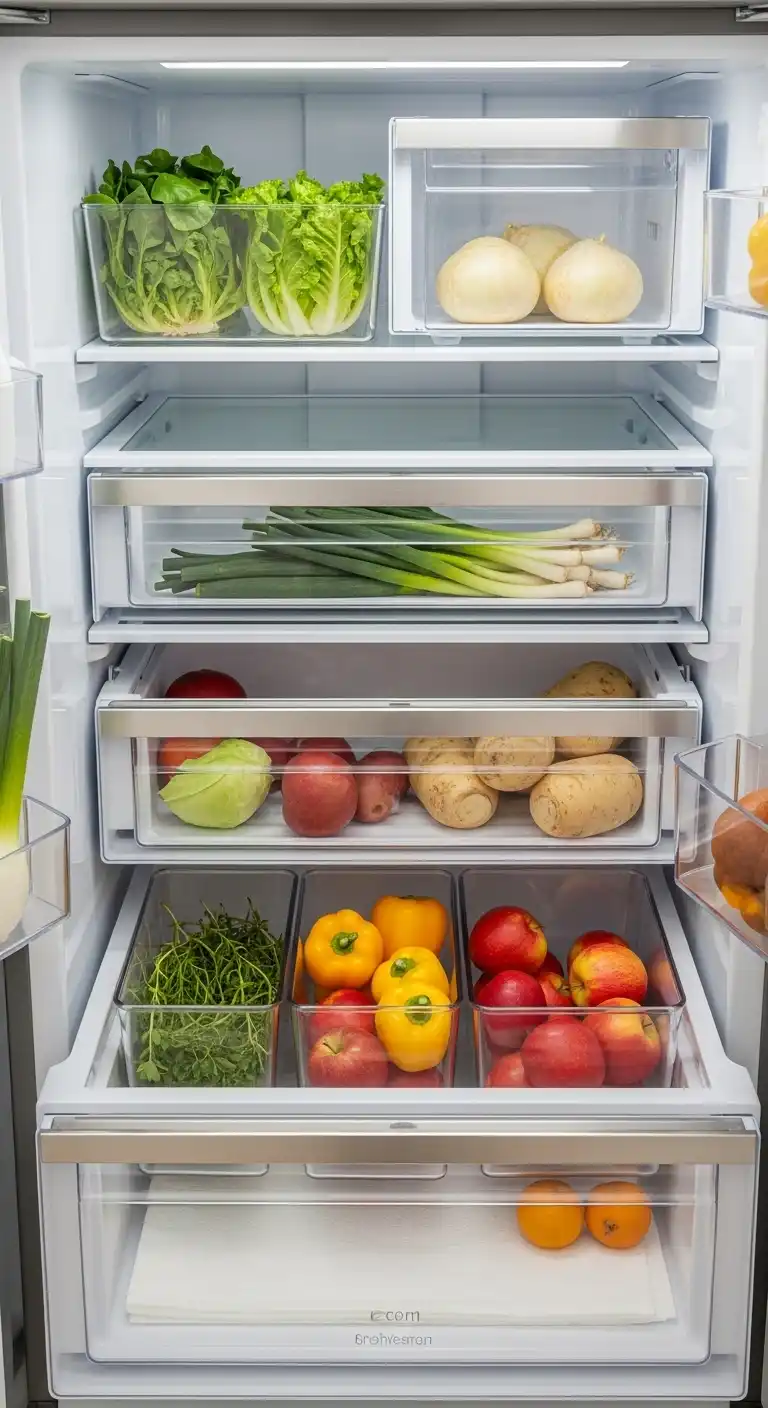
Those big crisper drawers can easily turn into a graveyard for forgotten veggies.
One solution? Drawer dividers.
By splitting your crisper into smaller zones—like “leafy greens,” “fruits,” and “root vegetables”—you prevent everything from becoming one big pile of mystery mush.
You can buy adjustable fridge-safe dividers or even use small, clear bins to create sections.
The key is to stop items from rolling around or getting buried under heavier produce.
For example, delicate herbs shouldn’t get squished under apples.
Pro tip:
Add a paper towel at the bottom of each divided section—it absorbs excess moisture and keeps produce fresher longer.
Hack for kids:
Create a mini “fruit drawer” with washed grapes, apple slices in containers, or clementines.
It encourages healthier snacking because everything is visible and ready.
9. Add Shelf Liners for Easy Cleaning
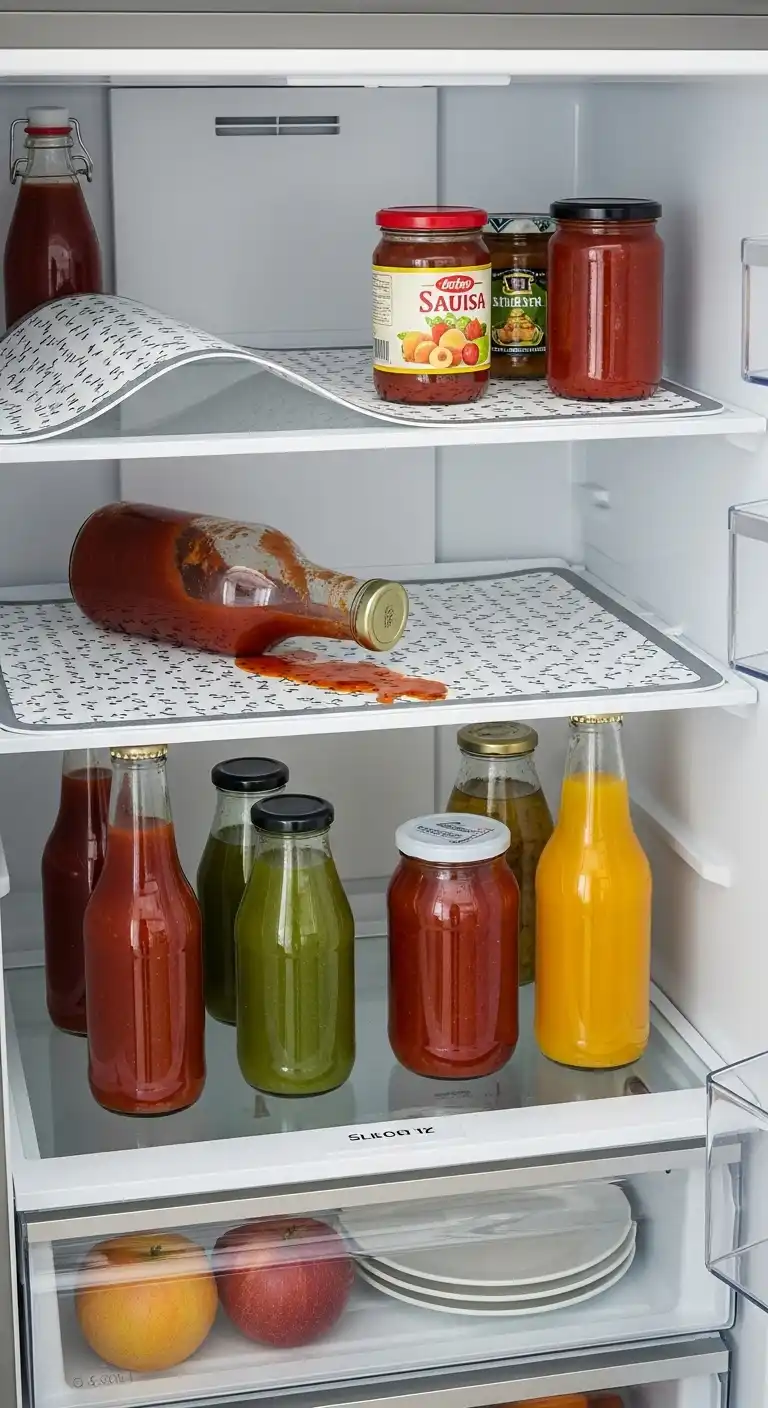
If you’ve ever discovered a spilled jar of salsa at the back of your fridge (and the horror of cleaning it up), you’ll appreciate shelf liners.
These flexible mats sit on your fridge shelves and catch drips, crumbs, and leaks.
Instead of scrubbing dried sauce or sticky juice, you just remove the liner, rinse it, and put it back.
The added bonus? Many liners are non-slip, so bottles and jars stay in place.
This prevents the domino effect when one bottle tips and knocks down the rest.
Style tip:
Choose clear or lightly patterned liners so your fridge looks neat without feeling cluttered.
Budget trick:
Don’t want to buy special liners? Use plastic placemats or cut-to-size silicone mats instead.
10. Use Stackable Containers for Leftovers
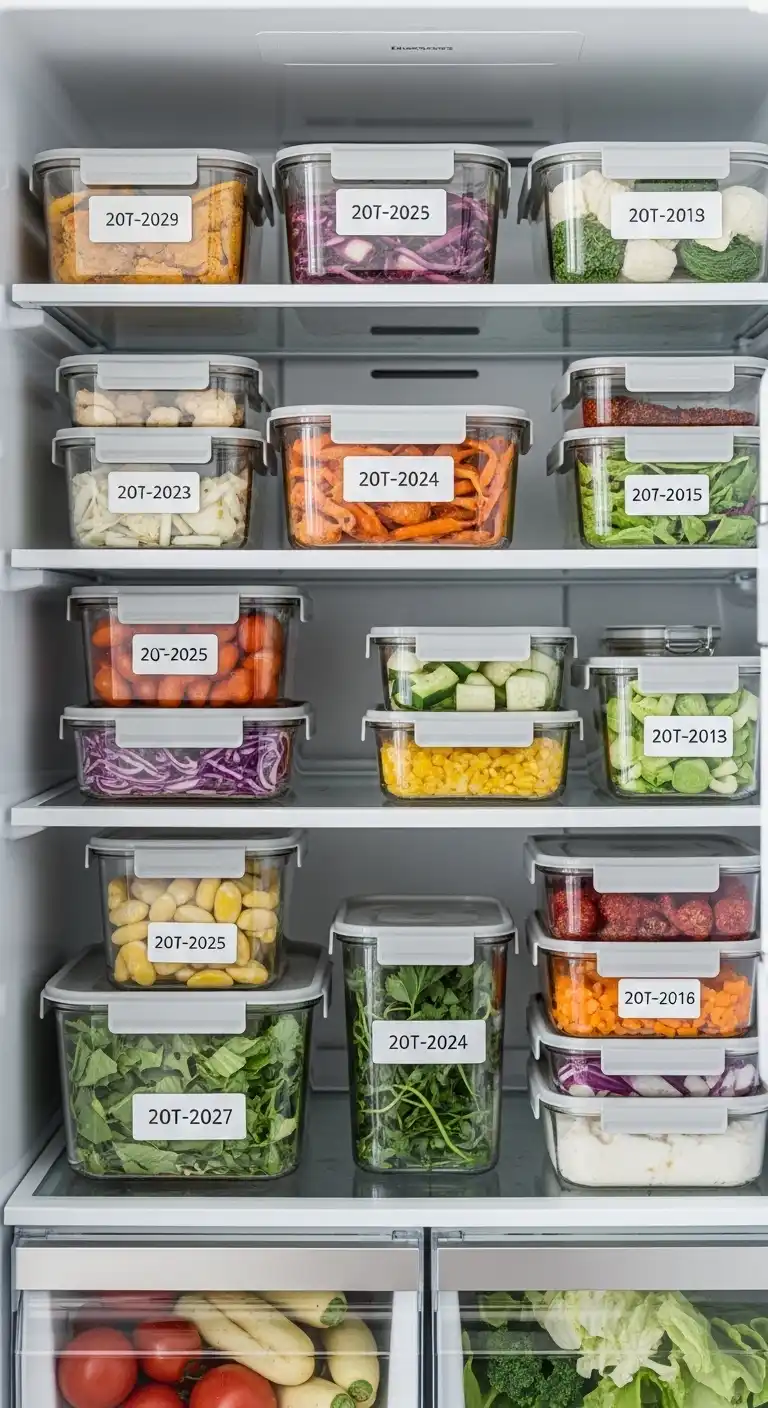
Leftovers don’t have to equal chaos.
Stackable, uniform containers transform your fridge from “pile of random bowls” to “organized meal station.”
By using matching containers, you maximize vertical space and make it easy to see what you actually have.
Square or rectangular containers are better than round ones since they fit together tightly, like puzzle pieces.
Clear containers are the best choice so you don’t forget what’s inside.
Pro tip:
Label each container with the date.
Leftovers typically last 3–4 days—having a reminder helps you eat them before they go bad.
Extra benefit:
Stackable containers aren’t just for leftovers—they’re great for prepped salad greens, cut veggies, or even meal-prep lunches.
11. Store Herbs in Jars of Water
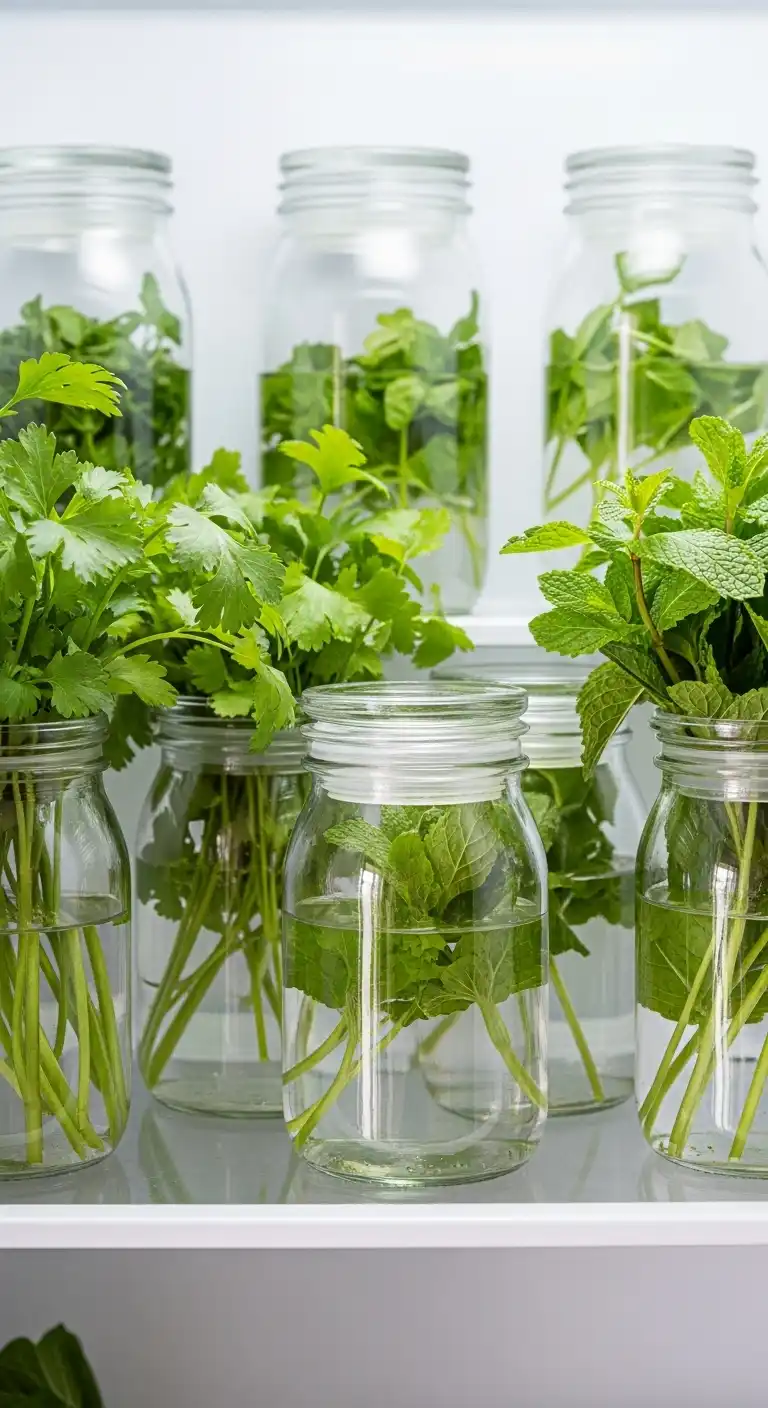
If you love cooking with fresh herbs but hate how fast they wilt, this hack is a lifesaver.
Instead of tossing parsley or cilantro into the crisper, treat them like fresh flowers.
Trim the stems, place them in a small jar of water, and cover loosely with a plastic bag.
Store them upright in the fridge door or a shelf.
This method keeps herbs crisp and fragrant for up to two weeks instead of just a few days.
Basil prefers to stay at room temperature in water, while herbs like parsley, cilantro, and mint do best in the fridge.
Pro tip:
Change the water every 2–3 days to keep them fresh longer.
Visual bonus:
A little jar of green herbs actually makes your fridge look lively and inviting.
12. Hang Bagged Produce with Clips
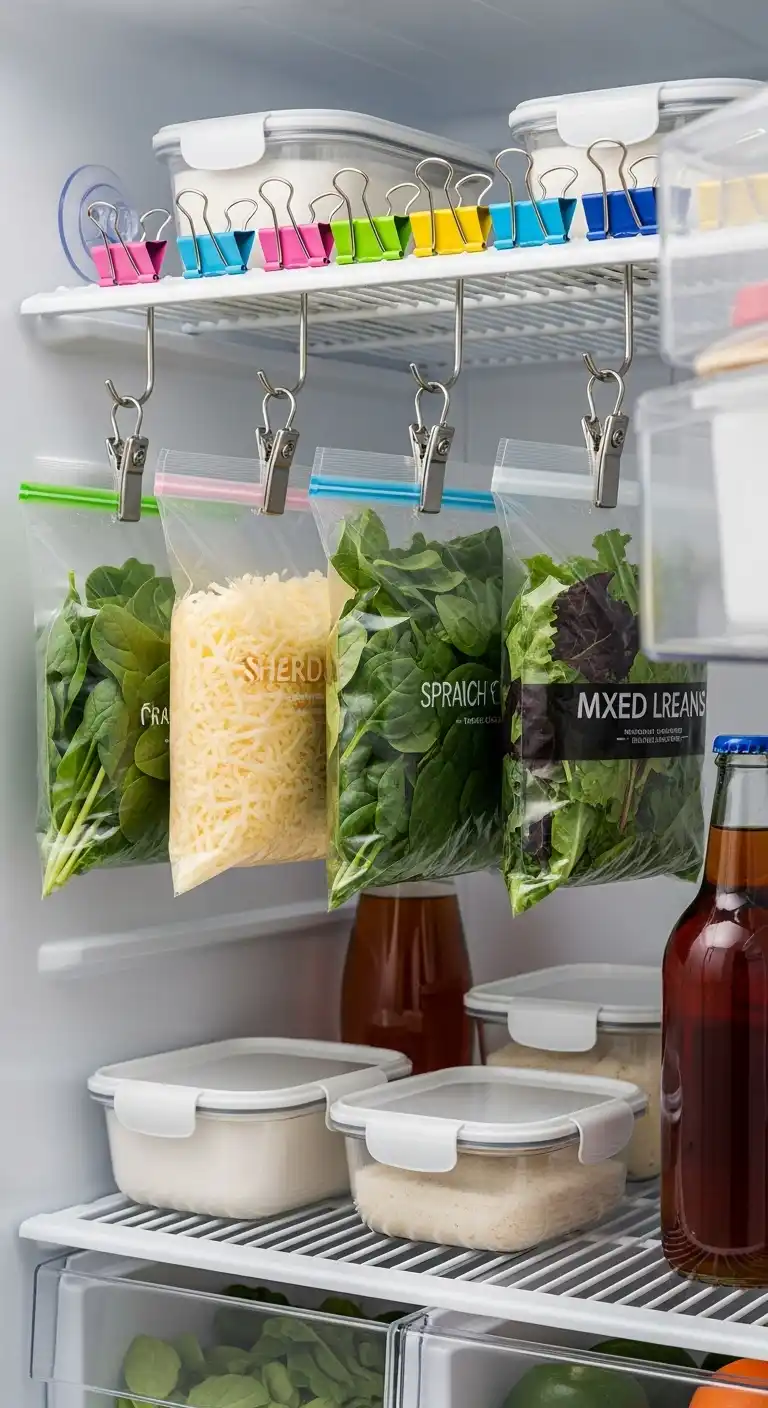
Ever open your fridge and watch a bag of shredded cheese slide out?
Or find a half-empty bag of spinach crushed at the bottom?
Hanging bags with clips solves both problems.
You can use chip clips with suction cups or magnetic hooks that stick to the fridge walls or shelves.
By hanging lightweight bags (like cheese, salad mixes, or frozen fruit you’re thawing), you free up shelf space and keep items visible.
No more buying an extra bag of lettuce because the first one got buried.
Budget trick:
Binder clips attached to wire shelves work just as well—simply hang the bags underneath.
Bonus:
Hanging bags improves airflow around your produce, helping it last longer.
13. Dedicate a Dairy Bin
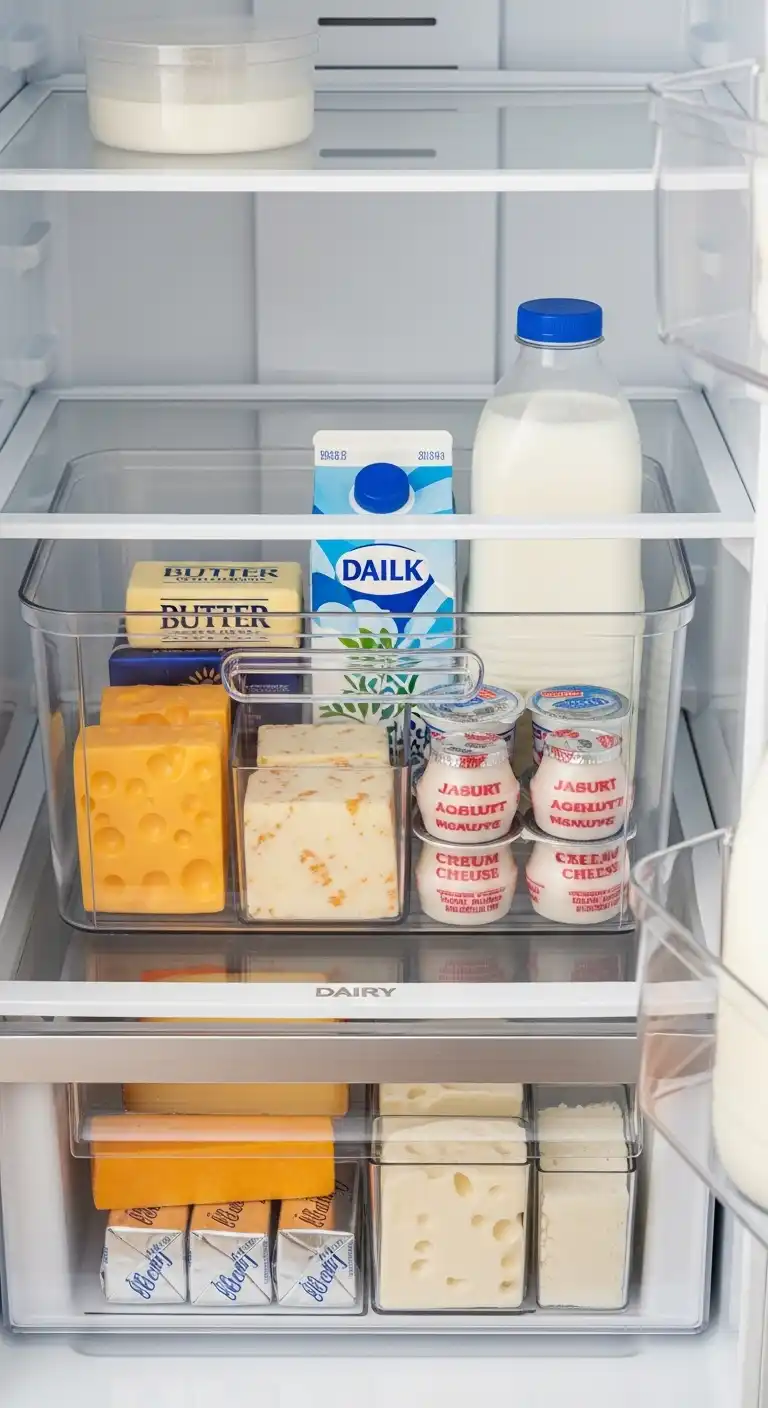
Milk, cheese, butter, and yogurt often scatter across the fridge, making it harder to keep track.
A simple dairy bin changes that.
By creating one designated space, you’ll never again discover three open sour cream tubs lurking on different shelves.
Use a medium-sized clear bin and place all dairy inside.
When you need cheese for tacos or butter for baking, you just pull out the bin instead of hunting for items.
Pro tip:
Keep this bin on a middle shelf where the temperature is most consistent.
Dairy is sensitive to temperature swings, so avoid the door where it warms up every time you open the fridge.
Advanced tip:
If you buy multiple types of cheese, add smaller dividers inside the bin so each variety has its own spot.
14. Use Tiered Shelves for Small Items
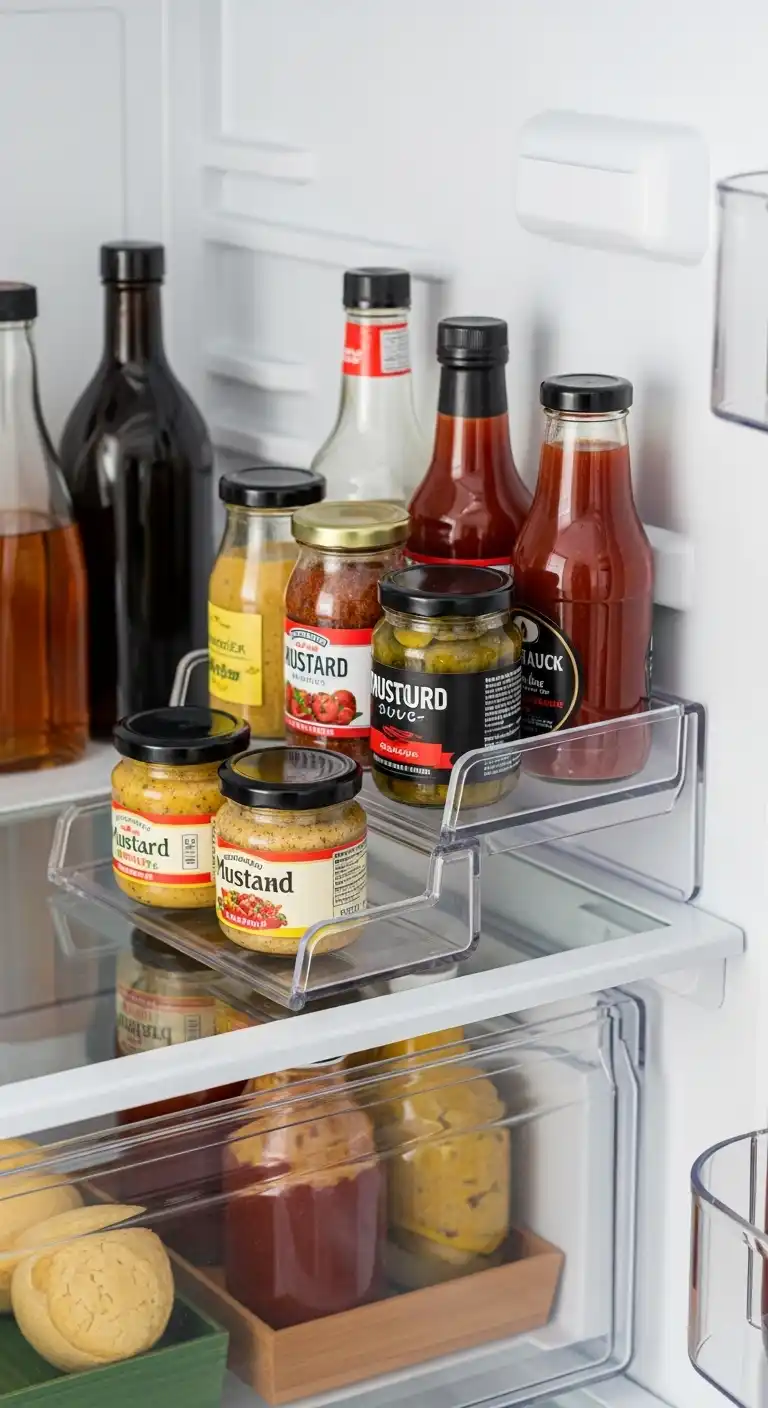
Tiny jars and containers often disappear behind taller items.
That’s where tiered shelving comes in.
These mini step-like risers let you create levels so small jars, like mustard or pickles, stay visible.
It’s like stadium seating for your condiments—everyone gets a front-row view.
Tiered shelves are especially helpful if you’re a sauce enthusiast with multiple jars.
They prevent duplicates because you’ll always see what you already own.
Budget option:
Use small sturdy boxes or trays to create your own DIY risers.
Pro tip:
Reserve this system for short jars and bottles; tall items work best on flat shelves to avoid toppling.
15. Create a “Snack Zone” Bin
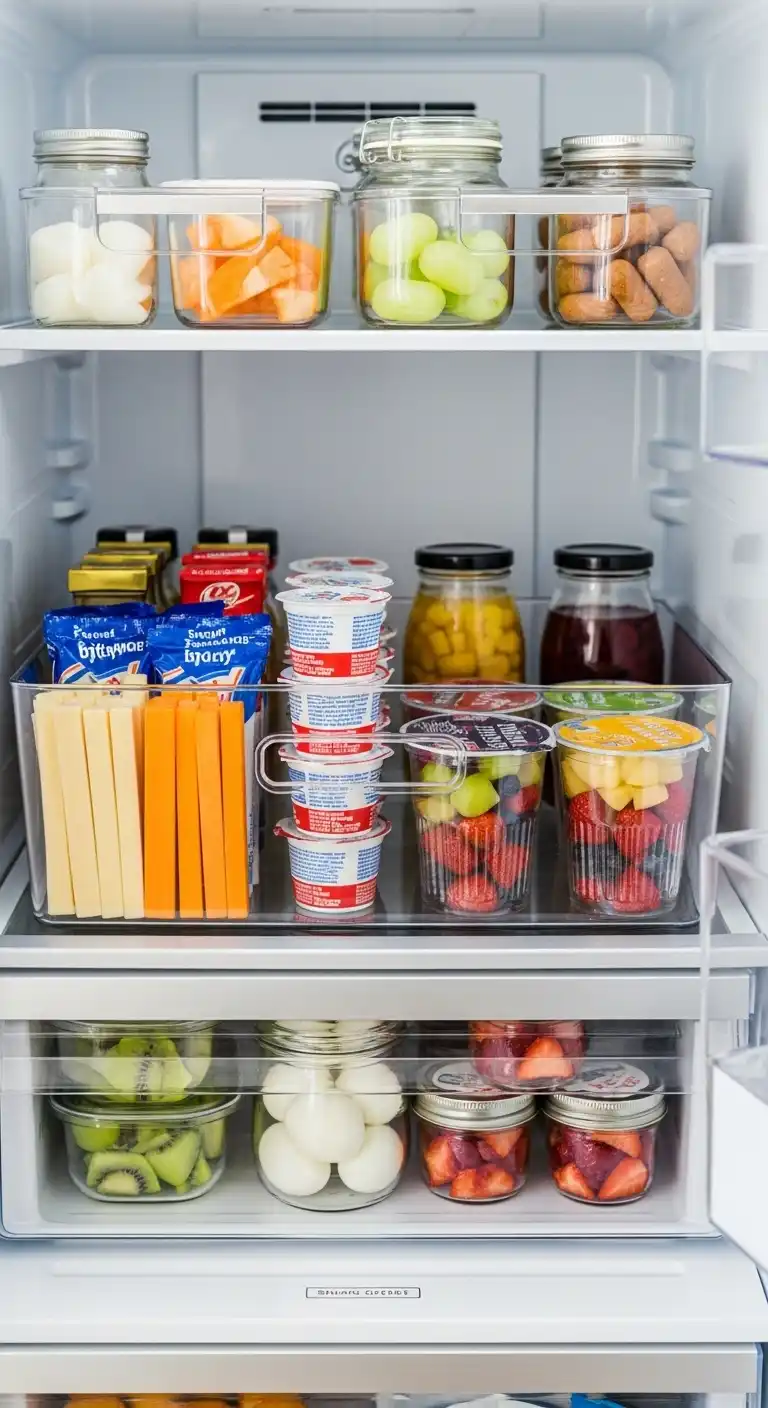
Snacks can easily clutter up your fridge—cheese sticks in one corner, yogurt cups stacked awkwardly, and fruit cups rolling everywhere.
A dedicated “snack zone” bin keeps all grab-and-go items in one place.
Place this bin at eye level if you have kids.
When they’re hungry, they’ll know exactly where to look instead of rummaging through every shelf.
Fill it with healthy options like cut fruit, string cheese, or hard-boiled eggs.
For adults, you can stock protein snacks, smoothies, or hummus cups.
Pro tip:
Rotate snacks weekly so you don’t end up with forgotten items at the back.
Bonus:
Clear bins let you see exactly how much is left, making grocery shopping easier.
16. Label Everything Clearly
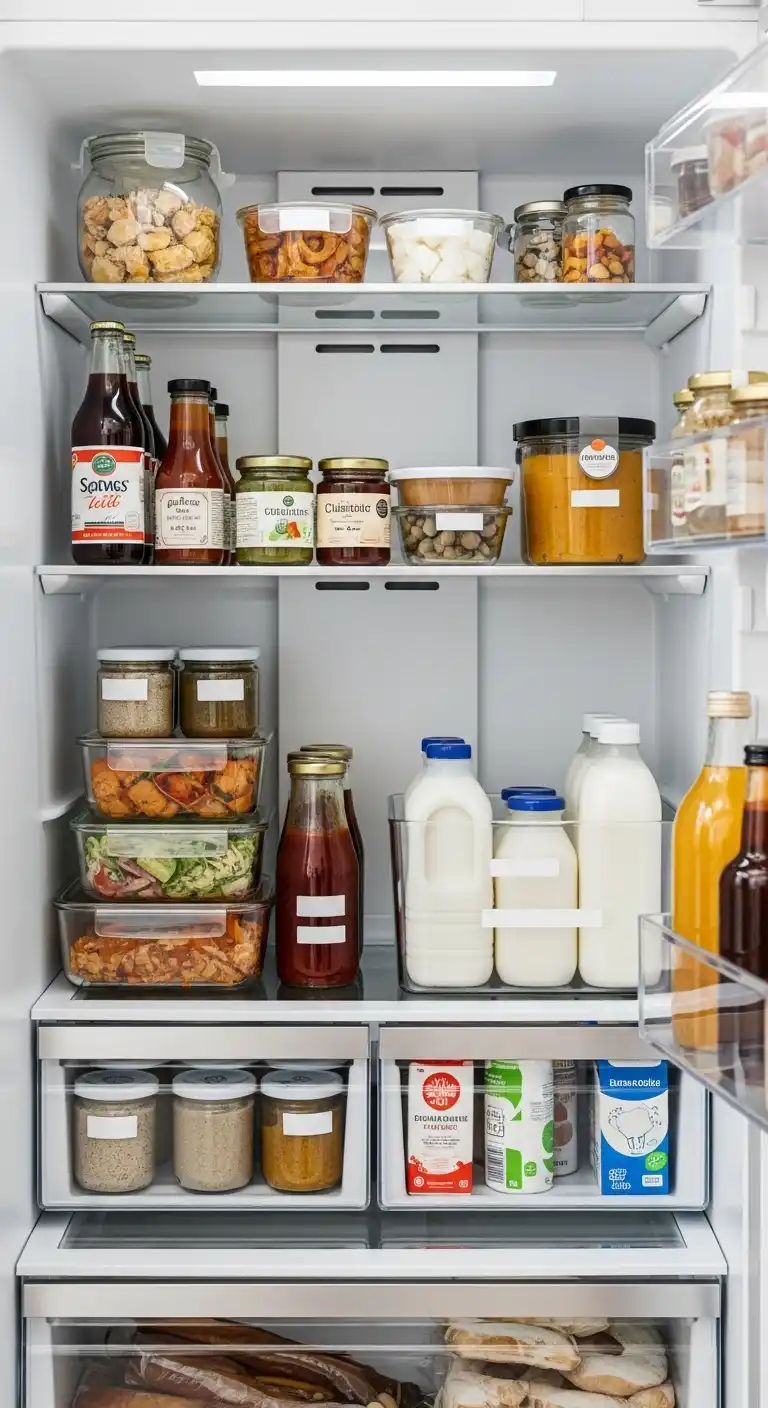
A fridge can turn into a black hole for half-used items unless you label them.
Invest in washable fridge labels or simply use masking tape and a marker.
Mark the contents and the date you opened it.
This is especially useful for leftovers, sauces, and dairy products.
You’ll reduce food waste and avoid the dreaded “sniff test.”
Plus, it’s easier for the whole family when everyone knows what’s what without asking.
Pro tip:
Create a system with color-coded labels—red for leftovers, blue for dairy, green for produce.
Bonus hack:
Keep a small roll of tape and marker inside a drawer or on the side of the fridge so labeling becomes second nature.
17. Use a Lazy Susan for Condiments
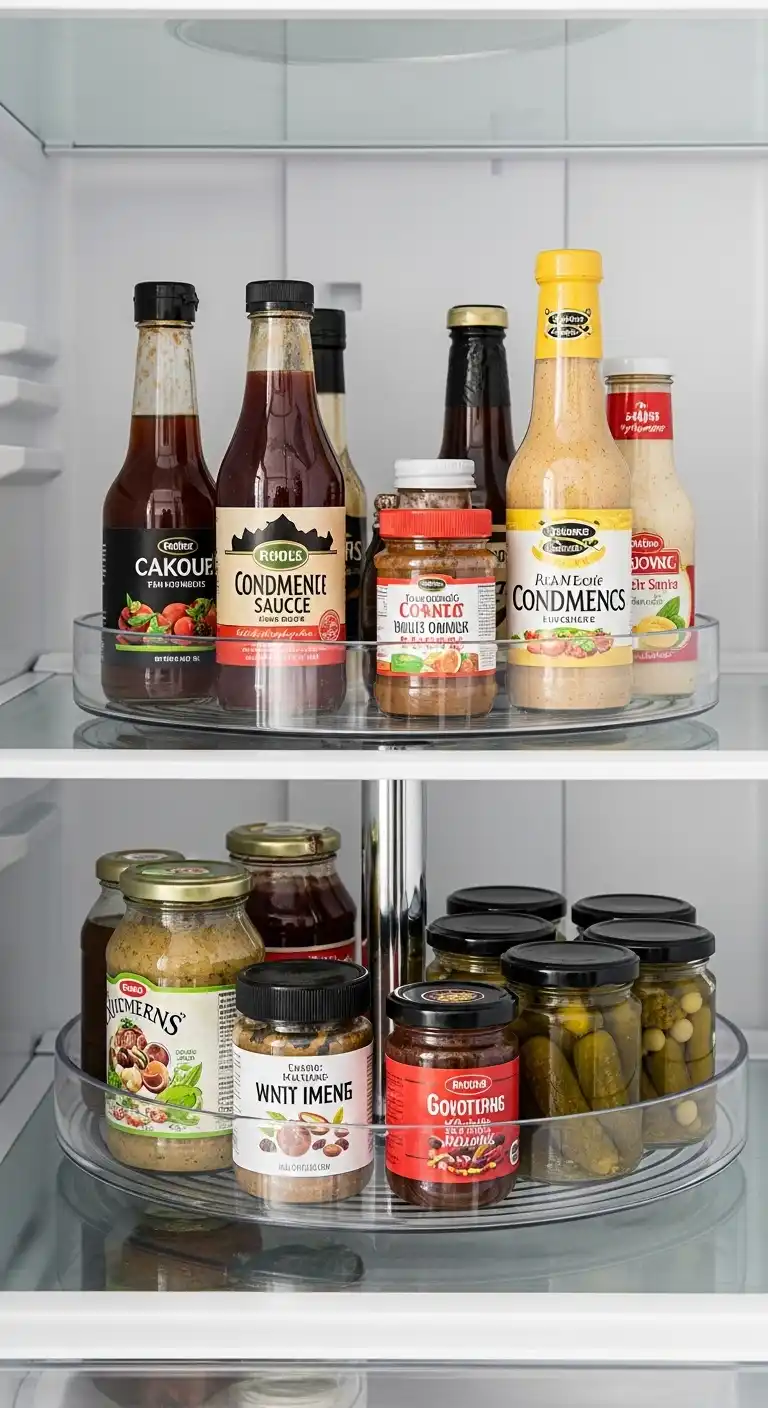
Condiments often get lost at the back, especially if you’re a fan of sauces and dressings.
A Lazy Susan changes everything.
This spinning tray makes it easy to access any bottle without knocking others over.
You can keep one for sauces, another for spreads like jam and nut butter, or even one for small jars of pickles.
The key is easy rotation—everything becomes visible and reachable in seconds.
Pro tip:
Choose a clear, non-slip Lazy Susan so bottles don’t slide when you spin it.
Style tip:
Tiered Lazy Susans give even more visibility for smaller jars.
18. Keep Raw Meat on the Bottom Shelf
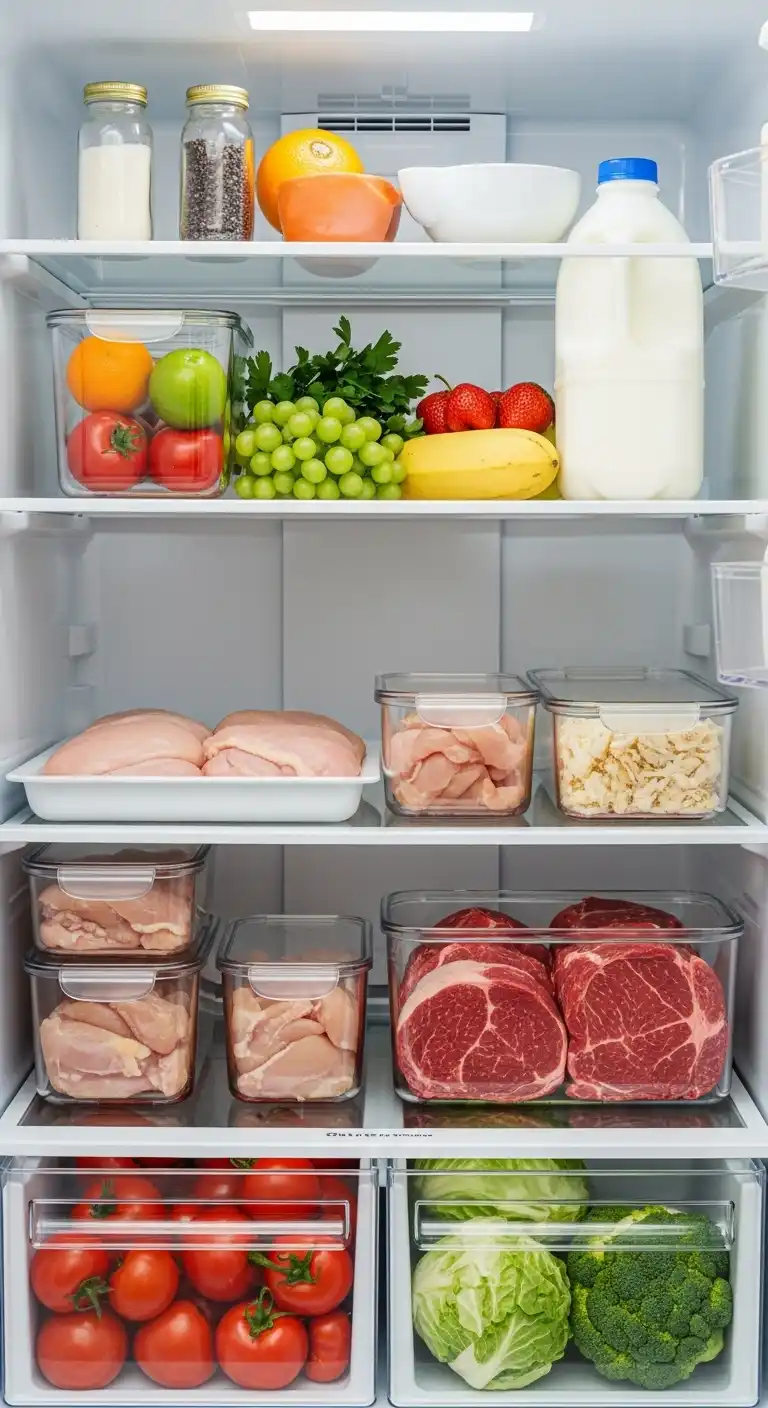
Food safety is just as important as organization.
Raw meat should always go on the bottom shelf to avoid dripping onto other foods.
Store it in a leak-proof container or tray for extra protection.
By keeping it low and contained, you prevent contamination and make cleanup much easier if a leak happens.
This is especially critical if you buy family packs or marinate meat in advance.
Pro tip:
Dedicate one small bin labeled “meat only” for peace of mind.
Bonus:
If you meal prep, separate meat portions into smaller bags or containers before freezing or storing—this avoids waste and saves time.
19. Group Beverages in One Section
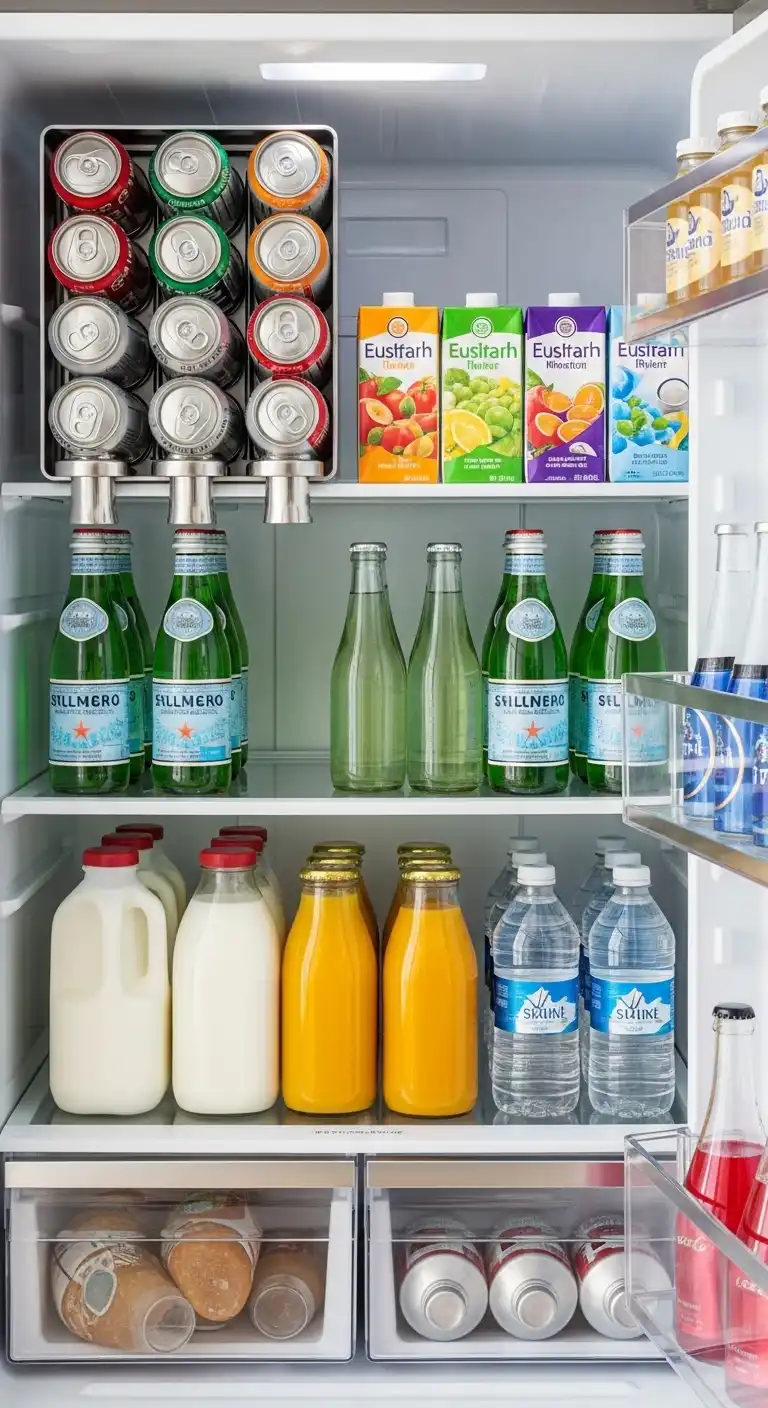
Beverages can take over your fridge if you don’t assign them a home.
Soda cans, juice boxes, milk cartons, and water bottles should all live in one zone.
This way, you free up shelf space for food and avoid random bottles scattered everywhere.
A can dispenser is a game-changer for sodas or sparkling water—it automatically rolls the next can forward when you grab one.
For water bottles, stackable bottle holders keep them neat and prevent rolling.
Pro tip:
Store heavier bottles lower down for easier access and to avoid accidents.
Hack for hosts:
If you entertain often, dedicate one shelf just for drinks so guests can help themselves.
20. Install an Egg Organizer
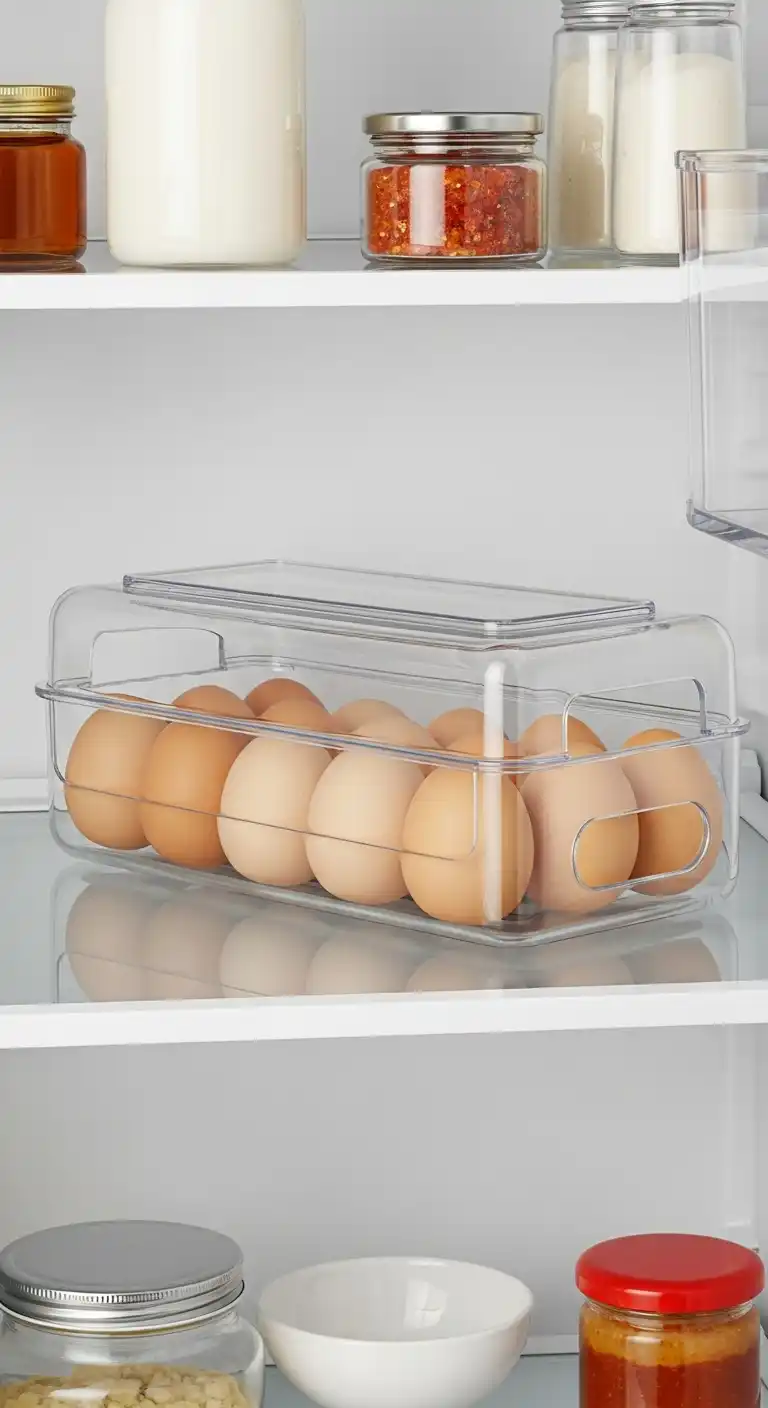
Egg cartons are bulky and don’t always fit well.
A slim, clear egg organizer helps maximize space and keeps eggs safe.
Some even come with stackable lids, allowing you to store items on top of them.
The best part? You can instantly see how many eggs are left without opening a carton.
Some organizers even come with date markers so you track freshness easily.
Pro tip:
Don’t store eggs in the door—the temperature fluctuates too much.
Keep them on a middle shelf instead.
Style bonus:
Clear acrylic organizers look sleek and make your fridge feel more “Pinterest-worthy.”
21. Rotate Items Regularly (FIFO Method)
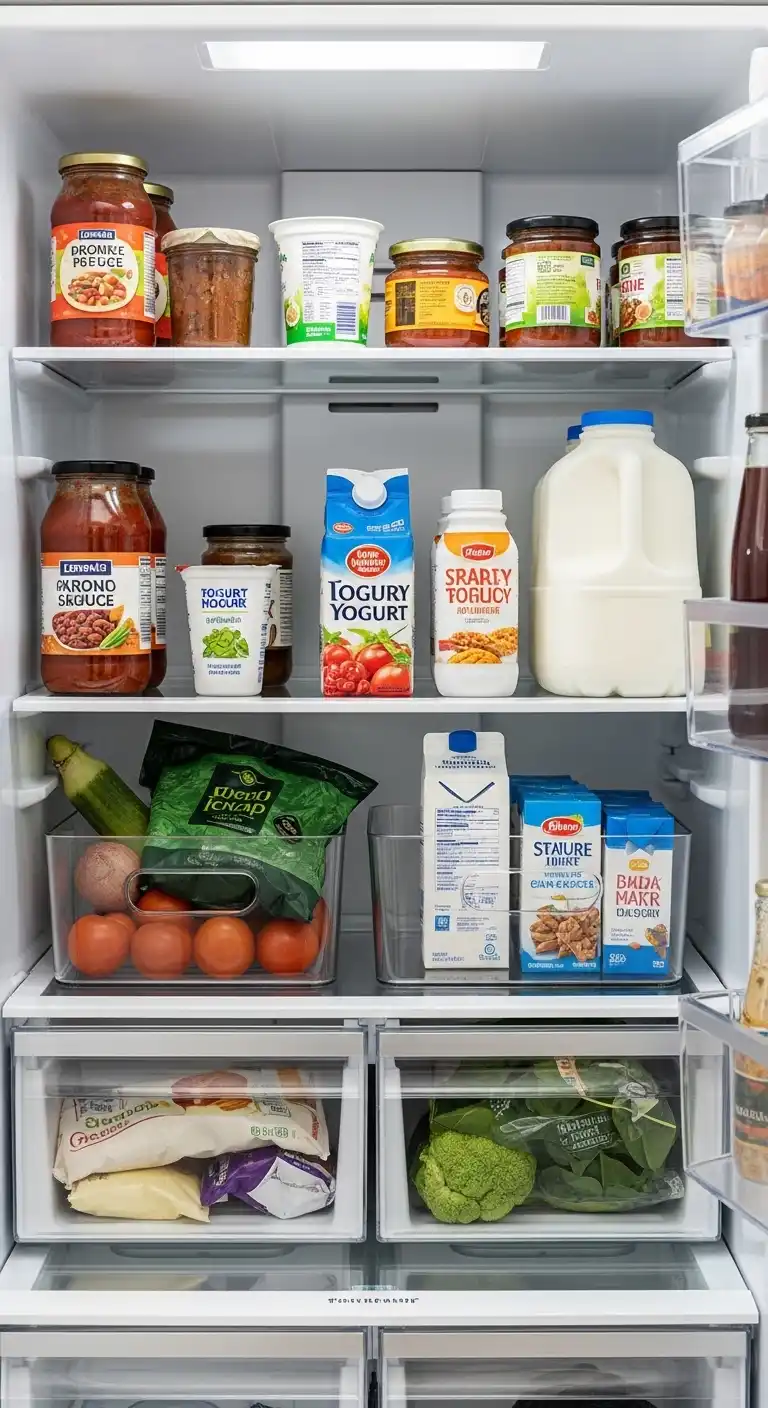
No matter how organized your fridge is, it won’t stay neat unless you rotate items.
FIFO—First In, First Out—is the golden rule.
This means placing newer items behind older ones so you use up food before it expires.
Once a week, do a quick fridge check.
Move soon-to-expire foods to the front and toss anything questionable.
Not only does this keep your fridge tidy, but it also saves money by reducing food waste.
Pro tip:
Dedicate 5 minutes before grocery shopping to reorganize your fridge—this ensures you don’t overbuy.
Mindset shift:
Think of your fridge like a mini grocery store.
Stock it neatly, rotate products, and always keep visibility in mind.
Do’s and Don’ts of Fridge Organization
Do’s
- Group items by category. Dairy with dairy, condiments with condiments—it saves time.
- Use clear containers. Visibility means fewer forgotten items.
- Clean as you go. A quick wipe-down before restocking keeps things fresh.
- Check expiration dates weekly. Saves money and avoids “mystery leftovers.”
- Store leftovers in stackable containers. More space, less chaos.
Don’ts
- Don’t overstuff your fridge. Air needs to circulate to keep food fresh.
- Don’t store raw meat on the top shelf. Risky drips can contaminate everything below.
- Don’t keep milk or eggs in the door. The temperature fluctuates too much.
- Don’t forget labels. If you can’t tell how old it is, you probably won’t eat it.
- Don’t ignore the back of your fridge. Rotate items regularly using FIFO (first in, first out).
Pro Tips to Keep Your Fridge Fresh Longer
- Use baking soda: A small open box inside absorbs odors and keeps things smelling clean.
- Line drawers with paper towels: They absorb moisture, extending the life of produce.
- Pre-wash and prep veggies: Makes healthy eating easier and keeps items from rotting untouched.
- Invest in airtight containers: Keeps cut fruit and veggies crisp for days.
- Leave space around items: Airflow helps regulate temperature evenly.
Wrap-Up
Your fridge doesn’t need to be a cluttered jungle of leftovers and random condiments.
With a little strategy, some clear containers, and a system that works for you, your fridge can become a space that saves money, reduces waste, and makes daily life smoother.
Remember: organization isn’t about perfection—it’s about function.
The goal is to make your fridge work for your lifestyle, whether that means creating a snack zone for kids, meal prep bins for busy weeks, or just finally being able to see your produce before it spoils.
Start small. Try one or two ideas this week—maybe add a Lazy Susan or create a snack bin—and build from there.
Before you know it, you’ll open your fridge and actually smile.
FAQs About Fridge Organization
Q: How often should I deep clean my fridge?
Every 1–2 months is best. But quick weekly wipe-downs make deep cleans faster and easier.
Q: What should I never store in the fridge door?
Milk, eggs, or anything highly perishable. The door is the warmest spot.
Q: How do I keep produce fresh longer?
Store leafy greens in breathable produce bags and line drawers with a dry towel to absorb moisture.
Q: Is it worth buying fridge organizers?
Yes, if you love order and visibility. But simple bins, jars, or repurposed containers work just as well.
Q: How can I avoid overbuying groceries?
Always do a quick fridge scan before shopping. Snap a photo so you know what you already have.