Garage Pantry Organization Ideas: 21 Smart Ways to Save Space

Want extra room for your groceries and bulk items? Try these garage pantry organization ideas to keep everything tidy and easy to find.

Converting your garage into a pantry space opens up tremendous possibilities for food storage, but success depends entirely on understanding the unique challenges this environment presents.
Unlike traditional indoor pantries, garage spaces require strategic planning to combat temperature fluctuations, humidity concerns, and accessibility issues.
The key to mastering garage pantry organization lies in thinking systematically about three fundamental elements: protection from environmental factors, efficient space utilization, and sustainable maintenance routines.
Each organizational strategy we’ll explore builds upon these core principles, creating a comprehensive system that transforms your garage from simple storage space into a highly functional food management center.
Understanding Your Garage Environment Before You Begin

Before implementing any organizational system, you must thoroughly assess your garage’s specific conditions.
Temperature variations throughout seasons directly impact food safety and storage container selection.
Humidity levels determine which foods can safely be stored and influence your choice of protective storage solutions.
Consider the traffic patterns in your garage space. High-traffic areas near vehicle parking spots require different organizational approaches than quieter corners.
Understanding these environmental factors forms the foundation for every subsequent organizational decision you’ll make.
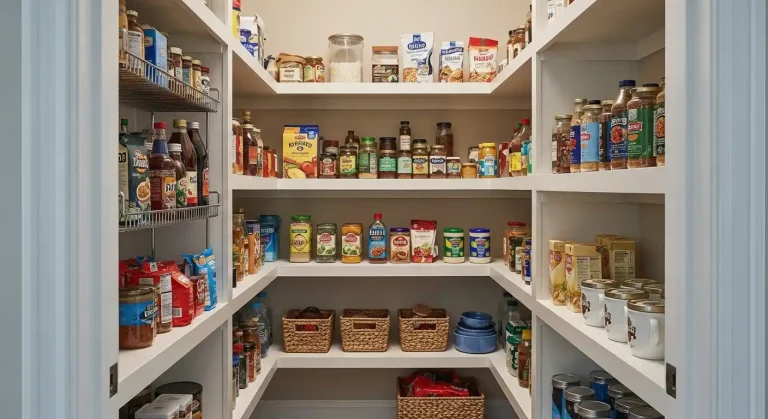
1. Install Heavy-Duty Metal Shelving Units

Professional-grade metal shelving creates the backbone of any successful garage pantry organization system.
Unlike wood shelving, metal units resist moisture damage and support significantly more weight, making them ideal for storing bulk purchases and canned goods.
When selecting shelving, prioritize adjustable systems that accommodate various container heights.
The ability to modify shelf spacing as your storage needs evolve prevents the common mistake of locked-in configurations that become obsolete over time.
Position your tallest shelving units against walls that receive minimal direct sunlight.
This strategic placement protects stored foods from temperature spikes while maximizing your vertical storage capacity.
2. Create Climate-Controlled Zones with Insulated Containers

Temperature control represents the most critical factor in garage pantry success.
Establish designated climate-controlled zones using insulated storage containers and strategic placement away from garage doors and windows.
Large insulated containers work exceptionally well for protecting temperature-sensitive items like oils, vinegars, and packaged snacks.
These containers create micro-environments that buffer against the garage’s temperature fluctuations.
Consider investing in containers with tight-fitting lids and built-in gaskets.
This extra protection layer ensures your food items remain fresh despite the challenging garage environment.
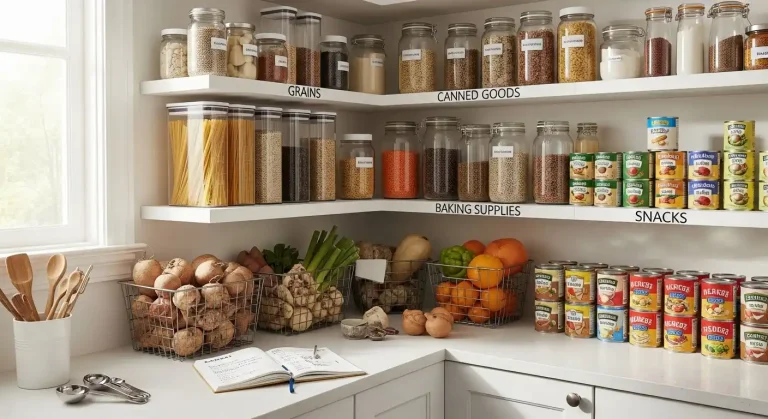
3. Implement a Color-Coded Category System

Visual organization systems dramatically reduce the mental effort required to maintain your garage pantry.
Assign specific colors to different food categories: red containers for canned goods, blue for grains and pasta, green for baking supplies.
This color-coding approach works particularly well in garage settings where lighting may be limited.
Even in dim conditions, the distinct colors guide you quickly to the correct storage area.
Extend your color system to labels and storage bins throughout the space.
Consistency in visual cues creates an intuitive system that family members can easily understand and maintain.
4. Design Vertical Storage Solutions for Maximum Space

Garage spaces typically offer generous ceiling height that remains underutilized in most storage systems.
Vertical storage solutions multiply your available space without expanding your garage’s footprint.
Install ceiling-mounted storage racks for lightweight, infrequently used items like seasonal baking supplies or bulk paper goods.
These elevated storage areas keep items accessible while freeing premium shelf space for everyday necessities.
Use tall, narrow containers that take advantage of vertical space while fitting efficiently between garage obstacles like water heaters or electrical panels.
5. Establish Easy-Access Zones for Daily Items

Convenience drives long-term organizational success more than any other factor.
Create dedicated easy-access zones at eye level and within arm’s reach for items you use most frequently.
Position everyday staples like coffee, snacks, and cooking oils in the most accessible locations.
This strategic placement encourages consistent use of your organizational system rather than shortcuts that gradually undermine your efforts.
Reserve harder-to-reach areas for bulk supplies and seasonal items that don’t require frequent access.
This thoughtful prioritization makes your garage pantry truly functional for daily use.
6. Install Motion-Sensor LED Lighting

Adequate lighting transforms your garage pantry from a frustrating storage area into a pleasant, functional space.
Motion-sensor LED lights provide instant illumination while conserving energy through automatic shut-off features.
Position lights strategically to eliminate shadows in storage areas.
Well-lit spaces encourage proper organization maintenance because you can clearly see what you have and where everything belongs.
Consider installing lights with different brightness settings.
Softer lighting works well for quick retrieval tasks, while brighter settings help during major reorganization projects.
7. Use Clear Storage Containers with Tight Seals

Transparency in storage containers eliminates guesswork and prevents duplicate purchases.
Clear containers allow you to assess quantities at a glance while protecting contents from pests and moisture infiltration.
Choose containers with airtight seals specifically designed for food storage.
The garage environment demands higher protection standards than typical indoor storage areas require.
Size your containers appropriately for the items they’ll hold.
Containers that are too large waste space, while undersized containers create overflow problems that compromise your organizational system.
8. Create a Detailed Inventory Management System

Systematic inventory tracking prevents waste and ensures you always know what supplies are available.
Develop a simple logging system that tracks purchase dates, quantities, and expiration dates for stored items.
Digital inventory apps can streamline this process, but even a simple notebook system proves effective for most families.
The key lies in consistency rather than complexity in your tracking method.
Regular inventory reviews help you identify consumption patterns and adjust your storage strategies accordingly.
This data-driven approach optimizes your garage pantry over time.
9. Install Pull-Out Drawers in Lower Storage Areas

Lower shelves in garage pantries often become black holes where items disappear and become forgotten.
Pull-out drawer systems solve this problem by bringing stored items into full view and easy reach.
These drawer systems work particularly well for heavy items like canned goods or bulk containers that are difficult to lift from deep shelves.
The sliding mechanism reduces physical strain while improving accessibility.
Choose drawer systems with smooth-operating hardware that can handle the weight of your stored items.
Quality hardware ensures long-term functionality despite frequent use.
10. Designate Specific Areas for Bulk Storage

Bulk purchasing offers significant savings but requires dedicated storage planning.
Establish specific zones designed to accommodate large quantities while maintaining organization and accessibility.
Use industrial-strength shelving in bulk storage areas to safely support heavy loads.
Calculate weight limits carefully to prevent shelf failure and potential safety hazards.
Implement a rotation system that ensures older items get used before newer purchases.
This first-in-first-out approach prevents waste and maintains food quality standards.
11. Implement Temperature Monitoring Systems

Understanding your garage’s temperature patterns enables better food storage decisions and prevents spoilage.
Install simple thermometers in different areas to identify hot spots and cooler zones.
Digital thermometers with memory functions track temperature ranges over time.
This historical data helps you understand seasonal variations and plan storage strategies accordingly.
Use this temperature information to create storage maps that guide placement decisions for different types of food items based on their temperature sensitivity requirements.
12. Create Dedicated Spaces for Emergency Food Supplies

Garage pantries excel at housing emergency food supplies due to their generous space and separate location from daily-use items.
Designate specific areas for emergency supplies to prevent accidental consumption during normal meal planning.
Organize emergency supplies using rotation principles to maintain freshness over extended storage periods.
Regular inspection and replacement schedules ensure these supplies remain viable when needed.
Consider the nutritional balance and preparation requirements of emergency foods.
Store necessary cooking equipment and utensils alongside food supplies for comprehensive emergency preparedness.
13. Install Pegboard Systems for Tools and Accessories

Pantry organization requires various tools and accessories that need their own storage solutions.
Pegboard systems provide flexible, visible storage for measuring cups, can openers, and organizational accessories.
Position pegboards within easy reach of your main storage areas.
This convenient placement encourages tool use and proper return to designated locations after use.
Customize pegboard layouts as your tool collection evolves.
The flexible nature of pegboard systems accommodates changing needs without requiring complete reorganization.
14. Use Magnetic Solutions for Small Metal Containers

Magnetic storage solutions utilize often-overlooked vertical surfaces like the sides of metal shelving units or appliances.
These systems work excellently for small spice containers or frequently used seasonings.
Strong magnetic strips can support surprising weight loads while keeping items visible and easily accessible.
This approach frees valuable shelf space for larger items.
Ensure magnetic solutions maintain secure holds in temperature variations.
Some magnetic materials lose strength in extreme temperatures, so choose appropriate grades for your garage environment.
15. Create Loading and Unloading Stations

Efficient workflow design includes dedicated areas for processing grocery deliveries and bulk purchases.
Establish staging areas near your garage entrance where you can sort and organize incoming supplies.
These staging areas should include temporary storage solutions like folding tables or rolling carts that can be cleared after use.
The goal is facilitating smooth transitions from purchase to proper storage.
Position these areas to minimize carrying distances while avoiding interference with vehicle parking or other garage functions.
Efficient workflow reduces the physical effort required to maintain your organizational system.
16. Install Wall-Mounted Can Dispensers

Canned goods present unique organizational challenges due to their uniform size but varying contents.
Wall-mounted can dispensers solve storage and rotation problems while maximizing accessibility.
These dispensers automatically rotate stock, ensuring older cans are used first.
This automatic rotation system prevents expired products and reduces waste without requiring manual intervention.
Choose dispensers appropriate for your can sizes and consumption patterns.
Over-sized dispensers waste space, while under-sized units require frequent refilling that creates maintenance burdens.
17. Implement Basket Systems for Grab-and-Go Items

Portable basket systems work exceptionally well for items that move between your garage pantry and kitchen frequently.
These systems reduce handling time while maintaining organization standards.
Label baskets clearly and assign specific purposes to each one.
Designated baskets for breakfast items, snacks, or baking supplies streamline meal preparation workflows.
Choose baskets with comfortable handles and appropriate sizes for typical loads.
Oversized baskets become unwieldy when full, while undersized baskets require multiple trips.
18. Design Child-Safe Storage Solutions

Garage pantries require special attention to child safety due to potential hazards like cleaning supplies, tools, or temperature extremes.
Create clearly designated child-safe zones with appropriate height restrictions and safety features.
Use cabinet locks or elevated storage for any potentially dangerous items.
Clear visual boundaries help children understand which areas are appropriate for their access.
Consider the teaching opportunities that organized garage pantries provide.
Children can learn valuable lessons about planning, organization, and resource management through age-appropriate involvement.
19. Create Seasonal Rotation Systems

Seasonal eating patterns and holiday cooking require flexible storage systems that accommodate changing needs throughout the year.
Plan designated areas for seasonal items that can be easily accessed and reorganized.
Implement clear labeling systems that identify seasonal items and their intended use periods.
This organization prevents seasonal items from becoming permanent space occupiers.
Design rotation schedules that move seasonal items between active storage and long-term storage areas based on upcoming needs and calendar planning.
20. Install Humidity Control Solutions

Garage environments often struggle with humidity issues that can damage stored foods and create pest problems.
Address humidity control through ventilation improvements and moisture absorption systems.
Desiccant packets or containers help control moisture in enclosed storage areas.
Regular replacement of these moisture control systems maintains optimal storage conditions year-round.
Monitor humidity levels using simple gauges to understand your garage’s moisture patterns.
This information guides decisions about which foods can be safely stored and which require additional protection.
21. Develop Maintenance and Cleaning Schedules

Long-term organizational success depends entirely on consistent maintenance routines that address the unique challenges of garage storage environments.
Develop realistic cleaning schedules that account for dust, temperature changes, and increased pest risks.
Monthly deep-cleaning sessions should address areas that daily maintenance misses.
These comprehensive sessions prevent small problems from becoming major organizational breakdowns.
Create maintenance checklists that can be completed quickly during routine use.
Simple tasks like wiping containers and checking expiration dates maintain system integrity with minimal time investment.
Sustaining Your Organizational Success
The difference between temporary organization projects and lasting systems lies in understanding the behavioral aspects of maintenance.
Your garage pantry organization will succeed long-term only if it makes daily life easier rather than more complicated.
Start with simple systems and gradually add complexity as habits develop.
Overwhelming organizational schemes often fail because they require too much daily mental effort to maintain properly.
Remember that perfect organization is less important than functional organization.
A system that works consistently at 80% efficiency serves you better than a perfect system that’s too difficult to maintain regularly.