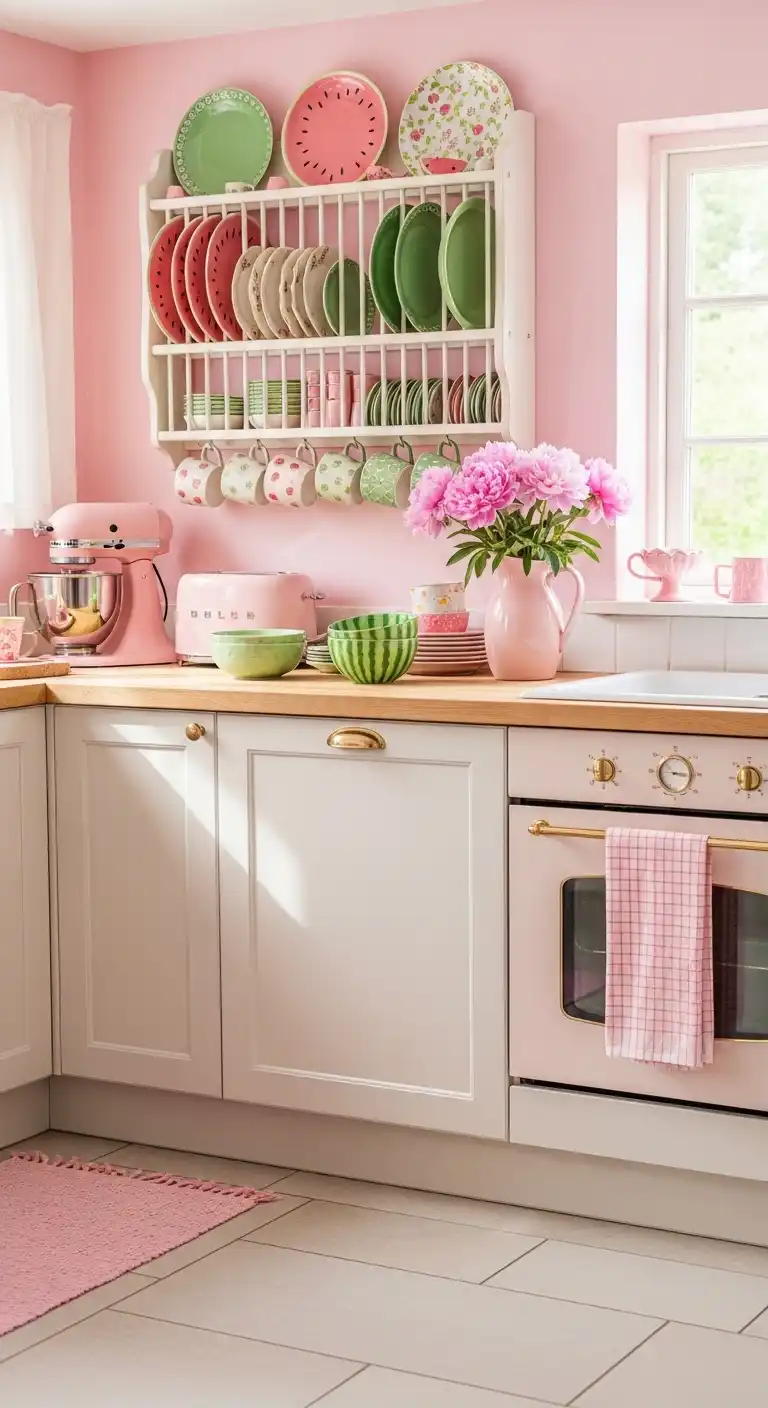
16 Pantry Alternatives for Apartment Kitchens With No Pantry

Rice bag in hand, you scan the room for a spot to put it. Pasta sits on the fridge. Cereal hides behind the toaster.
Nobody mentions that renting a small place often means losing the pantry first. An apartment kitchen with no pantry can still feel calm, though.
These sixteen kitchens show how. Each stores dry goods, small appliances, and daily gear in its own clever way.
Some lean on shelves, some roll a cart into a corner, and one borrows the side of a fridge. Mix and match freely. Scroll until you spot your layout, then steal what fits.
How to Replace a Pantry When Your Apartment Does Not Have One
Pantries do one job. They keep food in a spot you can always find. Rebuild that job with a few simple moves, and any rental kitchen can keep up.
- Sort first: Pull everything out and group items by how often you cook with them.
- Zone the room: Give breakfast, baking, snacks, and drinks each a small home.
- Go vertical: Walls, door backs, and the gap above the fridge cost no floor space.
- Decant staples: Clear jars show a low supply before you run out.
- Label everything: Tags stop you from buying a third bag of lentils.
1. A Metal Console With Labeled Baskets and Jars
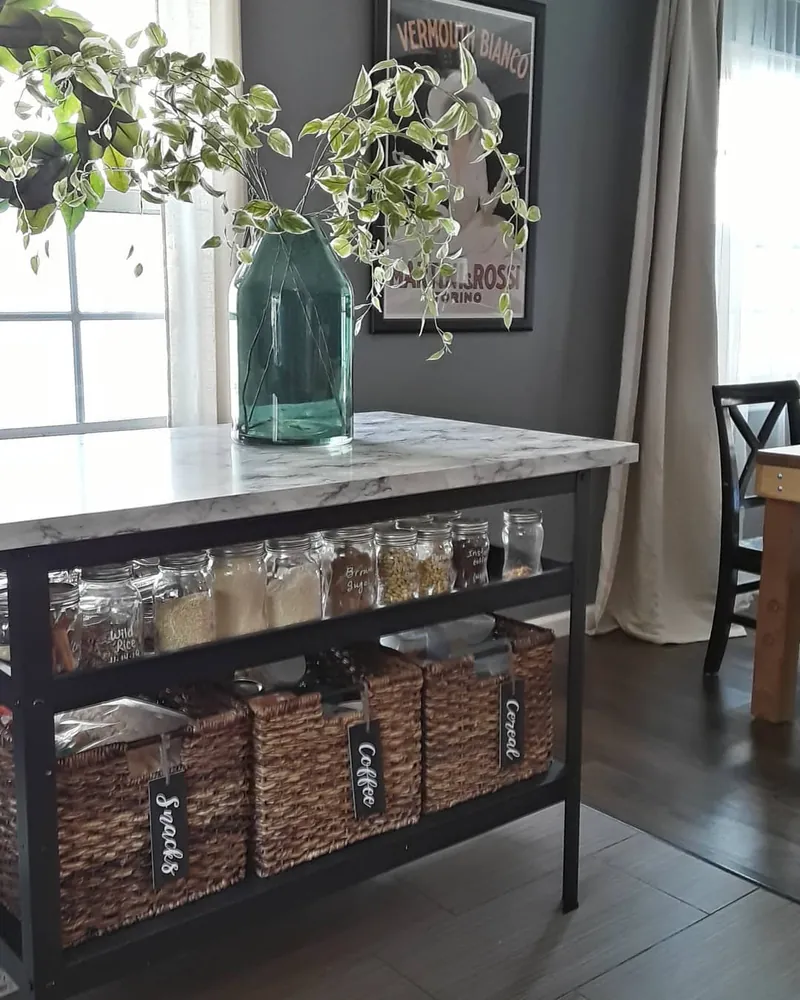
Copy the look:
- Top: Trailing vines in a tall green glass vase sit on a marble pattern slab.
- Middle shelf: Glass jars of wild rice, brown sugar, and grains stand in one row.
- Bottom shelf: Three woven baskets hold snacks, coffee, and cereal.
- Finishing touch: Chalkboard tags in black hang from the basket handles.
Without a pantry, a kitchen needs one spot for the weekly food, and this console fills that role. Eye level jars show what runs low before shopping day. Bulky bags vanish into the baskets underneath, which keeps the surface calm.
Label tip: Write each tag in chalk marker, so a basket can change jobs in seconds.
2. Wood Shelves That Wrap the Corner
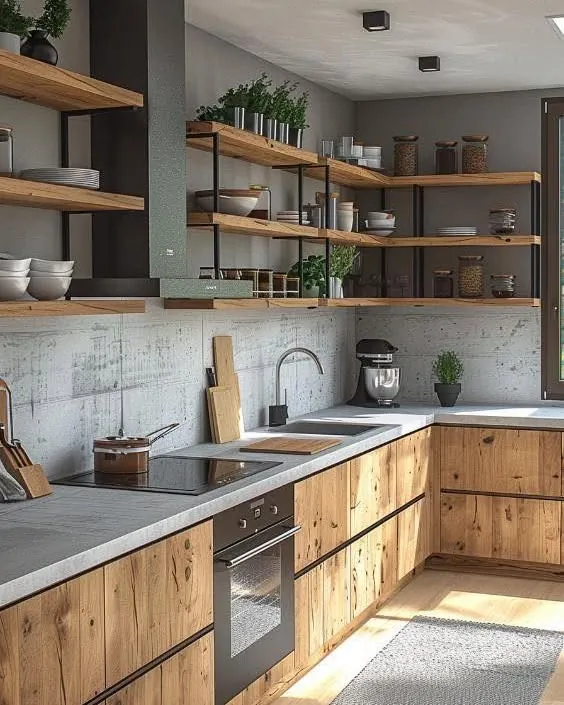
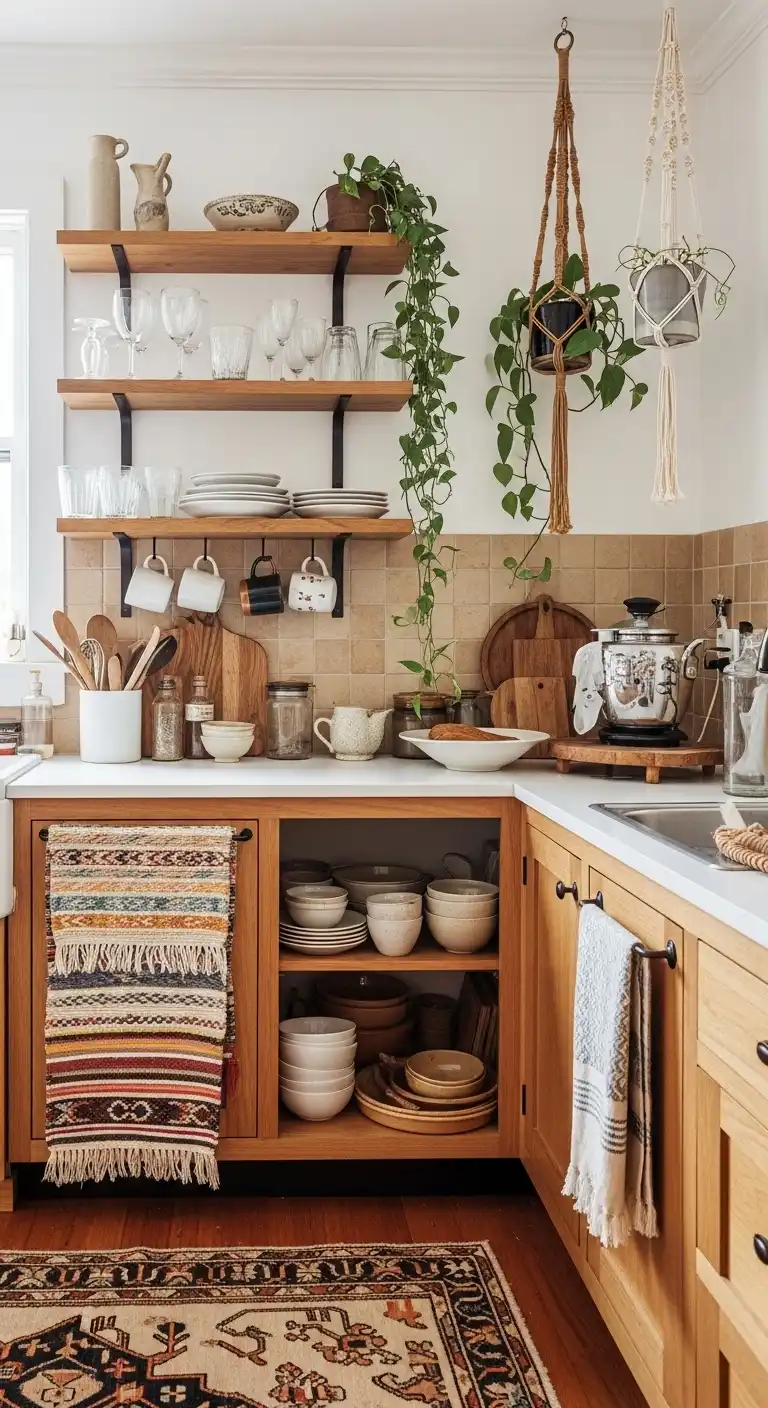
Raw oak shelves turn the corner of this kitchen and keep going. Metal brackets in black hold each level against a gray concrete look wall. Plates, bowls, and glass jars share the run without crowding.
Grains and beans in jars sit near the ends, where a hand lands first. Herb pots fill the upper tier and add a green edge. Levels stacked three high give one blank wall the job of a full pantry.
Corners usually waste space behind closed doors. Here, open shelving claims every inch of that dead zone. Anchor the brackets into studs for weight, or ask your landlord about a rail system that leaves few holes.
3. One Long Floating Shelf Above the Counter
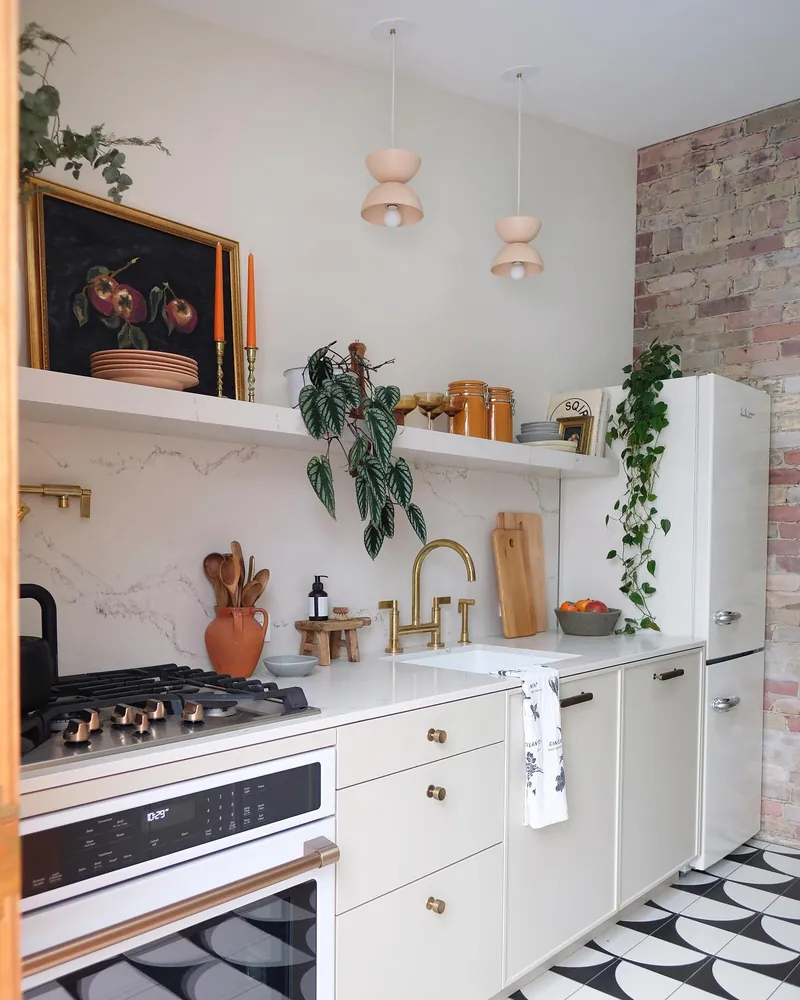
One slim white shelf runs over the counter and works as the pantry. Amber canisters with lids hold dry goods beside a stack of terracotta plates. Art and a trailing plant make the whole thing read as decor. In a pantry free kitchen, a single shelf like this can carry a week of staples.
Why it works:
- Matching canister color makes plain staples look chosen.
- Short items hug the wall, so the shelf stays light.
- Height above the counter keeps your cooking surface clear.
Budget swap: Gather thrifted jars in one shared shade to copy the amber set for less money.
4. Stepped Wood Shelves in a Galley Kitchen
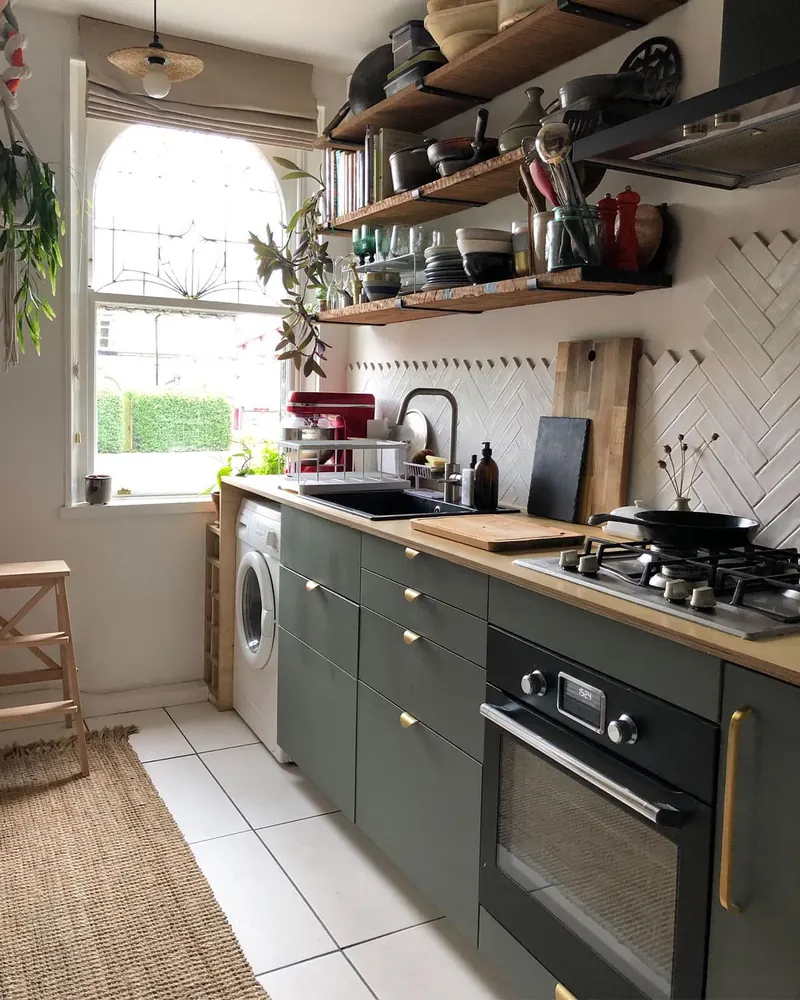
Storage formula: stepped shelves, cookware within reach, and a step stool for the top tier.
Wood shelves climb the wall above a narrow galley counter. Pans and lidded boxes ride on the top tier. Cookbooks and glasses fill the middle, while bowls and jars of tools sit lowest.
Herringbone tile behind the shelves keeps the wall looking calm. Near the window, a wooden step stool waits for the highest reach. Dark green cabinets below hide whatever the shelves cannot hold.
Weight note: Place the heaviest pans on the lowest shelf in your own setup, because the top tier here sits high.
5. A Single Shelf of Jars Above a Grid Backsplash
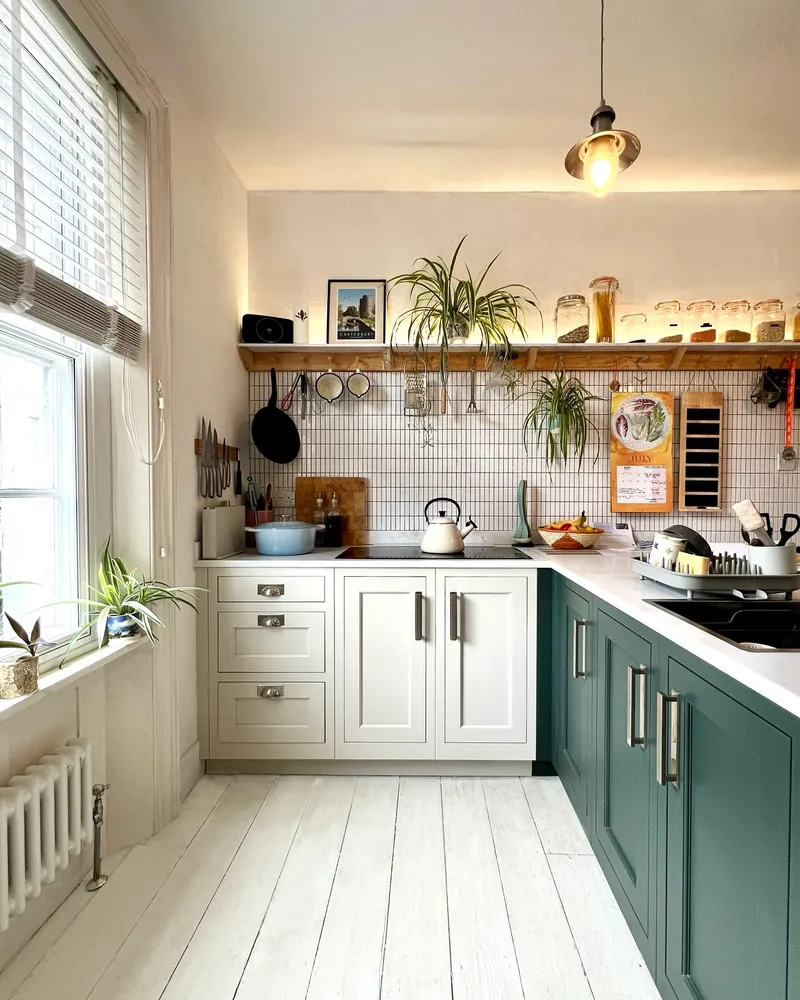
Best for: Renters with one clear stretch of wall above the counter.
Jars of pasta, grains, and beans line a single wood shelf. Pendant light overhead makes them glow at dusk. Spider plants spill over the shelf and soften the line. Plain staples start to look like decor.
Tile with black grid lines sits below and holds hooks. Little pots, pans, and tools hang across it. By the window, a magnetic strip keeps knives off the counter. Cream and green cabinets underneath hold what the shelf cannot.
Upgrade note: Swap mismatched jars for one jar style, and the row will look planned.
6. A Shelf Wall Beside a Small Dining Nook
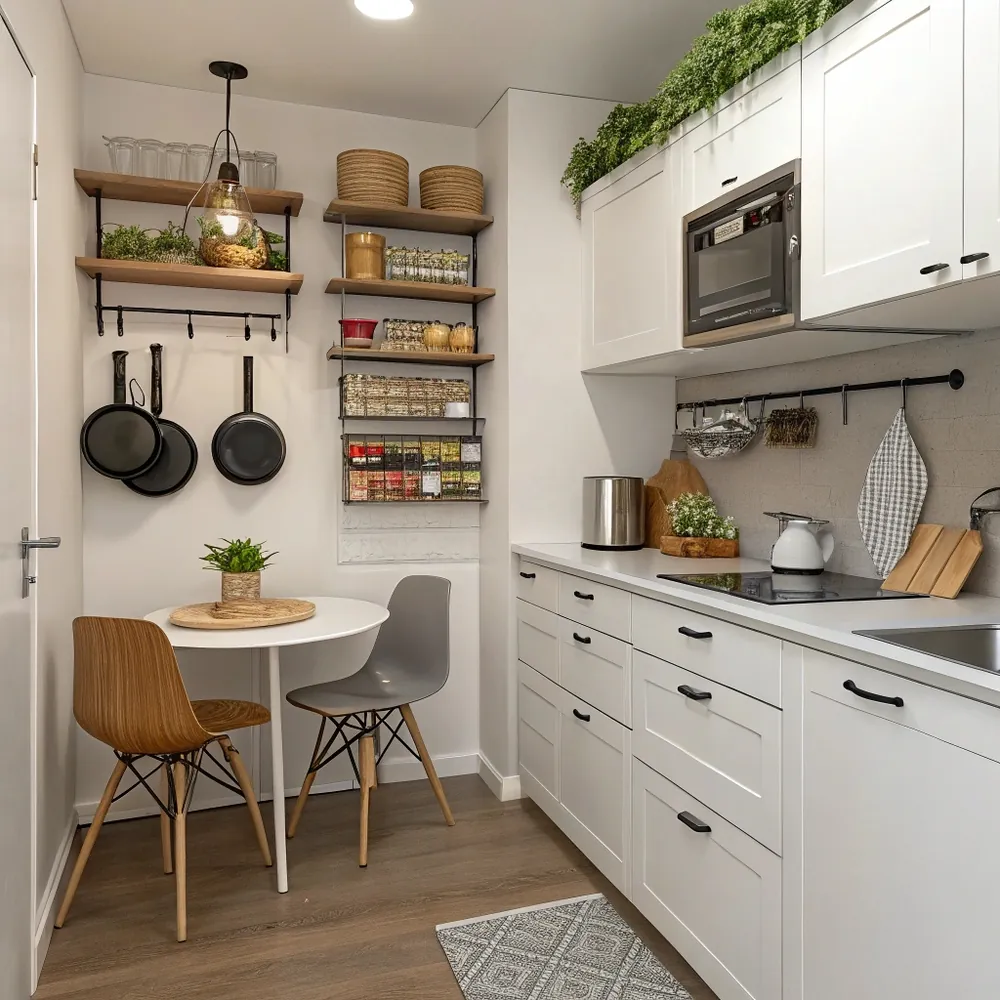
Rental life often means no pantry in the apartment, so this kitchen moved storage to the wall beside the table. Brackets in black hold three shelves of glasses, woven bowls, and jars. Below them, a wire rack carries rows of spice packets, and pans hang from hooks under the top shelf. Even small packets stay visible, so nothing gets lost behind a bigger box.
Reach note: Hold the spice rack at hand height, since you grab it most.
Hook idea: Hang pans from the bracket rail, which frees a cabinet for dry goods.
Light note: Overhead glow from the lamp keeps the shelves lit during late night cooking.
7. A Cube Shelf Under the Counter With Floral Bins
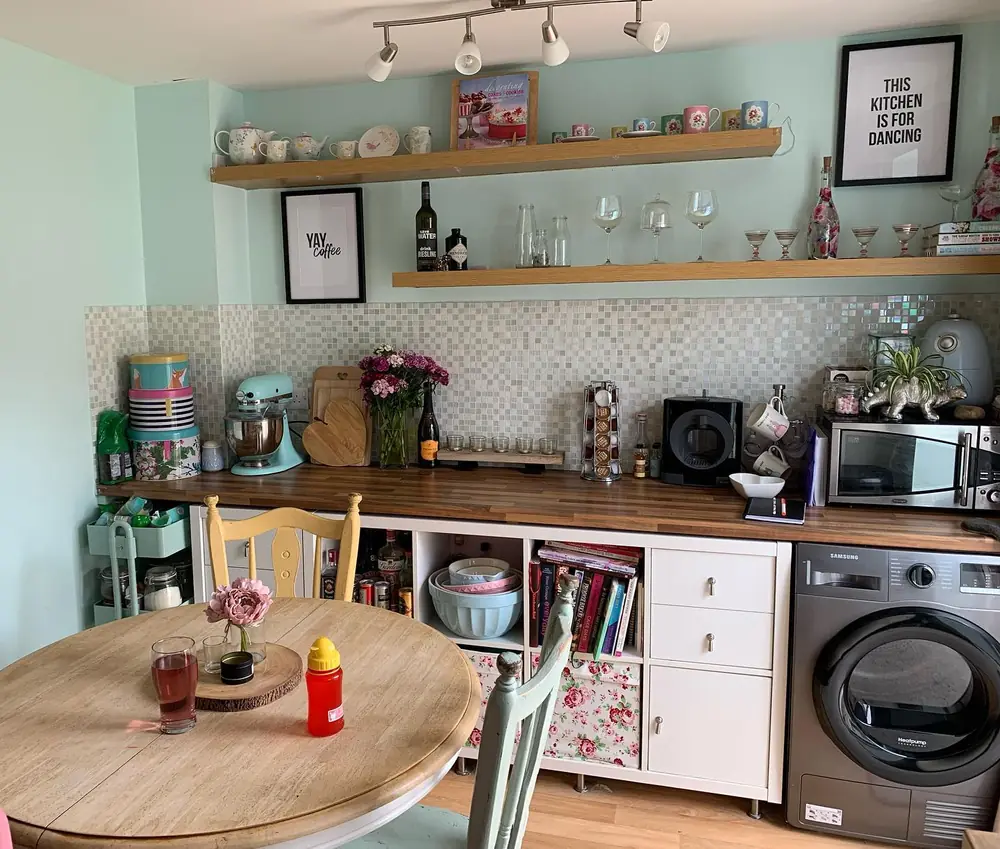
Copy this:
- Base: White cube shelving fills the space under a butcher block counter.
- Open cubes: Mixing bowls and cookbooks fill two of the openings.
- Closed cubes: Floral fabric fronts hide the rest.
- Add on: Rolling cart in teal parks at the end for jars and small tubs.
Apartment kitchens with no pantry often have empty floor space under the counter, and this setup uses it. Bowls stay easy to grab. Pretty fabric covers the items you would rather not see. Two white drawers above the bins suit tea towels and loose bags.
Fabric note: Choose washable cotton for the bin fronts, since crumbs and flour dust collect fast.
8. A Black Frame Wall Unit With Light Strips
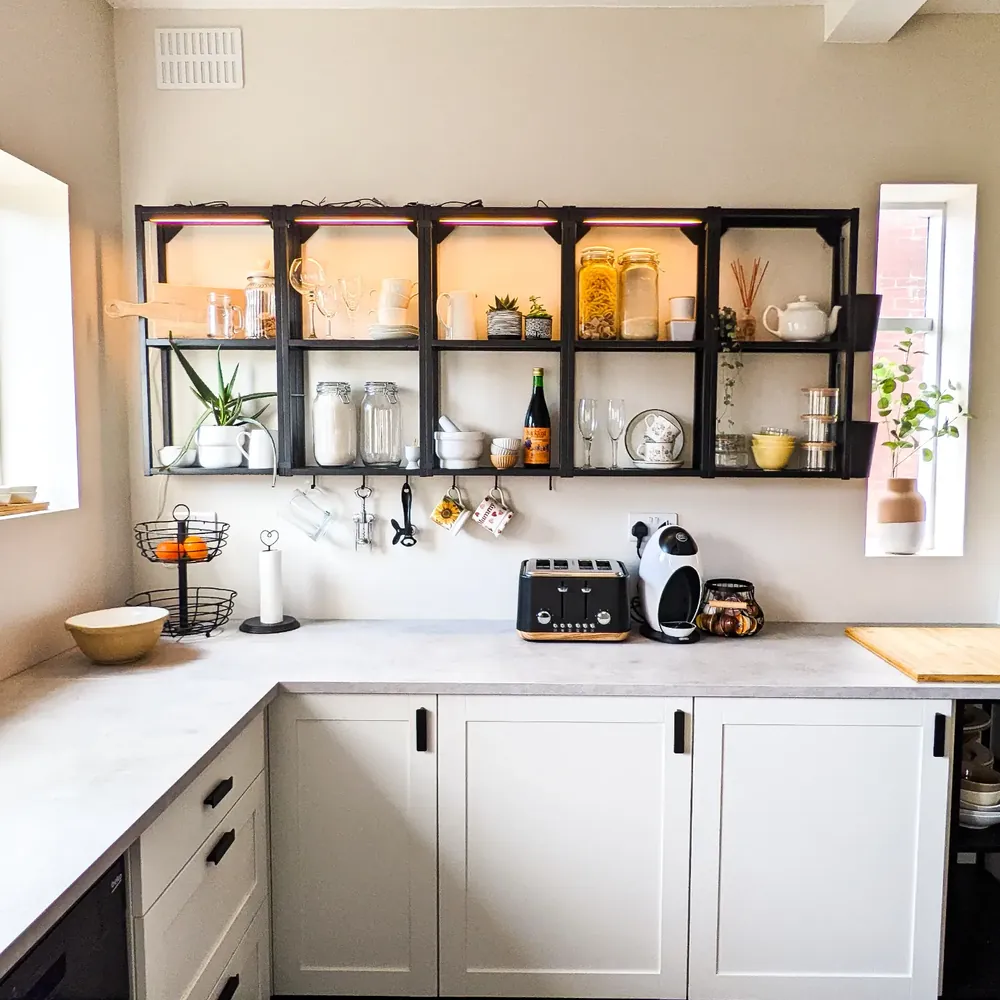
This black metal frame hangs on the wall and splits it into open boxes. Light strips glow along the top of each box. Flour and pasta in jars, plus glasses and a teapot, fill the cubbies, while hooks below hold mugs and tools. Kitchens that have no pantry gain a lot from a unit like this.
Why it looks expensive:
- Warm light on each box makes plain jars look like a shop display.
- Black lines match the black cabinet handles below.
- Gaps between items keep the grid from feeling heavy.
Cord note: Clip the light cable along the frame edge, so no wire hangs across the wall.
9. A Slim Open Tower Beside the Fridge
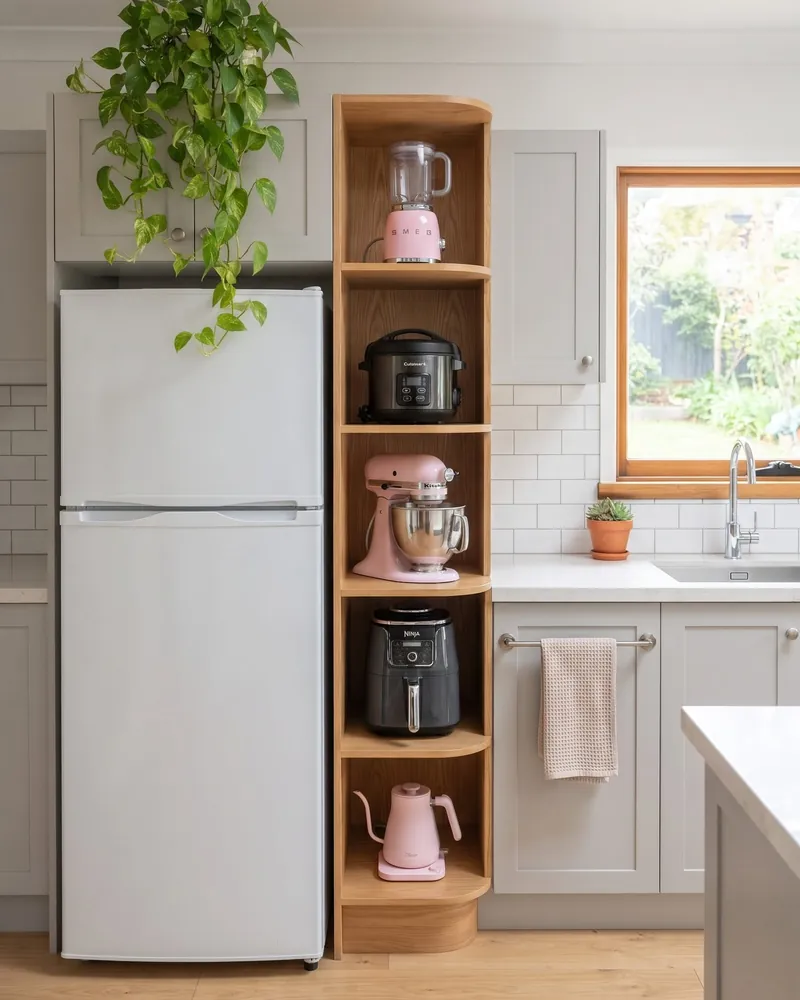
Tall and narrow, this oak tower fills the gap beside a white fridge. Its rounded edge softens the corner. Five open cubbies stack a blender, a multi cooker, a stand mixer, an air fryer, and a kettle.
Appliances stay off the counter, so prep space grows. Pink accents on the blender, mixer, and kettle give the stack a theme. Boxy dark gear sits between them and keeps the color from taking over.
Cabinets that once held bulky machines can now take dry goods. That trade turns a cupboard into pantry storage. Measure the space first, and leave a small gap above each appliance so steam can escape.
10. A Freestanding Wood Rack Beside a Rolling Cart
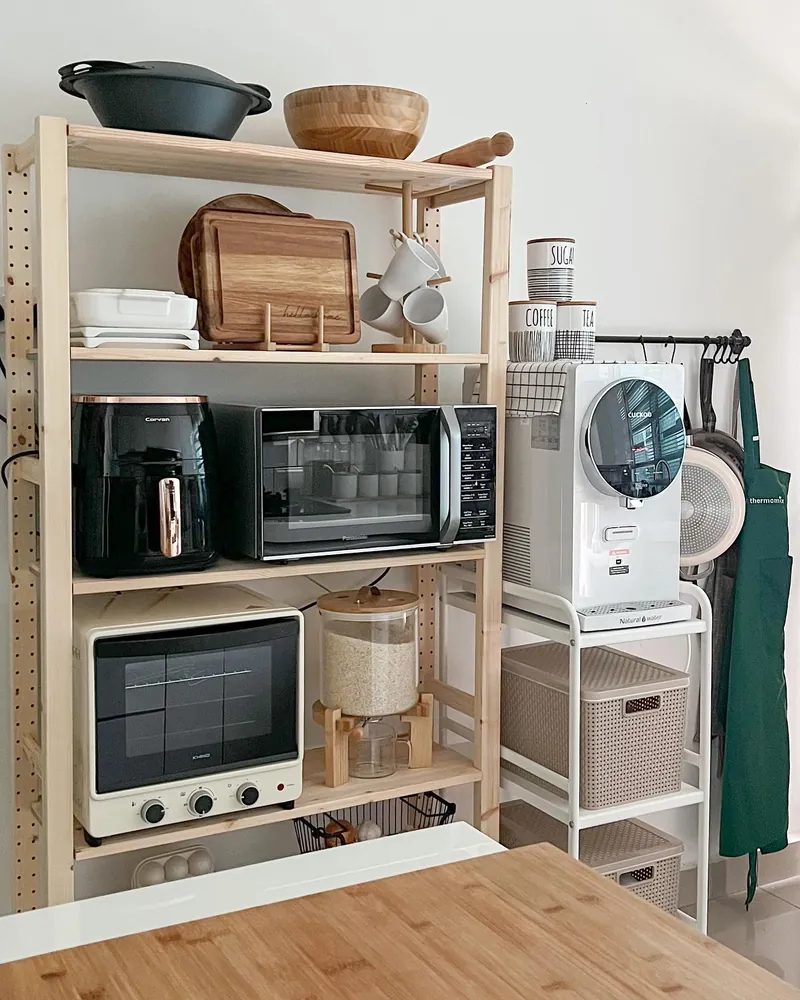
Best for: Homes with floor space but few cabinets.
Pine frames this rack, which holds an air fryer, a microwave, a toaster oven, and a glass rice dispenser on a wood stand. Cutting boards, white baking dishes, and a mug stand sit on the shelves above them.
Beside it stands a white rolling cart. Canisters marked Sugar, Coffee, and Tea sit high, and lidded beige baskets fill the lower shelves. Hanging from a rail on the wall are pans and a green apron. Eggs sit in a tray beside a wire basket on the lowest shelf.
Swap idea: Trade one appliance shelf for lidded bins if you own fewer gadgets.
11. A Slim Rack on the Side of the Fridge

Pantry formula: narrow rack, wood rail across each shelf, and a row of pegs on top.
Small kitchens that lack a pantry often waste the gap beside the fridge. Four shelves on this tall rack fill it. Oils and sauces sit near the top, then jars of grains and spices, then bagged goods and tins. Pegs hold two cutting boards.
Thin wood rails run across each shelf front and stop items from sliding forward. Framed art and a stack of books add a personal touch, so the rack reads as furniture.
Fit note: Check the gap first, then leave room for the fridge door to swing.
12. A Rolling Wood Cart With Two Drawers
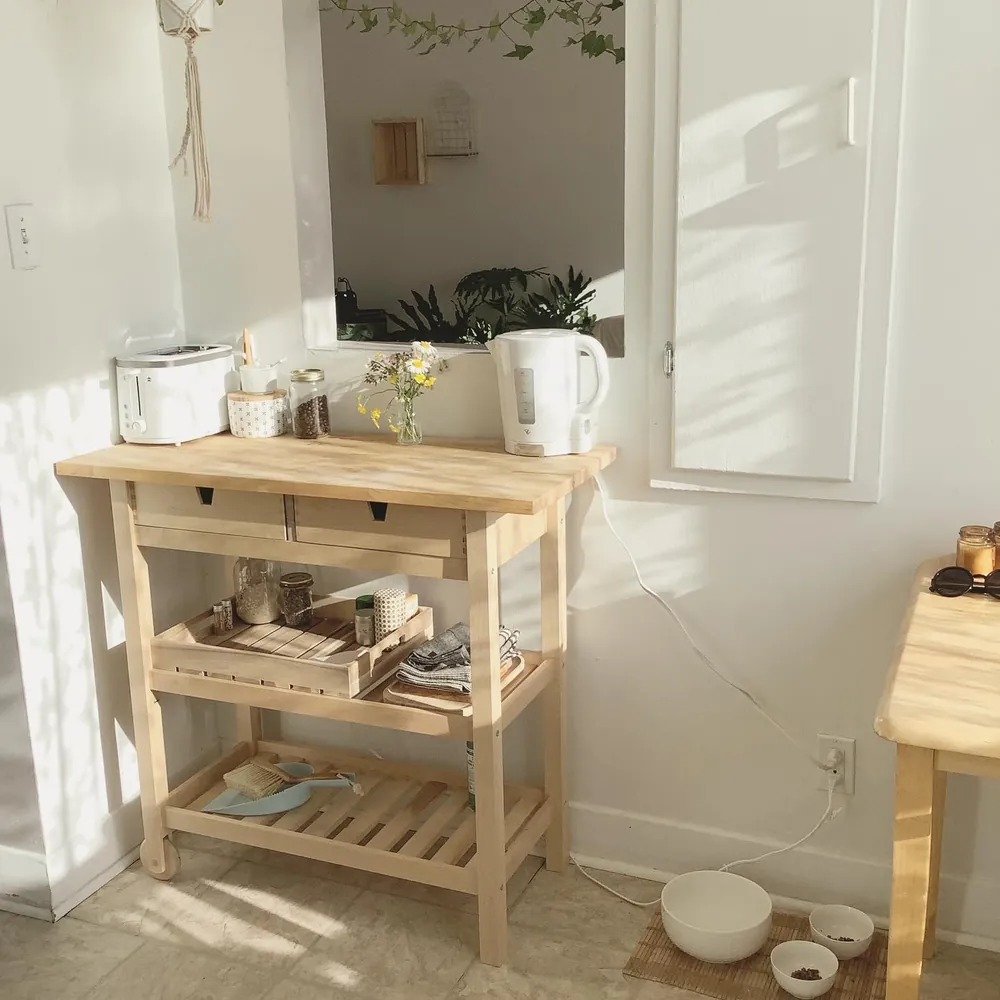
Sunshine falls across a wood cart with a butcher block top. Toaster, kettle, and a jar of coffee beans sit on top. On the middle shelf, a tray holds spice jars and folded towels, and a slatted lower shelf holds cleaning tools.
Drawer note: Both drawers look closed in the photo, so use them for tea bags, snack packets, and small tools.
Wheel note: Roll the cart aside on cooking nights to open more floor space, then park it back near the window.
Safety note: Kettle cords that run down a wall are easy to trip on, so clip yours flat.
13. A Hook Rail Under White Cabinets
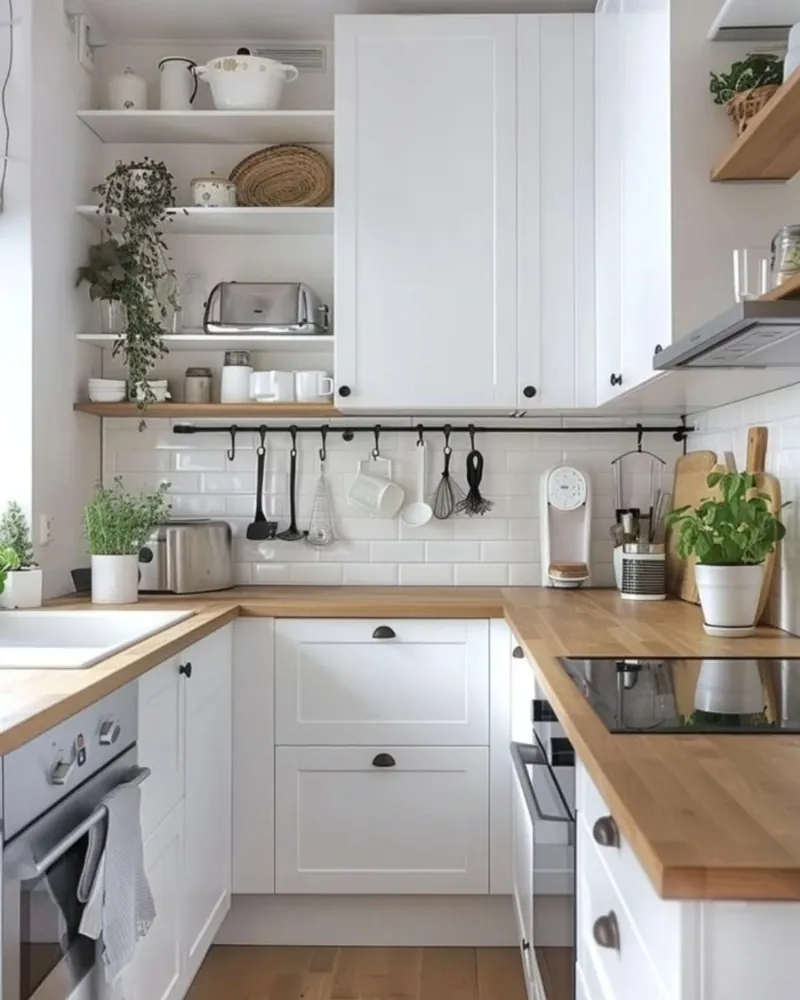
Copy the layout:
- Rail: Rod in black runs along the white subway tile backsplash.
- Hooks: Spatula, whisk, ladle, and mug hang from it.
- Open shelf: Stockpot, toaster, and woven tray sit on the left.
- Small extra: Pots of fresh herbs share the butcher block counter.
Daily tools leave the drawers and the counter, which opens room for dry goods in the cabinets below. Doors in white keep the wall quiet, so the warm wood counter stands out. Hooks cost little and hold more than you would guess.
Make it easier: Start with one rail and five hooks before you buy more.
14. A Vintage Wood Cabinet and Corner Shelf
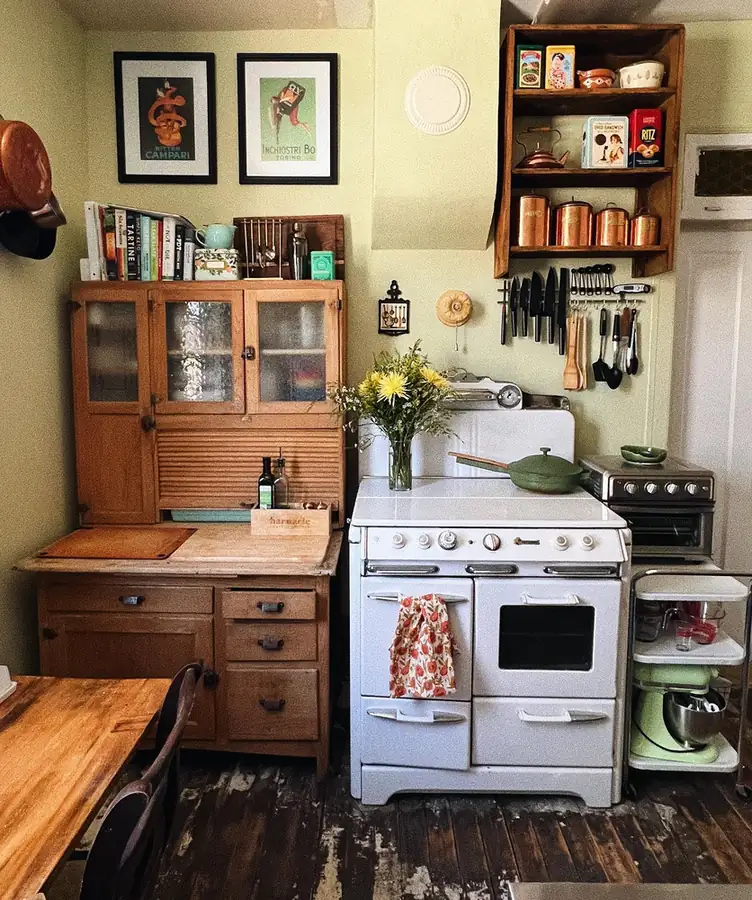
Aged wood makes this corner feel collected rather than cramped. Behind glass doors, an old cabinet with a slatted roll front stores dry goods. Flat work surface on the cabinet holds oil bottles and a small crate.
Above the stove, a small wood shelf carries copper canisters, tins, and boxes. Magnetic strip and a rail of hooks keep knives and spoons off the counter. Those two additions free the drawers for food.
Furniture like this fits even an apartment kitchen with no pantry. Hunt flea markets for a cabinet with its own work surface. Test the doors, then wipe the shelves before use.
15. Doorless Open Base Shelves Under the Counter
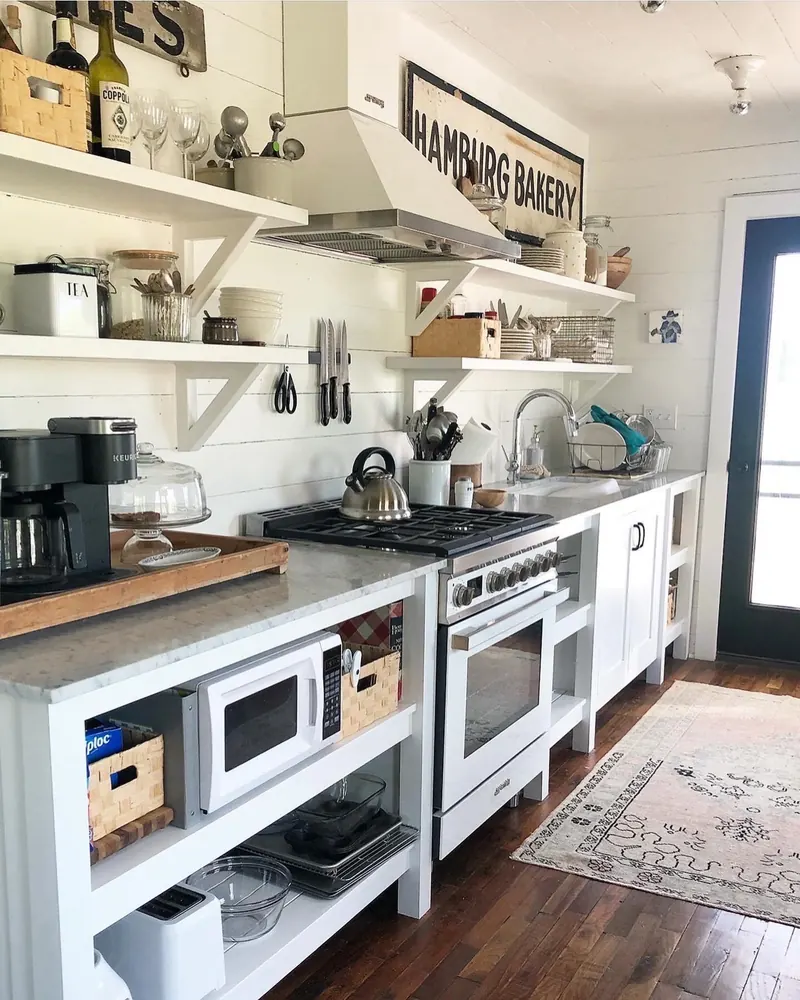
Frames in white replace base cabinet doors in this kitchen. Shelves under the marble counter hold a microwave, woven baskets, glass bowls, and baking sheets. Up top, wood shelves carry jars, tea tins, and bowls. Coffee gear owns the counter, while a toaster waits on the lowest shelf.
Why it feels roomy:
- Open fronts show everything at once, so nothing gets lost in the back.
- Baskets corral loose items like wrap boxes and packets.
- Pale paint makes the lower run feel airy.
What to avoid: Skip open fronts near the range, because grease settles on whatever sits there. Wipe the fronts weekly if you go open.
16. Colorful Jars on Wood Shelves Above Stacked Plates

Setup formula: colored lids, bright plates, and thick wood to hold them all.
A rental with no pantry can still feel cheerful. Orange, yellow, teal, and pink lids top the glass jars in the lower row. Sun from the doorway lights their contents, and woven baskets frame the shelves above.
Beneath, stacks of red, yellow, teal, and green plates rest on a thick wood counter. Same colors repeat in the lids, so the kitchen feels planned. Keep jar labels small so the color stays the star.
Seasonal swap: Switch bright lids for darker ones in fall to shift the mood.