How to Keep Cooking Smells Out of Your Bed and Clothes in a Studio Apartment

You own one good navy blazer. You hang it on the closet rod, fry garlic for dinner, and the next morning a coworker asks if you had Italian for breakfast. That is studio life.
The stove is only a few feet from your bed, and there is no door to close. This guide shows you how to keep cooking smells out of a studio apartment, so dinner stays in the kitchen and off your clothes, sheets, and pillows.
Smell travels in steam and grease. It floats through the air and sticks to soft things like wool, cotton, and bedding. So you will do three jobs: cover the fabric, push the air out, and clean the grease before it settles.
You do not have to quit cooking. The extra work takes about 15 minutes per meal, plus a 30 minute wait while you relax. This is a beginner job, and most of what you need is already in your home. Pick a meal, set up the room, and try it tonight.
- 2 to 3 cotton garment bags (or old cotton bedsheets)
- 1 spare flat sheet or light throw blanket
- 1 box fan or desk fan
- Pot and pan lids that fit
- A range hood with a clean filter (or an open window)
- Dish soap and a sponge
- 1 small box of baking soda
- White vinegar
- Hangers, plus a hook or door for hanging
- Phone timer
- Blazer smells like last night’s garlic
- Pillow smells like fried food
- Smell hangs around for days
- Clothes stay fresh inside their bags
- Bed stays covered and clean
- Air clears in about 30 minutes
Pick meals that keep cooking smells out of a studio apartment

Fish, bacon, curry, and fried onions make the loudest smells. Boiled rice, baked chicken, and salad barely make any.
Check the chart before you shop, and match tonight’s dinner to the row that fits your space. Save the loud meals for a day when you can open two windows, or plan to leave the apartment for 1 to 2 hours afterward.
Use this chart to match your meal to your space:
| Cooking method | Smell level | Smarter move |
|---|---|---|
| Boiling rice, pasta, or eggs | Low | Cook as usual with a lid on |
| Microwave meals | Low | Use a covered dish to stop splatter |
| Baking chicken or vegetables | Low to medium | Cover the dish with foil for the first 20 minutes |
| Stir-frying with garlic or onion | Medium to high | Lid on between stirs, window open |
| Pan-frying bacon, burgers, or fish | High | Cook on a weekend with 2 windows open |
| Deep frying | Very high | Use an air fryer instead, with the window open |
Zip your suits and coats into cotton garment bags

If your jackets hang on an open rack, wool grabs smell fast. Wool and cotton are soft and full of tiny gaps, so they soak up smell like a sponge soaks up water.
Slide each blazer, coat, or suit into a breathable cotton garment bag and zip it all the way. No bags? Drape an old cotton bedsheet over the rack and tuck it behind the hangers.
Cover your bed with a spare flat sheet
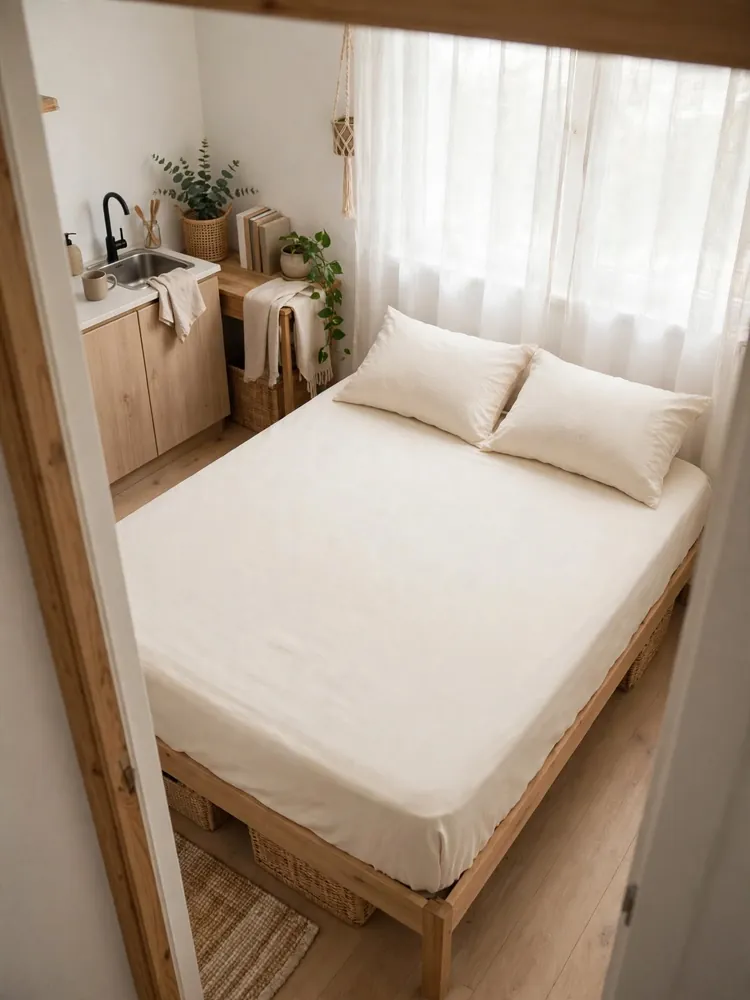
Beds hold smell for days. Toss a clean flat sheet or light throw over the whole bed, pillows included, before you start cooking.
Tuck the edges under the mattress so nothing sneaks in. When dinner is over, pull it off and your real sheets stay fresh.
Open a window before you turn on the stove

Where is the smell supposed to go? Out. Give it an exit before you light a burner:
- Unlock the window closest to the stove.
- Slide it open 3 to 4 inches.
- Pull the curtains back, because fabric holds smell too.
- Open a second window across the room if you have one. This makes a cross breeze that pulls air through.
Point a box fan out the window
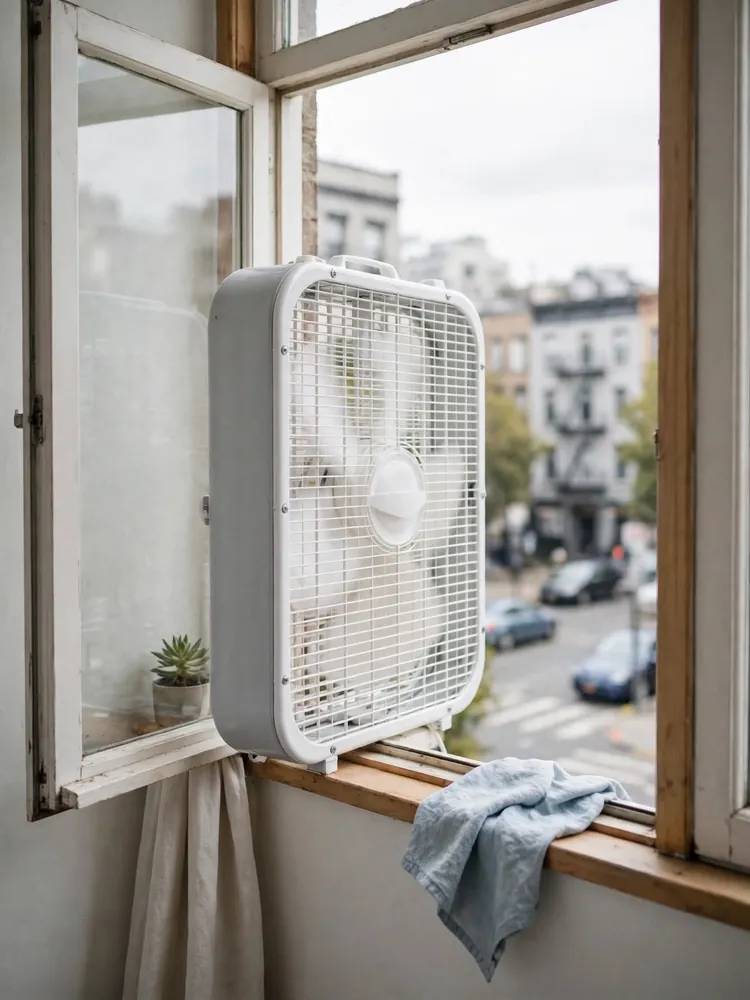
Open windows alone let smell drift out slowly. Set a box fan in the window with the airflow facing outside, so it pushes the air out.
Run it on low or medium. No box fan? A small desk fan on the sill works, and so does a floor fan aimed at the window.
Switch on the range hood before the pan heats up

Grease rides up in steam, and a hood catches it before it reaches your bed. Press the button at least 1 minute before you start cooking, and use the highest speed you can stand.
Check the metal mesh filter once a month. A filter coated in old grease stops catching new grease. Some studio hoods have no outside vent and only recirculate the air.
They help a little, so keep the fan and window running too. No hood at all? Skip this step. The window and fan will do the work.
Put a lid on the pan
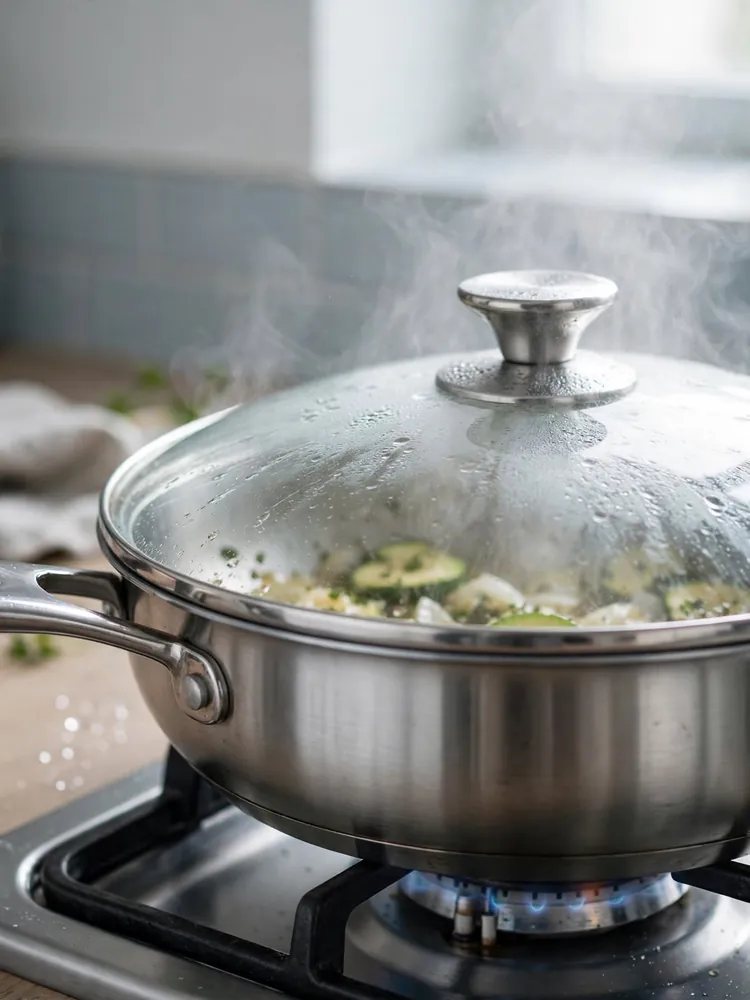
Every pop of oil sends smell into the room. Cover any pan that holds oil, onion, or garlic, and lift the lid only to stir.
Keep the heat at medium, not high, because burnt oil smells the worst. If you do not own a lid that fits, a flat baking sheet or a splatter screen works.
Wash the greasy pan while it is still warm
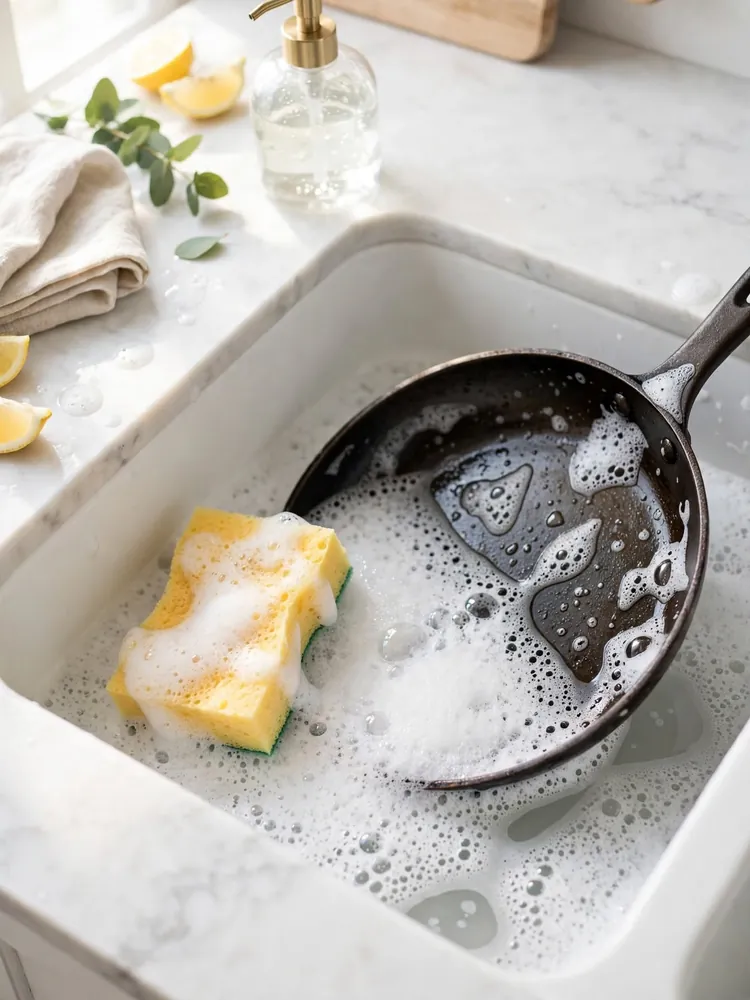
Cold grease turns sticky, and a sticky pan keeps smelling until morning. Fill the pan with hot water and a squirt of dish soap, then scrub, rinse, and dry. Can’t wash it right now? Cover it with soapy water and put a lid on top.
Keep the fan and hood running for 30 minutes

The stove is off, but the air still holds smell. Set a phone timer for 30 minutes and leave the fan and hood on. Eat dinner, watch a show, or fold laundry in the far corner while you wait.
Keep the window open for the whole time. Most of the smell leaves during this wait, and closing the window early traps what is left.
Peel the cover off your bed after the timer rings

Pull the cover sheet off by the corners and fold the smelly side inward. Toss it in the hamper.
Leave your garment bags zipped until the room smells normal, then unzip them. Still smell dinner? Give the room another 15 minutes with the fan on.
Hang the shirt you cooked in by the window for 20 minutes

The shirt on your back caught smell too. Take it off, put it on a hanger, and hang it near the open window.
Never toss it on the bed or on a pile of clean clothes, because it passes the smell along. Use the chart to see how long each fabric needs.
Use this chart to time the air-out:
| Item | How it holds smell | Air-out time |
|---|---|---|
| Cotton shirts | Medium, washes out well | 20 minutes, then wash |
| Polyester and blends | Low to medium, clings to oils | 30 minutes, then wash soon |
| Denim jackets | Medium | 1 hour |
| Wool coats and blazers | High, soft fibers trap smell | 1 hour, plus steam |
| Leather jackets and sneakers | Medium, sits on the surface | 30 minutes, then wipe with a damp cloth |
Conclusion
You did it. Your blazer, your bed, and your air stay fresh, even with the stove a few feet away.
Now you know how to keep cooking smells out of a studio apartment, one meal at a time.
Next, hang your wool coats by the window once a month, even if they smell fine.
Save this pin so it is ready the next time you cook.
Frequently Asked Questions