Art Deco Kitchen Cabinets: 29 Glamorous Ideas

Want to make your kitchen truly unforgettable? Art Deco cabinets can turn a simple cooking space into a statement of style and luxury. Explore these curated ideas to bring a touch of 1920s-inspired charm into your modern kitchen.
When I first laid eyes on Art Deco kitchen cabinets, I was instantly captivated by their bold lines and geometric patterns. My old kitchen felt dull in comparison—plain cabinets, muted colors, nothing that made me stop and admire.
Updating to Art Deco was more than a design choice; it felt like giving my kitchen a personality. Sleek handles, glossy finishes, and a hint of metallic shimmer transformed a once ordinary space into one that felt glamorous and inviting.
Even small touches, like a curved corner cabinet or mirrored accents, added a level of elegance I didn’t expect.
Over time, I realized that Art Deco isn’t just about looks—it’s about confidence in design and bringing a little drama to everyday life.
History and Characteristics of Art Deco Cabinets
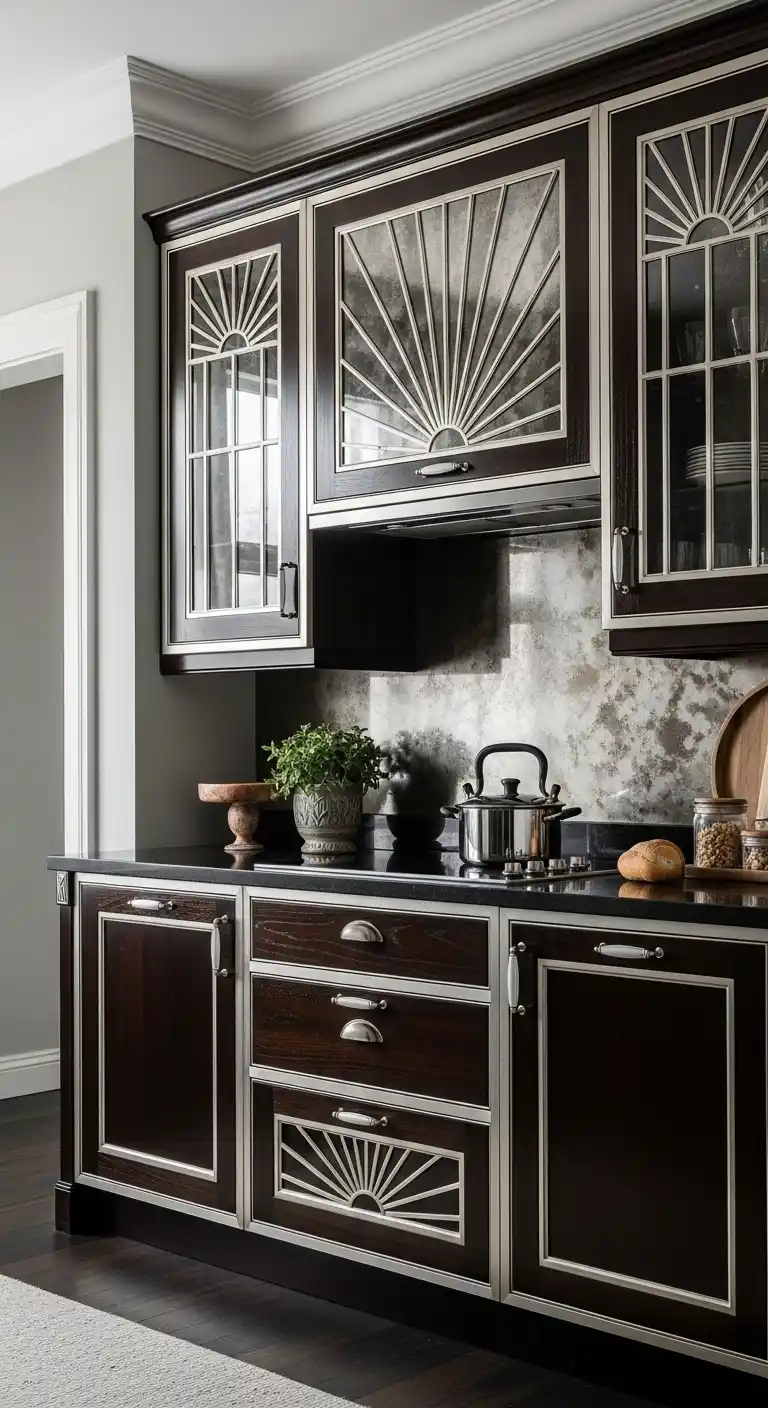
Art Deco design emerged in the 1920s and 1930s, emphasizing glamour, symmetry, and bold geometric patterns that reflected the modernist movement of the time.
In kitchen cabinetry, these features manifest as sharp lines, sunburst motifs, lacquered finishes, and metal hardware, creating both visual impact and functional storage solutions.
Designers often used exotic woods, mirrored panels, and high-gloss surfaces to enhance the luxurious feel of the cabinets while maintaining usability in everyday kitchen activities.
Art Deco kitchen cabinets continue to inspire modern homeowners because their combination of style and practicality brings a sense of sophistication to kitchens without sacrificing efficiency.
When choosing these cabinets, understanding their historical roots helps balance authentic design features with contemporary trends, ensuring a harmonious and timeless kitchen aesthetic.
Choosing the Right Art Deco Kitchen Cabinets for Your Home
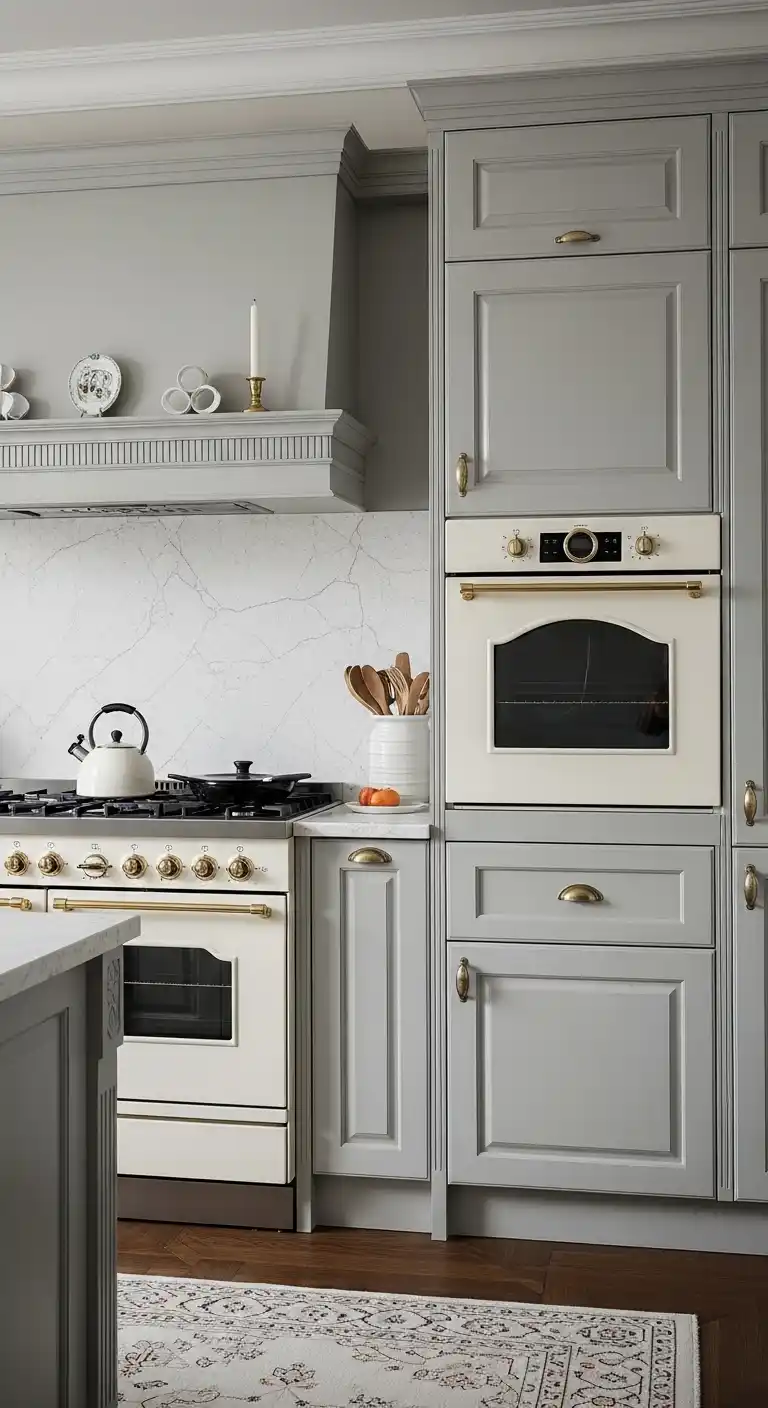
Selecting the ideal Art Deco kitchen cabinets requires consideration of space, layout, and personal style to create a balanced kitchen environment.
Homeowners should evaluate the size of their kitchens, existing color palettes, and the types of appliances they plan to integrate while ensuring design consistency.
Matching vintage-inspired cabinetry with modern appliances can be challenging, but choosing built-in or color-matched units helps maintain a cohesive aesthetic without compromising functionality.
Additionally, cabinet finishes, materials, and hardware should complement the kitchen’s overall design, balancing bold geometric patterns with subtle elements to prevent visual clutter.
By thoughtfully planning cabinet placement, colors, and textures, homeowners can enjoy a kitchen that feels both luxurious and practical while embracing the timeless appeal of Art Deco style.
29 Art Deco Kitchen Cabinets Ideas
1. Chevron Pattern Cabinets
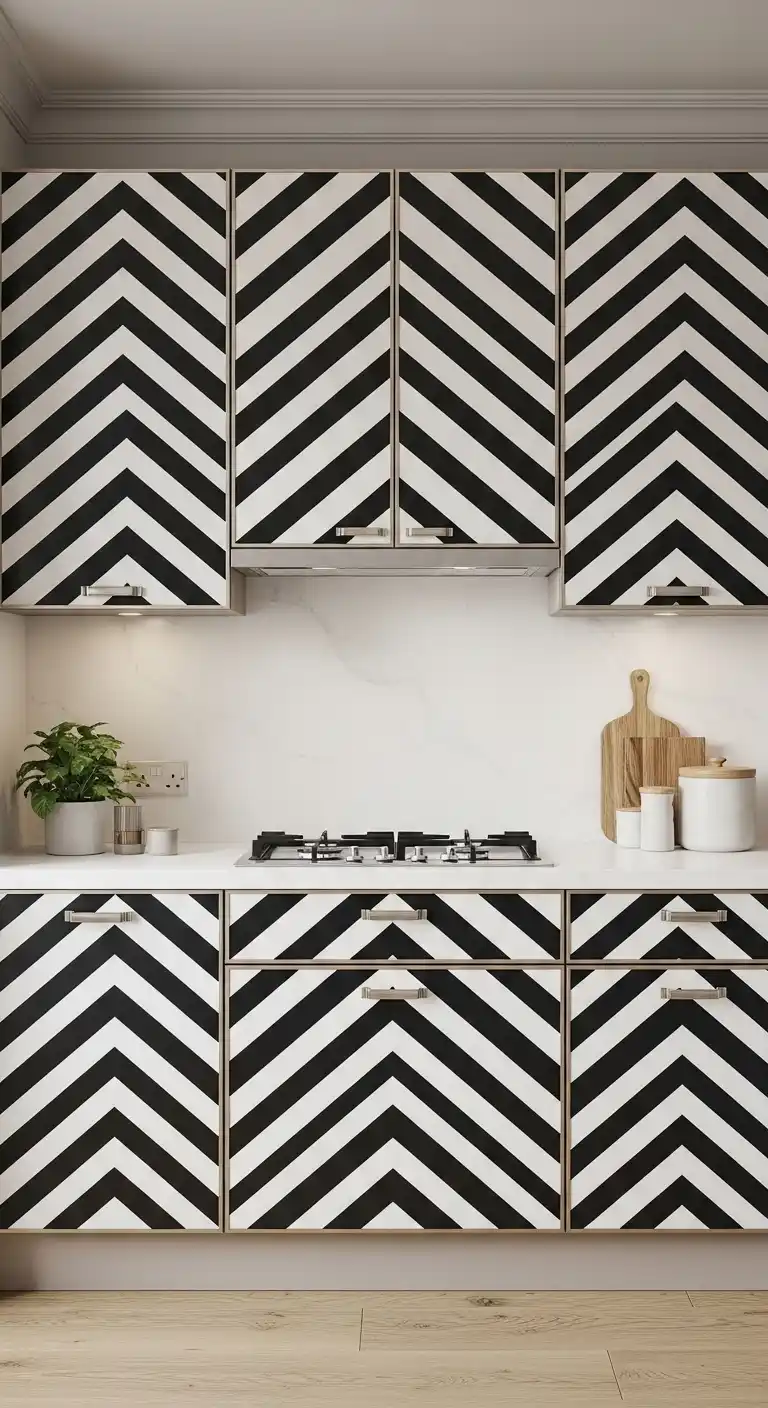
Chevron patterns are one of the most striking elements in Art Deco kitchen cabinets, providing a sense of motion and rhythm.
Cabinet fronts featuring alternating chevron stripes immediately draw the eye, creating an engaging visual focal point that enlivens the kitchen space.
These patterns work especially well in high-gloss finishes or with subtle metallic accents, which emphasize the bold geometry while reflecting light to make the kitchen feel brighter.
Chevron designs can be applied to upper or lower cabinets, or even on kitchen islands, offering a versatile way to introduce geometric artistry.
In addition to aesthetics, the pattern helps break the monotony of plain cabinetry, making the kitchen feel more dynamic without overwhelming the overall design.
Homeowners can balance the boldness of chevron patterns by pairing them with neutral countertops, flooring, or backsplash materials, ensuring that the space feels luxurious yet harmonious.
Overall, chevron pattern cabinets bring classic Art Deco energy to kitchens, combining sophistication with visually stimulating design.
2. Sunburst Door Inlays
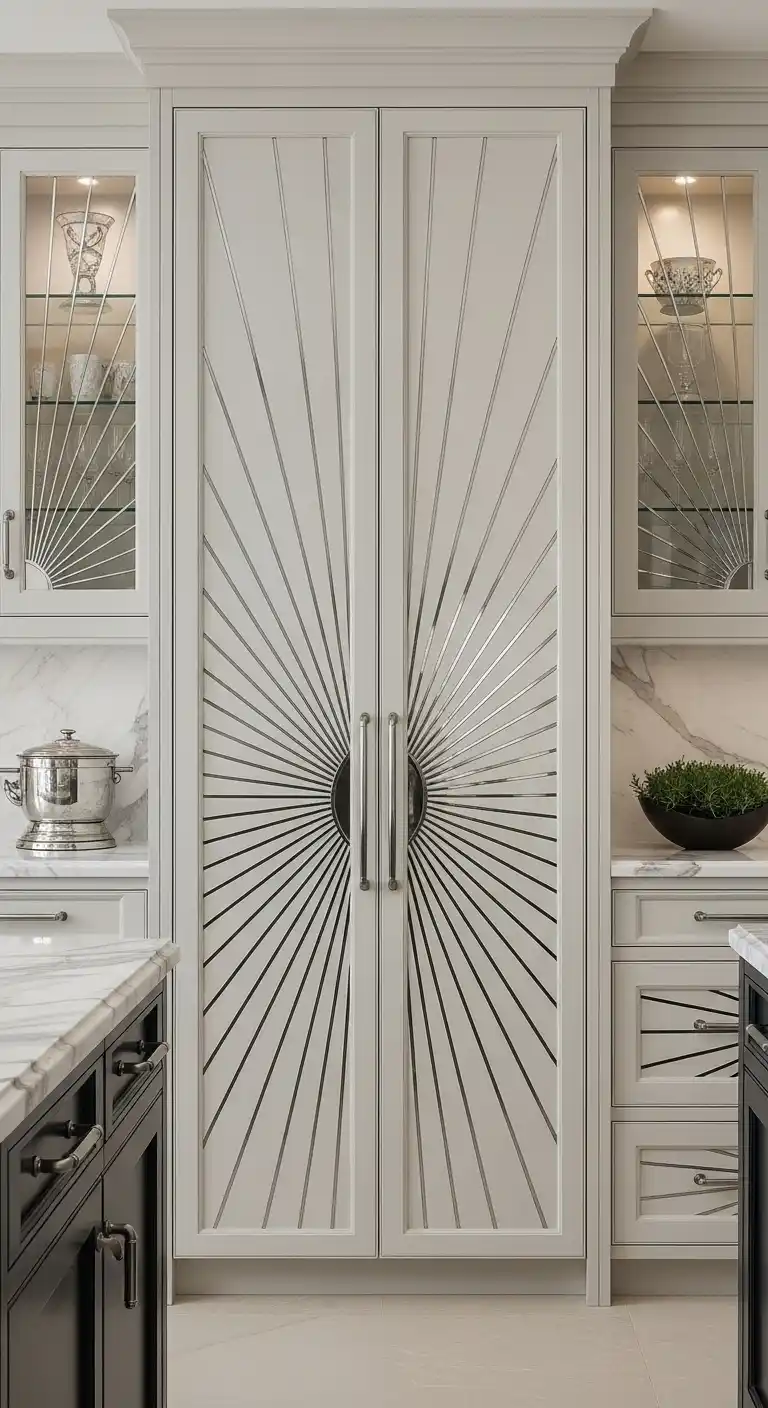
Sunburst motifs are a quintessential Art Deco design element that adds elegance and drama to kitchen cabinets.
These inlays, often crafted from wood, metal, or lacquer, create a radiant effect reminiscent of 1920s glamour, instantly elevating a kitchen’s aesthetic.
Sunburst designs work beautifully on cabinet doors, drawer fronts, or even on island panels, providing a subtle yet striking focal point.
The combination of reflective surfaces and geometric rays enhances visual depth, making cabinets appear more intricate and sophisticated.
Pairing sunburst inlays with complementary materials such as high-gloss finishes, metallic hardware, or marble countertops reinforces the luxurious feel while maintaining modern practicality.
These designs allow homeowners to express individuality without compromising storage or functionality, blending artistry and utility seamlessly.
Sunburst cabinet doors capture the essence of Art Deco, turning everyday storage into a design statement that enhances both elegance and personality in the kitchen.
3. High-Gloss Lacquered Cabinets
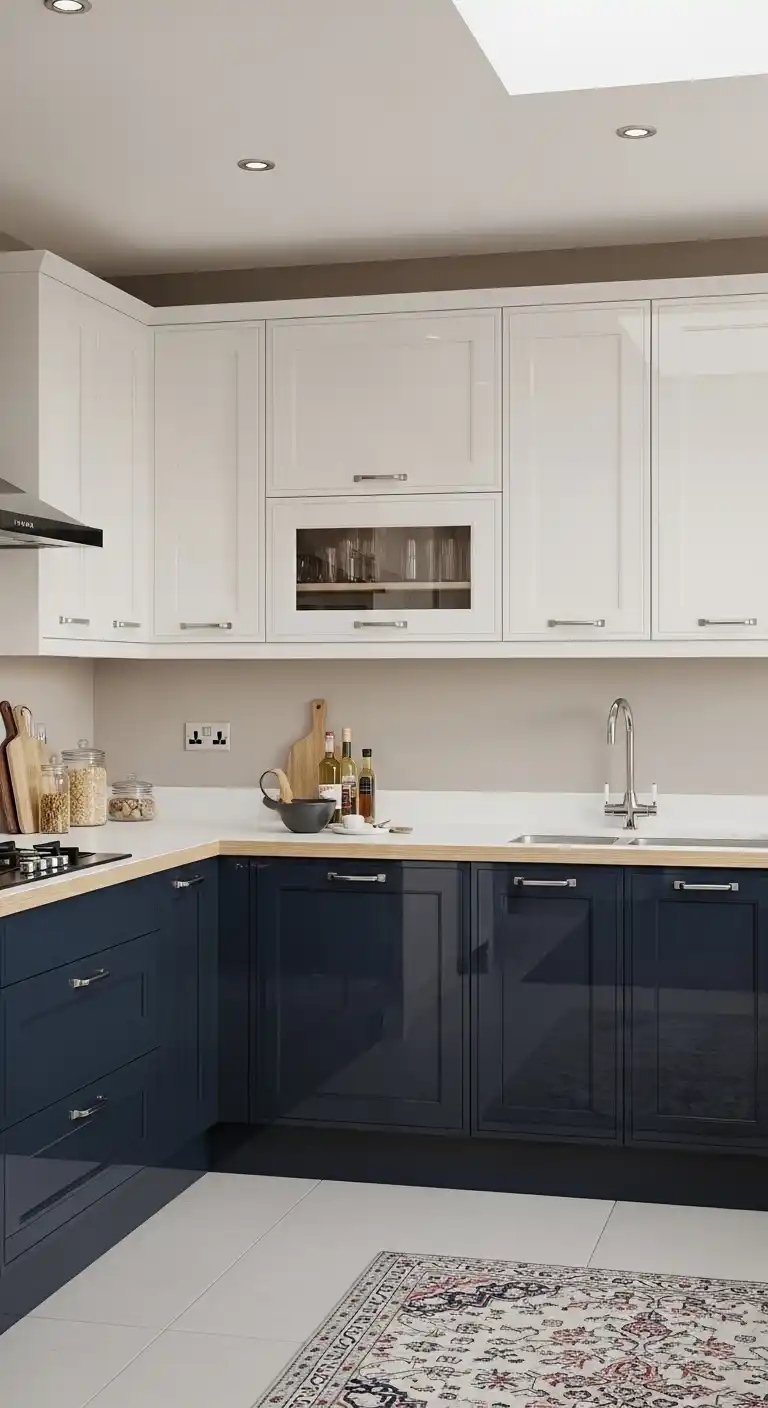
High-gloss lacquered cabinets are a defining feature of modern Art Deco kitchens, combining reflective beauty with durability.
Glossy surfaces amplify light, making kitchens appear larger and brighter while drawing attention to bold colors, geometric patterns, and metallic accents.
These cabinets work well in jewel tones like emerald, navy, or ruby, but neutral shades such as white or beige also achieve a sleek, timeless appeal.
Gloss finishes are practical for daily kitchen use since they are easy to clean, resist moisture, and maintain their polished look over time.
Pairing high-gloss cabinets with matte countertops, natural wood accents, or metallic hardware creates balance and prevents the design from feeling overwhelming.
Homeowners can use lacquered finishes on both upper and lower cabinets, or focus them on islands to create a dramatic, high-impact centerpiece.
The combination of sheen, bold colors, and structured geometry ensures these cabinets reflect both the glamour and functionality associated with Art Deco kitchens.
4. Metallic Hardware Accents
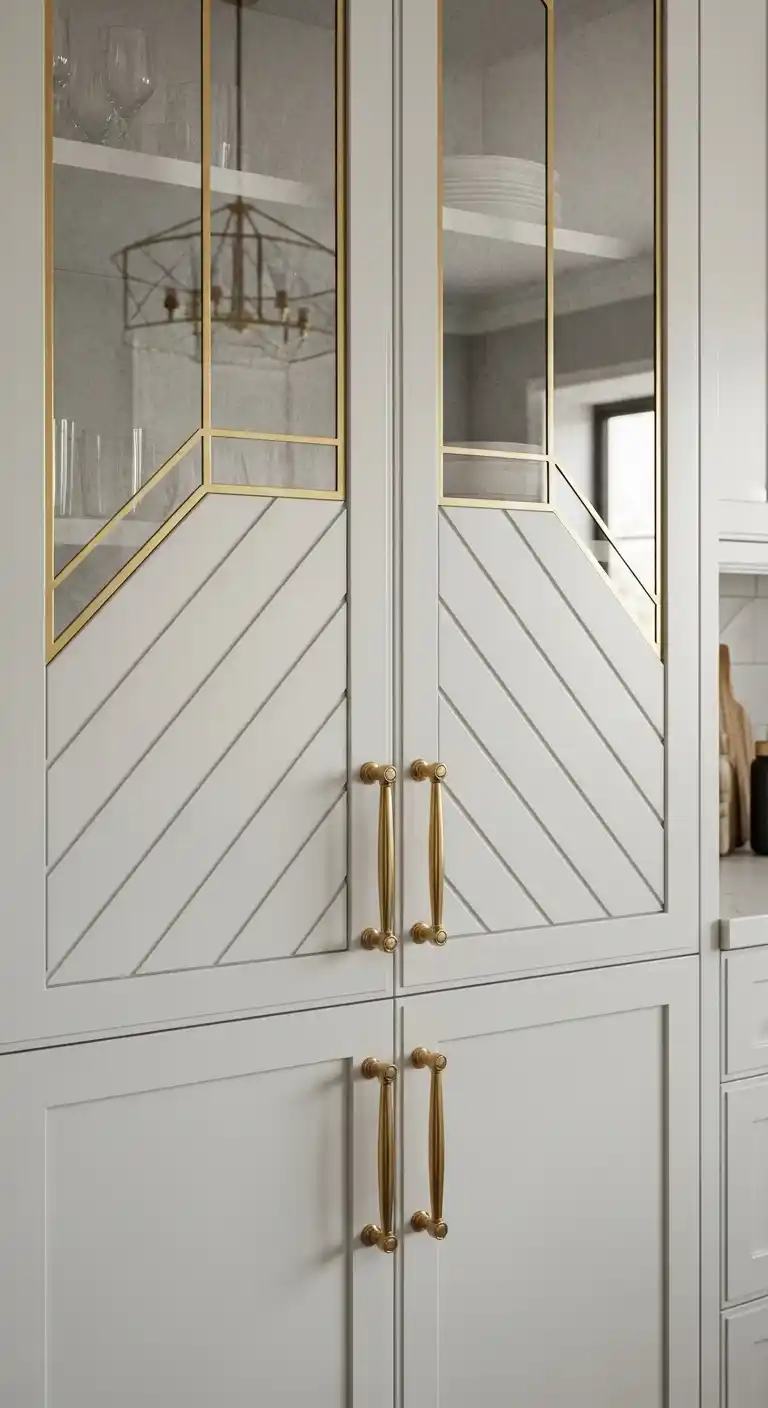
Metallic hardware is a simple yet highly effective way to infuse Art Deco glamour into kitchen cabinets.
Handles, knobs, and pulls in polished brass, chrome, or gold elevate cabinet designs, highlighting geometric patterns and decorative details.
Even minimalist or neutral cabinets gain a luxurious feel when paired with striking metallic hardware, reinforcing the visual richness of the space.
Hardware can be used to accentuate chevron patterns, fluted panels, or mirrored insets, creating cohesion between different cabinet design elements.
Homeowners should consider the finish carefully to ensure harmony with lighting, appliances, and other metallic elements in the kitchen.
Beyond aesthetics, high-quality hardware enhances functionality, offering smooth, durable operation that withstands daily use while maintaining elegance.
Incorporating metallic accents allows homeowners to enjoy a luxurious Art Deco atmosphere without committing to bold colors or extensive design changes.
5. Marble-Top Cabinets
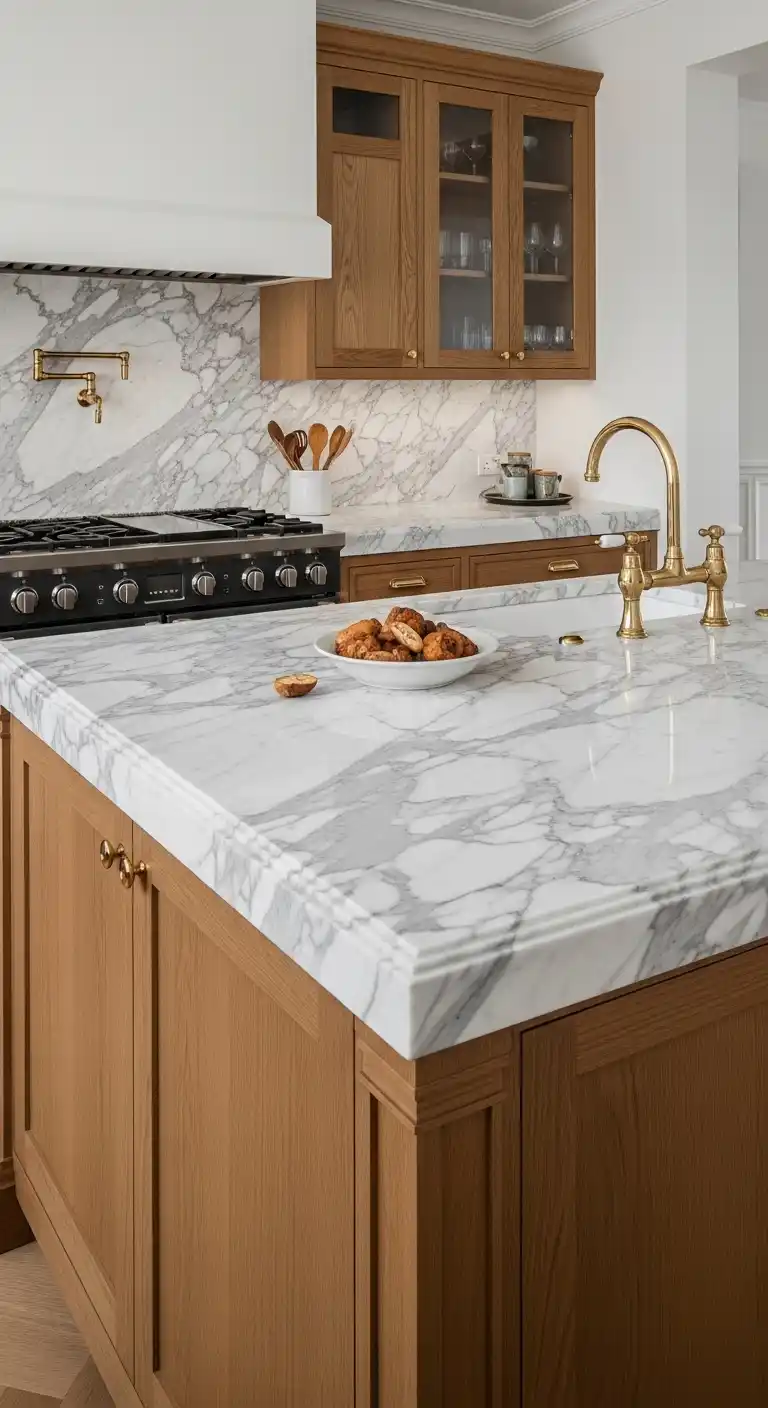
Marble-topped cabinets combine luxury and practicality, making them a hallmark of sophisticated Art Deco kitchens.
Natural stone surfaces, such as Carrara or Calacatta marble, provide striking veining patterns that enhance cabinet aesthetics while offering a durable workspace.
Pairing marble countertops with wooden or lacquered cabinets creates visual contrast, balancing warmth and elegance for a refined kitchen environment.
This combination works particularly well on kitchen islands, where marble tops act as both functional prep space and a stylish centerpiece.
Marble is easy to maintain with regular sealing, making it suitable for daily kitchen use without losing its luxurious appeal over time.
Homeowners can further enhance the design with metallic inlays or geometric patterns on the cabinet fronts, complementing the natural beauty of the stone.
Marble-top cabinets capture the essence of Art Deco sophistication, blending opulence with practical usability in modern kitchens.
6. Exotic Wood Finishes
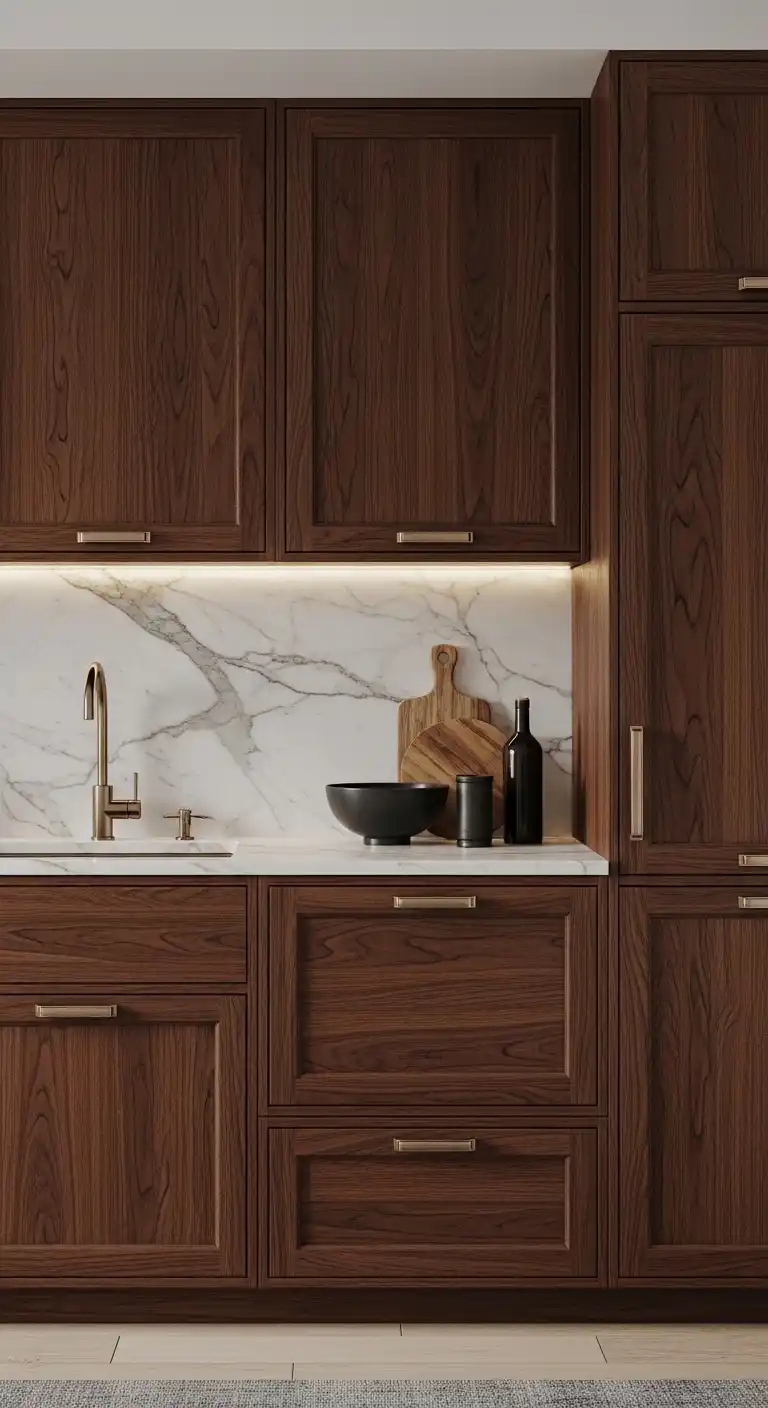
Cabinets made from exotic woods like walnut, mahogany, or ebony provide depth, richness, and timeless elegance to any kitchen design.
These woods bring warmth to the space while complementing glossy finishes, metallic accents, or bold color palettes common in Art Deco kitchens.
The natural textures and grains create visual interest, ensuring that each cabinet feels unique while maintaining cohesion with other design elements.
Exotic wood cabinets are durable and resilient, capable of withstanding daily kitchen use while retaining their aesthetic appeal over time.
Homeowners can combine these woods with marble, glass, or metallic finishes to create contrast and elevate the luxurious atmosphere of the kitchen.
In addition to their beauty, wood cabinets allow flexibility in design, supporting both geometric patterns and curved fronts for varied Art Deco effects.
Using exotic wood finishes ensures a sophisticated, tactile experience that reflects both quality craftsmanship and timeless design.
7. Mirrored Panel Cabinets
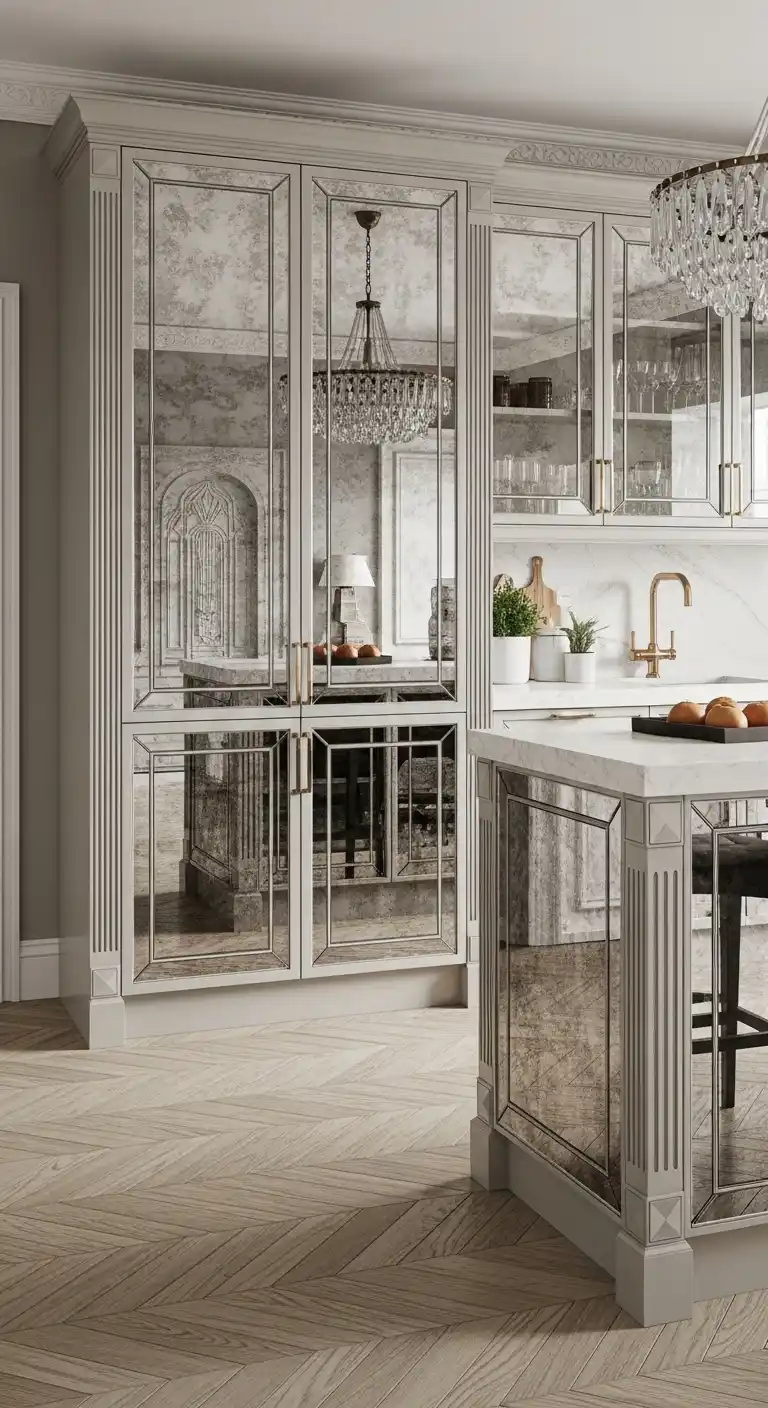
Mirrored cabinet panels are a glamorous Art Deco feature that reflects light, visually expanding the kitchen while emphasizing decorative details.
These panels can be full-door mirrors, inset sections, or mirrored islands, providing a sense of spaciousness without compromising storage functionality.
Mirrored surfaces complement geometric designs, metallic accents, or high-gloss finishes, enhancing both depth and elegance in the kitchen space.
They work well for smaller kitchens, creating an illusion of openness while making the space feel brighter and more inviting.
Homeowners should choose tempered or easy-to-clean mirrors to ensure safety and durability while maintaining their luxurious appeal over time.
Mirrored panels allow designers to integrate visual sophistication into practical storage, transforming cabinets into reflective art pieces that harmonize with the Art Deco style.
8. Glass-Inset Doors
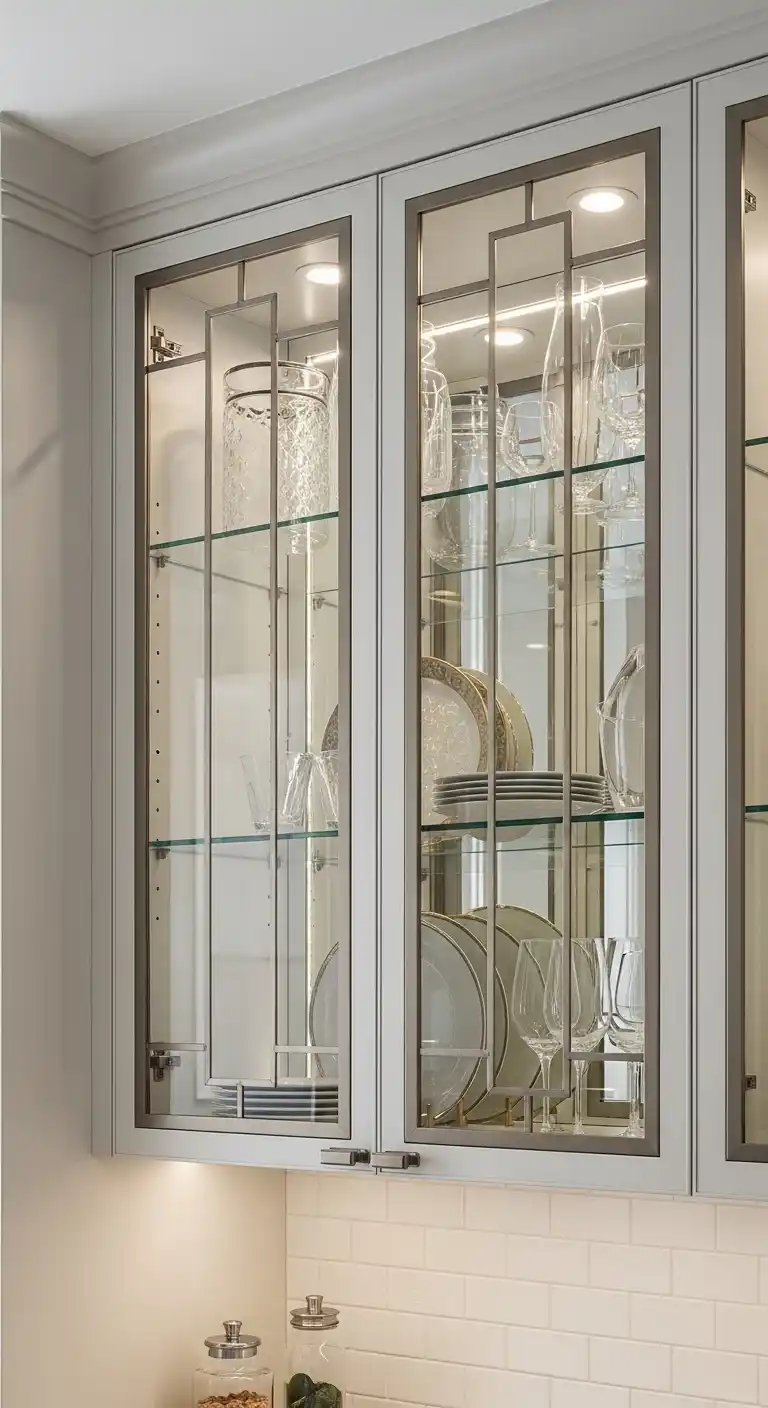
Glass-inset doors offer a balance between display and accessibility, allowing homeowners to showcase dishware, decorative pieces, or elegant glassware.
Clear or frosted glass can be combined with geometric patterns or metallic frames, reinforcing the classic Art Deco aesthetic.
Glass cabinets create visual depth, light reflection, and openness, making kitchens appear larger and more sophisticated.
They are particularly effective for upper cabinets, enabling decorative displays without cluttering countertops, and can be paired with interior LED lighting for added drama.
Homeowners should select tempered or durable glass to ensure safety while maintaining elegance and functionality in daily use.
Glass-inset doors blend practicality with artistry, enhancing both the aesthetic appeal and usability of Art Deco kitchen cabinets.
9. Curved Cabinet Fronts
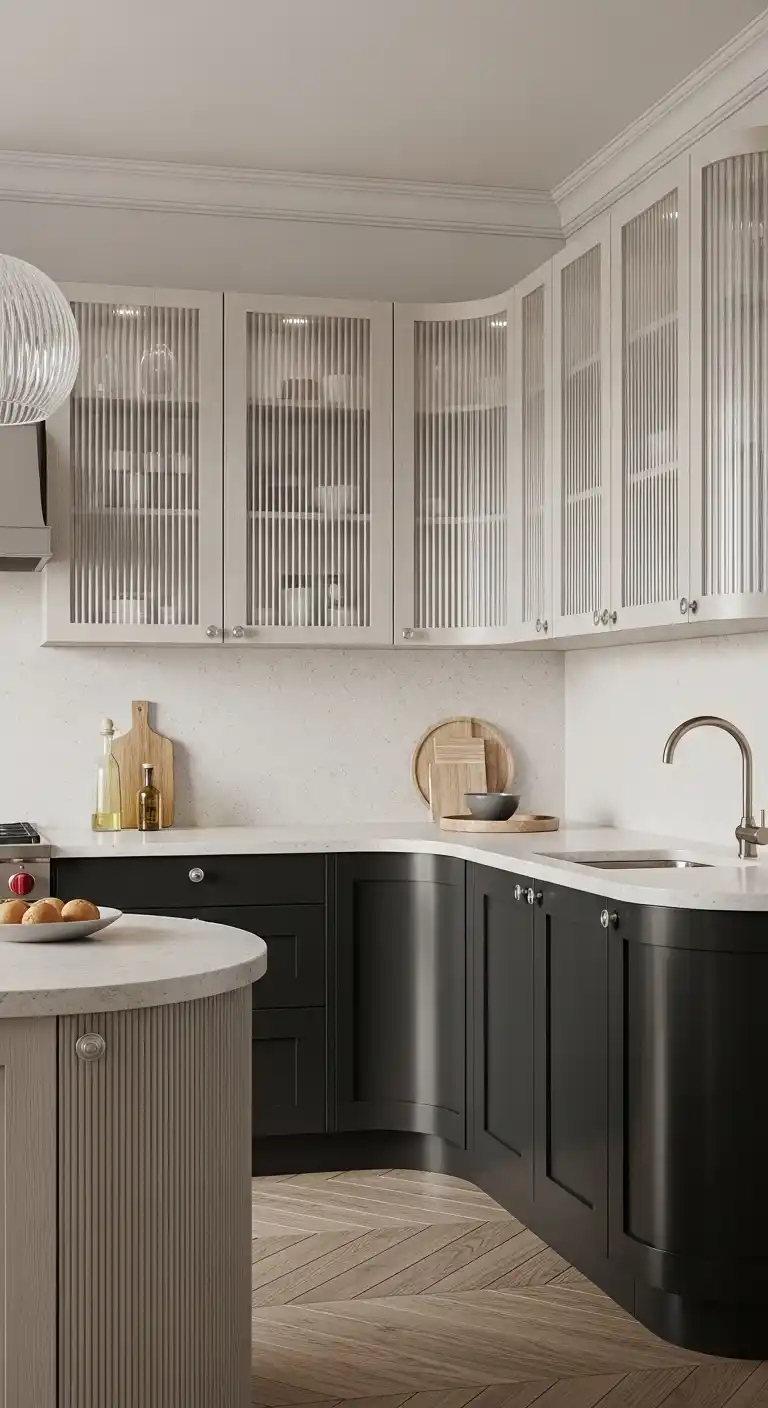
Curved or rounded cabinet fronts soften the bold, angular lines typical of Art Deco design, creating a more harmonious visual effect.
Bow-front cabinets or rounded corners can be integrated into islands, corner units, or upper cabinets, offering both aesthetic and functional benefits.
These curves complement geometric patterns or fluted panels, preventing the kitchen from feeling rigid or overwhelming while maintaining elegance.
Materials such as lacquered wood, polished metals, or glass enhance the fluidity and luxury of curved cabinets.
Homeowners can use curved designs to highlight key areas, like islands or breakfast nooks, turning functional storage into decorative features.
Curved fronts provide a unique balance of softness and sophistication, ensuring that Art Deco kitchens feel both inviting and stylish.
10. Statement Kitchen Islands
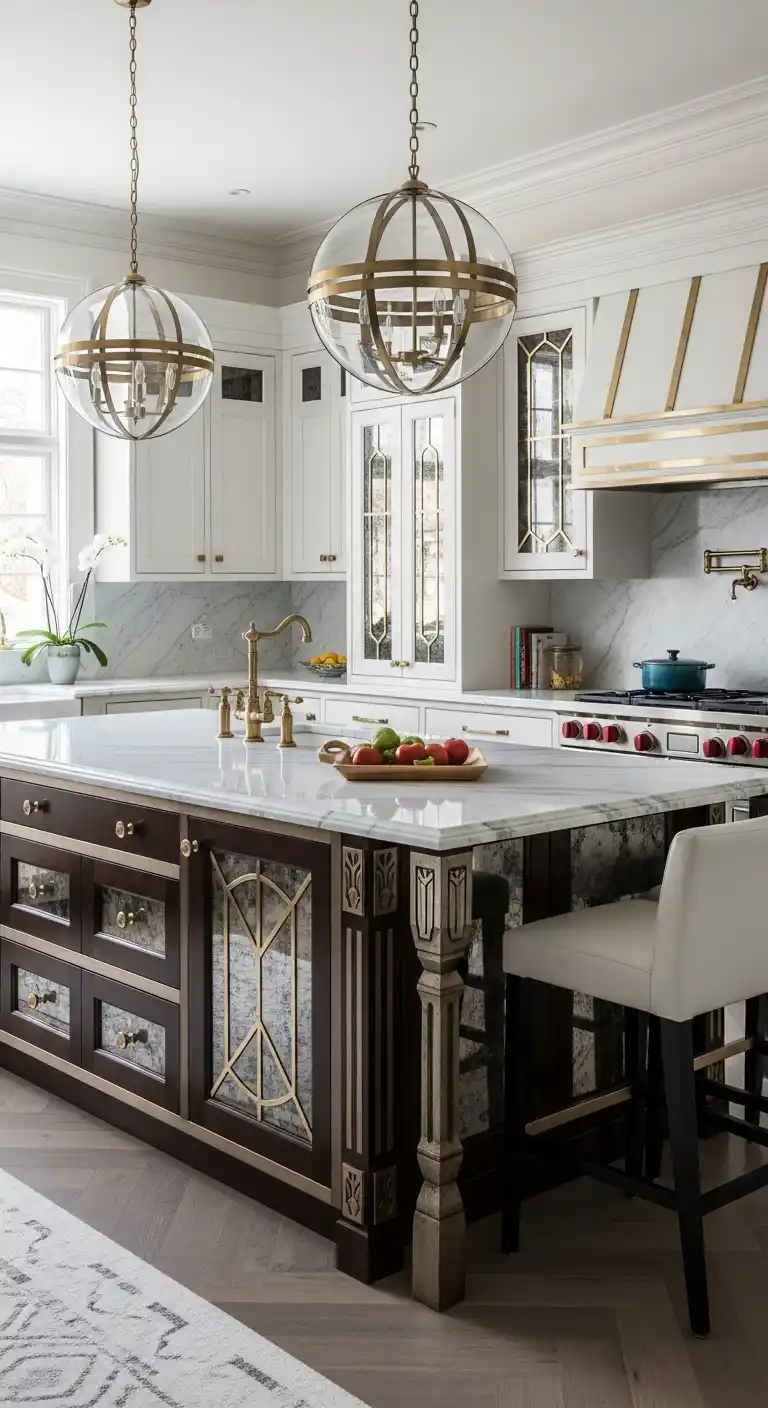
A kitchen island can become a bold focal point when designed with Art Deco cabinets, combining functionality with dramatic visual impact.
Statement islands often feature geometric patterns, contrasting finishes, metallic inlays, or mirrored panels to draw attention without overwhelming the space.
They provide ample prep space, storage, and seating while integrating key design elements like bold colors or unique hardware.
By making the island a centerpiece, homeowners create a natural gathering point in the kitchen, highlighting both practicality and luxury.
Materials such as marble tops, lacquered cabinetry, and metallic trims reinforce the opulent Art Deco aesthetic while ensuring durability and usability.
Well-designed statement islands harmonize with surrounding cabinetry, balancing creativity and functionality in a way that embodies timeless Art Deco style.
11. Bold Jewel-Toned Cabinets
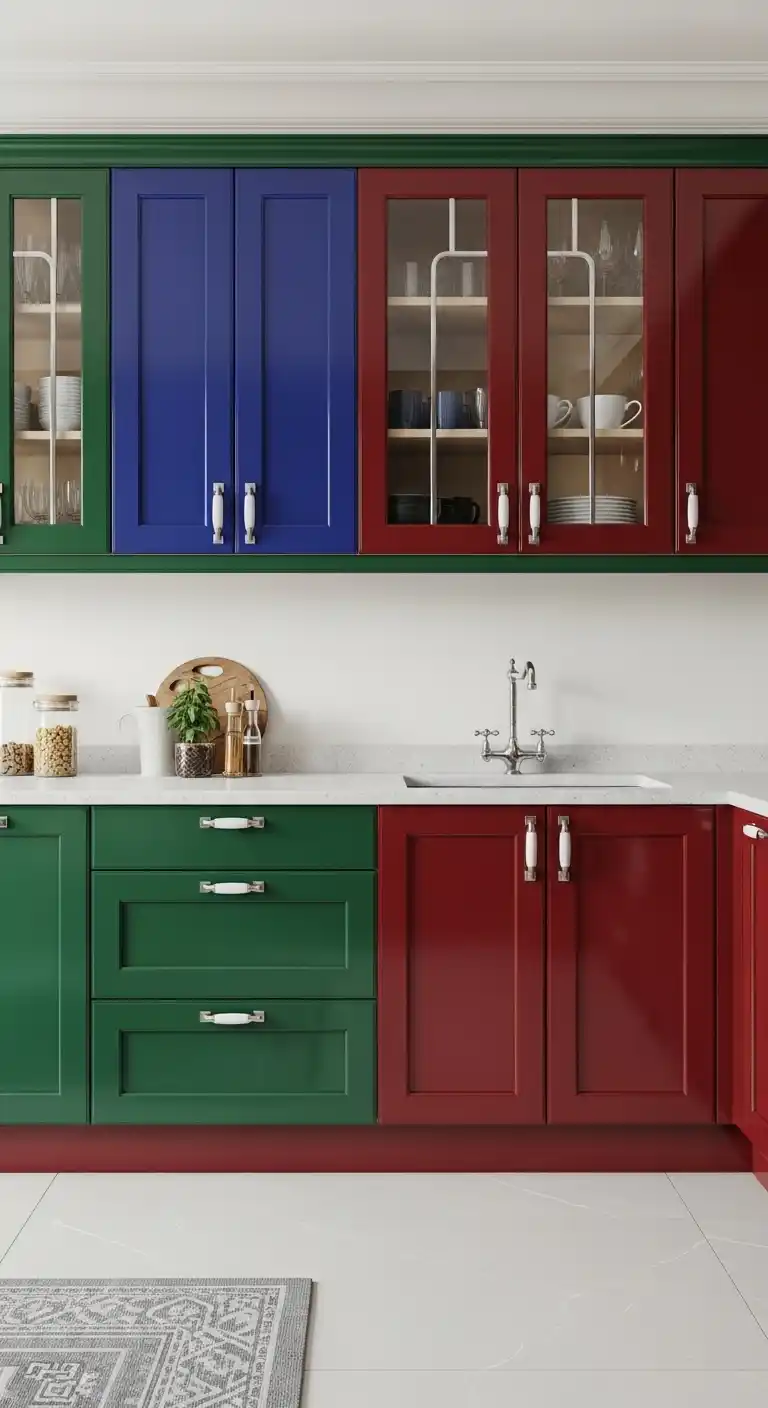
Bold jewel tones like emerald green, sapphire blue, and ruby red bring luxurious vibrancy to Art Deco kitchen cabinets.
These rich hues create dramatic focal points while complementing metallic hardware and geometric patterns commonly associated with Art Deco design.
Jewel-toned cabinets pair beautifully with neutral countertops, floors, or backsplashes, ensuring the space feels sophisticated without becoming overwhelming.
Glossy finishes amplify color intensity, reflecting light to enhance brightness and visual appeal in kitchens of all sizes.
Using bold colors also allows homeowners to express personal style and inject personality into their kitchen, making it a space that feels unique and curated.
Accents such as brass or gold handles, mirrored panels, or inlaid designs can further enhance the elegance, ensuring the kitchen maintains its Art Deco luxury.
Bold jewel-toned cabinets are perfect for homeowners who want their kitchen to stand out while remaining functional and timeless.
12. Black and Gold Cabinets
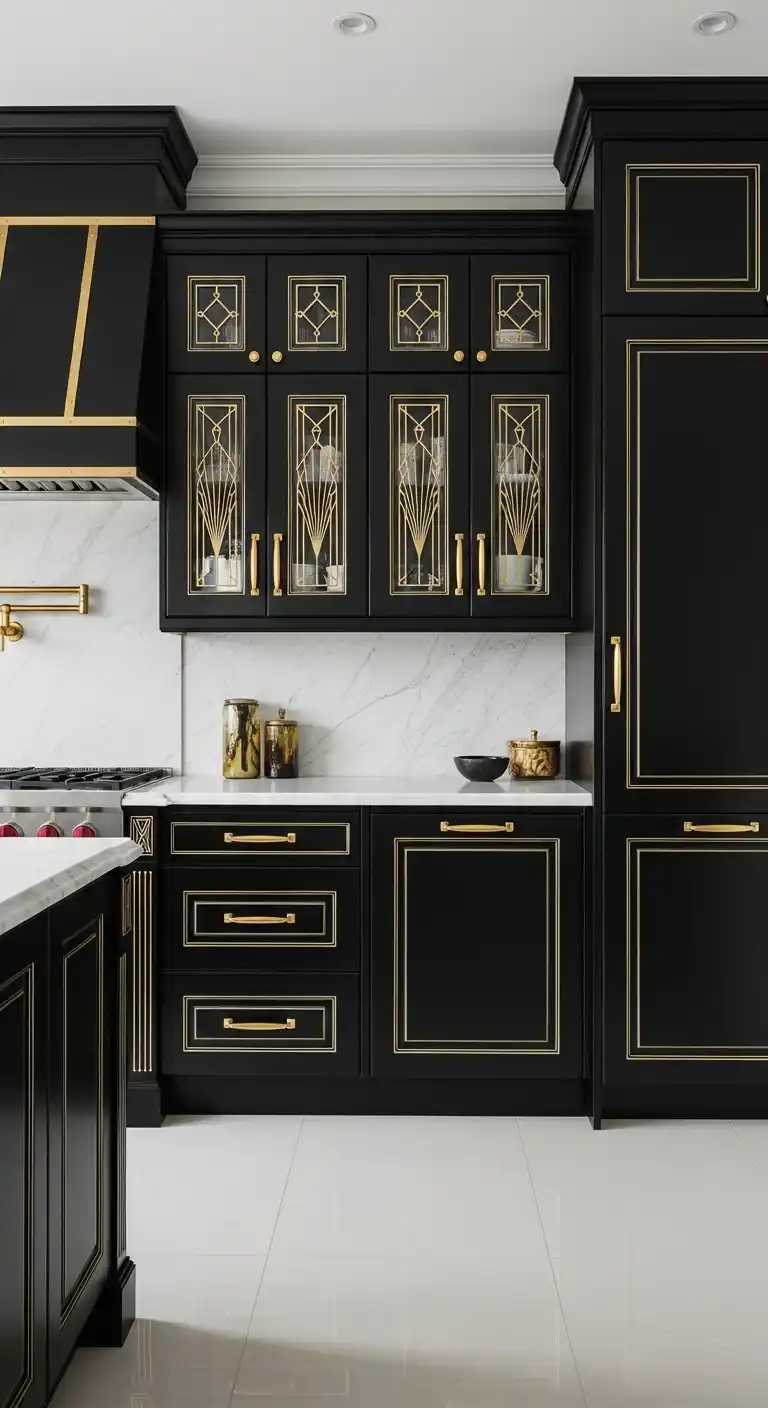
Black and gold cabinets exemplify timeless Art Deco elegance, offering a striking balance of sophistication and visual drama.
Deep black cabinetry serves as a sleek backdrop, while gold handles, trims, or inlays highlight geometric patterns and luxurious details.
This combination works well for both full cabinets and accent islands, allowing homeowners to create focal points without overwhelming the entire space.
Pairing black and gold cabinets with neutral flooring or marble countertops ensures visual balance while emphasizing Art Deco opulence.
The high contrast between dark cabinetry and metallic accents enhances depth and richness, making kitchens appear more refined and curated.
Black and gold cabinets are especially effective in open-plan kitchens, where the contrast draws attention and creates a cohesive, elegant design theme.
Incorporating these colors allows homeowners to combine classic Art Deco glamour with modern functionality seamlessly.
13. Open Shelving with Geometric Brackets
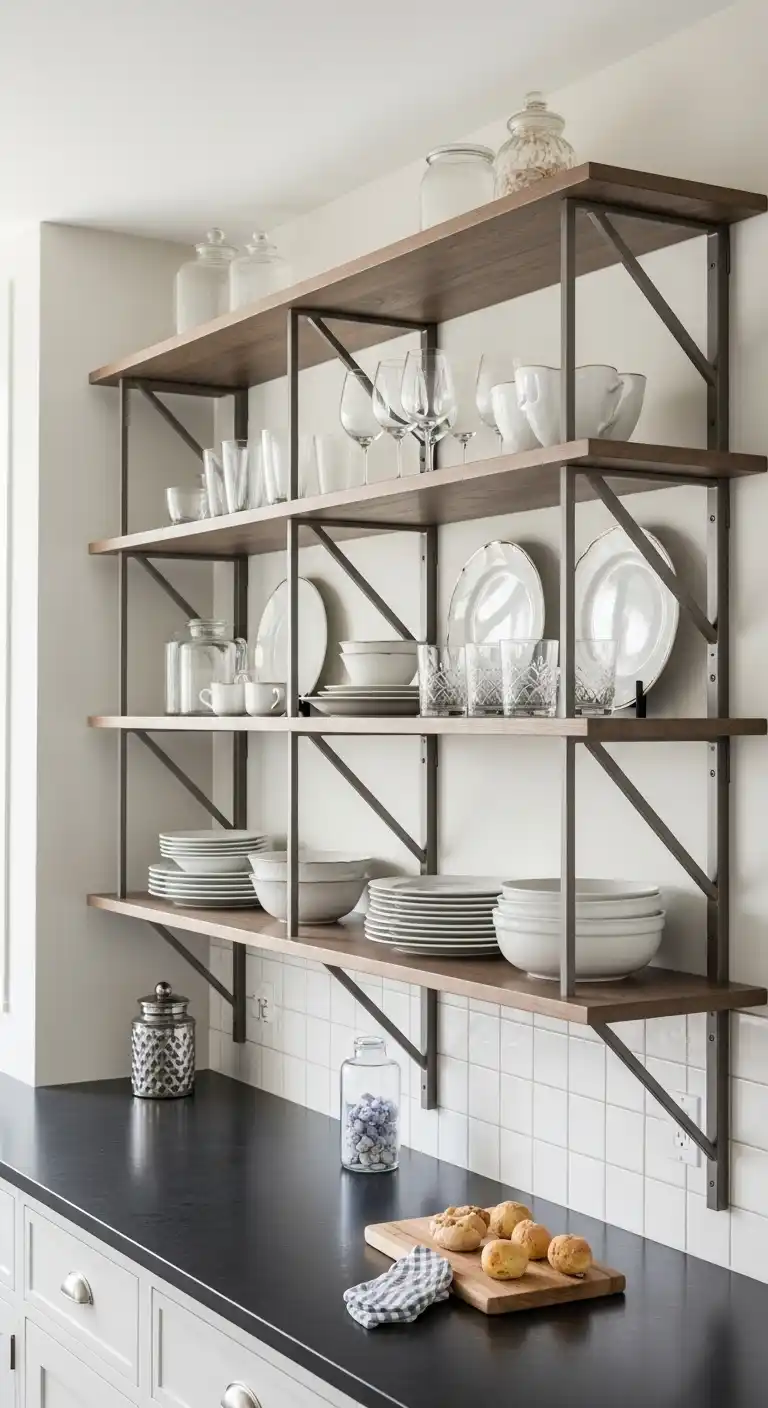
Open shelving adds both practicality and style to Art Deco kitchens, providing accessible storage while enhancing decorative appeal.
Geometric metal brackets support shelves while contributing to the kitchen’s signature design elements, reinforcing bold lines and symmetry.
Homeowners can display elegant dishware, glassware, or decorative items, transforming storage into a visual feature that complements enclosed cabinets.
Open shelving also improves workflow by keeping frequently used items within easy reach without cluttering countertops.
Pairing open shelves with enclosed cabinets ensures flexibility, balancing accessibility with concealed storage for less visually appealing items.
High-gloss finishes or metallic accents on shelves further tie the open storage into the broader Art Deco aesthetic, creating harmony across the kitchen space.
Open shelving with geometric brackets offers both utility and style, making kitchens more functional while emphasizing Art Deco luxury.
14. Two-Tone Cabinet Designs
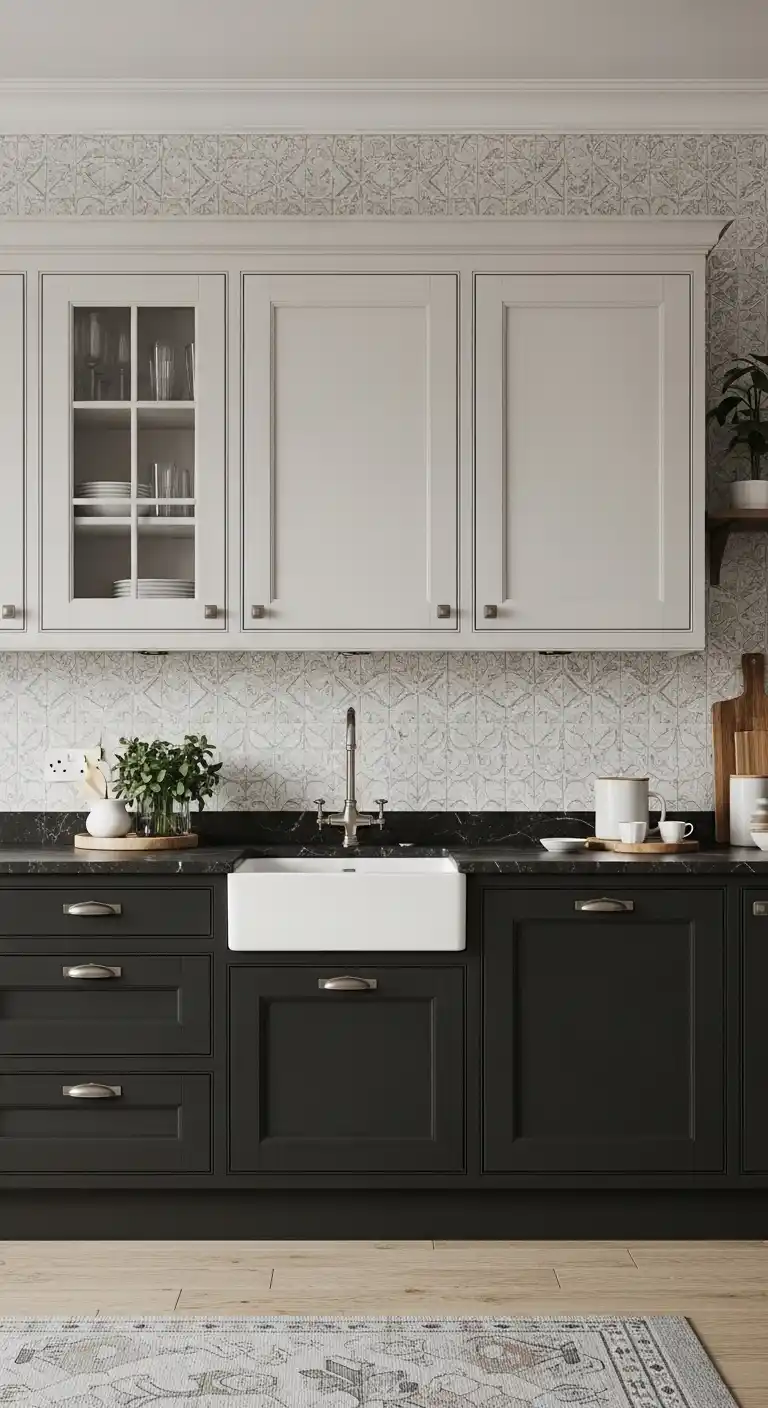
Two-tone cabinetry adds visual contrast and sophistication to Art Deco kitchen designs, breaking monotony while emphasizing structural elegance.
Homeowners can combine darker lower cabinets with lighter upper cabinets or mix bold jewel tones with neutral shades for depth.
This approach highlights architectural features, geometric patterns, and metallic accents while maintaining balance between drama and subtlety.
Two-tone designs also provide flexibility in styling, allowing homeowners to introduce bold colors without overpowering the kitchen space.
Pairing contrasting finishes with lacquered surfaces or natural wood textures adds richness and enhances tactile appeal.
This combination works on both islands and wall cabinets, ensuring a cohesive design throughout the kitchen.
Two-tone cabinets offer a creative way to introduce color and variety while maintaining the structured elegance of Art Deco interiors.
15. Textured Cabinet Panels
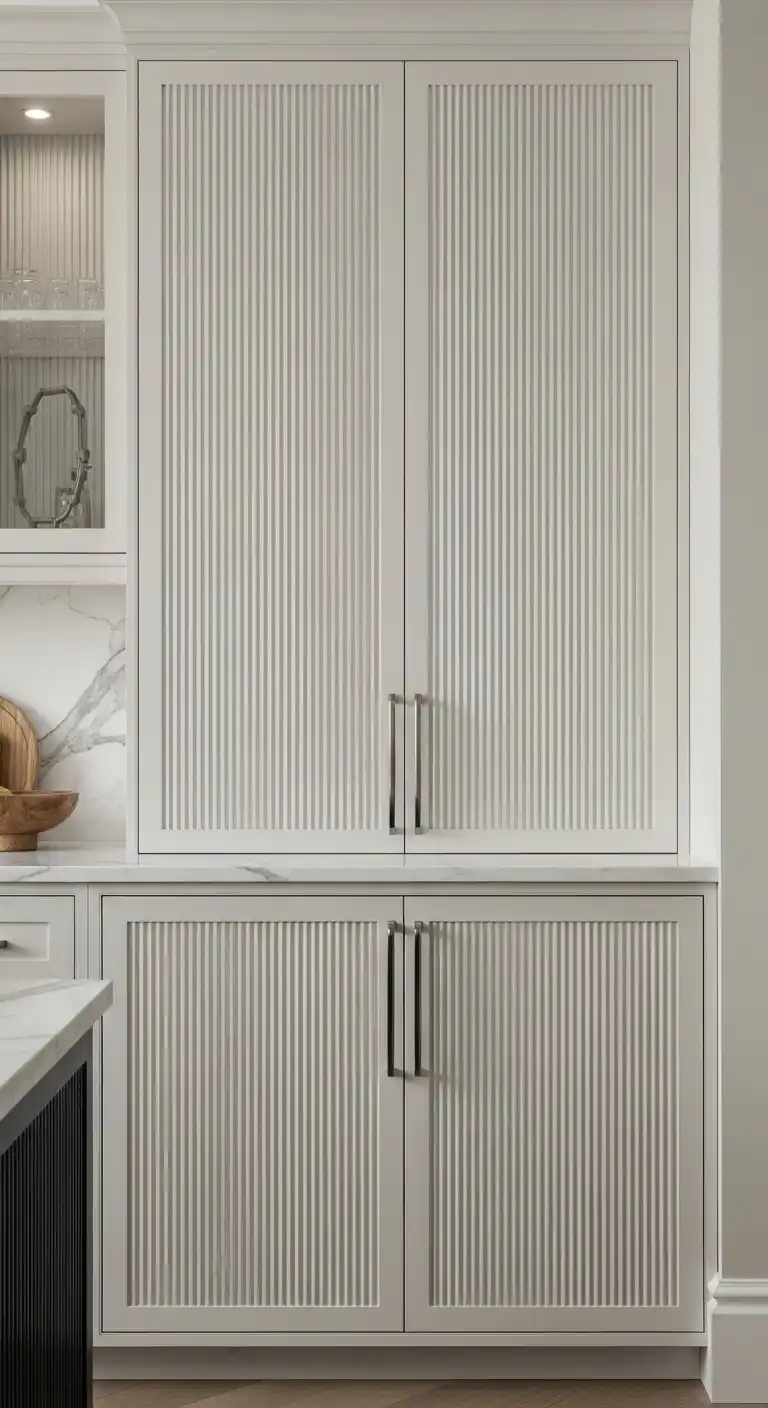
Textured panels, such as fluting, ribbing, or carved designs, bring depth and tactile richness to Art Deco kitchen cabinets.
These subtle details enhance visual interest, breaking up smooth surfaces while complementing geometric patterns and metallic hardware.
Fluted or ribbed panels reflect light in dynamic ways, creating a sense of sophistication that evolves with changing angles and lighting.
Textured cabinets pair well with lacquered finishes or marble countertops, reinforcing the luxurious feel associated with Art Deco kitchens.
Homeowners can use textured panels selectively on islands, upper cabinets, or feature doors to draw attention to specific areas.
These panels combine artistry with practicality, ensuring cabinets remain functional while elevating the kitchen’s aesthetic.
Textured cabinet designs allow homeowners to create a refined, high-end kitchen environment that feels luxurious and thoughtfully curated.
16. Mirrored Island Cabinets
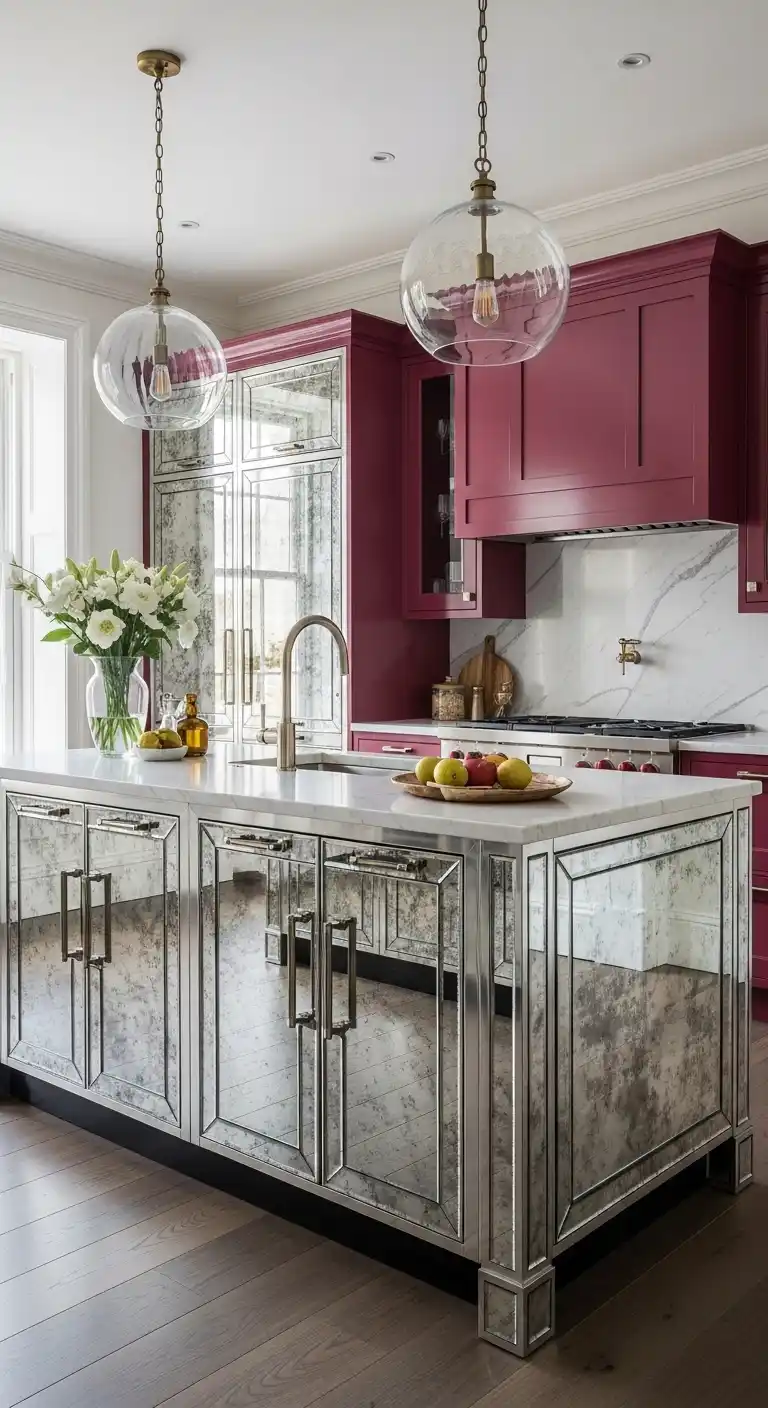
Mirrored panels on kitchen islands add visual drama and a sense of openness, making them ideal for Art Deco-inspired spaces.
Reflective surfaces create the illusion of a larger kitchen while highlighting surrounding cabinetry, metallic accents, and geometric patterns.
Mirrored islands are especially effective in smaller kitchens, amplifying light and making the space feel brighter and more inviting.
Pairing mirrored panels with high-gloss lacquer or bold-colored cabinets adds depth, contrast, and luxurious sophistication to the island.
Designers often combine mirrored surfaces with metallic hardware or marble countertops to reinforce Art Deco glamour while ensuring functionality.
Homeowners can use mirrored islands as statement pieces, turning functional storage and prep areas into a striking visual centerpiece.
These cabinets demonstrate how reflection, geometry, and material selection come together to create a visually stunning Art Deco kitchen feature.
17. Backlit Cabinet Accents
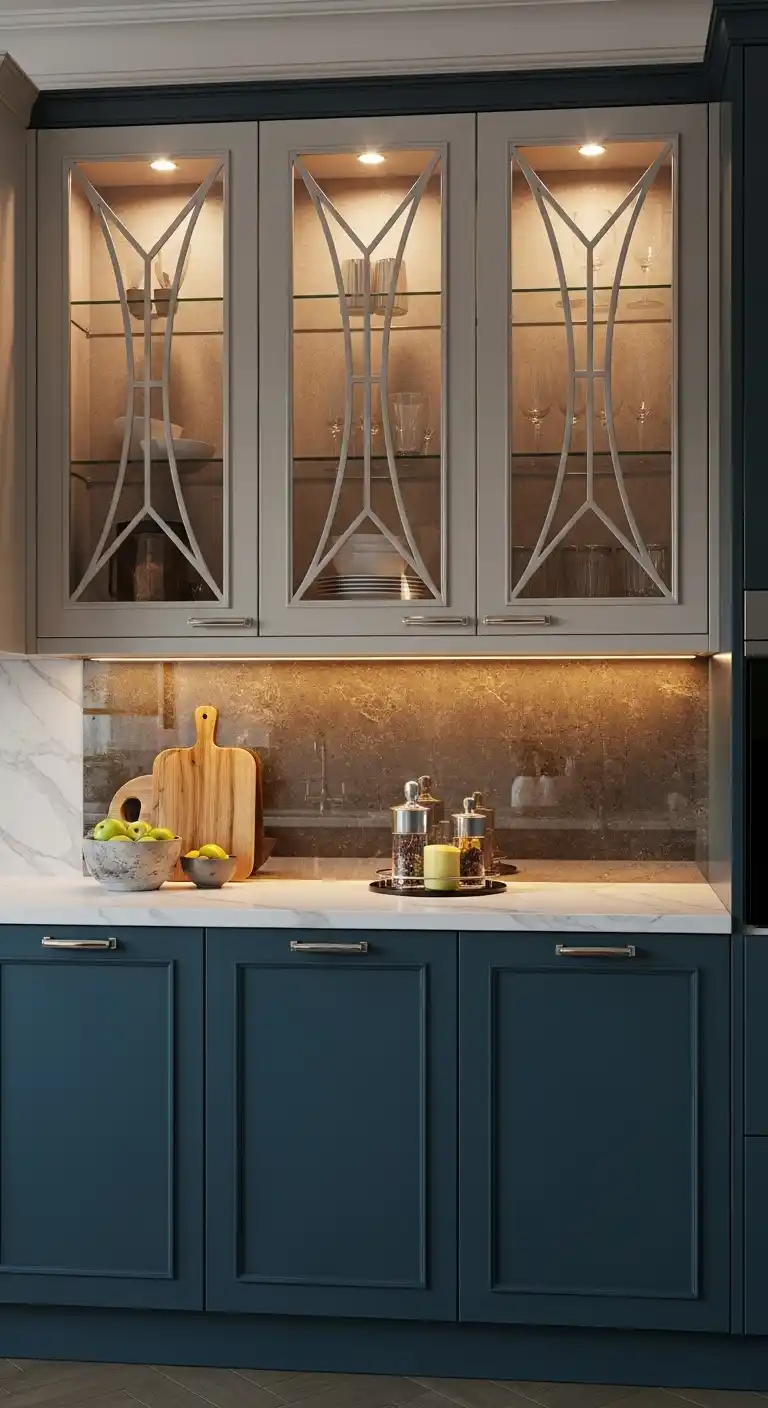
Backlit cabinet accents bring both practicality and drama to Art Deco kitchen cabinets, highlighting patterns, textures, or glass panels.
LED lighting behind glass doors, mirrored panels, or metallic trims creates a warm glow that enhances geometric designs and reflective surfaces.
Backlighting adds visual depth, making kitchens appear more spacious while emphasizing luxurious finishes and intricate cabinet details.
Homeowners can install lighting under cabinets, within shelves, or behind panels to create ambiance, showcase décor, and improve functionality.
Pairing backlit accents with high-gloss finishes or jewel-toned cabinets reinforces sophistication while ensuring the kitchen feels inviting and modern.
These illuminated elements highlight the craftsmanship of Art Deco cabinetry, blending form and function seamlessly.
Backlit cabinets turn ordinary storage into a visually engaging centerpiece, enhancing both luxury and usability in the kitchen.
18. Glossy White Cabinets with Brass Handles
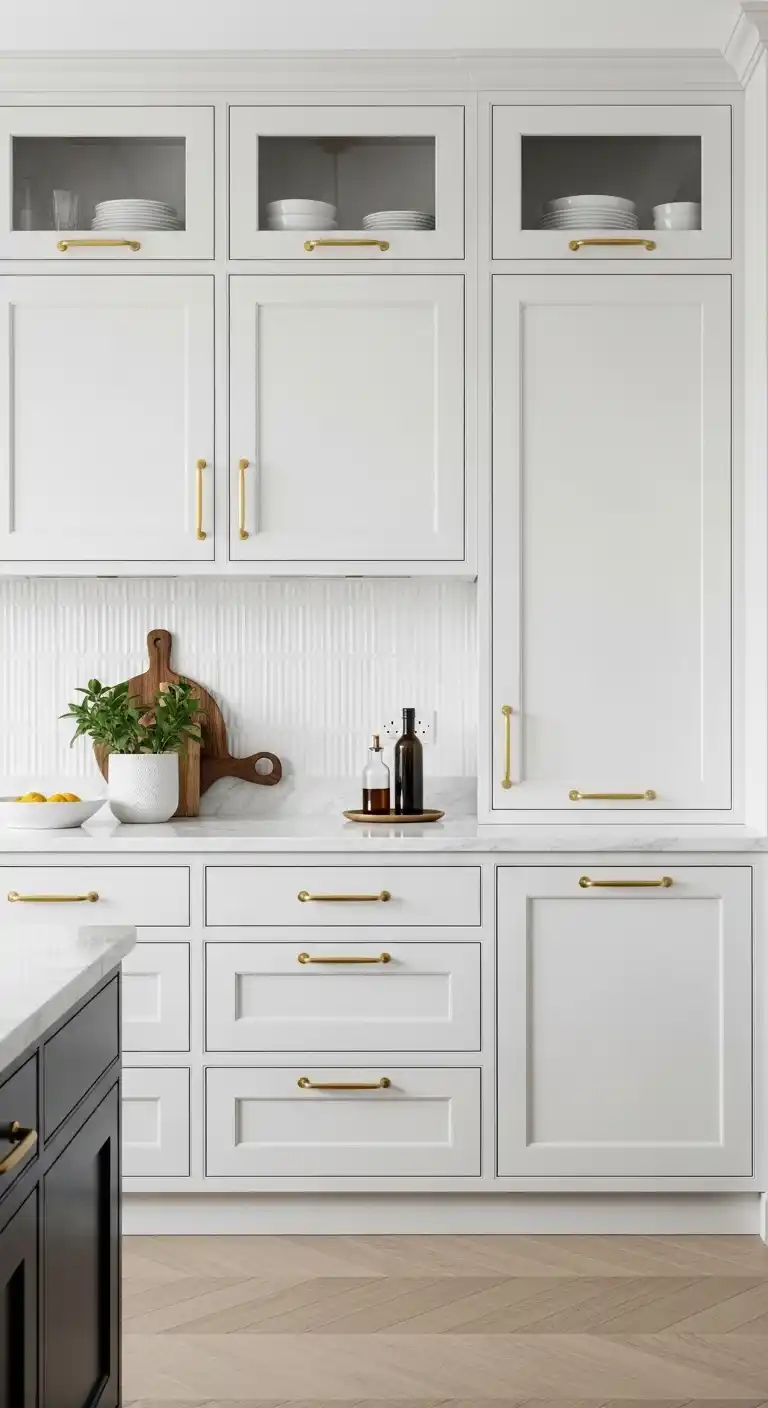
Glossy white cabinets paired with brass hardware offer a timeless Art Deco aesthetic that feels both elegant and contemporary.
The reflective white finish brightens the kitchen while emphasizing clean lines, geometric patterns, and metallic details.
Brass handles introduce warmth and luxury, creating contrast against the crisp white surfaces without overpowering the overall design.
These cabinets pair well with marble countertops, textured panels, or subtle wood accents, maintaining balance between glamour and practicality.
White lacquered cabinets are easy to maintain, making them ideal for busy kitchens while retaining a polished, luxurious look.
This combination works well for upper and lower cabinetry, islands, and pantry units, providing a cohesive, high-end design throughout the space.
Glossy white and brass cabinetry embodies the essence of Art Deco: sophistication, practicality, and timeless elegance.
19. Two-Tone Metallic Finishes
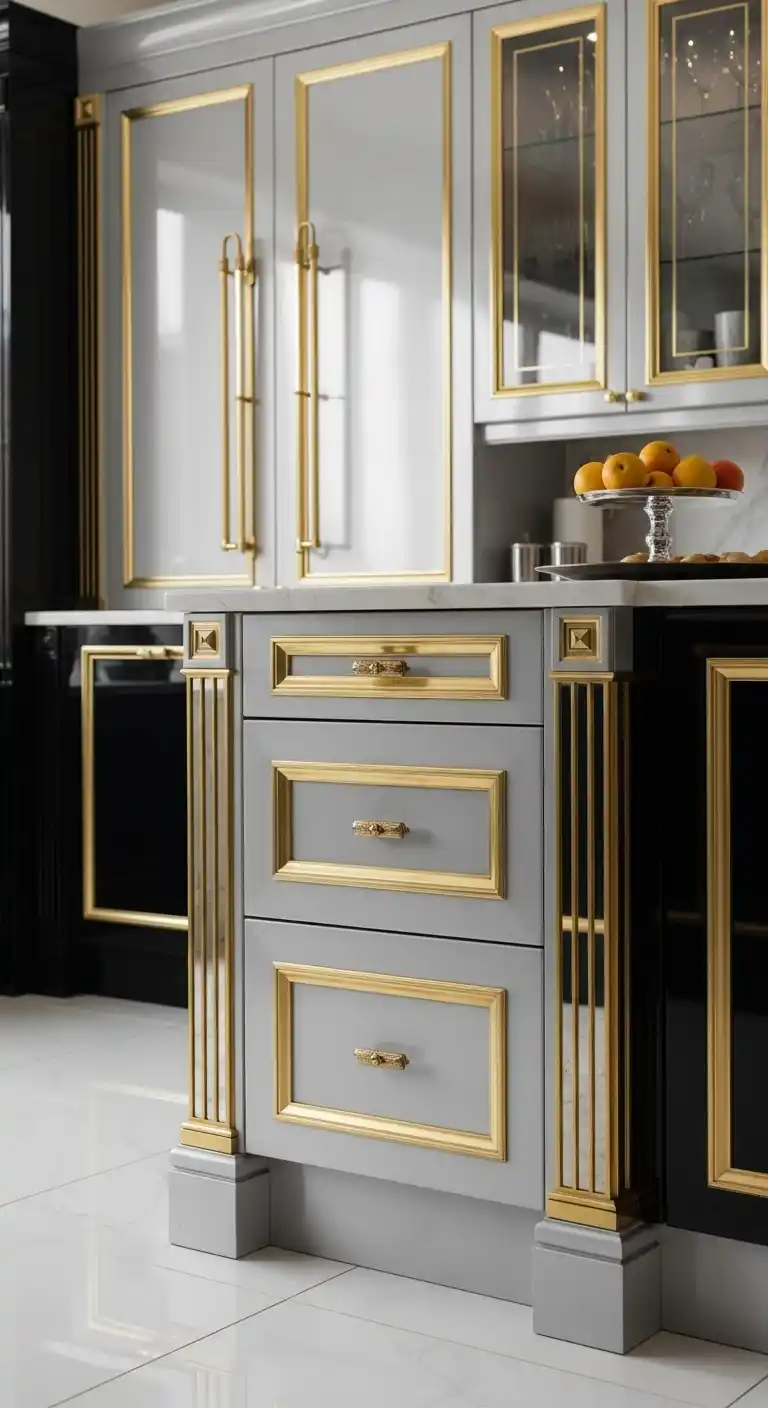
Two-tone metallic finishes combine silver and gold or brass to create a refined, layered look on Art Deco kitchen cabinets.
These finishes highlight geometric patterns, inlays, or panel edges, enhancing the visual complexity and luxurious feel of the cabinetry.
Metallic combinations work beautifully on drawer fronts, island panels, or accent cabinets, allowing homeowners to introduce shimmer without overwhelming the space.
Pairing metallic tones with high-gloss lacquer, mirrored panels, or dark jewel-toned cabinetry balances opulence with subtlety and functionality.
Two-tone metallic cabinets provide reflective surfaces that play with light, making the kitchen feel brighter, more dynamic, and stylish.
This approach allows homeowners to integrate classic Art Deco glamour while maintaining modern practicality and a cohesive design theme.
20. Bow-Front Island Cabinets
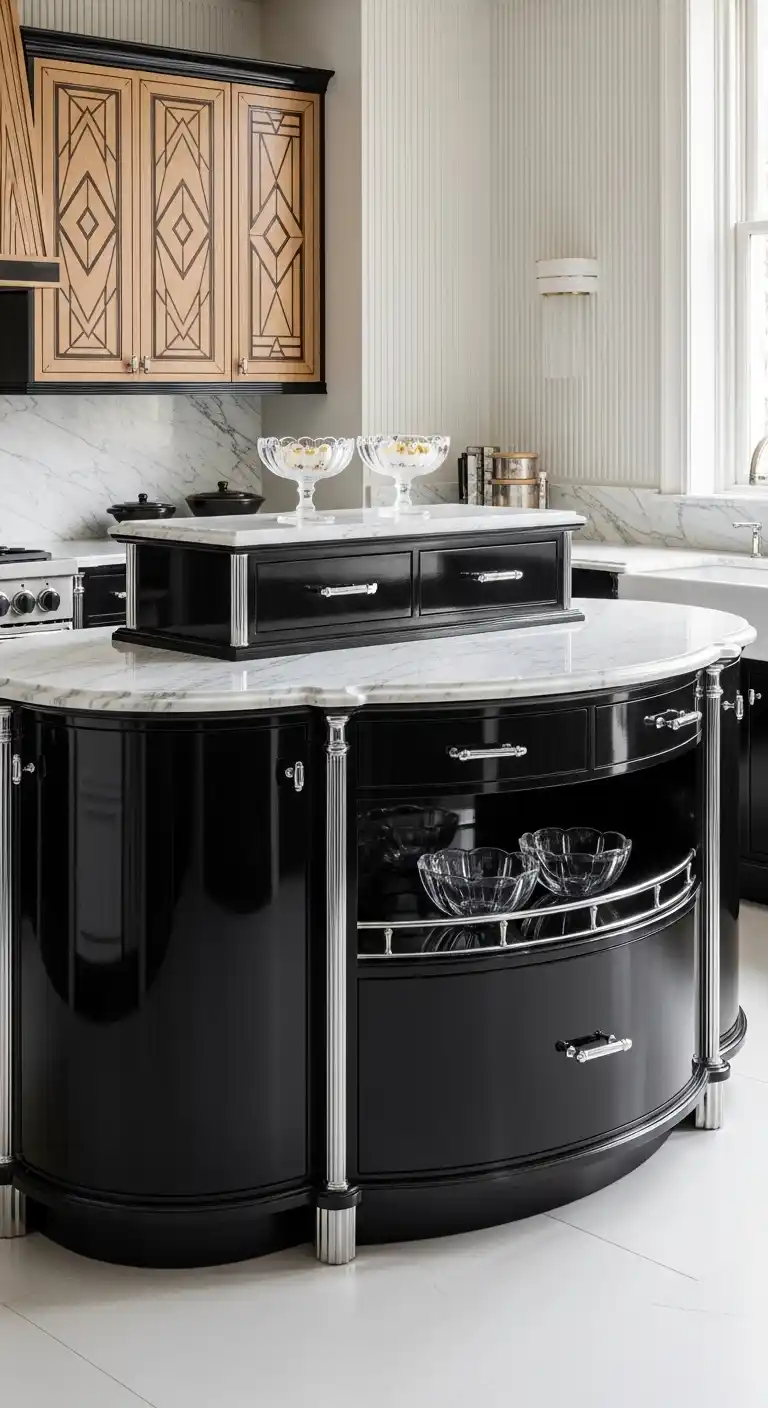
Bow-front or curved island cabinets soften angular kitchen layouts, creating visual harmony in Art Deco-inspired spaces.
These rounded fronts provide a tactile elegance, balancing geometric lines on upper cabinets or fluted panels elsewhere in the kitchen.
Bow-front islands can incorporate drawers, cabinets, or open shelving, offering versatile storage while doubling as a functional prep area.
Materials such as lacquered wood, mirrored panels, or marble countertops enhance the luxury and reflective qualities of curved surfaces.
Homeowners can use bow-front islands as statement pieces, creating a focal point that is both practical and visually engaging.
Curved islands ensure that kitchens feel inviting, fluid, and sophisticated, exemplifying the elegance and functionality central to Art Deco design principles.
21. Decorative Inlays
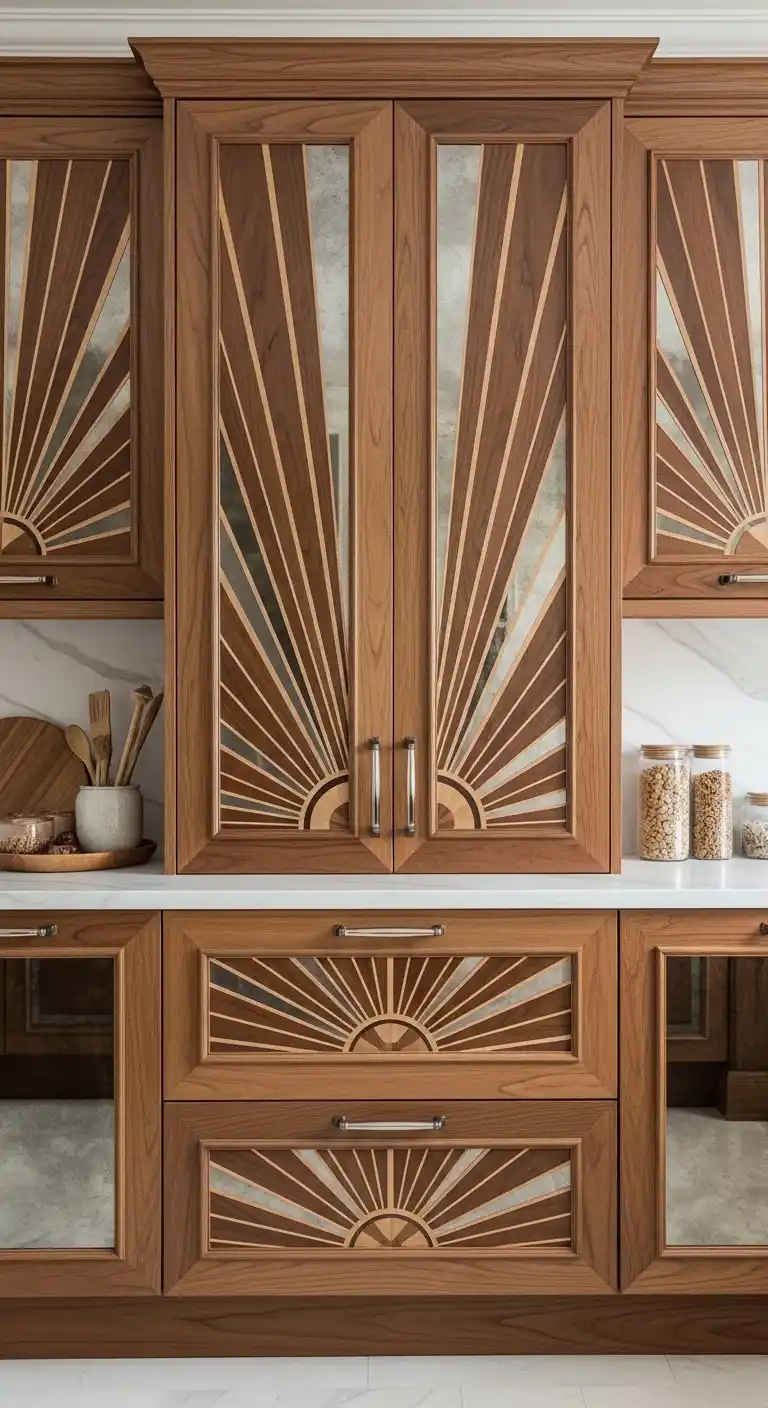
Decorative inlays on cabinet fronts are a hallmark of Art Deco design, adding visual intrigue and artistic flair to kitchens.
Inlays can be made from wood, metal, or contrasting lacquer, creating geometric or sunburst patterns that complement overall cabinet design.
These artistic details transform ordinary storage into statement pieces, allowing homeowners to showcase craftsmanship and creativity in functional cabinetry.
Inlays work particularly well on island cabinets, upper doors, or drawer fronts, providing subtle focal points without overwhelming the kitchen.
Combining decorative inlays with high-gloss finishes, metallic accents, or mirrored panels enhances the luxurious aesthetic associated with Art Deco kitchens.
Homeowners can mix and match inlay patterns across cabinets to introduce variety while maintaining a cohesive design theme.
Decorative inlays provide both elegance and individuality, making cabinetry feel curated, refined, and distinctly Art Deco.
22. Emerald Green Lacquer Cabinets
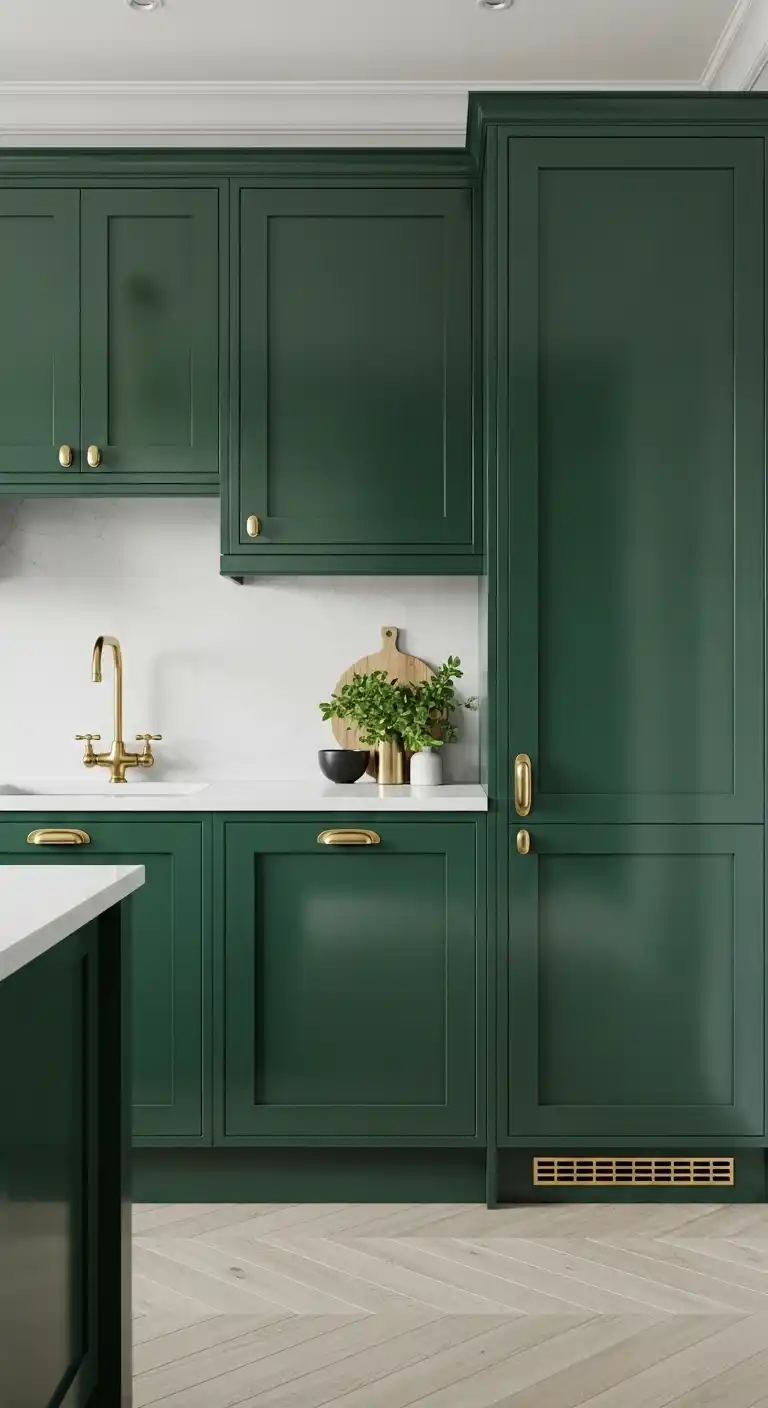
Emerald green lacquer cabinets bring a bold, luxurious feel to modern kitchens while honoring Art Deco traditions of rich, jewel-toned finishes.
The deep green hue pairs beautifully with metallic accents such as gold or brass, emphasizing geometric patterns and adding visual richness.
Glossy lacquer surfaces reflect light, enhancing brightness and highlighting the depth of the cabinetry, even in smaller kitchen spaces.
Emerald green works well for islands, upper cabinets, or feature walls, creating a striking contrast with neutral countertops or flooring.
Homeowners can combine these cabinets with mirrored panels or textured inlays to further emphasize sophistication and layered design.
Maintenance is simple with lacquered finishes, ensuring the cabinets remain vibrant, polished, and stylish for years of daily use.
Emerald green lacquer cabinets make kitchens feel bold, elegant, and uniquely personalized, capturing the essence of Art Deco luxury.
23. Glossy Black Cabinets with Mirror Accents
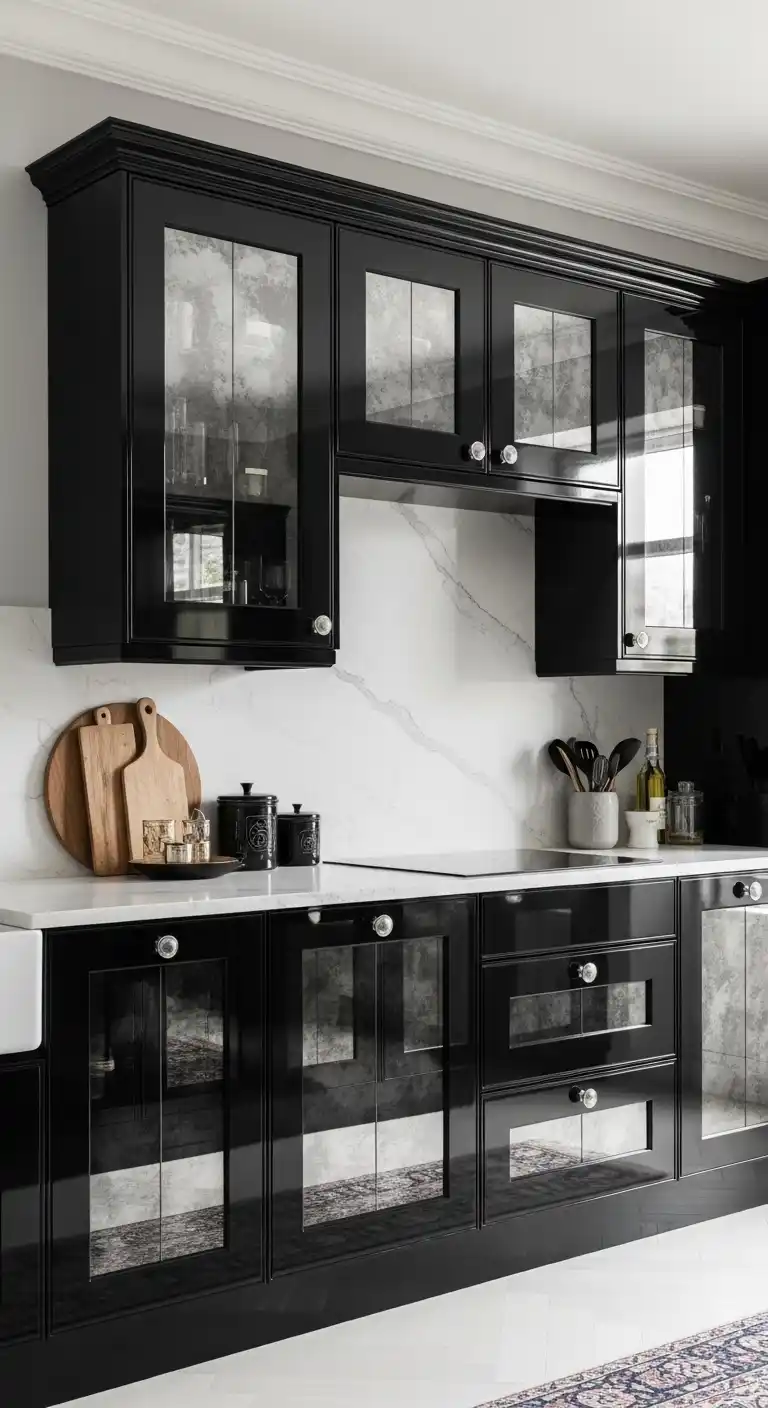
Glossy black cabinets paired with mirrored panels create a striking Art Deco aesthetic, combining depth, sophistication, and reflective brilliance.
The black lacquer adds drama and intensity, while mirrored accents expand visual space and reflect light to prevent darkness from overwhelming the room.
This combination works beautifully on both upper and lower cabinets or islands, making the kitchen feel opulent and cohesive.
Pairing with metallic hardware, marble countertops, or jewel-toned accents enhances the luxurious atmosphere, highlighting classic Art Deco principles.
Black and mirrored cabinetry balances boldness with elegance, allowing geometric patterns and textured details to stand out prominently.
Homeowners can use these cabinets to create a high-impact centerpiece, turning ordinary storage into a functional and glamorous design feature.
Glossy black with mirrors transforms kitchens into visually captivating, Art Deco-inspired spaces that are both practical and stylish.
24. Integrated Appliances with Custom Panels
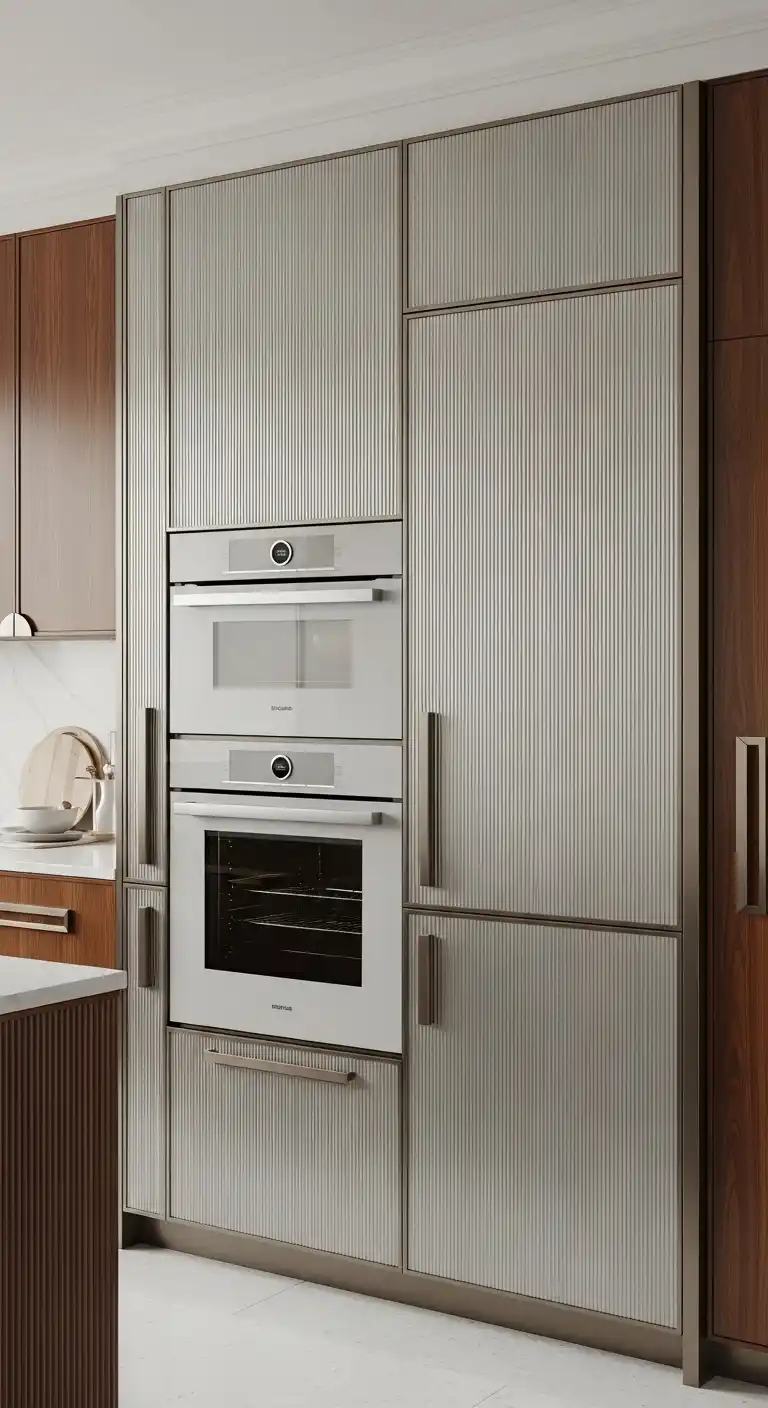
Concealing modern appliances with custom cabinet panels maintains the clean, geometric lines characteristic of Art Deco kitchens.
Integrated panels ensure appliances blend seamlessly with cabinetry, preserving visual cohesion without compromising practicality or functionality.
These panels can be finished in lacquer, wood, or metallic surfaces to match existing cabinets, allowing bold geometric patterns or fluted textures to continue uninterrupted.
Homeowners benefit from a streamlined, minimalist look while retaining easy access to appliances for everyday cooking tasks.
Custom panels also offer flexibility in color and material selection, enabling creative contrasts or harmonious blends within the kitchen design.
Integrated appliance cabinetry ensures that technology enhances rather than disrupts the overall aesthetic, marrying modern convenience with Art Deco elegance.
This approach transforms appliances into subtle, elegant features rather than visual distractions, reinforcing the luxury of the kitchen.
25. Metal Trimmed Cabinet Edges
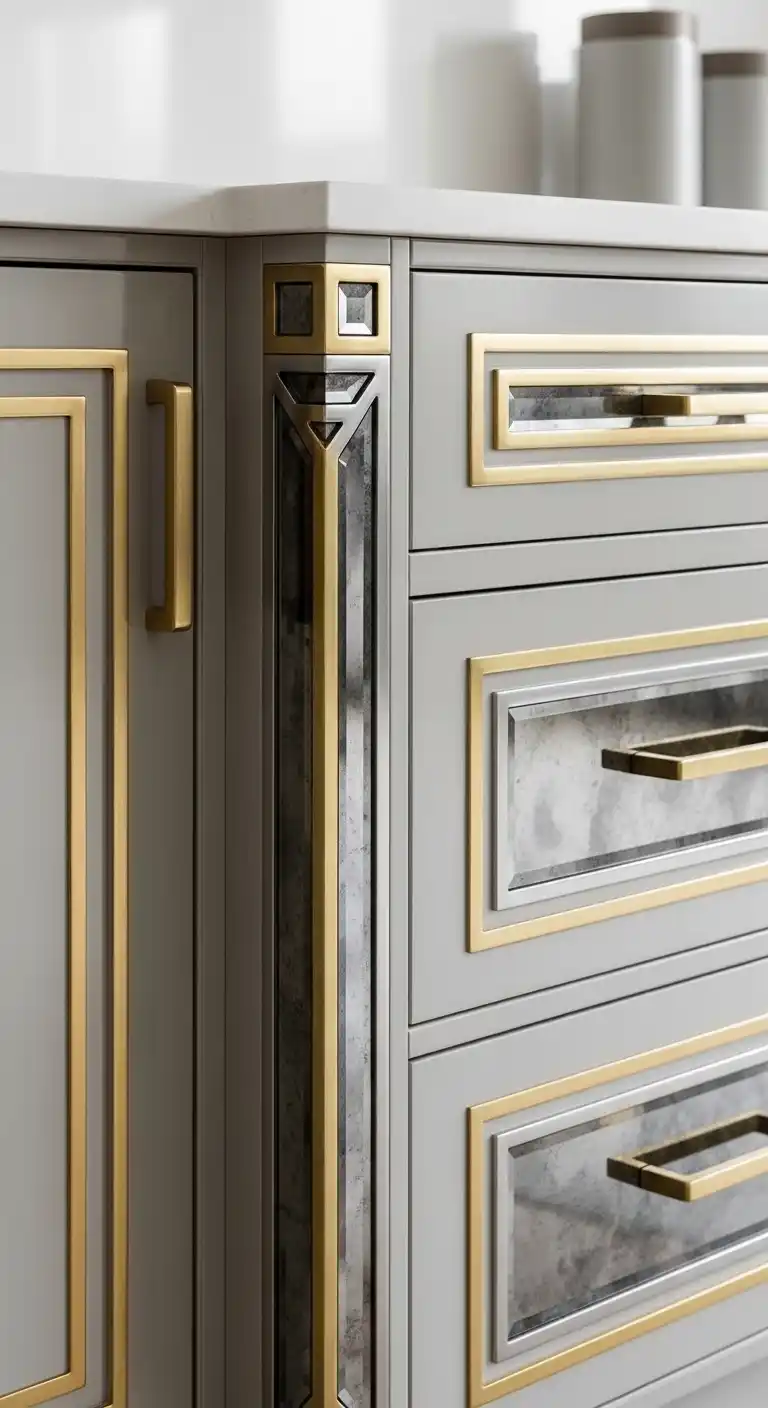
Metal-trimmed edges add definition and sophistication to Art Deco kitchen cabinets, highlighting geometric shapes and enhancing reflective qualities.
Gold, silver, or brass trims accentuate panel lines, drawer edges, and cabinet doors, emphasizing structure and elegance.
This technique works well on high-gloss or lacquered surfaces, creating a layered, luxurious effect that reflects light and adds depth.
Metal trims can complement mirrored or glass panels, enhancing visual interest while maintaining the cohesive Art Deco aesthetic.
Homeowners can selectively apply metal trims to islands, feature cabinets, or drawers to create focal points without overwhelming the overall design.
Metal-trimmed cabinetry combines functional durability with decorative appeal, ensuring that cabinets remain both practical and visually captivating.
This detail elevates ordinary storage into refined, statement-making pieces that define the luxury and style of Art Deco kitchens.
26. Rounded Corner Wall Cabinets
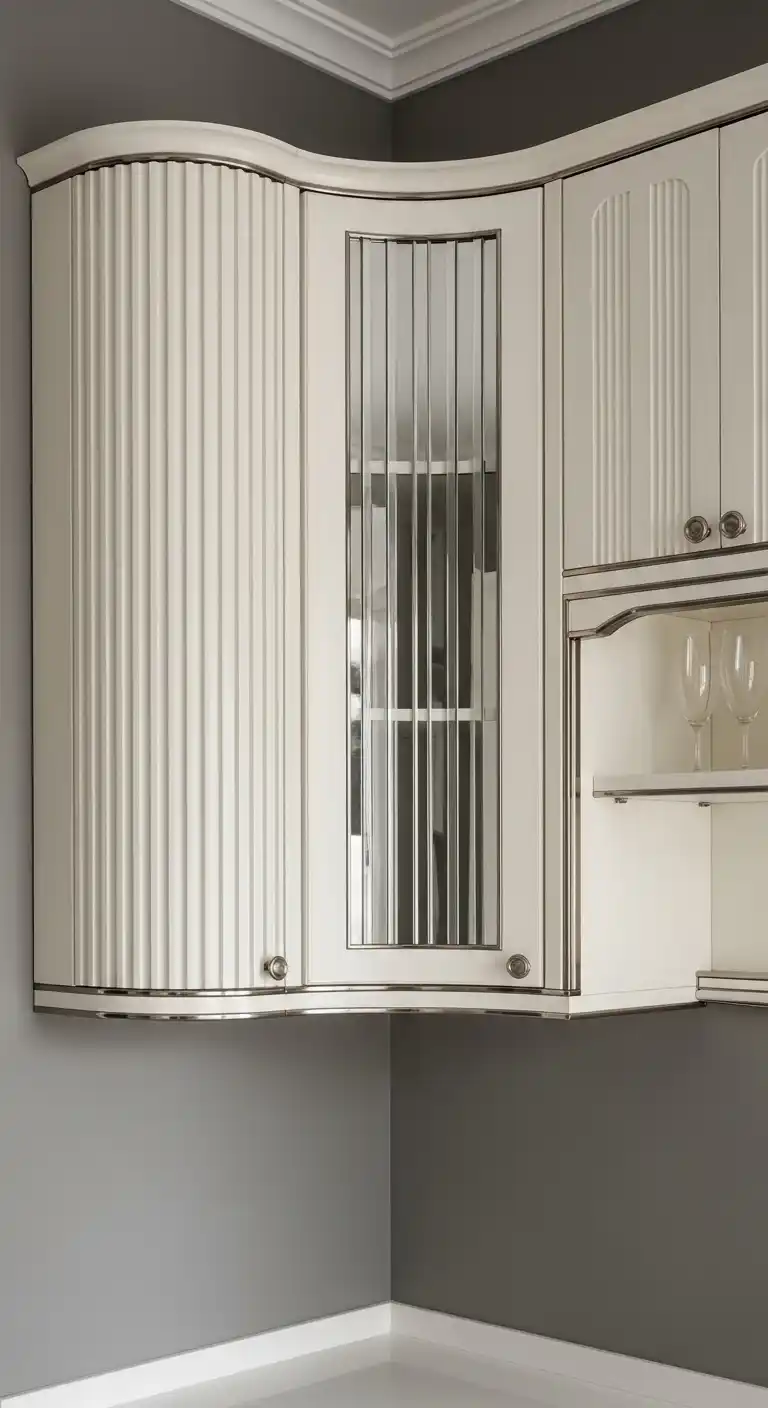
Rounded corner wall cabinets soften transitions between walls and other cabinetry, maintaining flow and elegance in Art Deco kitchen layouts.
Curved edges complement geometric or fluted patterns on adjacent cabinets, creating a harmonious balance between bold lines and gentle contours.
These cabinets also maximize usable space in corner areas, offering functional storage without compromising design integrity.
Materials such as lacquered wood, mirrored panels, or metallic trims enhance curvature while reflecting light and adding visual interest.
Rounded corner cabinets work well in combination with islands, open shelving, or feature units to create a cohesive, luxurious design.
Homeowners benefit from both aesthetics and practicality, enjoying smooth transitions and a sophisticated, inviting kitchen environment.
These cabinets exemplify the balance of functionality, style, and Art Deco glamour.
27. Glass Front Cabinets with Etched Patterns
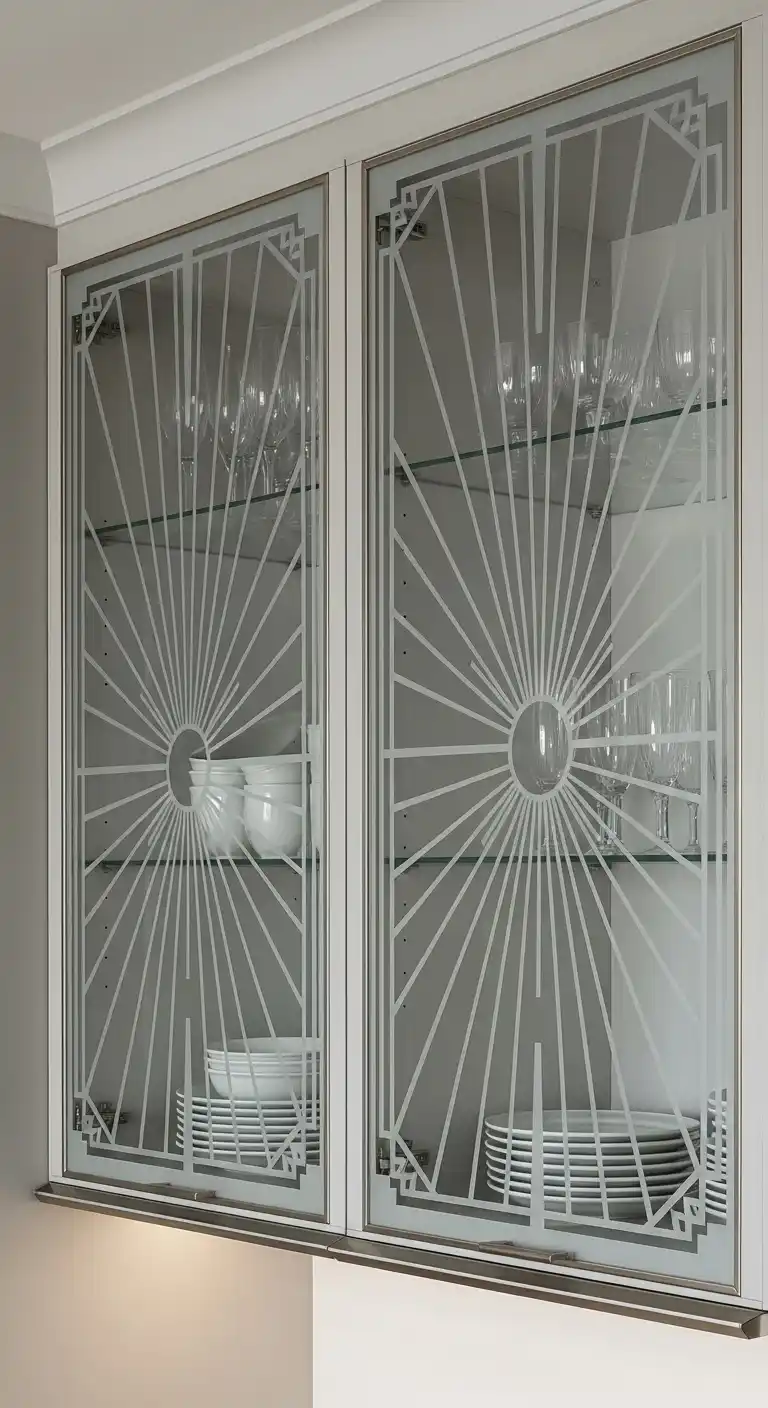
Glass-front cabinets with etched designs introduce subtle decoration while allowing functional storage and visual openness.
Etching can create geometric, sunburst, or abstract patterns, enhancing the Art Deco aesthetic without overwhelming other elements.
These cabinets allow homeowners to display dishware or glassware while maintaining clean lines and sophisticated organization.
Pairing etched glass with metallic trims or high-gloss lacquer enhances reflective properties, adding light and depth to the kitchen.
Glass-front cabinets are especially effective for upper units or display shelves, contributing to both decorative appeal and functional accessibility.
The combination of transparency, intricate design, and geometric elegance ensures the kitchen feels curated, luxurious, and modern.
Etched glass-front cabinetry is ideal for homeowners seeking artistic detail that complements Art Deco style without sacrificing usability.
28. Contrasting Cabinet Drawer Fronts
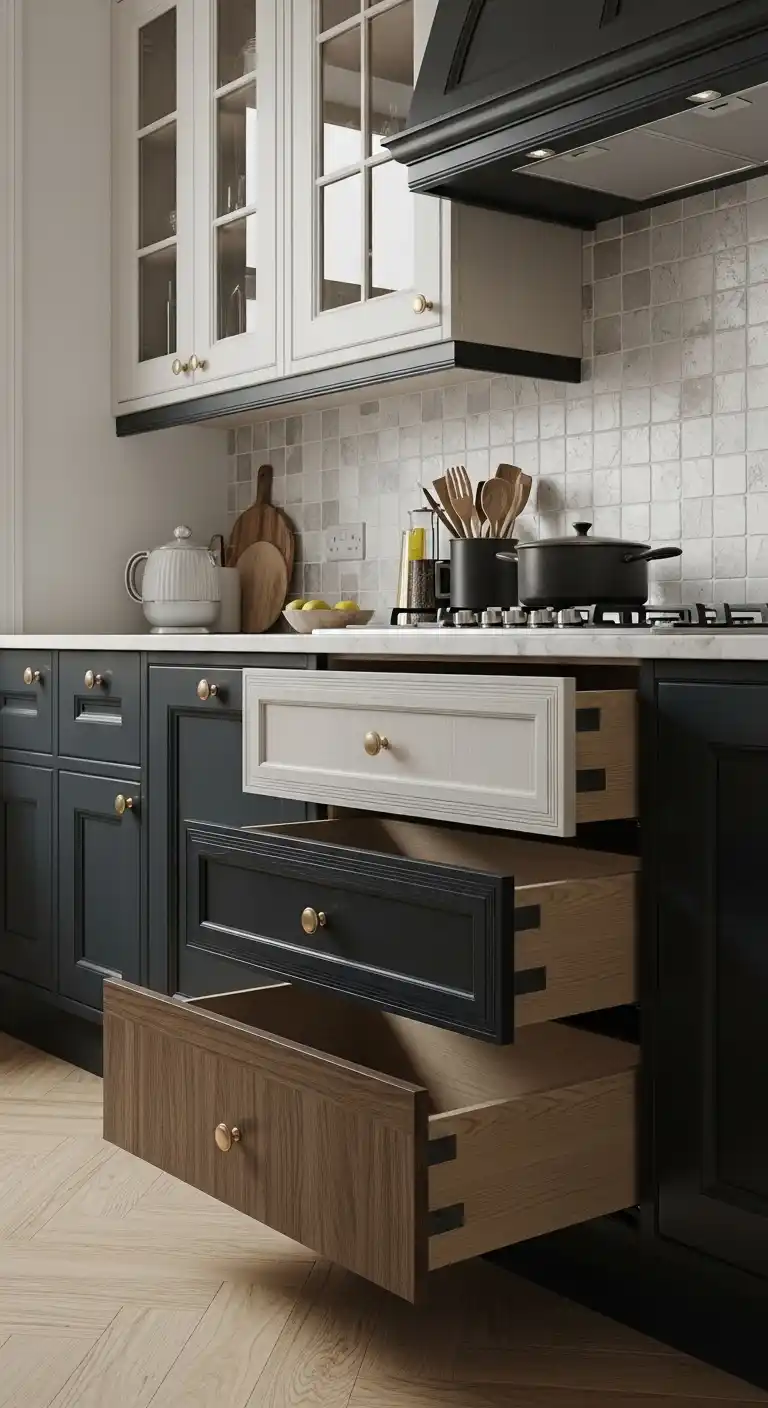
Contrasting drawer fronts create visual movement and interest in Art Deco kitchens, highlighting the cabinet’s structure and design complexity.
Homeowners can mix light and dark finishes, bold jewel tones, or metallic surfaces to emphasize depth and pattern.
This approach works well for islands, lower cabinets, or feature walls, ensuring a dynamic, engaging visual experience throughout the kitchen.
Contrasting drawers draw attention to geometric patterns, metallic accents, and high-gloss finishes, reinforcing Art Deco luxury.
Pairing these with neutral countertops, flooring, or backsplash ensures the contrast remains balanced without feeling chaotic or distracting.
Homeowners can experiment with subtle or bold contrasts depending on their preferred level of drama and personalization.
Contrasting drawer fronts combine functionality with artistic design, making cabinetry both practical and visually striking.
29. Cabinets with Vertical Fluting
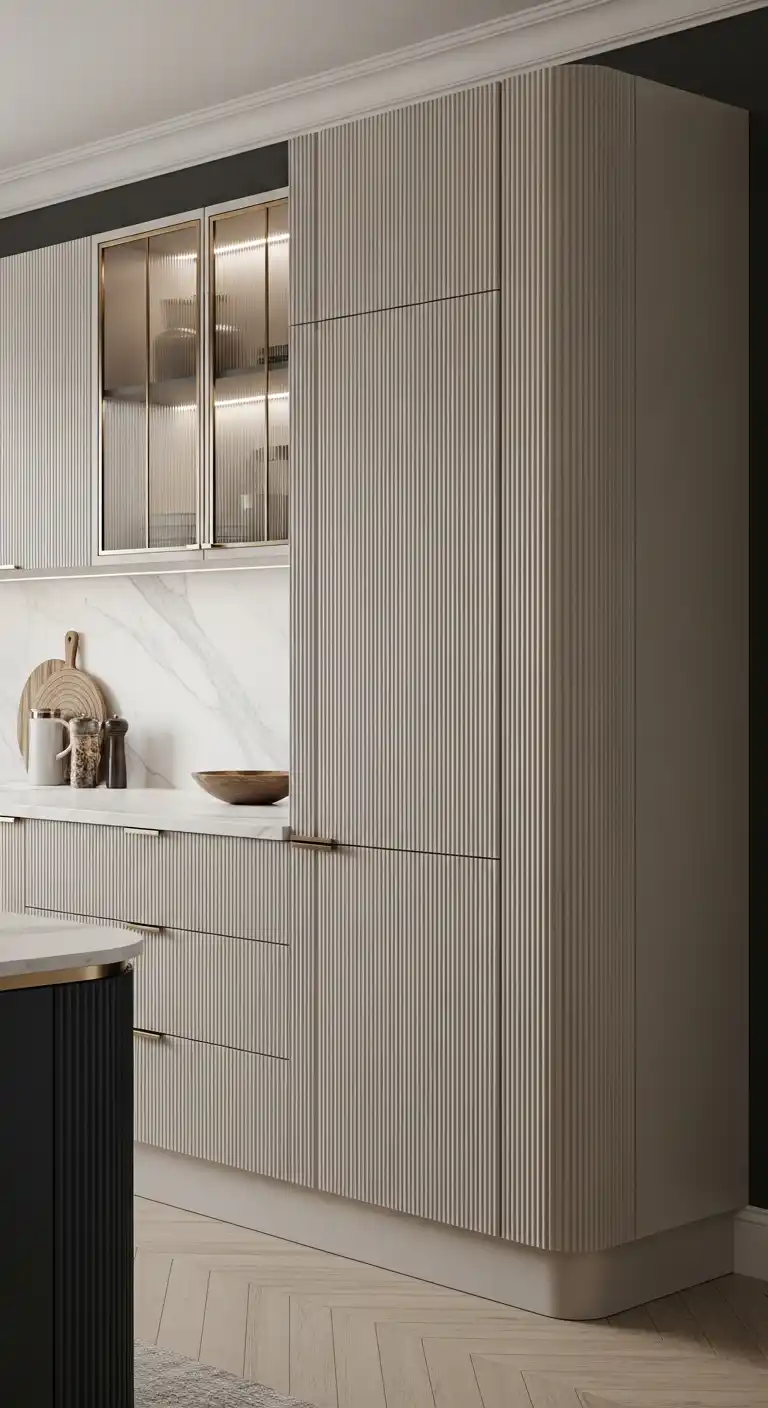
Vertical fluted panels add height, texture, and elegance to Art Deco kitchen cabinets, emphasizing linearity and structure.
Fluting works beautifully on tall cabinets, islands, or feature walls, enhancing depth while complementing geometric patterns or metallic trims.
These textured panels create shadow and light interplay, adding dimension without overwhelming the space or other design elements.
Homeowners can pair fluted cabinets with glossy finishes, mirrored panels, or metallic hardware to reinforce a luxurious aesthetic.
Vertical fluting also adds tactile interest, making cabinets visually engaging and encouraging touch interaction in addition to visual admiration.
This detail exemplifies the craftsmanship and sophistication central to Art Deco design, blending beauty and practicality seamlessly.
Fluted cabinets create a visually stunning kitchen environment, combining elegance, depth, and structured artistry.
Maintenance Tips for Art Deco Kitchen Cabinets
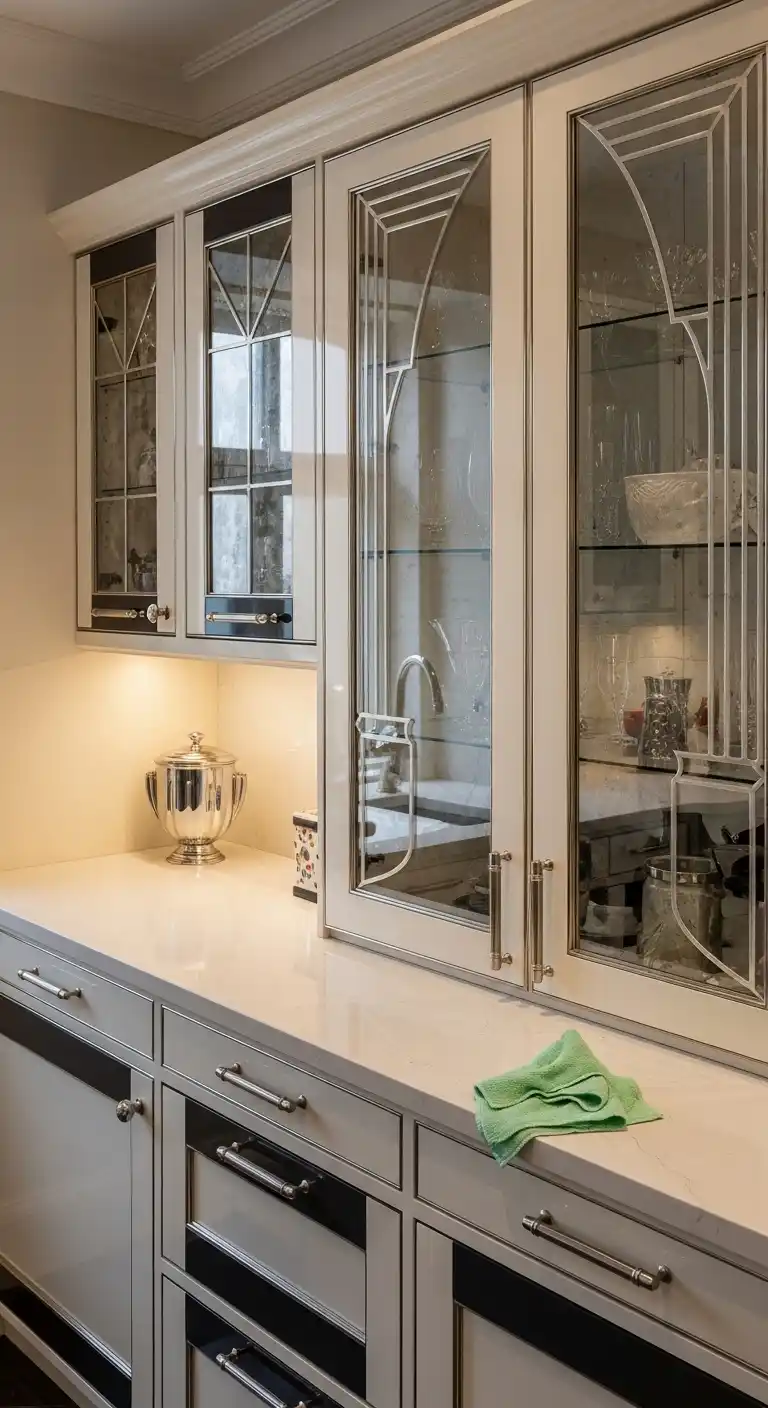
Maintaining Art Deco kitchen cabinets requires careful cleaning and attention to preserve their luxurious finishes and intricate details over time.
Lacquered surfaces should be wiped regularly with soft, damp cloths, avoiding harsh chemicals that may damage the glossy finish or alter the color.
Metallic hardware and mirrored panels benefit from gentle polishing to maintain shine while preventing tarnish, rust, or scratches that reduce visual appeal.
Glass surfaces should be cleaned with streak-free solutions, ensuring both clarity and durability while complementing the overall cabinet design.
By following proper maintenance practices, homeowners can extend the lifespan of their cabinets and keep the kitchen looking elegant, functional, and inviting.
Final Wrap-Up
Art Deco kitchen cabinets combine timeless elegance with functional practicality, making them a perfect choice for homeowners who want a luxurious yet usable space.
From geometric patterns and bold color palettes to lacquered finishes and metallic accents, every design element contributes to a cohesive, visually stunning kitchen environment.
Choosing the right materials, such as exotic woods, marble, or mirrored panels, can transform ordinary cabinets into statement pieces that enhance both beauty and functionality.
By thoughtfully integrating open shelving, curved fronts, or statement islands, homeowners can add personality, sophistication, and versatility to their kitchens.
Proper maintenance and strategic appliance integration ensure these cabinets remain both practical and luxurious, allowing homeowners to enjoy their investment for years.
Art Deco kitchens are more than just storage solutions; they are functional works of art that elevate everyday living while reflecting personal style.