23 Japandi Kitchen Cabinet Ideas You’ll Love

Want a kitchen that balances natural beauty with modern simplicity? Japandi kitchen cabinets are known for their clean lines, soft colors, and clutter-free design. Explore these stylish ideas to create a space that feels both cozy and refined.
I’ll never forget the first time I saw a Japandi kitchen in a design magazine. The soft wood panels, muted neutrals, and simple hardware felt like a breath of fresh air compared to my chaotic, dark kitchen. I knew immediately I wanted that calm, balanced feeling for my own home.
Replacing my old cabinets was intimidating at first. But once I started picking light oak tones, matte white fronts, and natural black handles, everything fell into place.
The space felt bigger, cleaner, and somehow more joyful. Even cooking breakfast in the morning became a quiet ritual rather than a rushed chore.
Japandi kitchen cabinets aren’t just a trend—they’re a lifestyle. They combine efficiency, elegance, and calmness, letting your kitchen feel like the center of a home you actually love being in.
Understanding Japandi Kitchen Cabinets
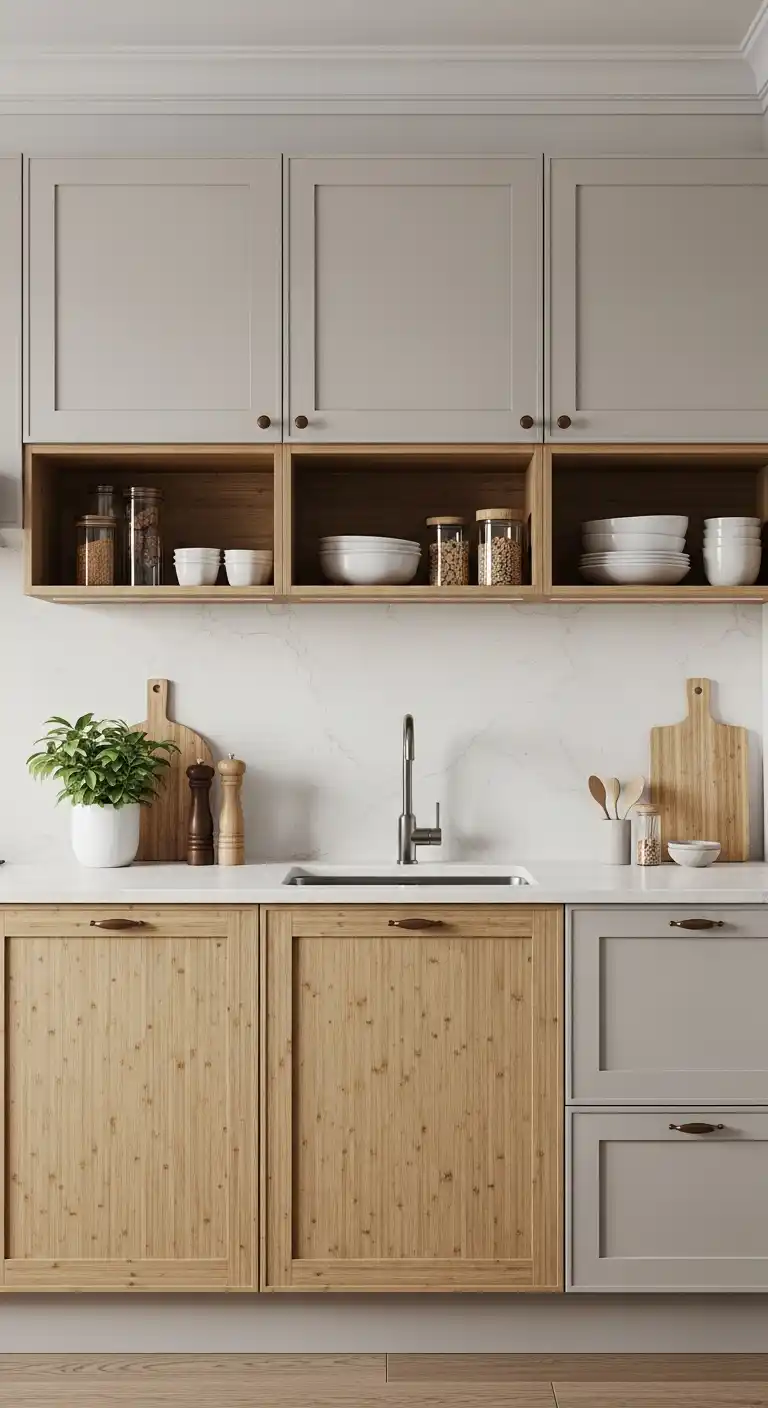
Japandi kitchen cabinets stand out because they focus on both simplicity and utility, unlike other traditional or modern designs.
Materials are often natural, including oak, walnut, or bamboo, paired with muted finishes like matte beige, gray, or soft white to maintain visual harmony.
Design elements emphasize clean lines, smooth surfaces, and minimal ornamentation, ensuring that every piece looks intentional and practical at the same time.
These cabinets work for small apartments or large kitchens because the style prioritizes decluttered spaces, thoughtful storage solutions, and visual balance.
The combination of Japanese minimalism and Scandinavian warmth produces a cozy yet organized environment, appealing to homeowners who want both elegance and functionality.
Benefits of Choosing Japandi Kitchen Cabinets
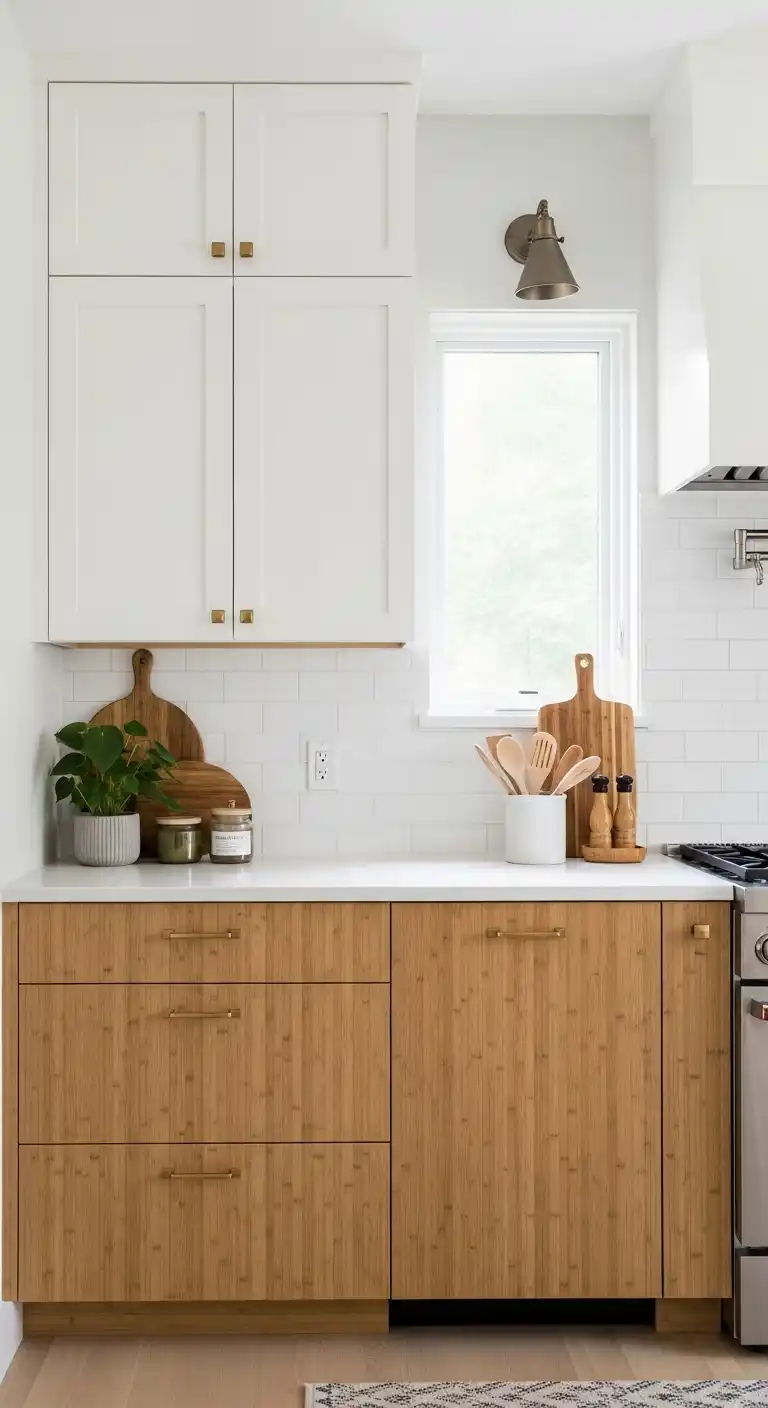
One major benefit of Japandi cabinets is the balance between aesthetics and utility, providing ample storage without compromising visual simplicity.
Neutral tones and natural wood finishes create a peaceful atmosphere, making the kitchen feel inviting, clean, and well-structured.
Many designs also use sustainable materials, such as bamboo or reclaimed wood, which not only reduce environmental impact but also add durability to the kitchen space.
The uncluttered design helps reduce stress while cooking, cleaning, or entertaining, giving homeowners a functional and calming experience every day.
By combining elegance with practicality, Japandi cabinets ensure that your kitchen remains stylish while supporting modern lifestyle demands efficiently.
23 Japandi Kitchen Cabinets Ideas
1. Light Oak Japandi Kitchen Cabinets for Bright Spaces
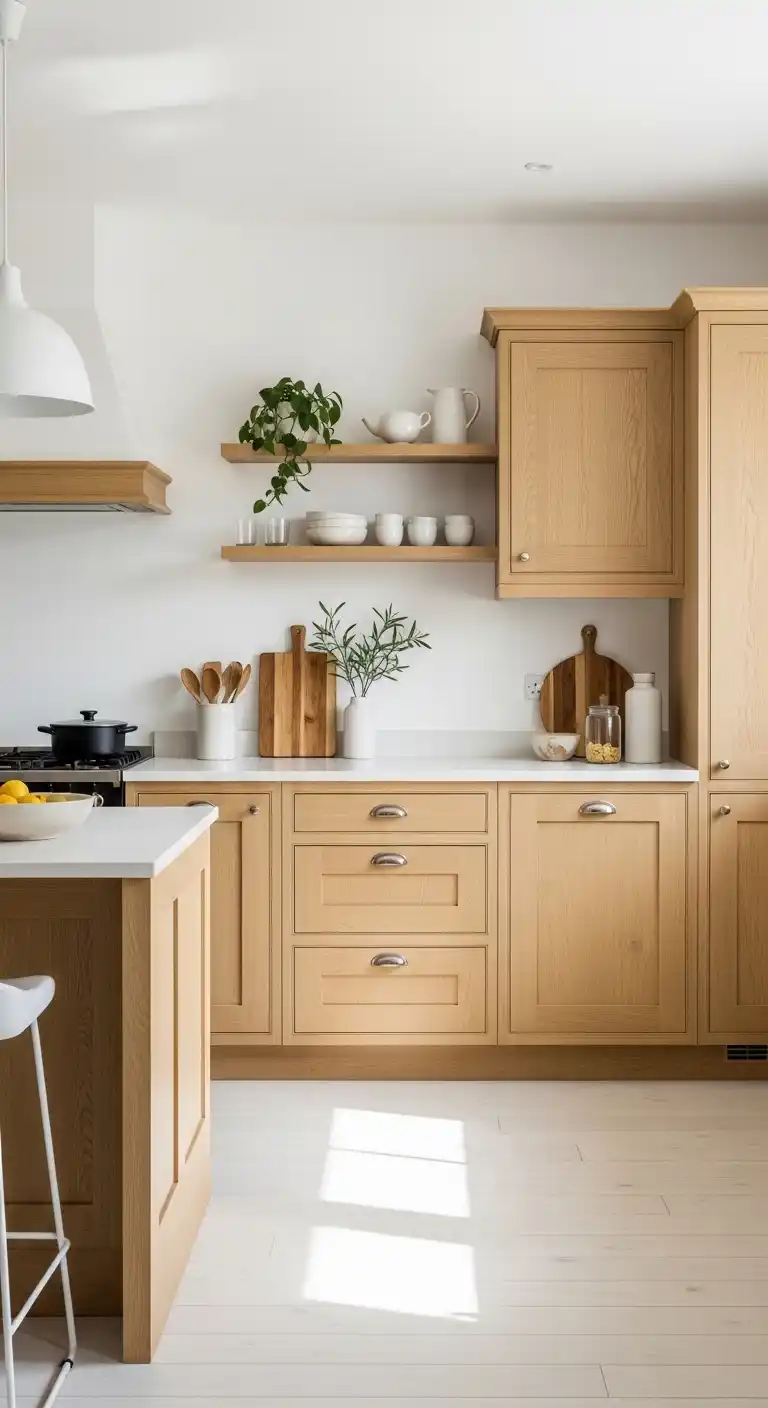
Light oak Japandi cabinets offer a natural, airy feel that enhances the brightness of any kitchen, making the room feel larger and more open.
The soft, golden tones of oak pair well with white walls, neutral countertops, and Scandinavian-inspired minimal furniture, creating a cohesive and calming aesthetic.
This type of cabinet works especially well in kitchens with natural light, as it reflects sunlight and keeps the space visually light and cheerful.
Homeowners can also incorporate small indoor plants or minimal decorative ceramics to complement the natural wood, enhancing warmth without adding clutter.
Overall, light oak cabinets combine functionality with serene style, making them a versatile choice for both modern and traditional kitchen layouts.
2. Matte Black Japandi Cabinets for Modern Elegance
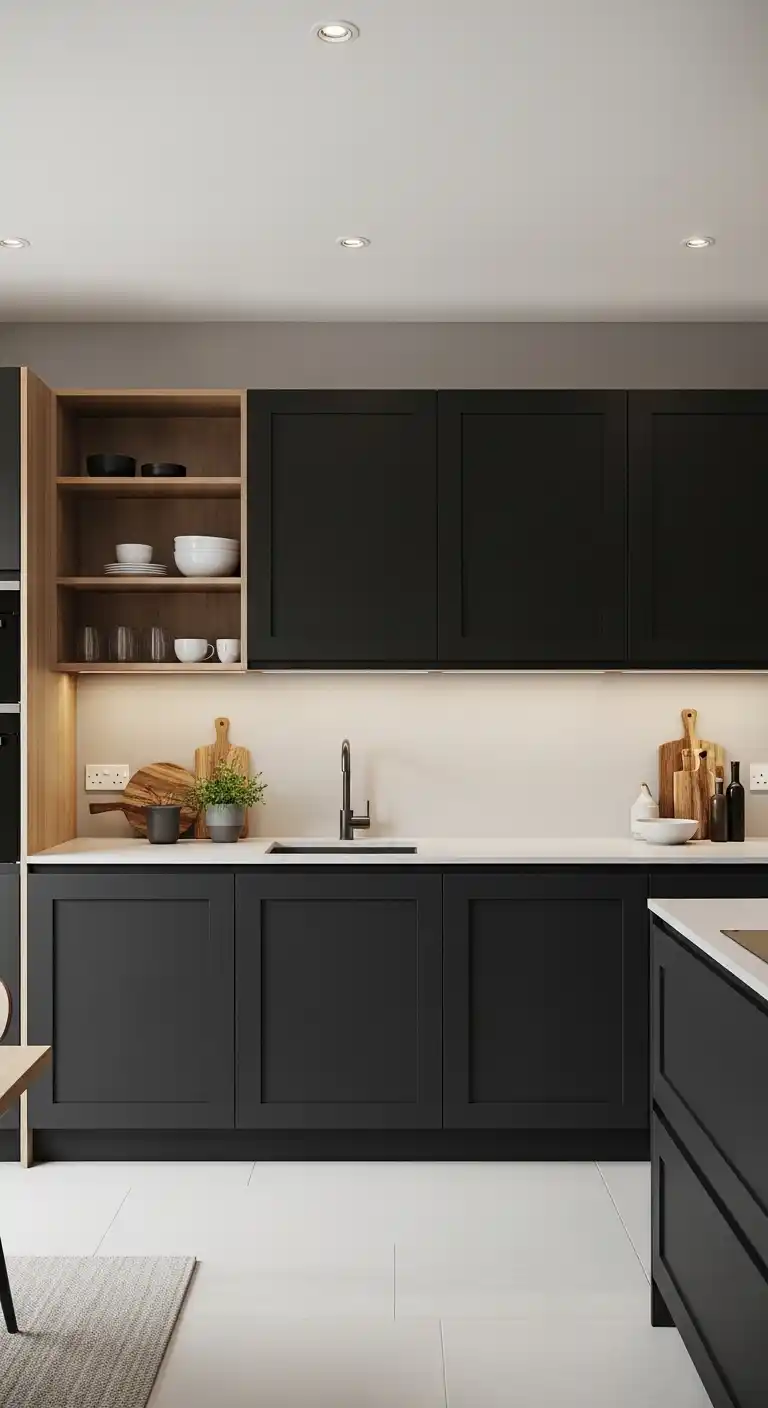
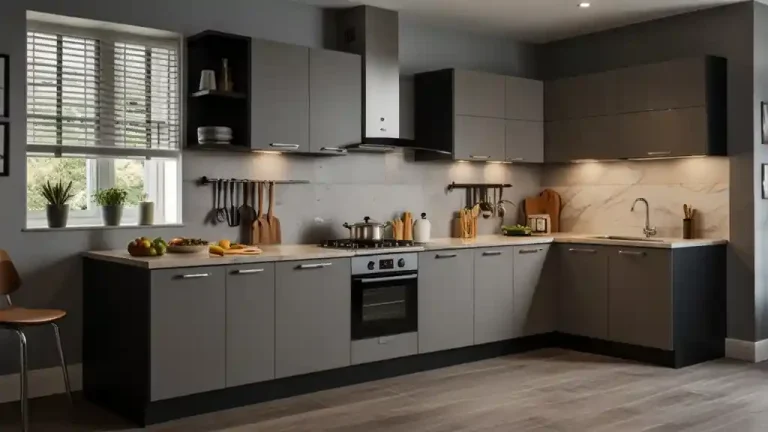
Matte black Japandi cabinets create a striking visual statement while maintaining the minimalist principles central to this design philosophy.
Dark cabinets contrast beautifully with muted walls, light countertops, and wooden accents, producing a balanced, contemporary kitchen look.
Proper lighting, such as recessed LEDs or under-cabinet lights, ensures that the kitchen remains bright and functional, preventing the space from feeling heavy.
These cabinets work well in open-plan kitchens or islands, where they can serve as a visual anchor while blending seamlessly with surrounding furniture and finishes.
Matte black finishes also hide fingerprints and smudges more effectively than glossy surfaces, making maintenance simpler while retaining modern elegance.
3. Two-Tone Japandi Kitchen Cabinets for Visual Interest
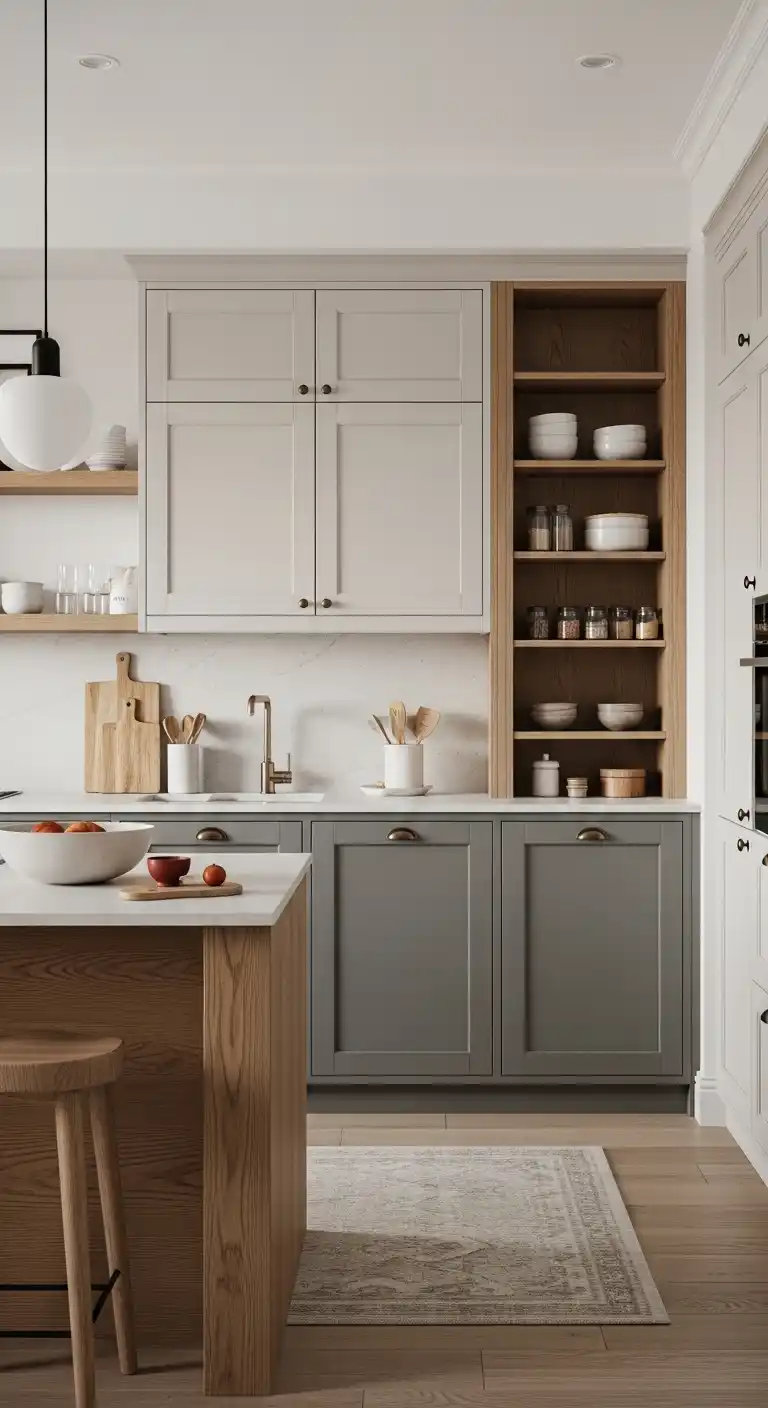
Two-tone Japandi cabinets combine natural wood with soft neutrals like gray, beige, or muted white, creating depth without breaking minimalism.
This design introduces subtle contrast, drawing attention to specific areas like kitchen islands, upper or lower cabinets, or built-in storage units.
By blending two complementary tones, the kitchen feels dynamic yet uncluttered, maintaining the calming balance essential in Japandi design principles.
Pairing two-tone cabinets with natural elements, like wooden shelves, stone countertops, or ceramic accessories, further enhances the warm, serene aesthetic.
This approach allows homeowners to express style creatively while adhering to minimalism, producing a kitchen that is visually interesting and practical simultaneously.
4. Handleless Japandi Cabinets for Seamless Minimalism
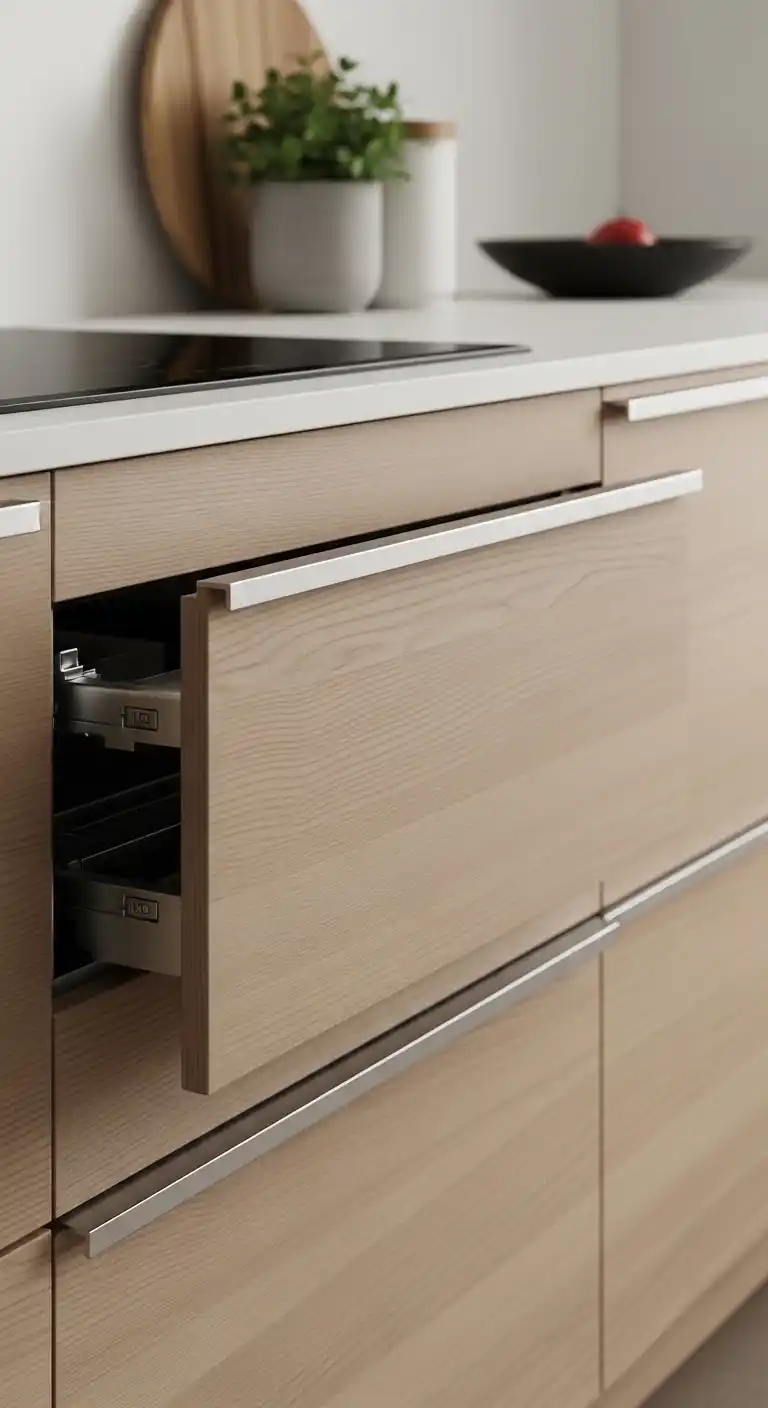
Handleless Japandi cabinets create a smooth, uninterrupted surface that enhances the minimalist aesthetic and promotes a sense of visual calm in the kitchen.
Instead of traditional knobs or pulls, these cabinets use push-to-open mechanisms, making them functional and elegant while maintaining clean lines throughout the space.
This design reduces clutter, ensuring that every element contributes to a cohesive and harmonious kitchen environment without unnecessary distractions.
Handleless cabinets pair exceptionally well with muted wood tones, soft white finishes, or matte black surfaces, providing flexibility for different Japandi interior palettes.
Homeowners who prioritize modern simplicity and efficiency find handleless cabinets ideal for achieving both a functional workspace and an aesthetically pleasing kitchen.
5. Open Shelving with Japandi Cabinetry
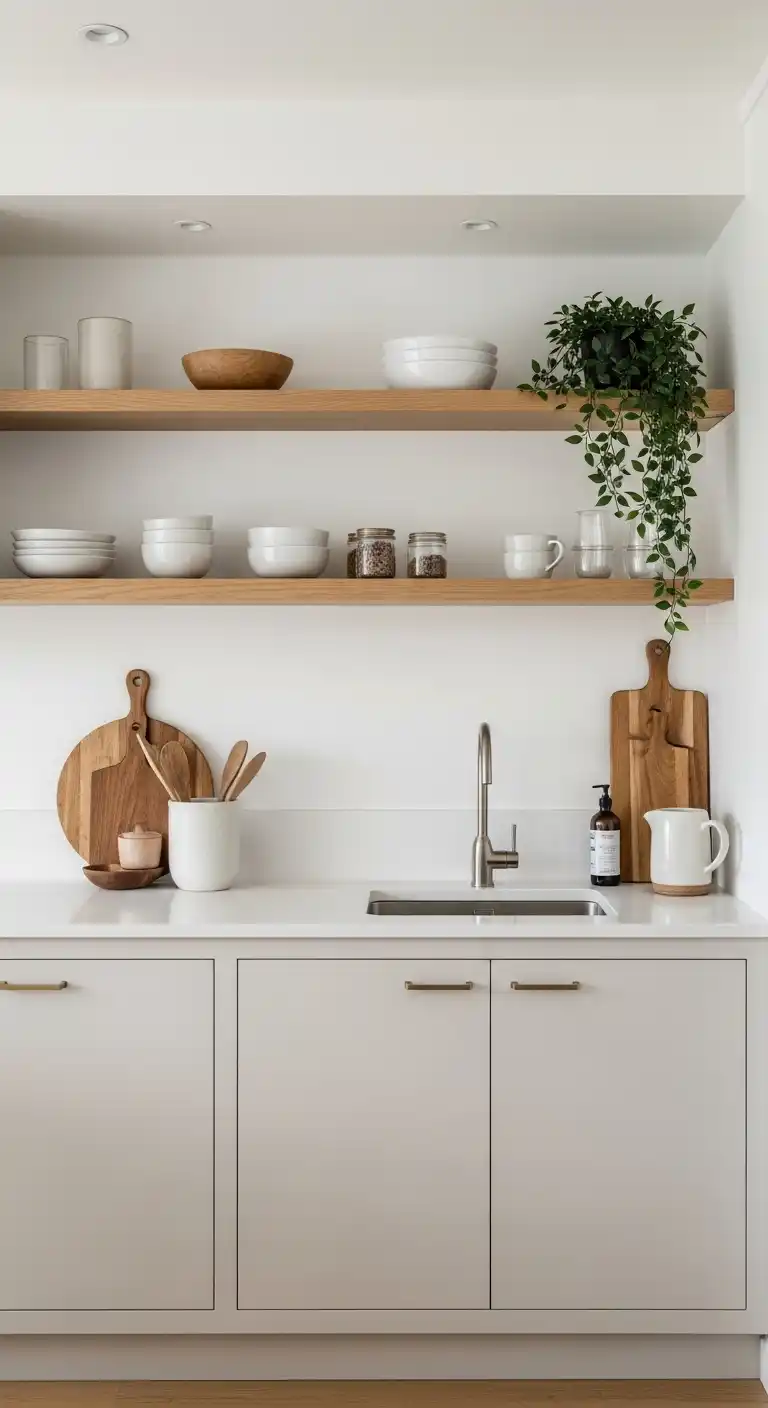
Open shelving introduces a modern twist to Japandi kitchens, balancing storage with opportunities for tasteful display and visual openness.
By using natural wood shelves or neutral-colored materials, homeowners can showcase ceramics, plants, or carefully curated kitchen essentials without cluttering the space.
Open shelves encourage organization, as every item becomes visible and contributes to the overall minimalist design philosophy that defines Japandi interiors.
This approach also fosters easy access to frequently used items, enhancing functionality while keeping the kitchen visually light and inviting.
When combined with closed cabinets for concealed storage, open shelving maintains the perfect balance between practicality and serene design aesthetics.
6. Floating Japandi Kitchen Cabinets
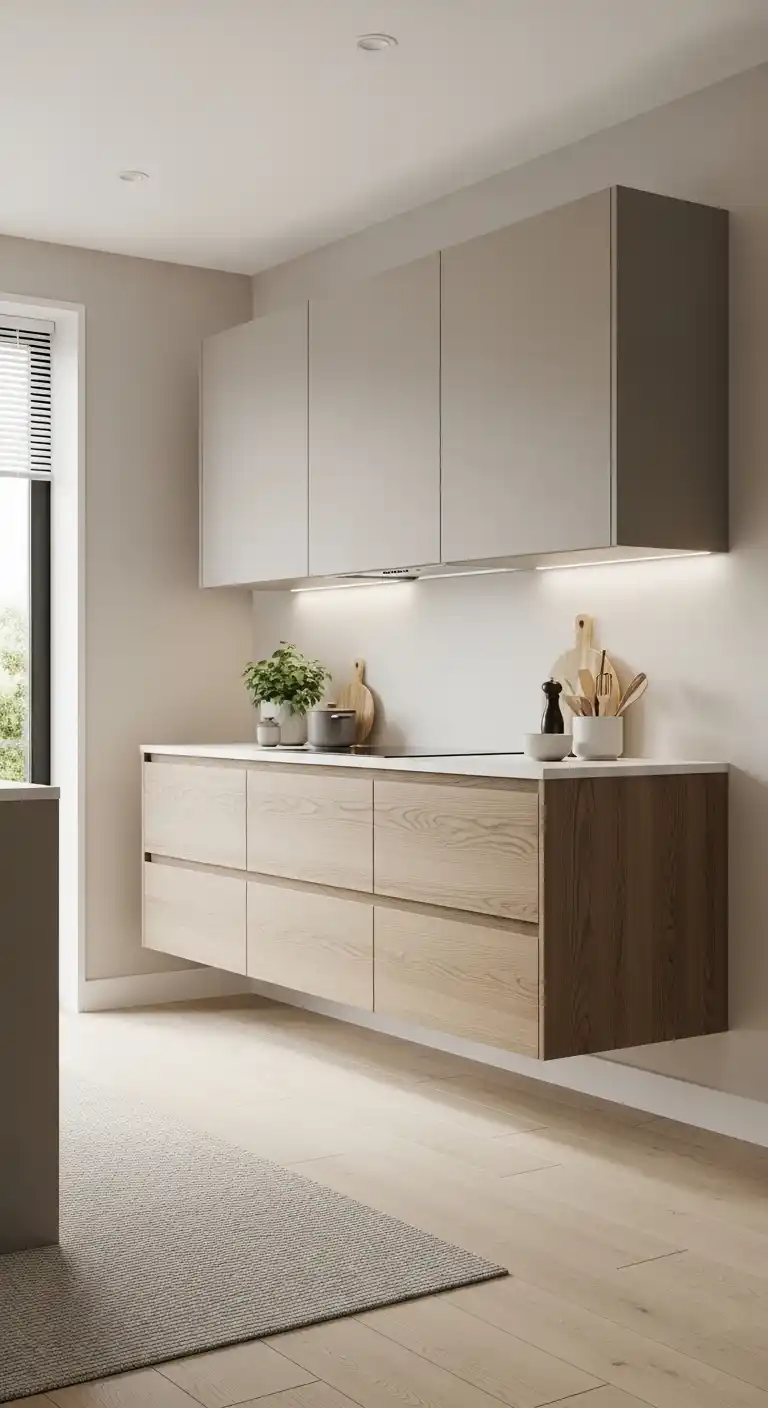
Floating cabinets are wall-mounted units that elevate kitchen storage off the floor, creating a sense of spaciousness and modern sophistication.
By exposing floor space beneath, these cabinets make smaller kitchens appear larger and contribute to a clutter-free environment essential to Japandi style.
Floating cabinets work beautifully with under-cabinet lighting, enhancing both function and visual appeal by highlighting natural wood textures or matte finishes.
Homeowners can pair floating designs with a neutral color palette and simple countertops, producing a streamlined look that emphasizes both elegance and practicality.
This design ensures easy cleaning underneath and promotes a modern kitchen layout that balances minimalism with functional storage solutions.
7. Wooden Japandi Cabinets with Soft Grain Patterns
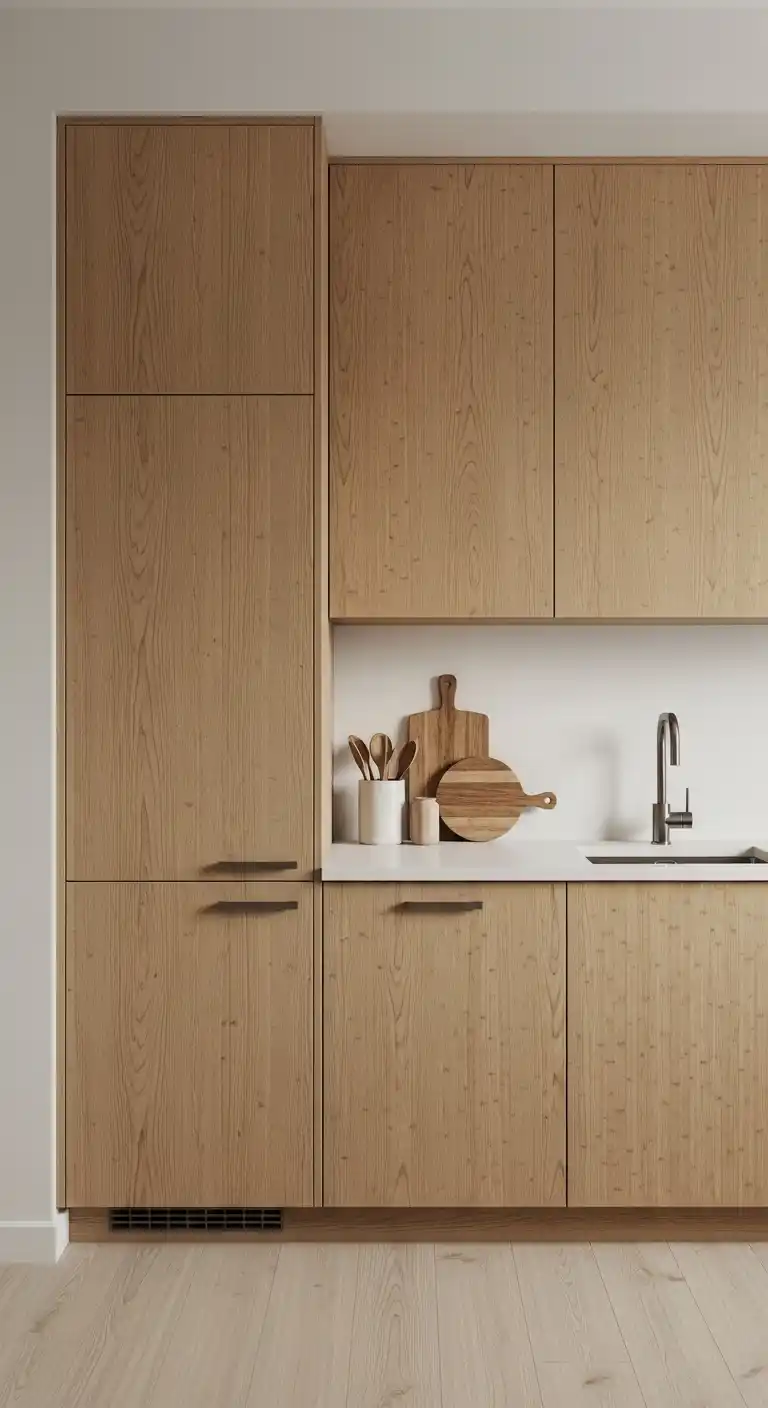
Soft wood grains add warmth and subtle character to Japandi cabinets, enhancing the minimalist aesthetic without overpowering the kitchen’s serene atmosphere.
Oak, walnut, and bamboo are popular choices, providing both durability and natural texture that aligns with Scandinavian and Japanese design principles.
Soft-grained wood pairs well with neutral-colored walls, countertops, and flooring, reinforcing harmony while adding visual interest through understated patterns.
Regular care, like gentle polishing or avoiding harsh chemicals, preserves the wood’s natural beauty and ensures cabinets remain fresh and inviting over time.
Wood grain cabinets work in both small and large kitchens, creating a cozy, timeless space that emphasizes natural elegance and functionality.
8. White Japandi Cabinets with Natural Wood Accents
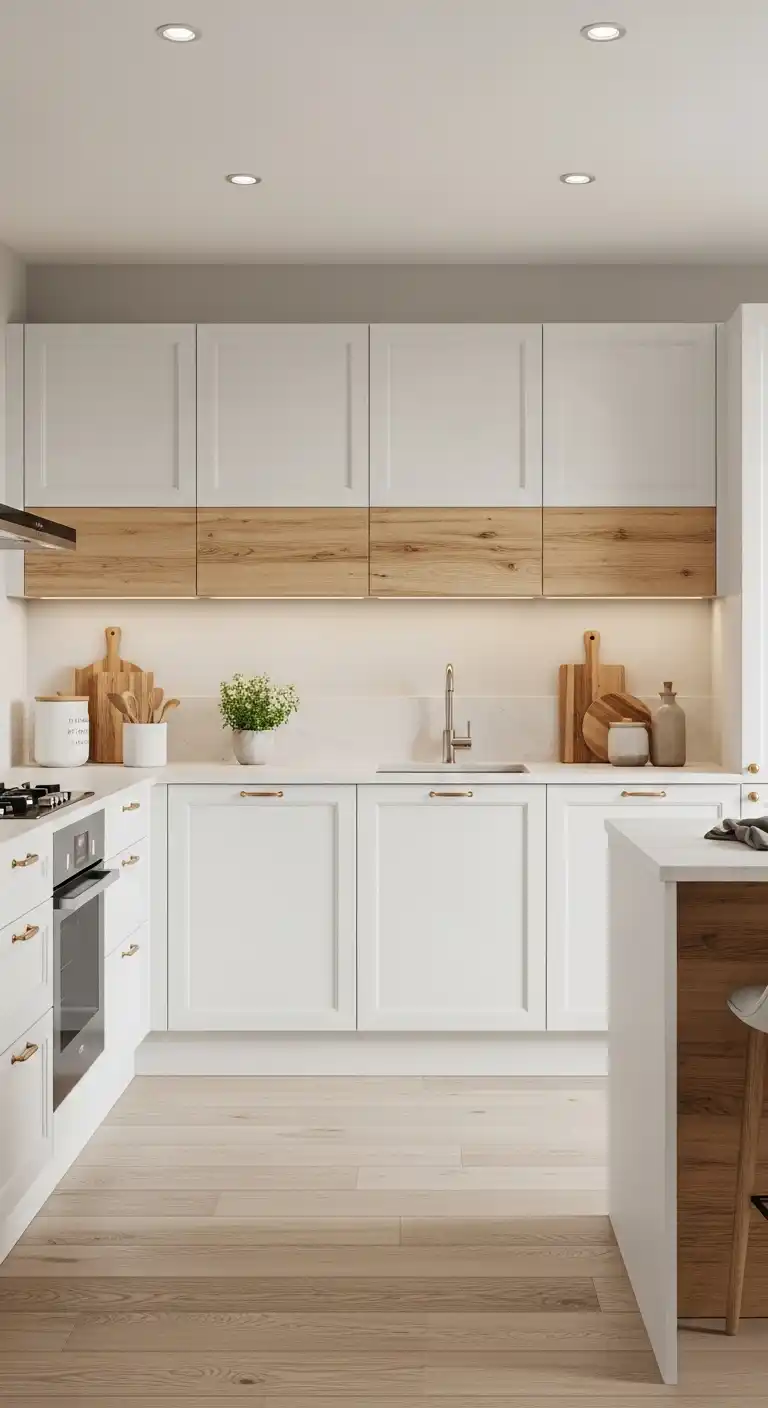
White cabinets paired with subtle wood accents produce a balanced, light, and airy kitchen that captures the essence of Japandi design.
The combination introduces a modern Scandinavian brightness while retaining warmth from natural wood panels, creating an inviting and functional workspace.
Upper cabinets, islands, or shelving can incorporate wood details, breaking the monotony of white while maintaining clean lines and minimalism.
This pairing works especially well with neutral countertops and soft lighting, producing a kitchen that feels open, calming, and visually cohesive.
Homeowners can easily personalize this design with small greenery, ceramics, or muted decorative items, complementing the minimalist aesthetic.
9. Japandi Cabinets with Sliding Doors
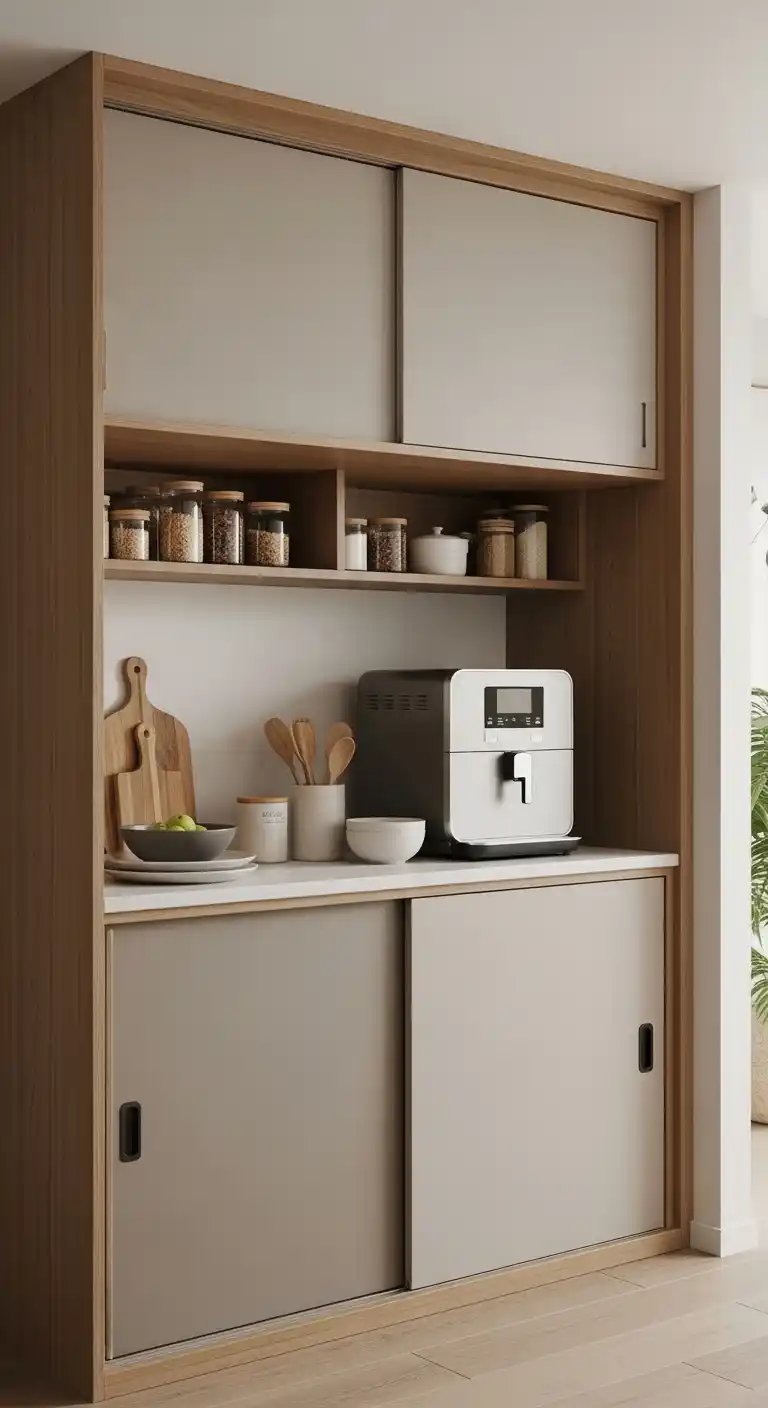
Sliding door cabinets are a practical solution inspired by Japanese interior design, maximizing storage while preserving clean lines and uncluttered surfaces.
They work well in tight kitchen layouts, allowing easy access without requiring extra clearance for swinging doors, making the space functional and visually appealing.
These cabinets integrate seamlessly with wood, matte finishes, or neutral-colored panels, maintaining the signature calm and harmonious Japandi look.
Sliding doors can conceal pantry items, appliances, or everyday kitchen essentials, keeping counters clear and supporting organized storage throughout the kitchen.
With careful placement and design, sliding door cabinets combine tradition, innovation, and minimalism to create both efficiency and style.
10. Eco-Friendly Japandi Cabinets
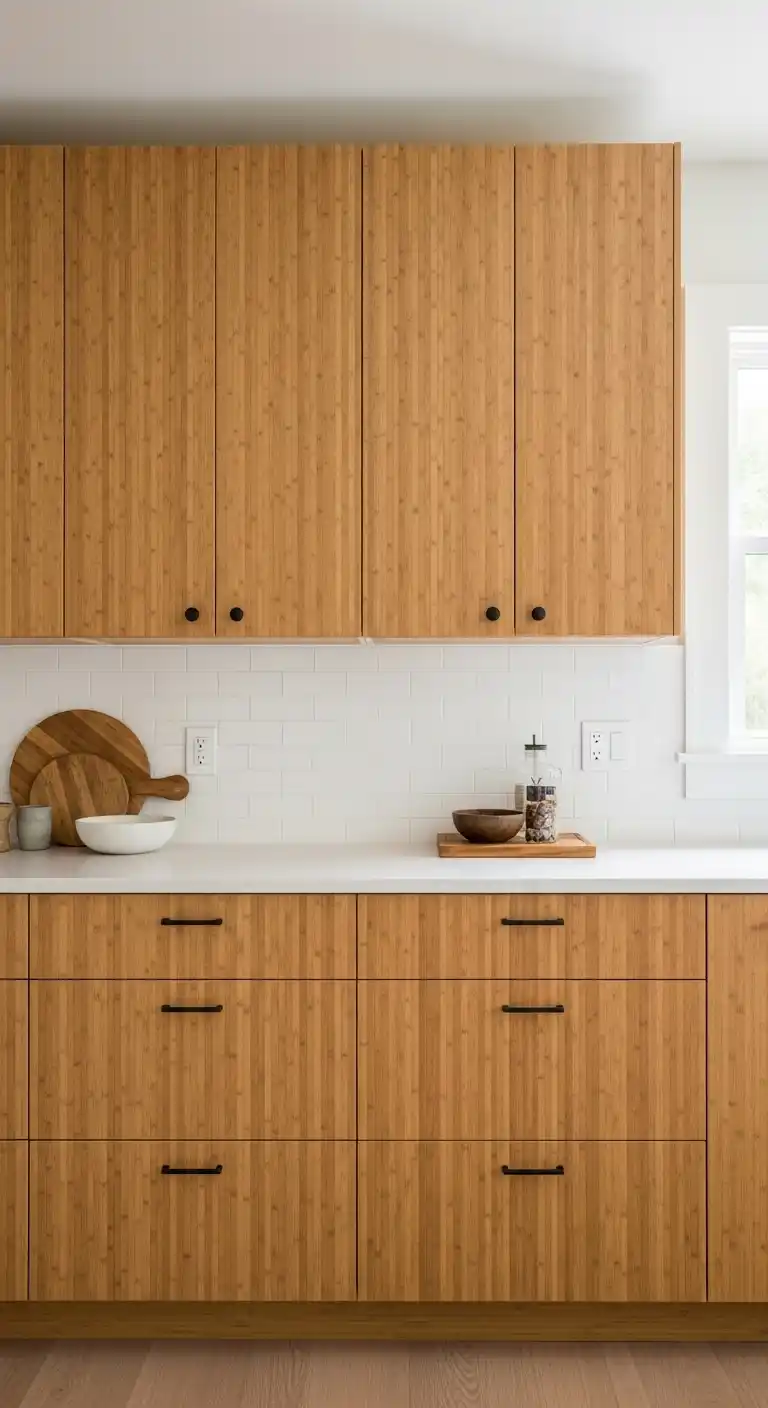
Eco-friendly Japandi cabinets prioritize sustainable materials such as bamboo, reclaimed wood, or low-VOC finishes, reducing environmental impact while providing durability.
Sustainable choices create a kitchen that feels natural, harmonious, and aligned with Japandi design principles focused on balance, functionality, and simplicity.
These cabinets appeal to homeowners seeking an ethical, stylish solution that also contributes to long-lasting kitchen quality and visual serenity.
Using environmentally conscious materials does not compromise aesthetics, as natural textures and muted colors enhance minimalism while maintaining elegance.
Eco-friendly cabinets combine style, functionality, and environmental responsibility, making them a practical choice for modern homeowners who value both design and sustainability.
11. Japandi Cabinets with Integrated Appliances
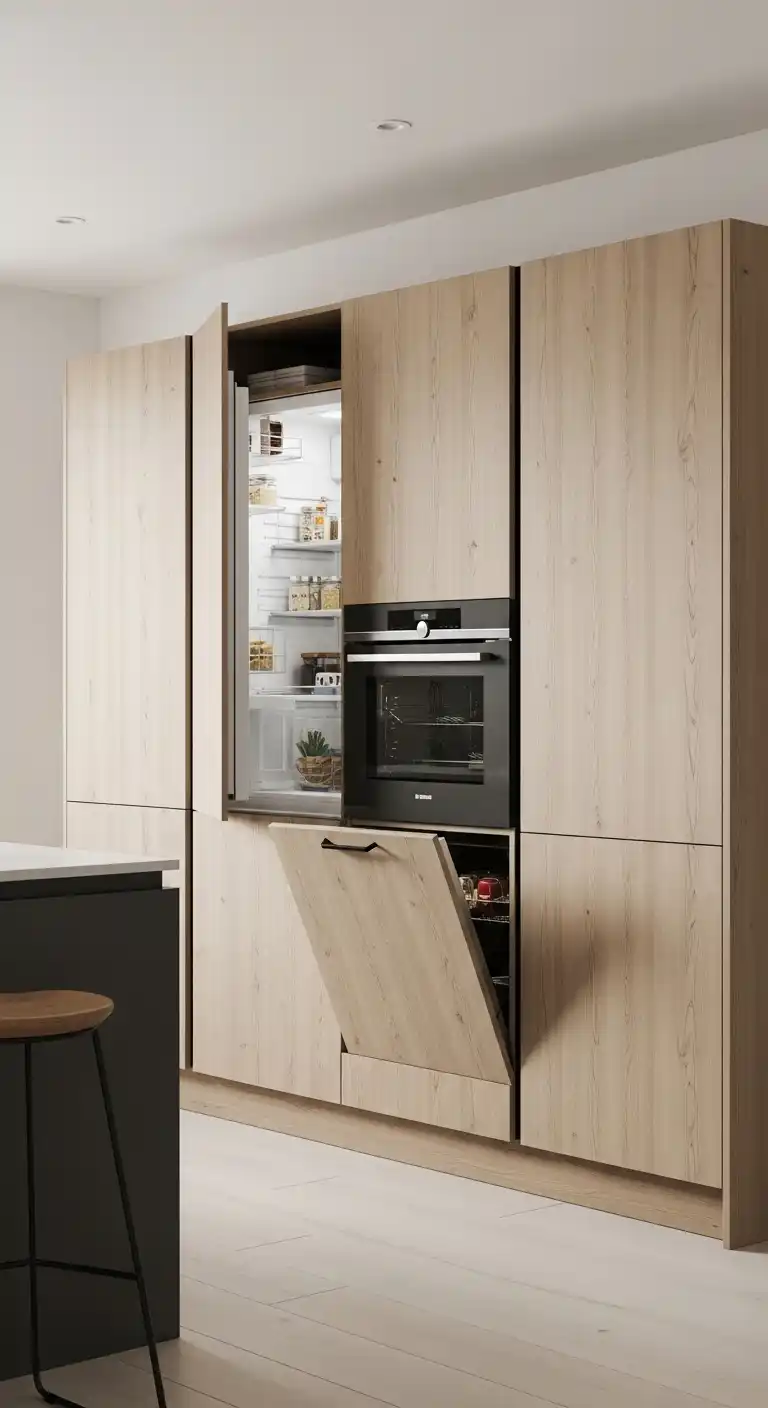
Integrated cabinets conceal appliances like refrigerators, ovens, and dishwashers, maintaining a smooth, uninterrupted visual flow in the kitchen.
By hiding appliances behind matching cabinet fronts, homeowners create a minimalist, clutter-free environment that reflects the essence of Japandi design.
This approach also improves functionality, as appliances remain fully accessible without disrupting the visual harmony of neutral tones and natural wood finishes.
Integrated cabinets work well for both large kitchens with islands and smaller spaces, keeping the layout cohesive while enhancing aesthetic appeal.
By combining practical storage with a streamlined look, integrated appliance cabinets make kitchens more organized, functional, and visually calm.
12. Minimalist Japandi Pantry Cabinets
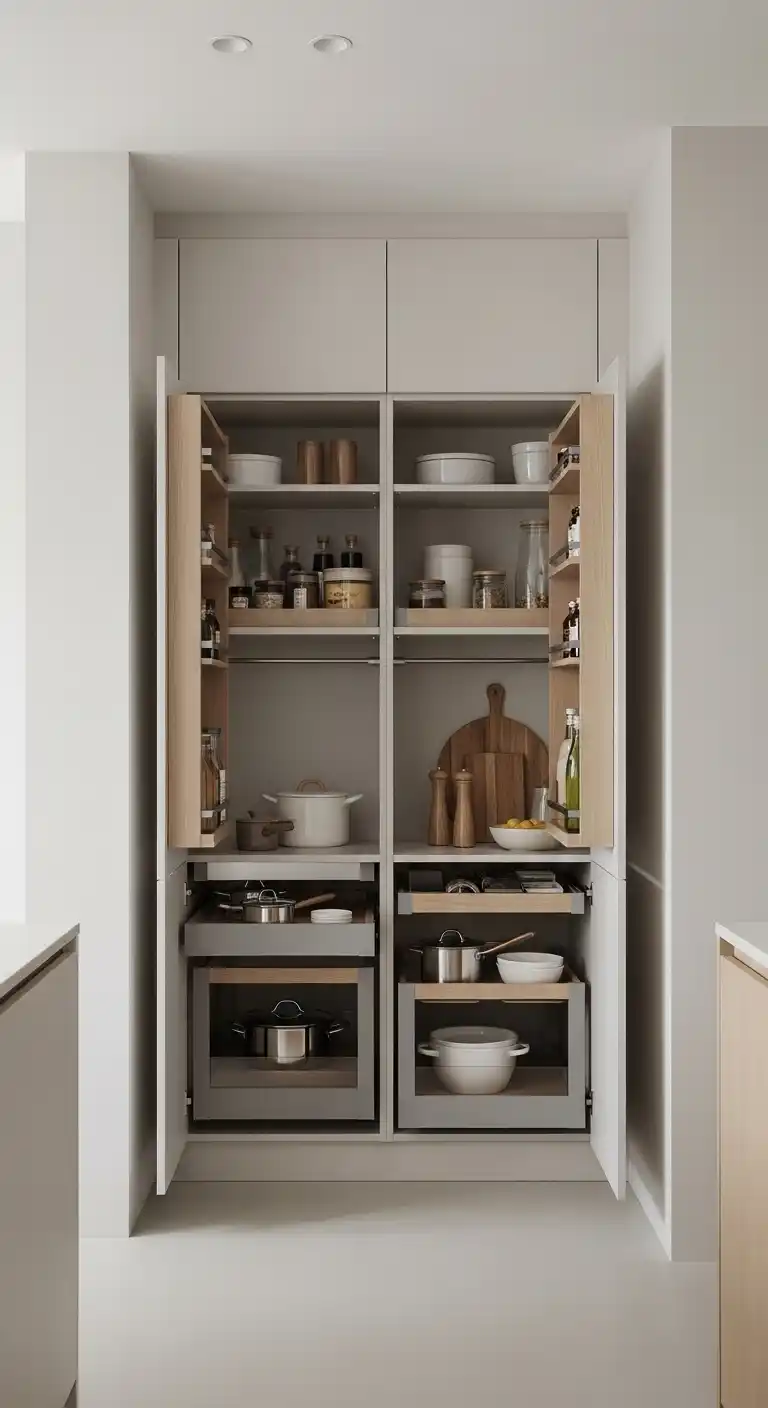
Tall pantry cabinets optimize vertical space, providing maximum storage while maintaining the minimal, clean aesthetic of Japandi design.
Pull-out shelves, dividers, and hidden compartments enhance usability, keeping ingredients, cookware, and supplies organized without cluttering counters or open shelves.
Neutral finishes, natural wood tones, or matte surfaces reinforce simplicity and harmony, making pantry cabinets blend seamlessly into the overall kitchen layout.
These cabinets are especially useful in small kitchens, offering efficient storage while preserving a spacious, airy feeling central to Japandi principles.
Minimalist pantry solutions combine practicality with design elegance, supporting daily kitchen activities while maintaining a visually soothing environment.
13. Japandi Cabinets with Soft-Close Drawers
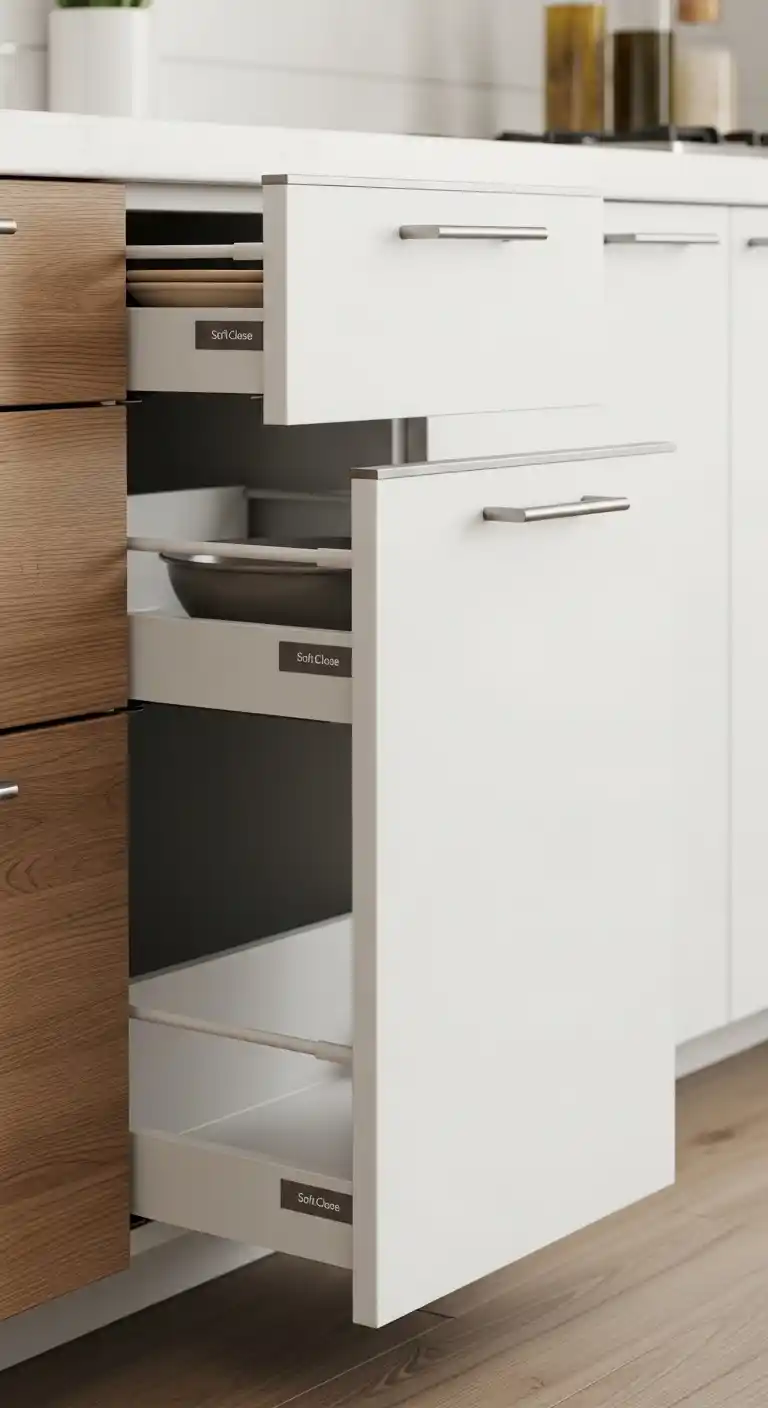
Soft-close drawers and doors add modern functionality to Japandi kitchens, ensuring quiet operation and reducing wear and tear over time.
These mechanisms enhance the overall cooking experience, promoting ease of use while maintaining the minimalist elegance central to Japandi design.
Soft-close hardware pairs well with wood, white, or muted matte finishes, complementing the natural textures and neutral palette of the kitchen.
The silent closing action preserves the serene, calm atmosphere desired in Japandi interiors while improving accessibility for all household members.
With durability and smooth operation, soft-close cabinets offer practical benefits that combine convenience, comfort, and stylish simplicity in modern kitchens.
14. Japandi Corner Cabinets for Functional Space
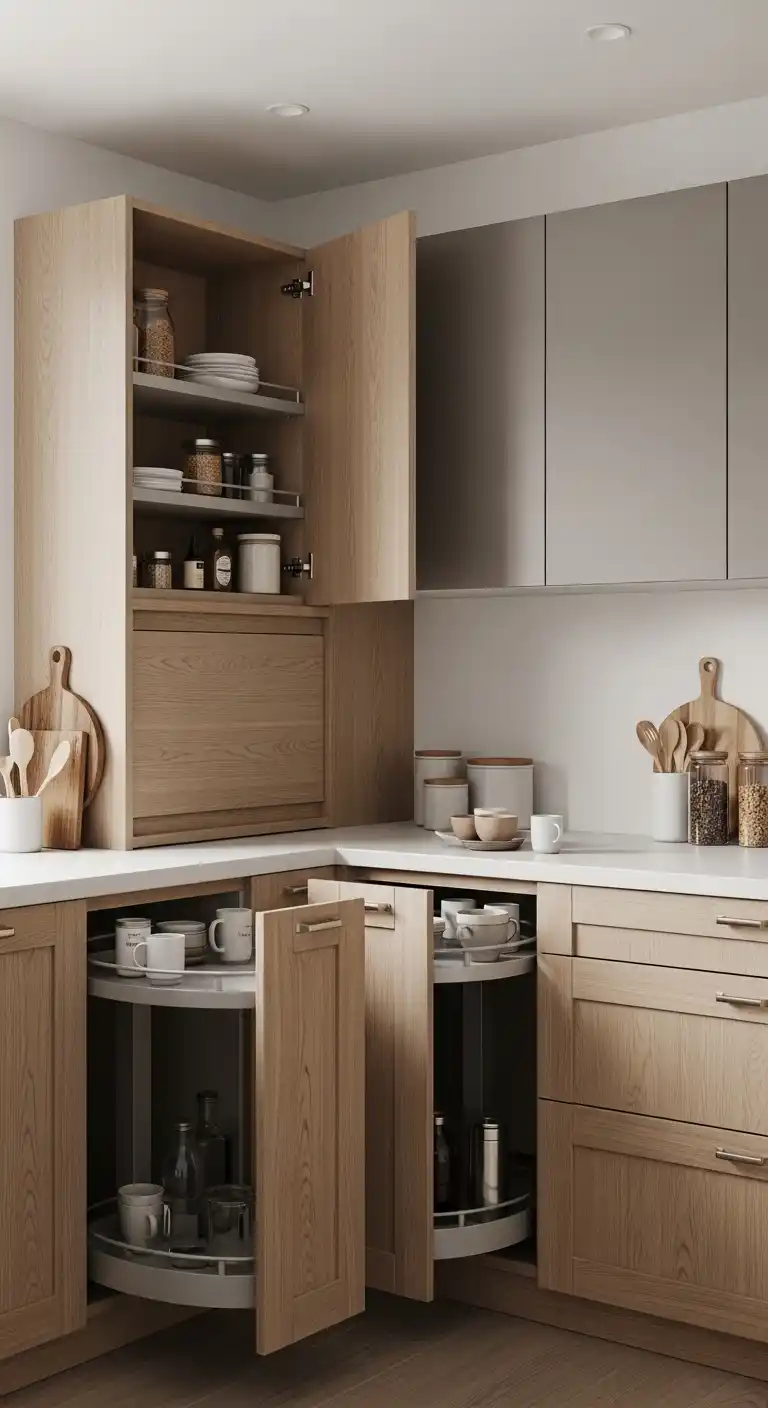
Corner cabinets solve the challenge of underutilized areas, maximizing kitchen storage while keeping the design sleek and organized.
Rotating trays, pull-out shelves, or custom angled solutions make corner cabinets both functional and accessible, supporting the practical aspect of Japandi design.
Natural wood, matte finishes, and muted colors ensure these cabinets blend seamlessly with the surrounding minimalist environment.
Properly designed corner cabinets contribute to storage efficiency without compromising aesthetics, maintaining clean lines and visual balance throughout the kitchen.
Homeowners can use these solutions to store infrequently used items or larger kitchen tools, combining practicality with harmonious design.
15. Japandi Cabinets with Glass Fronts
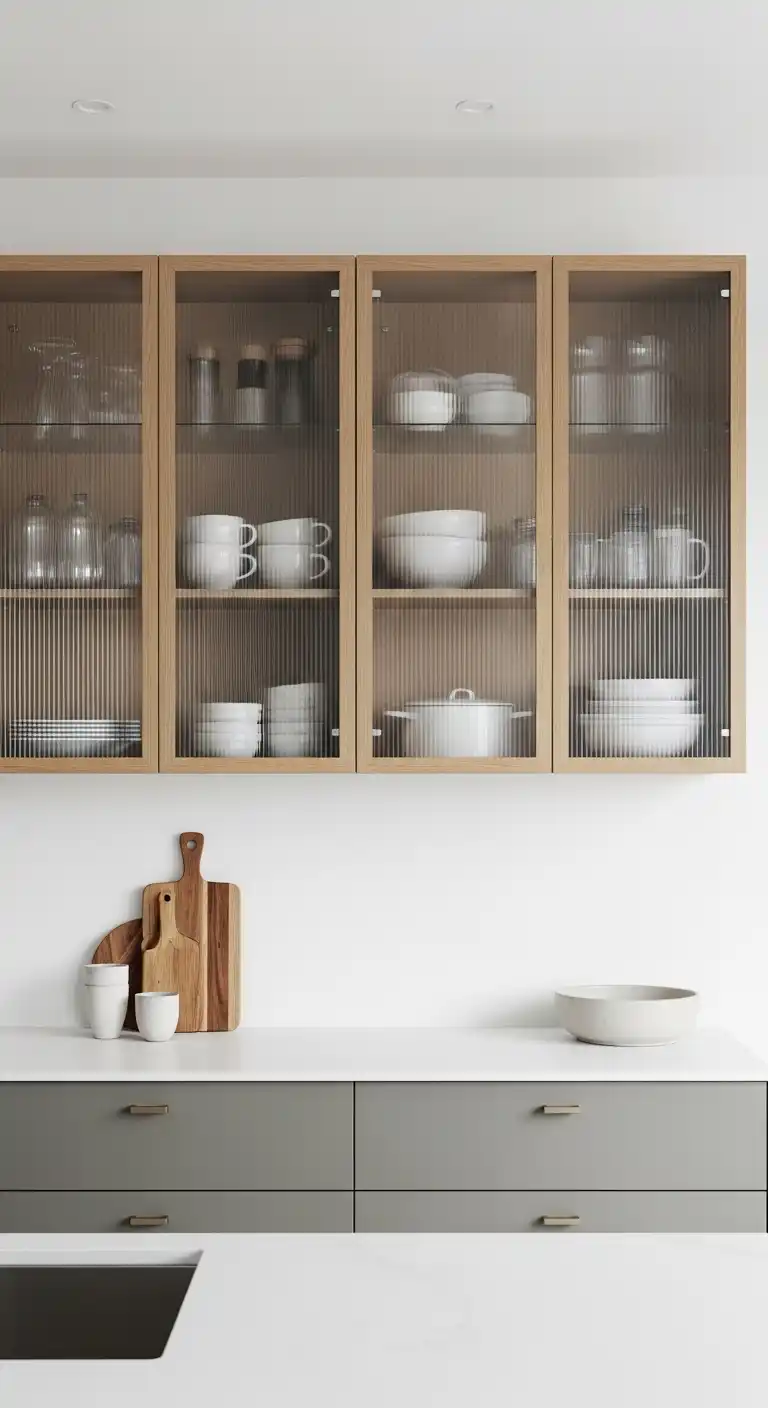
Glass-front cabinets combine functionality with visual elegance, allowing homeowners to display beautiful ceramics or organized kitchenware while keeping surfaces uncluttered.
Frosted, clear, or lightly textured glass preserves minimalism while subtly enhancing kitchen aesthetics, providing an airy feel and preventing visual heaviness.
Pairing glass panels with natural wood frames or muted matte finishes reinforces the Japandi philosophy, blending Scandinavian warmth with Japanese simplicity.
Glass-front cabinets also encourage organization, as every item becomes visible yet orderly, contributing to a serene and practical kitchen space.
This design is ideal for open kitchens, islands, or wall-mounted units, maintaining light flow while adding depth and subtle interest to the overall layout.
16. Japandi Cabinets with Warm Neutral Finishes
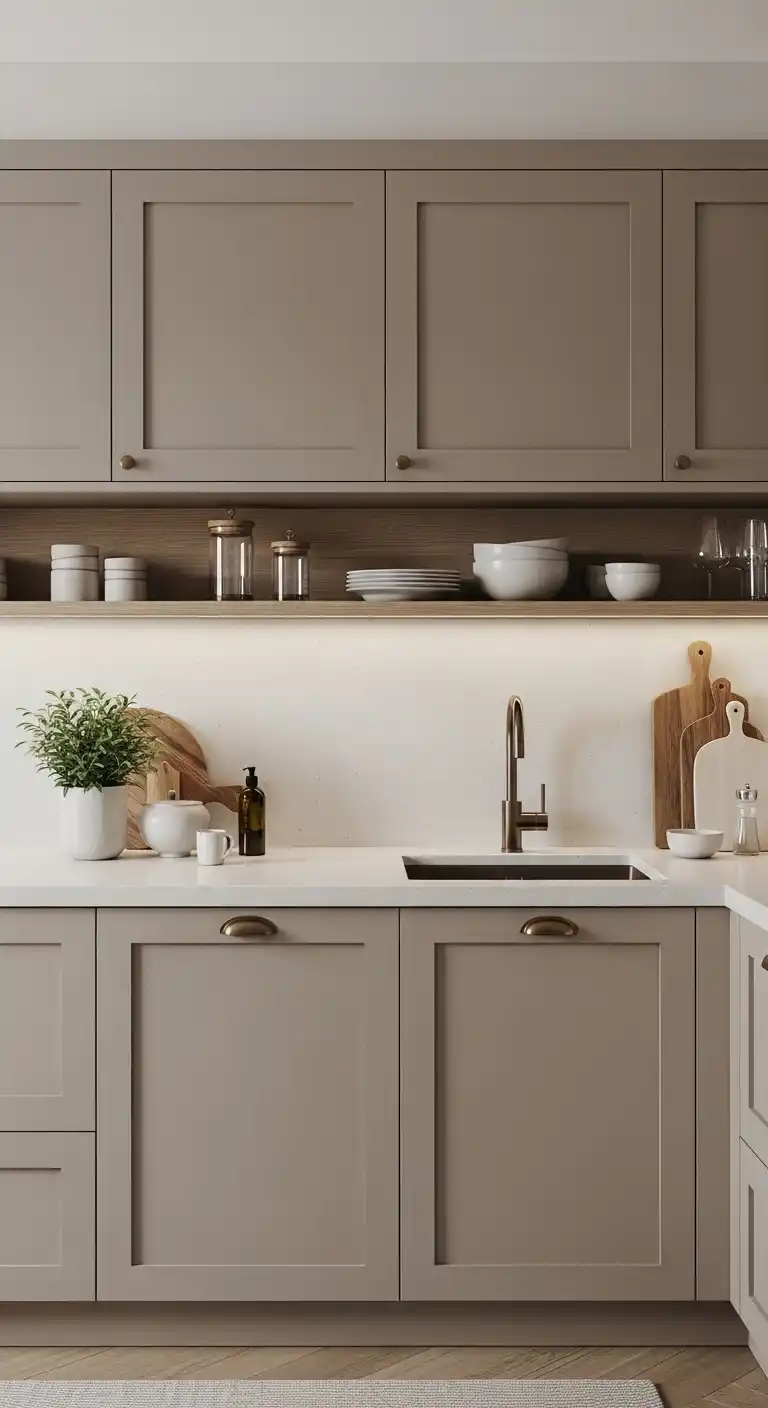
Warm neutral tones, like beige, taupe, or soft gray, create calming, inviting kitchen environments that reflect the minimalist elegance of Japandi design.
These muted shades work beautifully with natural wood, soft lighting, and clean lines, producing balance and subtle sophistication throughout the kitchen.
Neutral finishes help unify contrasting elements, allowing textures, materials, and functional features to stand out without overwhelming the space visually.
Homeowners can incorporate small pops of greenery, ceramics, or muted metallic accents to enhance interest while retaining a serene, cohesive look.
Warm neutral cabinets support flexible design choices and allow a harmonious blend of functionality and visual serenity for kitchens of all sizes.
17. Japandi Cabinets with Vertical Slats
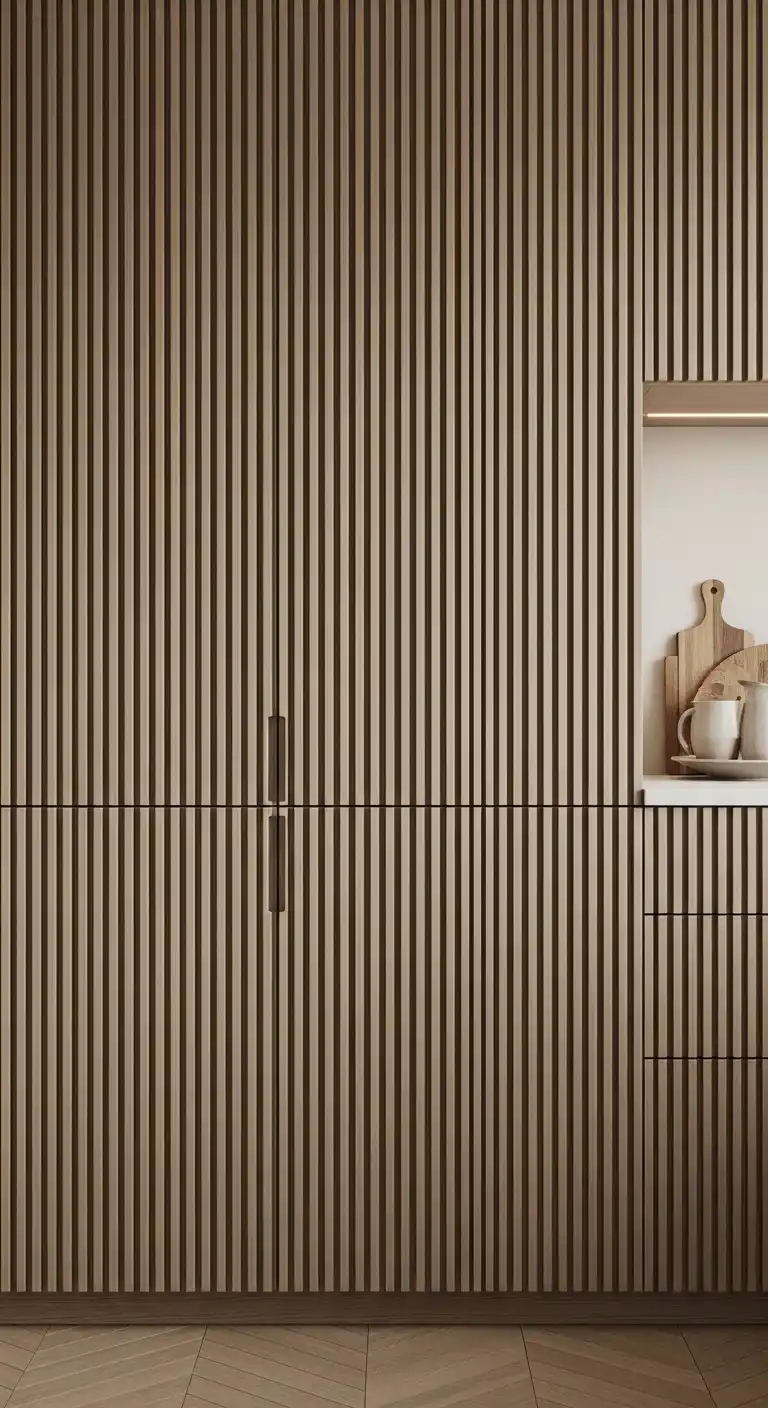
Vertical slats add understated texture to cabinet fronts, creating subtle visual interest without compromising minimalist principles central to Japandi design.
Inspired by Japanese architecture, slatted panels bring warmth and rhythm to the kitchen while maintaining clean, uncluttered lines for modern functionality.
This design works well in muted or matte finishes, highlighting the natural wood grain and emphasizing Scandinavian simplicity alongside Japanese inspiration.
Vertical slats also help disguise wear, fingerprints, or minor smudges, keeping cabinets looking polished while enhancing aesthetic value and longevity.
Homeowners seeking a distinctive but harmonious look often choose slatted cabinets as a statement feature while preserving visual calm throughout the kitchen.
18. Japandi Cabinets with Integrated Lighting
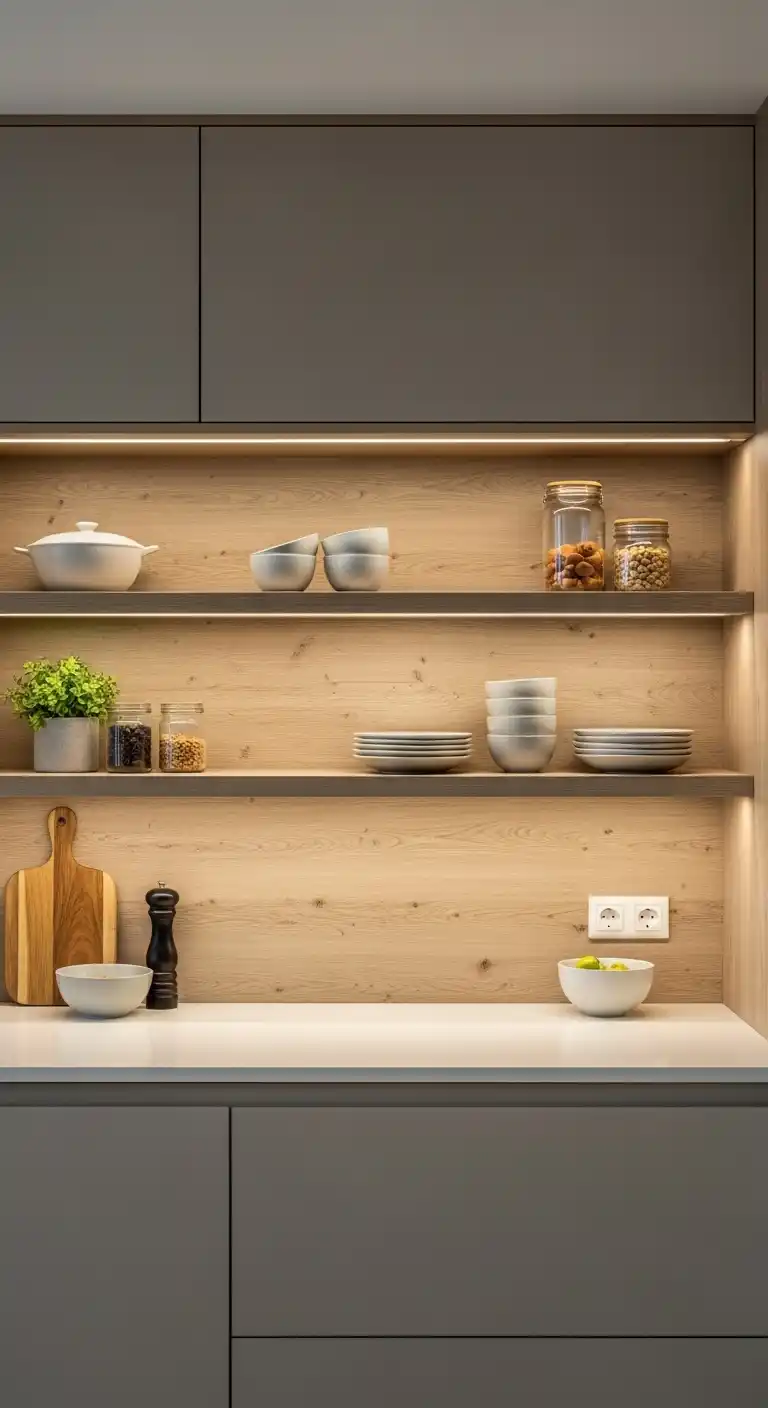
Integrated lighting enhances both functionality and ambiance by illuminating counters, shelves, and cabinets in subtle, energy-efficient ways.
LED strips, recessed lights, or under-cabinet illumination highlight natural textures, wood grains, and muted finishes, reinforcing the minimalist Japandi aesthetic.
Lighting improves visibility during meal preparation, making kitchens safer and more practical while contributing to a warm and inviting atmosphere.
Homeowners can use adjustable or dimmable lighting to create different moods, supporting both daytime efficiency and evening relaxation.
This approach seamlessly blends practicality with style, ensuring that every corner of the kitchen is functional, visually appealing, and harmonious with overall design principles.
19. Japandi Cabinets with Textured Surfaces
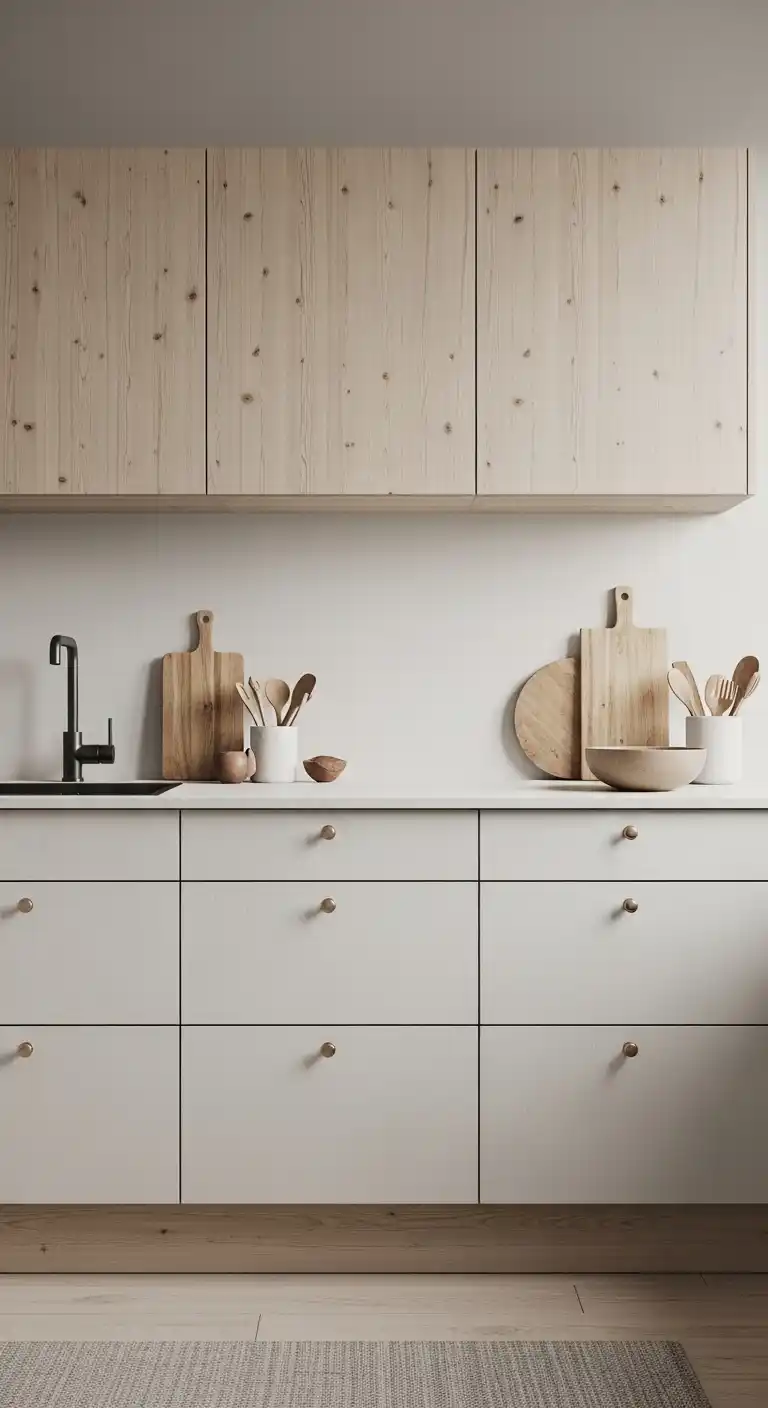
Textured surfaces add subtle depth to cabinets without compromising the minimalist aesthetic, creating tactile and visual interest in serene kitchen spaces.
Natural wood grains, matte finishes, or lightly embossed panels enhance the organic feel central to Japandi design, blending Japanese simplicity with Scandinavian warmth.
Texture also helps hide minor scratches or fingerprints, making cabinets easier to maintain while preserving aesthetic appeal over time.
Pair textured cabinets with smooth countertops, neutral walls, and minimal accessories to maintain balance and harmony throughout the kitchen layout.
This combination of texture and minimalism ensures the kitchen remains functional, elegant, and visually engaging without appearing cluttered or busy.
20. Japandi Cabinets for Small Kitchens
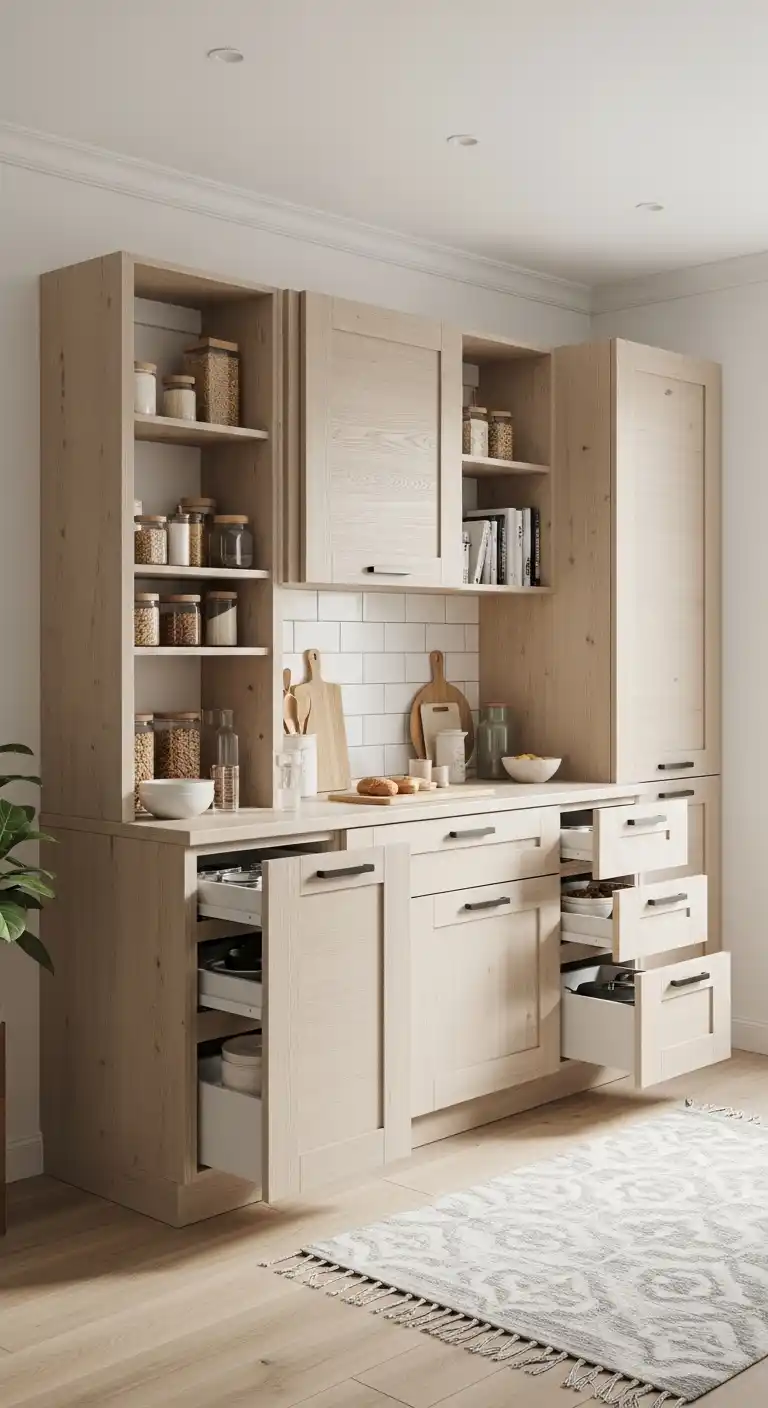
Small kitchens benefit from Japandi cabinets designed for maximum efficiency, including floating units, handleless drawers, and vertical storage solutions.
Light colors, sliding doors, and open shelving help expand visual space, making even compact kitchens feel airy and well-organized.
These cabinets prioritize practicality without compromising aesthetic appeal, ensuring every inch of storage contributes to a clutter-free, serene environment.
Homeowners can combine functional design with natural wood accents, muted tones, and minimalistic accessories to maintain the signature Japandi balance.
Small kitchen solutions demonstrate that functionality and calm design can coexist beautifully, creating spaces that are practical, stylish, and inviting for everyday use.
21. Japandi Cabinets for Large Kitchens
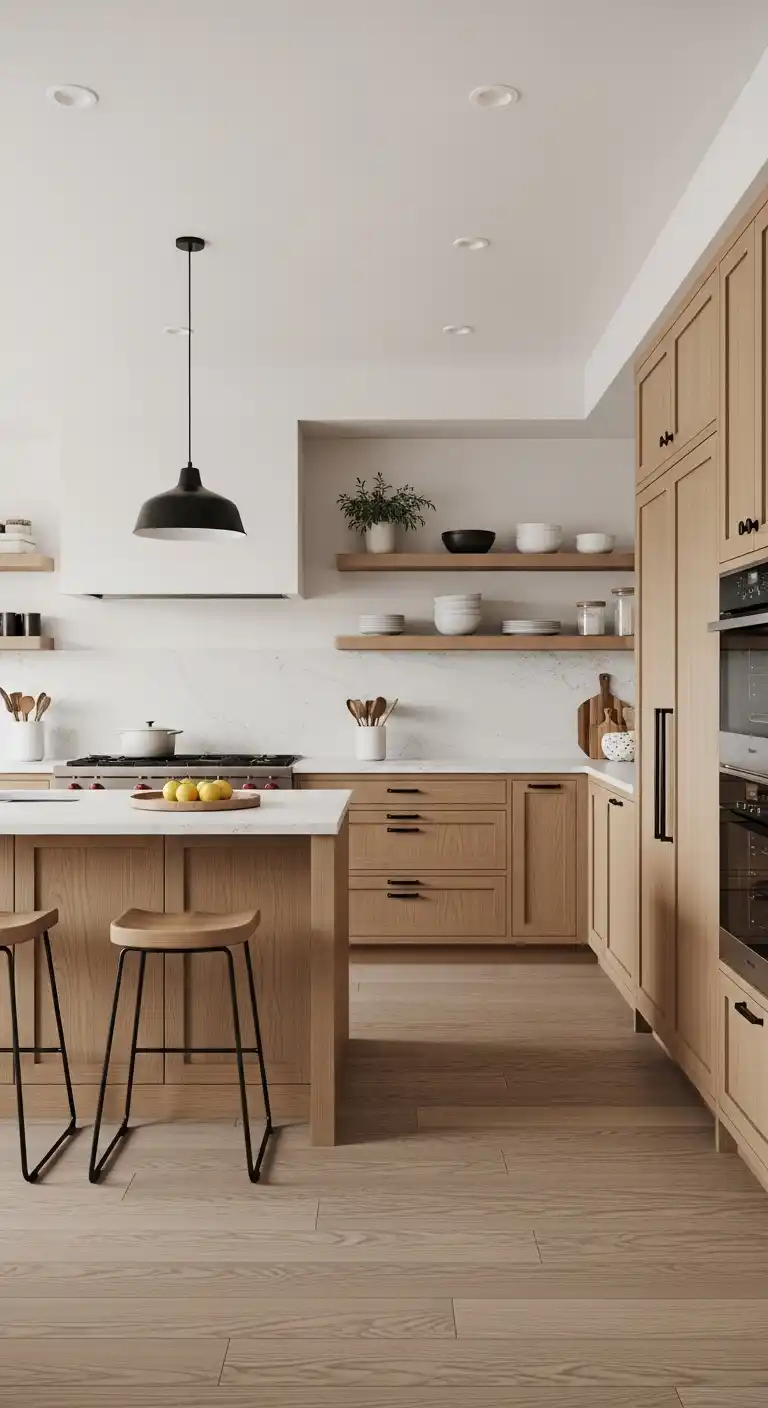
Large kitchens allow more flexibility, incorporating islands, two-tone finishes, and expansive storage while retaining the minimalism central to Japandi design.
Even in larger layouts, clean lines, neutral palettes, and natural textures maintain balance, preventing the space from feeling overwhelming or disconnected.
Designers often use combination storage—closed cabinets, floating shelves, and integrated appliances—to enhance usability while preserving visual harmony.
Large kitchens benefit from careful layout planning, ensuring open flow, accessibility, and cohesive design across expansive areas without cluttering the aesthetic.
Japandi principles in large kitchens support both practicality and serenity, proving that minimalism and warmth can scale effectively to bigger spaces.
22. Japandi Cabinets with Contrasting Hardware
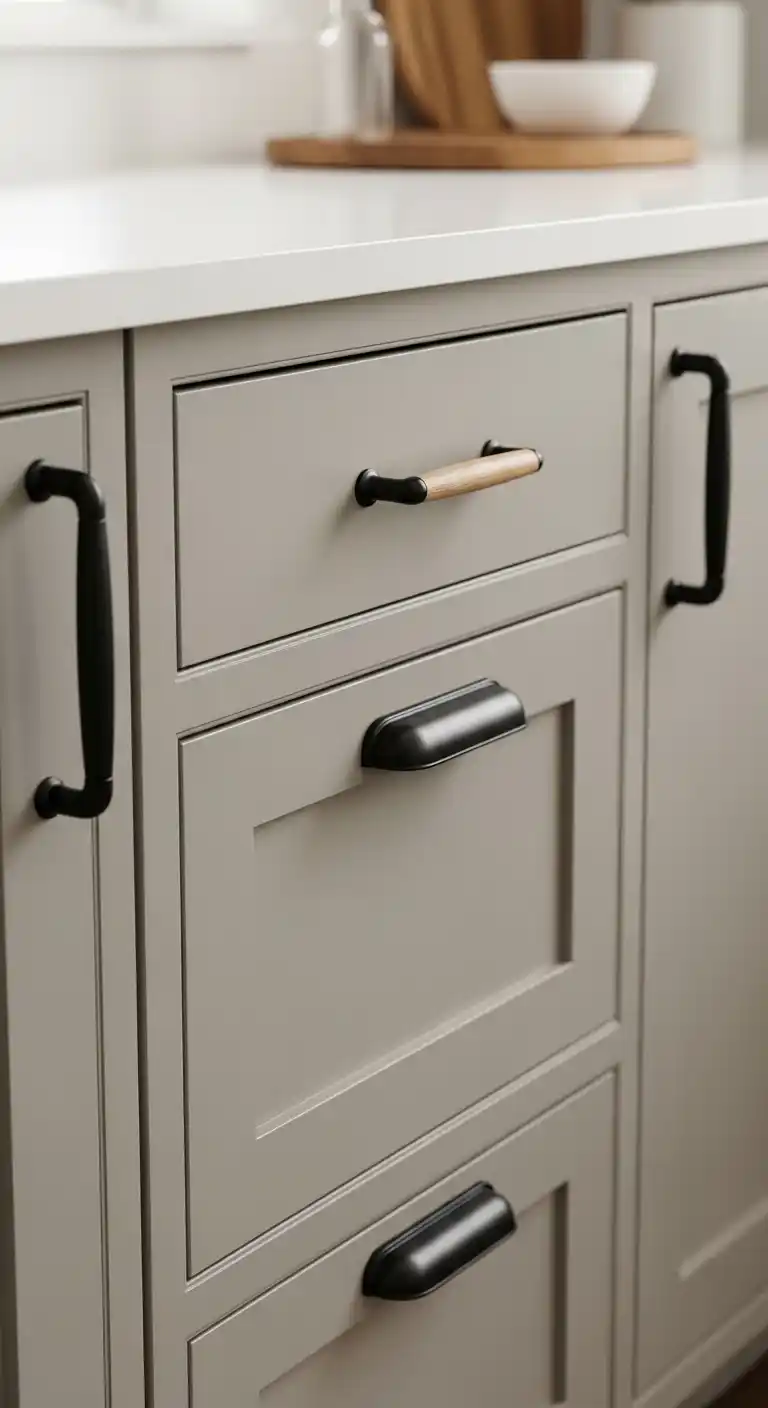
Subtle, contrasting hardware in matte black, brushed nickel, or natural wood enhances visual interest while respecting minimalism in Japandi kitchen design.
Handles, knobs, or drawer pulls introduce texture or contrast without overwhelming muted tones or natural finishes.
Strategically placing hardware on islands, drawers, or accent cabinets emphasizes functional areas and adds understated style to the kitchen environment.
Contrasting hardware allows homeowners to personalize minimalistic spaces, giving depth, elegance, and unique character to an otherwise neutral layout.
When chosen carefully, hardware complements clean lines and serene aesthetics, enhancing usability while remaining true to Japandi design principles.
23. Custom Japandi Cabinets for Personalized Kitchens
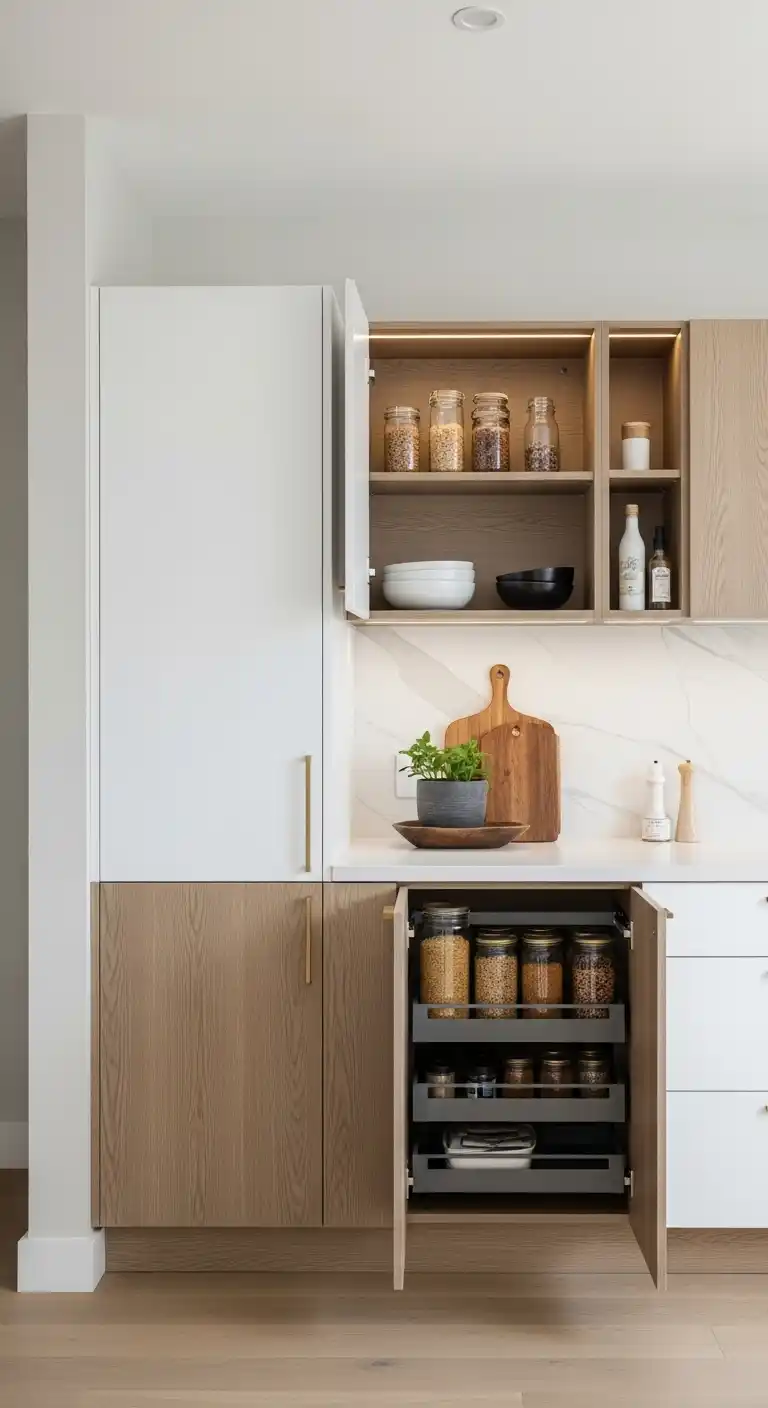
Custom cabinets allow homeowners to tailor designs to specific kitchen dimensions, storage needs, and aesthetic preferences while keeping minimalism intact.
Options include unique finishes, integrated lighting, sliding doors, and innovative storage solutions designed to enhance functionality and visual harmony.
Custom solutions ensure that cabinets optimize space, improve usability, and support a cohesive Japandi aesthetic without compromising style or serenity.
Homeowners can select colors, textures, and layouts that resonate with personal taste while maintaining timeless design principles central to Japandi interiors.
Custom cabinets combine elegance, efficiency, and individuality, creating kitchens that feel both unique and perfectly balanced according to the Japandi philosophy.
Tips for Maintaining Japandi Kitchen Cabinets
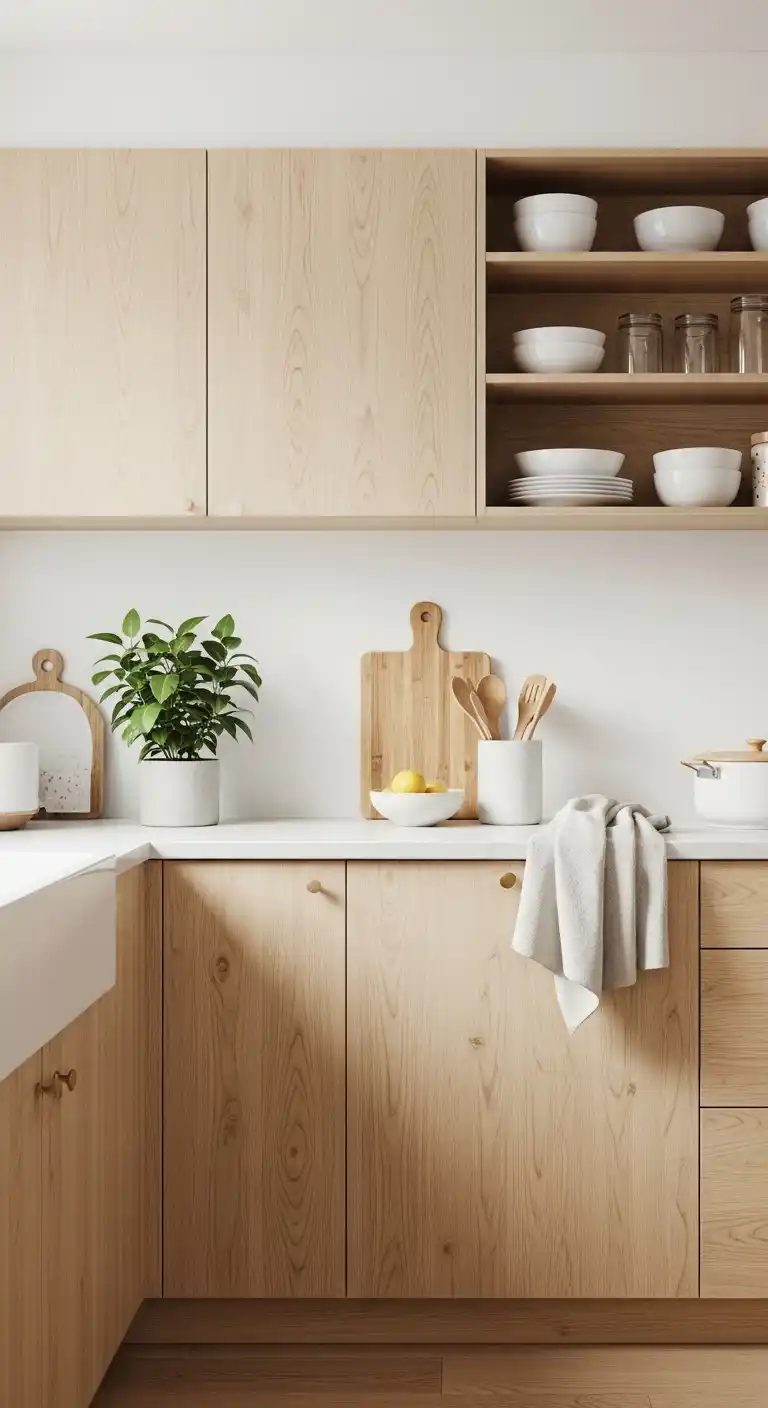
Regular cleaning with gentle, eco-friendly products preserves cabinet surfaces, finishes, and natural wood grain while maintaining aesthetic integrity.
Avoid harsh chemicals or abrasive materials, as they can damage matte surfaces, wood textures, or subtle finishes over time.
Wipe spills promptly, especially on light-toned cabinets, to prevent staining, and ensure proper ventilation to reduce moisture buildup in small or enclosed kitchens.
Periodic polishing or application of natural oils on wooden surfaces keeps textures vibrant, enhances durability, and maintains the serene aesthetic of Japandi design.
By following simple maintenance practices, homeowners can extend cabinet life while preserving both function and visual appeal, ensuring their kitchen remains beautiful for years.
Combining Japandi Cabinets with Kitchen Decor
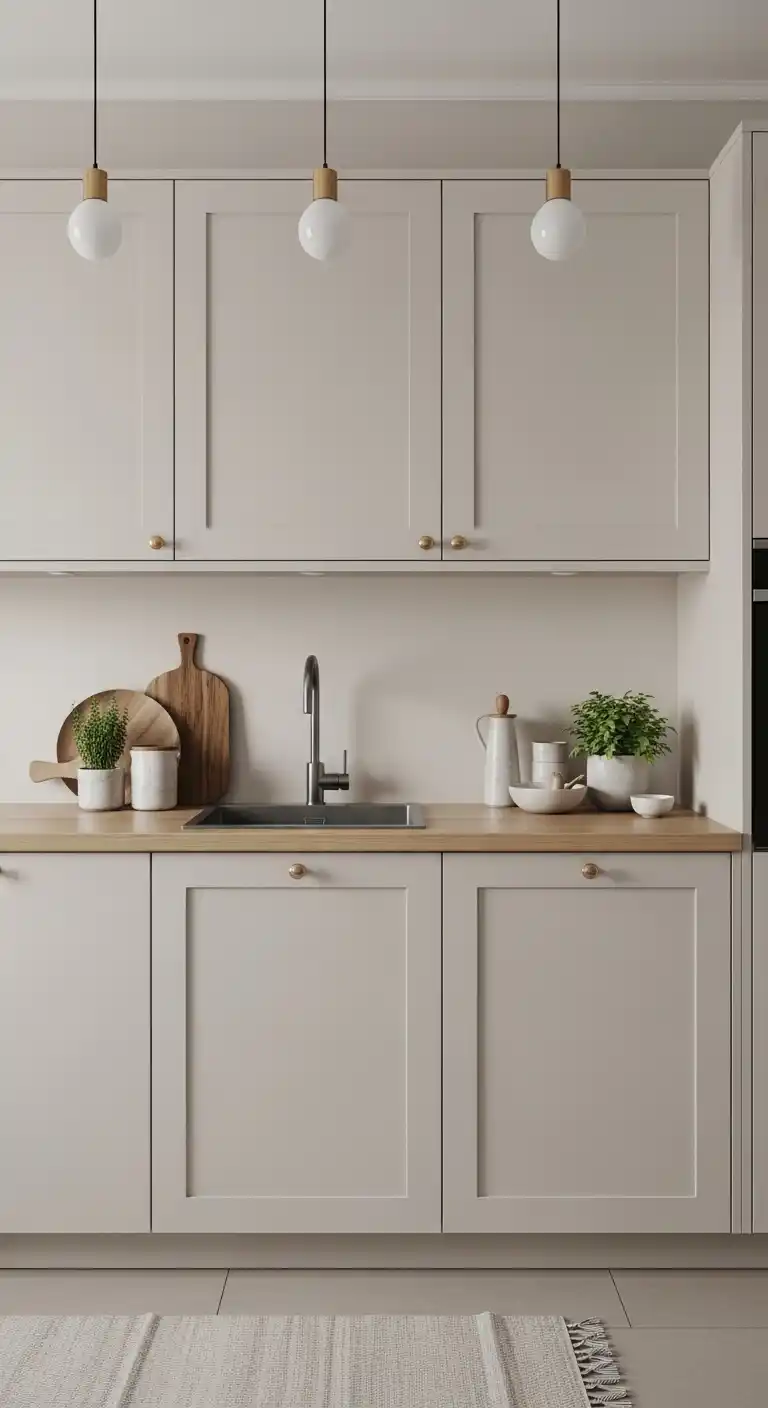
Japandi cabinets pair well with minimalist lighting, natural wood countertops, stone surfaces, and neutral flooring to maintain balance and cohesion.
Small plants, muted ceramics, or decorative items add warmth and personality while preserving clean lines and uncluttered surfaces central to Japandi philosophy.
Neutral tones, integrated appliances, and consistent textures across the kitchen contribute to visual harmony and make daily cooking both functional and enjoyable.
Balancing accessories and natural elements ensures that every kitchen component enhances aesthetics without disrupting the minimalist, serene atmosphere of Japandi design.
Homeowners can customize details to suit personal taste while staying true to the principles of simplicity, functionality, and calm elegance.
Final Thoughts
Japandi kitchen cabinets successfully merge Japanese minimalism with Scandinavian warmth, creating spaces that are functional, serene, and visually timeless.
From light oak tones to matte black finishes, two-tone designs, and custom options, each cabinet style offers unique solutions for any kitchen size.
Attention to detail, sustainability, and practicality ensures that these cabinets support modern lifestyles while preserving elegance and visual harmony.
Maintaining cabinets, integrating thoughtful decor, and choosing designs carefully allows homeowners to achieve a peaceful, efficient, and stylish kitchen environment.
Ultimately, Japandi kitchen cabinets provide an inspiring, balanced approach to kitchen design, offering both aesthetic beauty and everyday functionality for modern homes.