27 Transitional Kitchen Cabinet Ideas You’ll Love

Can’t decide between a modern or traditional kitchen? Transitional kitchen cabinets offer the perfect balance of both styles, creating a look that feels timeless and fresh. In this post, we’ve gathered inspiring ideas to help you design a kitchen that blends classic charm with modern simplicity.
When we first started planning our kitchen remodel, I couldn’t decide between traditional charm and modern sleekness.
I loved the warmth of classic cabinets, but the clean lines of modern design kept calling my name. That’s when I discovered transitional kitchen cabinets—the perfect blend of both worlds.
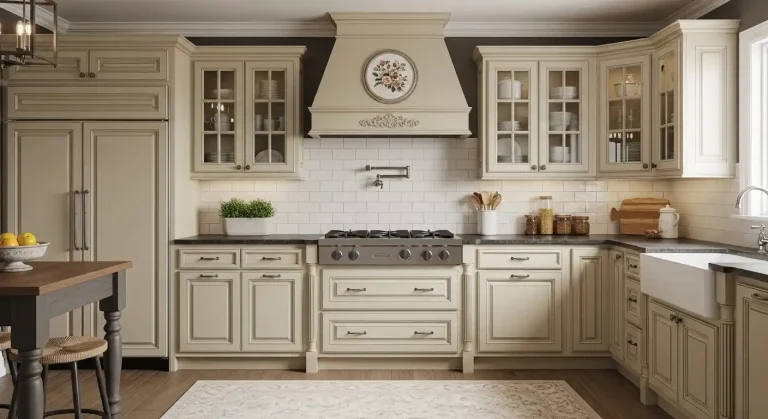
With their balanced design, these cabinets offer timeless appeal without feeling dated. Whether it’s the soft shaker doors, subtle moldings, or elegant hardware, small details can make a huge difference.
After swapping our old cabinets for transitional ones, the kitchen instantly felt open, inviting, and effortlessly stylish.
If you’re torn between traditional and modern, transitional cabinets might just be the solution that lets you have the best of both worlds without compromise.
Understanding Transitional Kitchen Cabinets
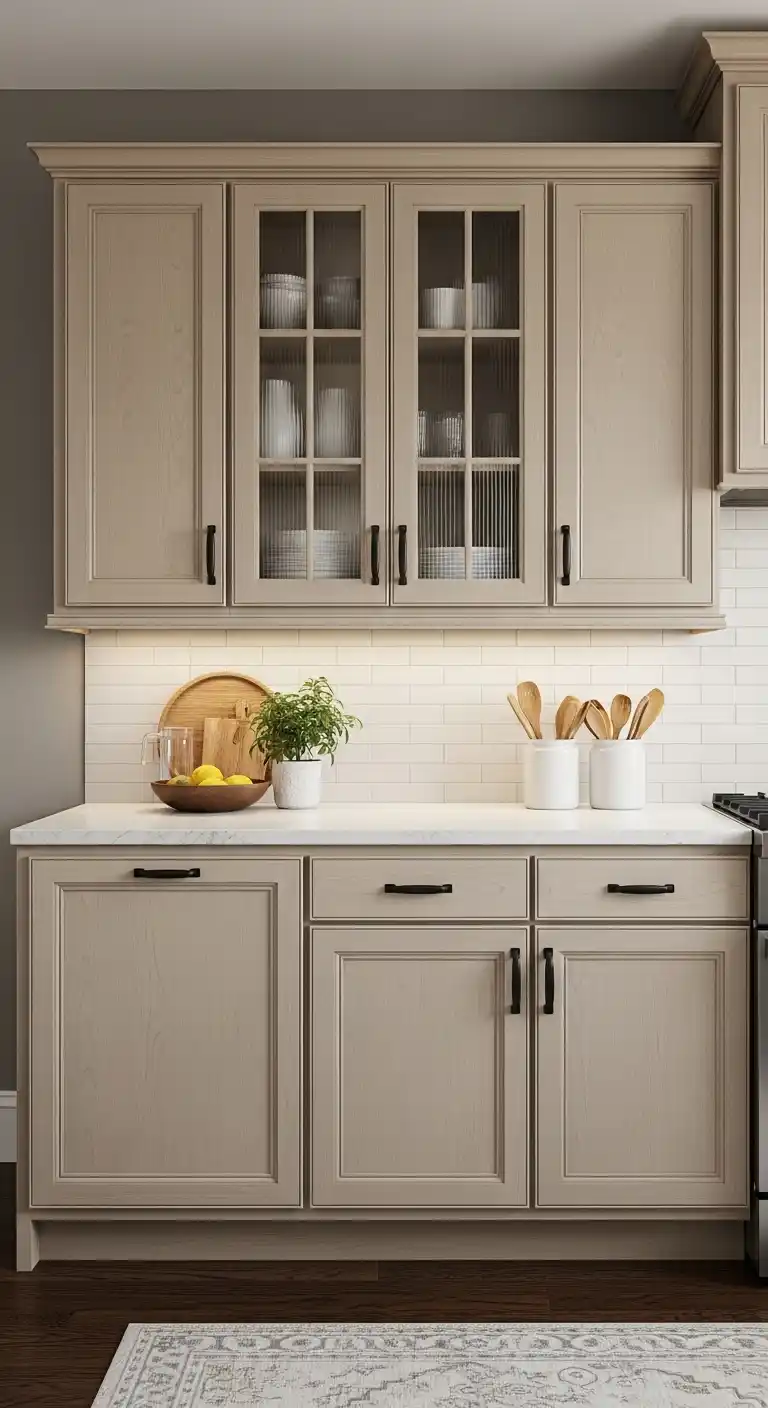
Transitional kitchen cabinets represent a design style that perfectly bridges traditional and modern aesthetics.
They often feature simple, clean lines combined with subtle decorative details, avoiding overly ornate or extremely minimalist looks.
Homeowners appreciate them for their adaptability because they can fit into both classic and contemporary kitchen spaces.
Materials commonly used include high-quality wood, engineered composites, and occasionally glass inserts that enhance visual interest.
Hardware choices like brushed nickel or matte black handles further emphasize their blend of style and practicality.
This cabinet style ensures that your kitchen remains visually appealing while offering long-lasting functionality.
Transitional cabinets also provide flexibility in color schemes, allowing neutral tones, two-tone designs, or even subtle bold accents.
Benefits of Choosing Transitional Kitchen Cabinets
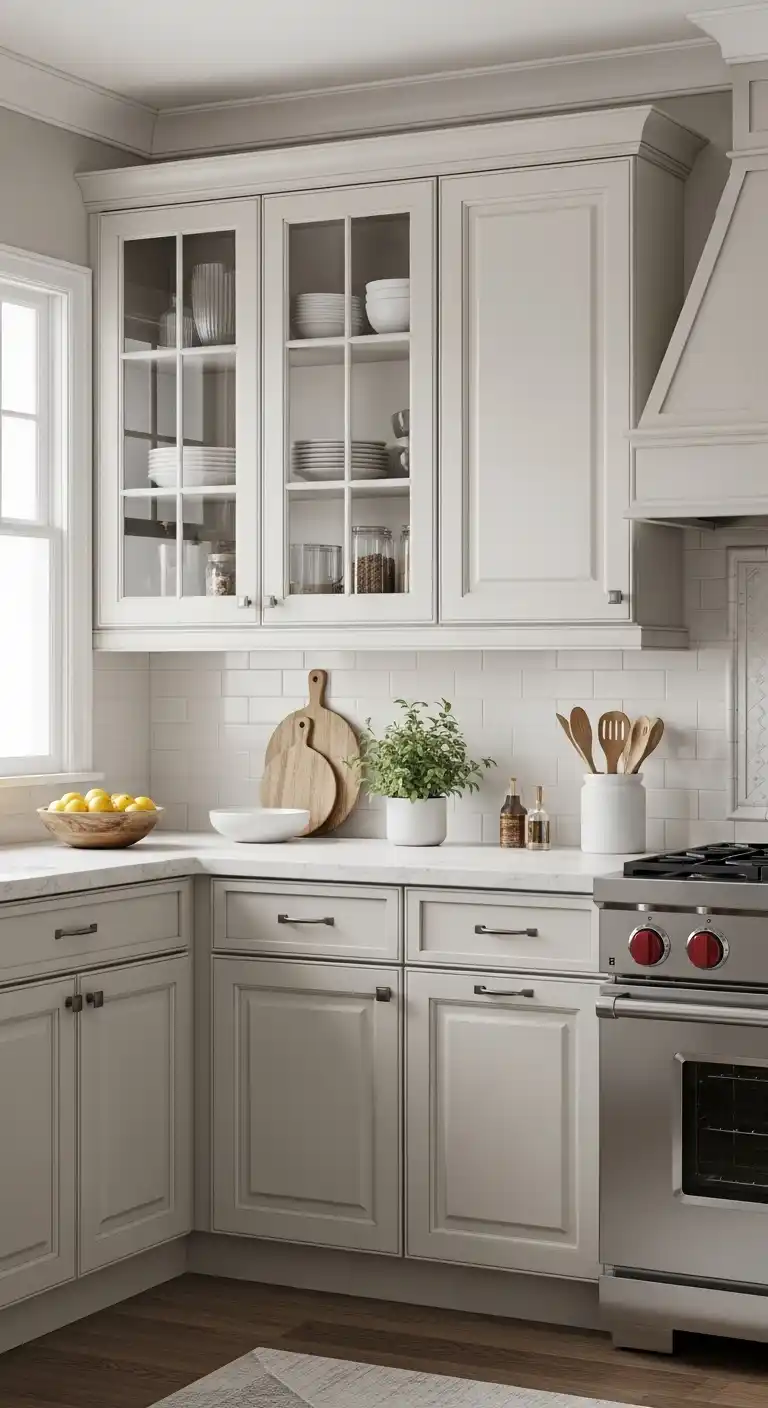
Transitional kitchen cabinets offer durability, style, and long-term value for homeowners seeking both aesthetics and functionality.
They are designed to blend seamlessly with a wide range of kitchen décor styles, from minimalist to more classic interiors.
These cabinets provide customization options, allowing homeowners to choose finishes, hardware, and storage configurations that match their needs.
Their timeless appeal ensures that they remain stylish even as kitchen trends change over time.
Additionally, transitional cabinets can enhance a home’s resale value because they appeal to buyers seeking both modern convenience and classic elegance.
The combination of style and practicality makes them a smart choice for anyone looking to create a welcoming and organized kitchen space.
27 Transitional Kitchen Cabinets Ideas
1. Neutral-Toned Transitional Cabinets for a Calm Ambiance
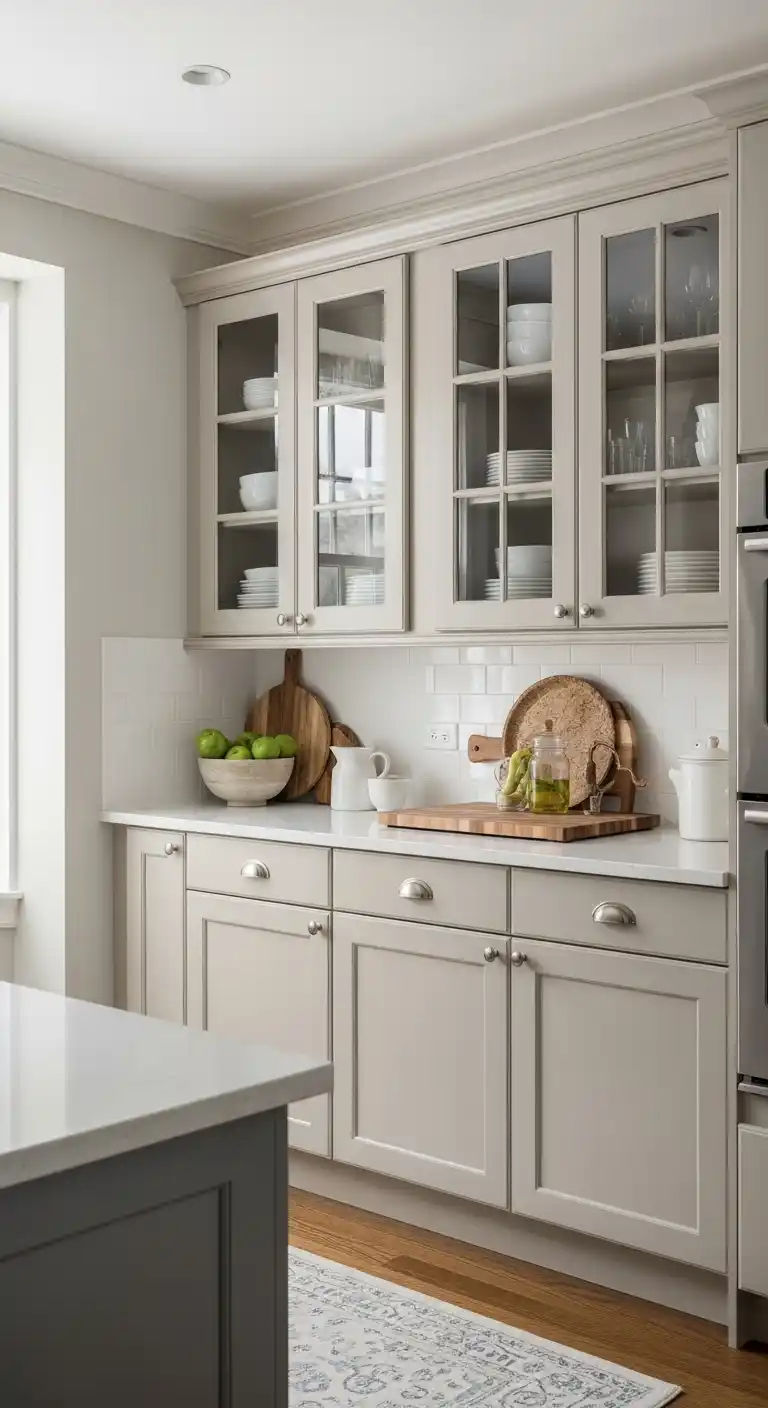
Neutral-toned transitional cabinets, such as shades of beige, soft white, or gray, create a calm and inviting kitchen environment.
These colors complement a variety of countertop materials, including quartz, granite, and butcher block surfaces, without overpowering other design elements.
Neutral cabinets also provide flexibility when updating wall colors, flooring, or decorative accents, allowing homeowners to make seasonal or aesthetic changes easily.
Pairing these tones with subtle metallic hardware creates a sophisticated look that remains timeless while supporting functional kitchen organization.
This color choice works well in both small and large kitchens, making spaces feel more open and welcoming.
Additionally, neutral cabinets act as a blank canvas for homeowners to experiment with lighting, backsplashes, and accessories.
2. Two-Tone Transitional Cabinets for Visual Interest
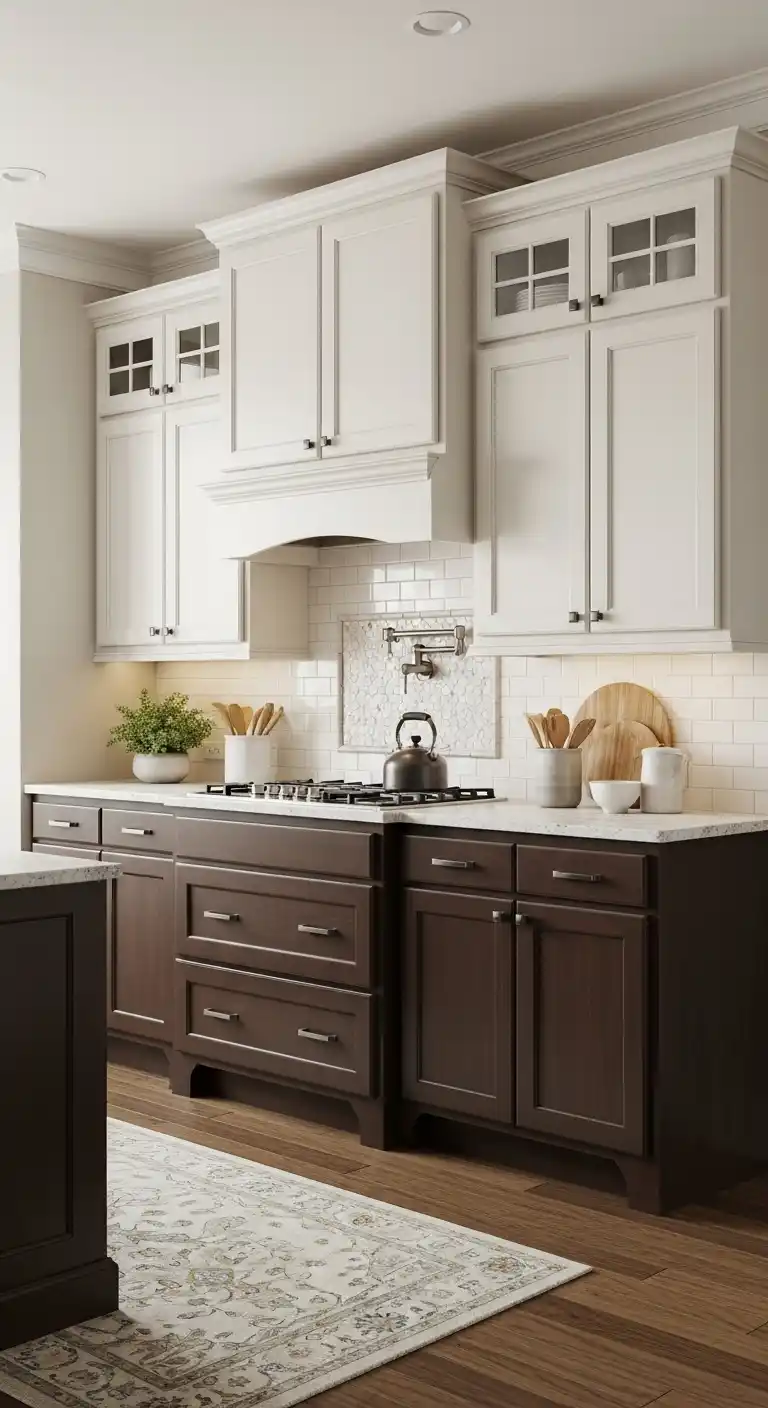
Two-tone transitional cabinets create visual contrast by pairing upper and lower cabinets in complementary yet distinct shades.
This design strategy adds depth and character to the kitchen while maintaining balance between modern and classic elements.
For example, darker lower cabinets can ground the space, while lighter upper cabinets make the room appear taller and more spacious.
Two-tone cabinets allow for playful experimentation with finishes and materials, such as combining wood tones with painted surfaces.
This style also works well when coordinating with countertops, backsplashes, and flooring to achieve a cohesive yet dynamic aesthetic.
By adding subtle color contrast, homeowners can elevate the overall style of their kitchen while preserving the transitional design philosophy.
3. Shaker-Style Transitional Cabinets for Timeless Appeal
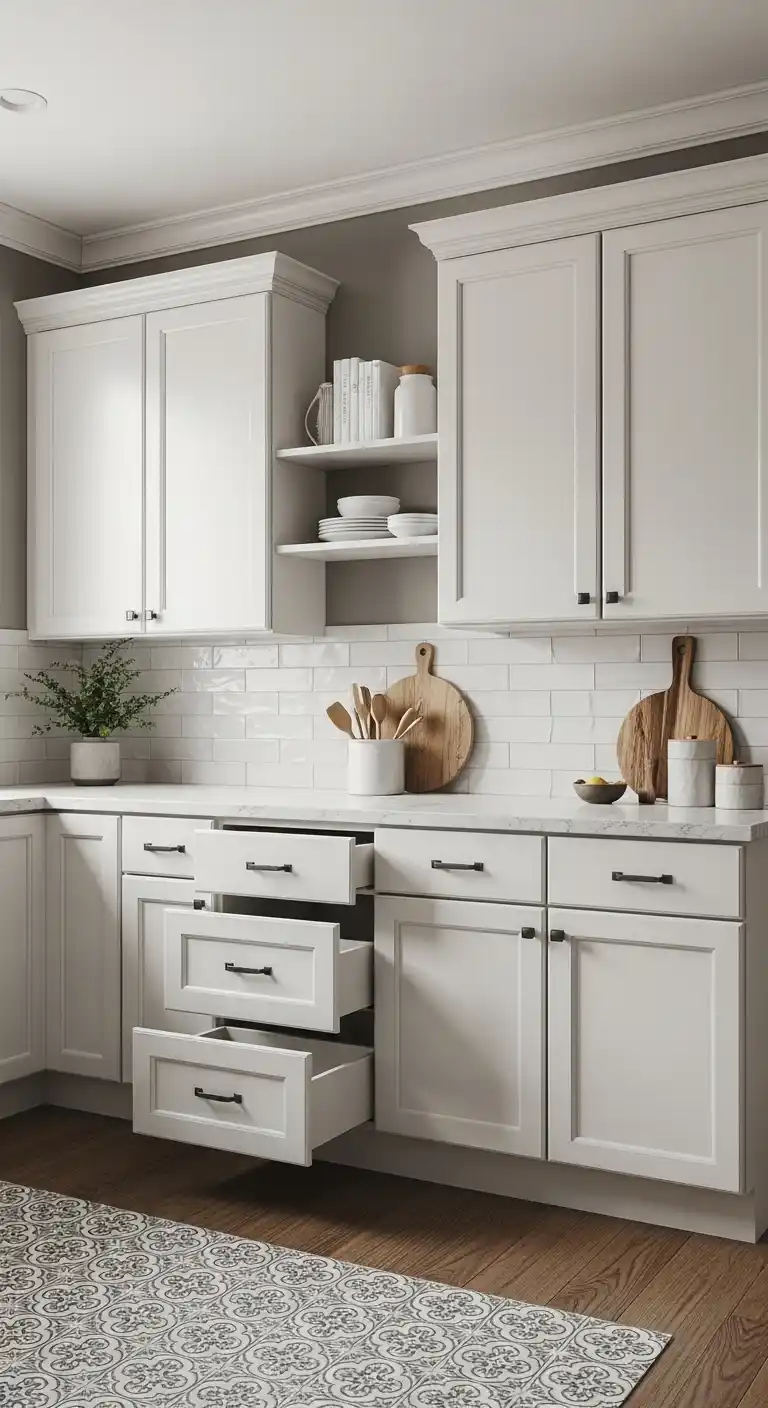
Shaker-style transitional cabinets feature a clean, square-panel design that emphasizes simplicity, durability, and versatility in any kitchen layout.
Their minimalist appearance blends seamlessly with modern interiors while retaining traditional charm that prevents the space from feeling cold or impersonal.
Shaker cabinets are highly adaptable, complementing both neutral color schemes and bolder design elements, such as textured backsplashes or patterned flooring.
The understated design allows homeowners to focus on hardware choices, lighting, and countertop materials without overwhelming the overall aesthetic.
Additionally, Shaker-style cabinets provide excellent storage efficiency, offering deep drawers and spacious shelves that maximize organization.
They have remained a popular choice for decades because they effortlessly combine practical functionality with a timeless design appeal.
4. Glass-Front Transitional Cabinets to Showcase Décor
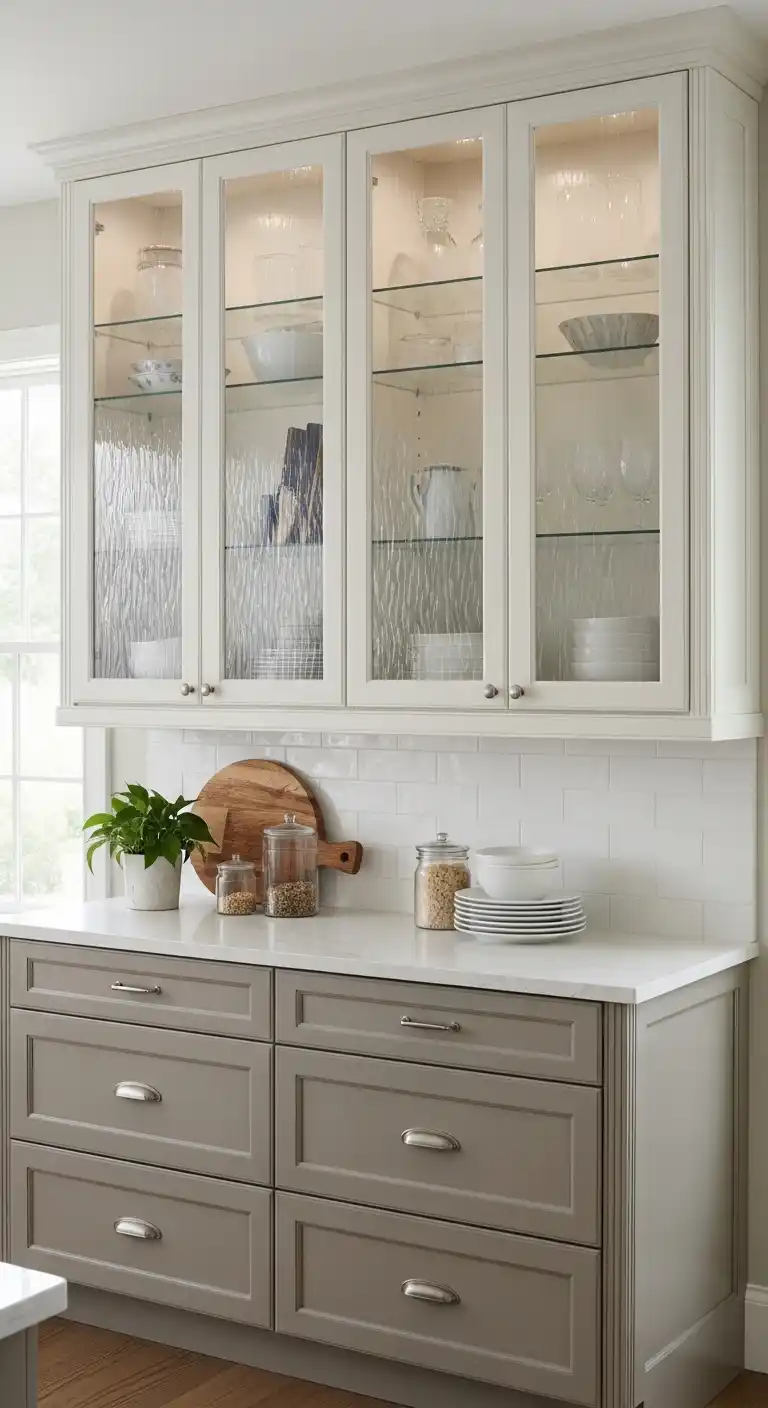
Glass-front transitional cabinets add a sense of openness and elegance while allowing homeowners to display dishes, glassware, or decorative pieces.
These cabinets create visual depth, making the kitchen appear larger and brighter by reflecting natural and artificial light.
Choosing clear, frosted, or textured glass panels allows for customization while maintaining a clean transitional aesthetic.
Pairing glass-front cabinets with neutral or two-tone bases highlights the balance between modern minimalism and traditional charm.
This style encourages organization because items on display must remain neat, adding both beauty and practicality to the kitchen.
Glass-front cabinets are ideal for kitchens where homeowners want to combine storage with visual appeal, creating a welcoming and stylish space.
5. Custom Built-In Cabinets for Maximum Storage
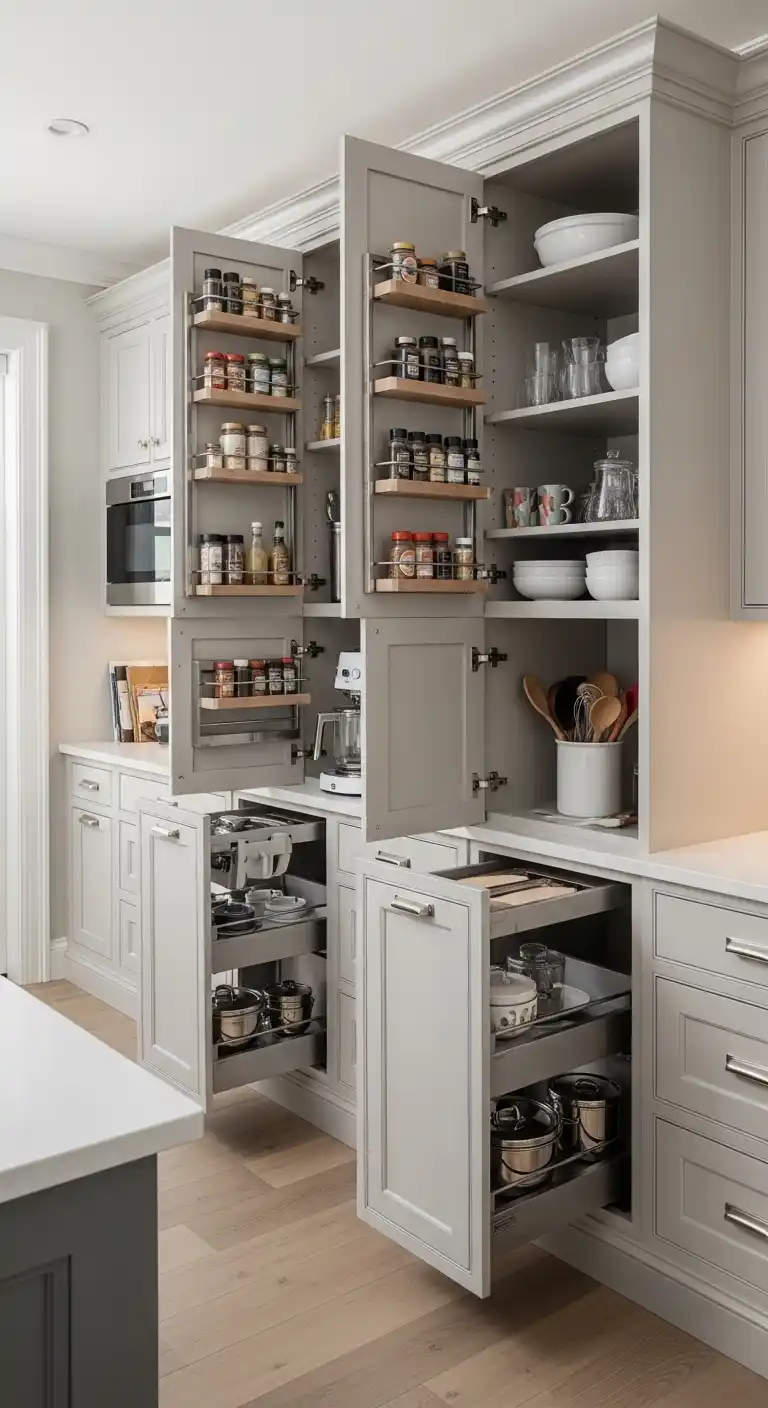
Custom built-in cabinets are designed to fit specific kitchen dimensions, providing optimal storage solutions without wasting space.
They allow homeowners to incorporate pull-out shelves, spice racks, and hidden compartments tailored to their cooking habits.
Built-in designs help reduce clutter by creating designated areas for appliances, utensils, and pantry items.
They also enhance the visual flow of the kitchen because every element aligns seamlessly with walls, countertops, and other cabinetry.
Homeowners can select finishes, colors, and hardware that match the transitional style, combining elegance and practicality.
With thoughtful planning, custom built-ins transform kitchens into organized, functional spaces while preserving the charm of transitional design.
6. Bold Color Accents for a Statement Kitchen
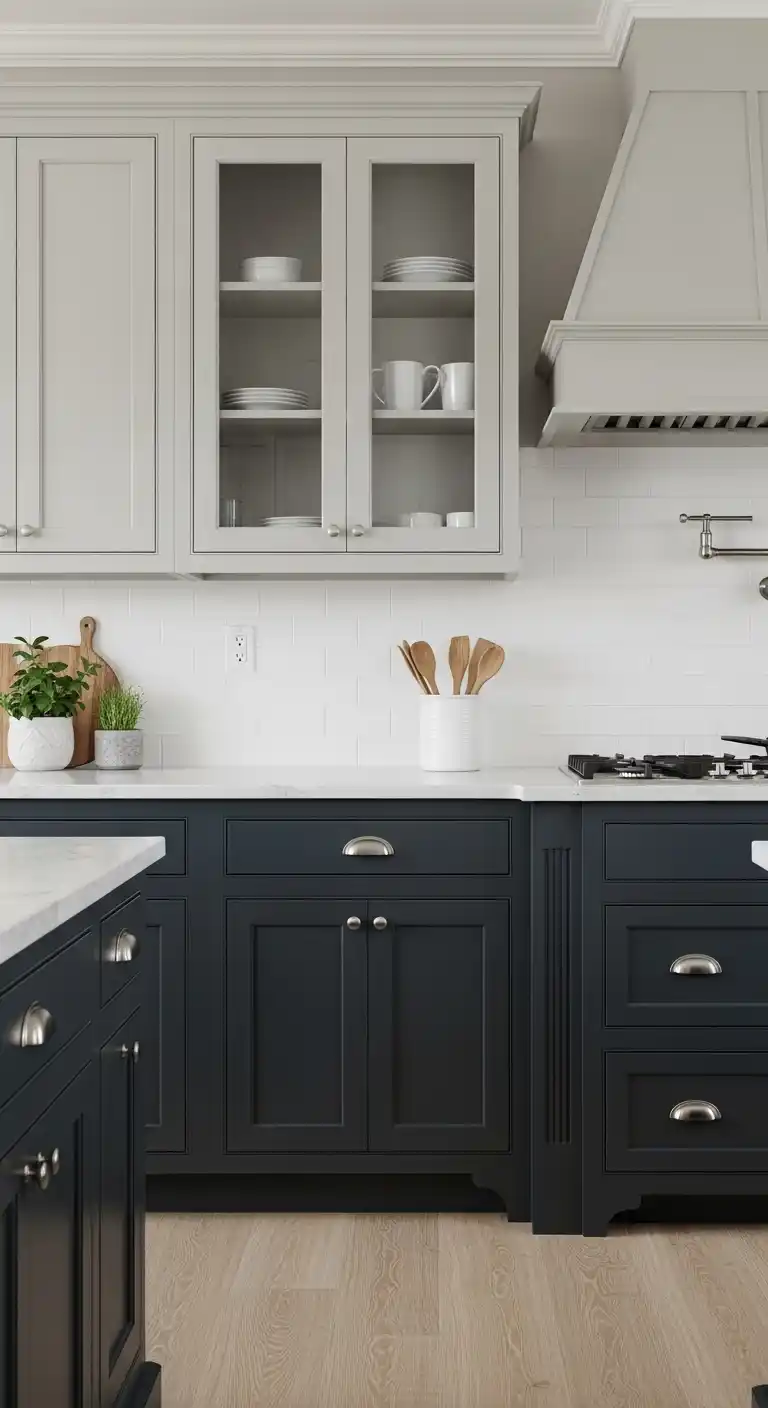
Incorporating subtle bold colors in transitional cabinets, such as muted green, navy, or deep charcoal, creates a striking focal point.
These hues add personality and dimension to the kitchen without overwhelming the overall neutral or two-tone palette.
Bold cabinet colors pair well with soft countertops and metallic hardware, emphasizing sophistication while maintaining transitional balance.
Homeowners can choose one accent area, like an island or lower cabinets, to introduce color while keeping the rest neutral.
This approach allows for visual interest and dynamic design while avoiding trends that may feel outdated in a few years.
Bold transitional cabinets offer a way to experiment with color creatively while keeping the kitchen elegant and cohesive.
7. Mixed Material Cabinets for Texture and Depth
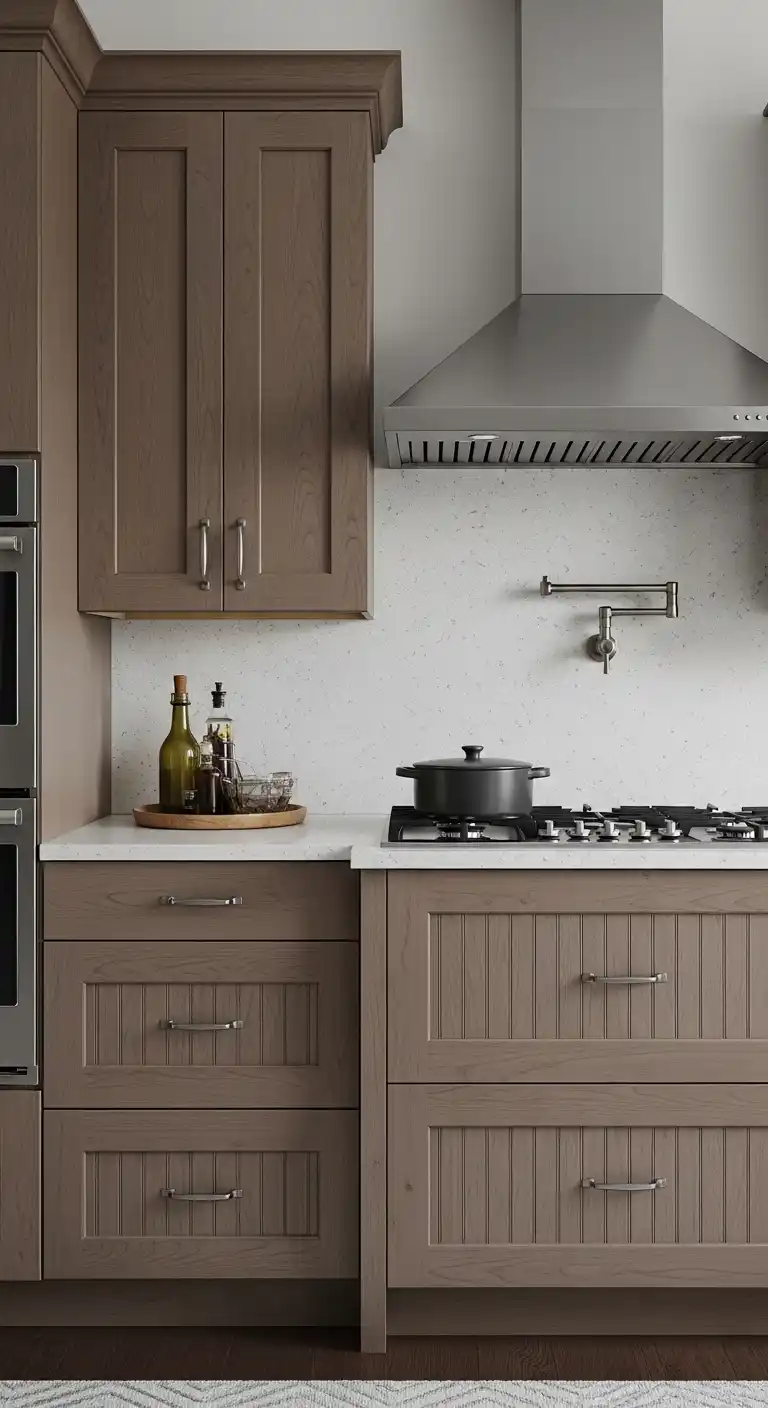
Combining materials such as wood, metal, and laminate adds texture and depth to transitional kitchen cabinets, making the design more engaging.
Wood surfaces bring warmth and traditional charm, while metal accents introduce modern elegance and durability.
Laminate or painted finishes allow for easy customization, offering versatility in color and style without compromising functionality.
Mixing materials enhances both the visual appeal and tactile experience, encouraging homeowners to explore innovative design possibilities.
This approach works well in two-tone schemes, islands, or accent cabinetry, balancing modern sophistication with classic warmth.
Mixed material cabinets help create a kitchen that feels dynamic and inviting while maintaining the clean, transitional style.
8. Floating Cabinets for Contemporary Flair
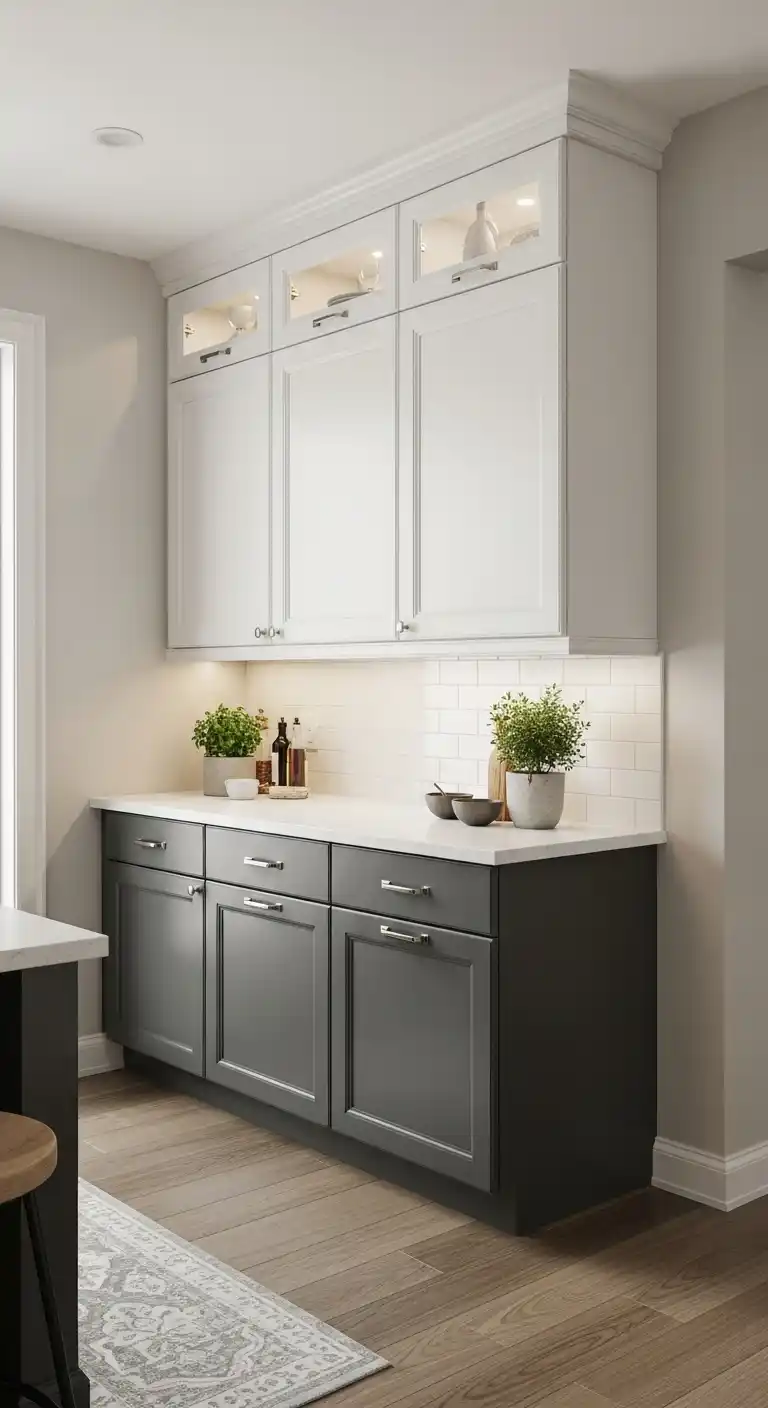
Floating cabinets mounted on the wall give a kitchen a contemporary, airy feel while maintaining functional storage.
This design maximizes floor space and creates a sense of openness, especially in smaller kitchens.
Homeowners can combine floating cabinets with under-cabinet lighting to highlight both cabinet surfaces and countertops.
They also provide visual contrast with traditional base cabinets, subtly reinforcing the transitional design philosophy.
Floating cabinets can be paired with open shelving or glass-front designs to create layers of storage and display.
By combining functionality and modern elegance, floating cabinets enhance both workflow and aesthetic appeal in transitional kitchens.
9. Open Shelving Elements in Transitional Design
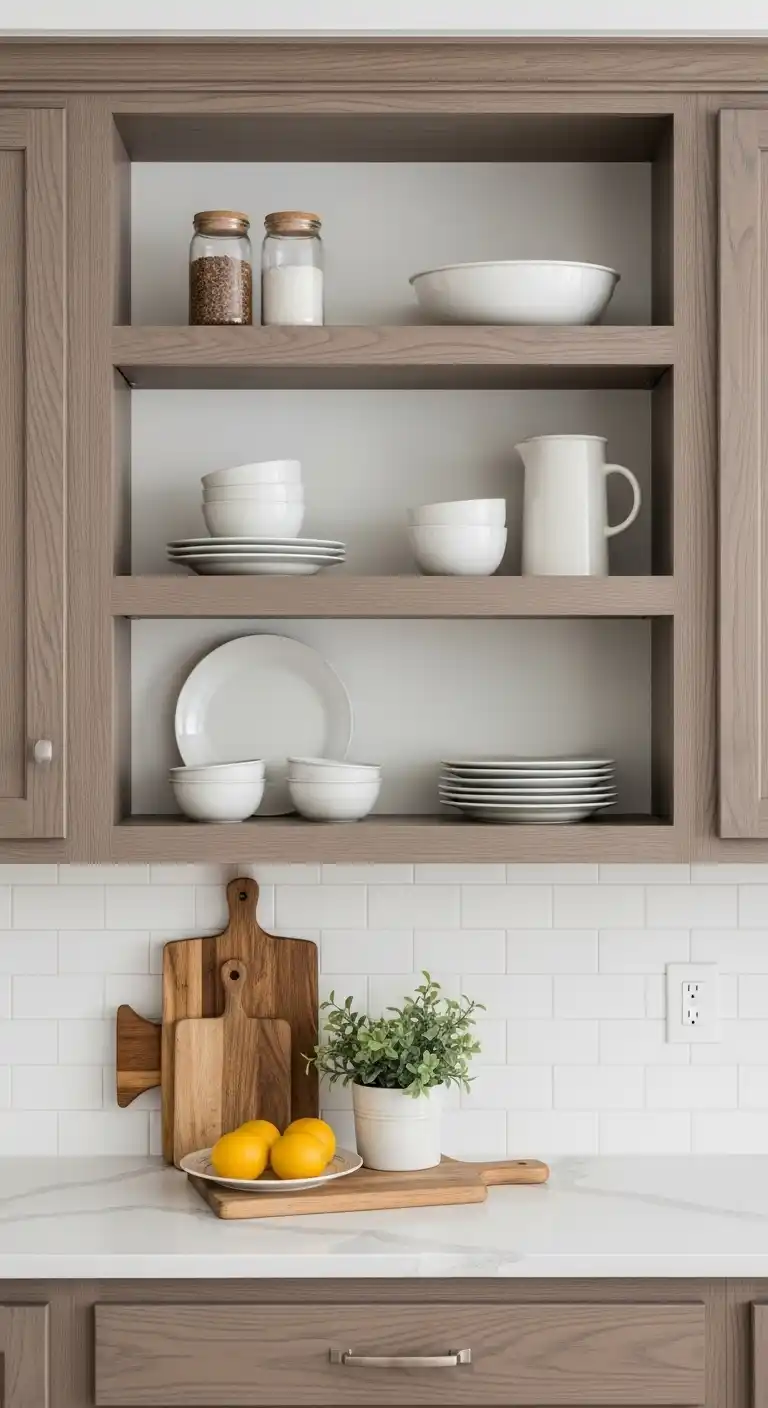
Open shelving offers homeowners easy access to everyday items while creating a decorative display area for transitional kitchens.
It works best when paired with closed cabinets, maintaining balance between practicality and visual openness.
Shelves can showcase organized dishes, cookbooks, or decorative accents, enhancing the kitchen’s personality without cluttering the space.
Material choices, such as wood or metal, complement adjacent cabinetry and reinforce the transitional style’s balance between modern and classic elements.
Open shelving encourages careful organization, helping homeowners maintain a clean and functional kitchen environment.
It is a flexible addition that improves both usability and design in a contemporary yet timeless way.
10. Cabinet Hardware Choices for Transitional Kitchens
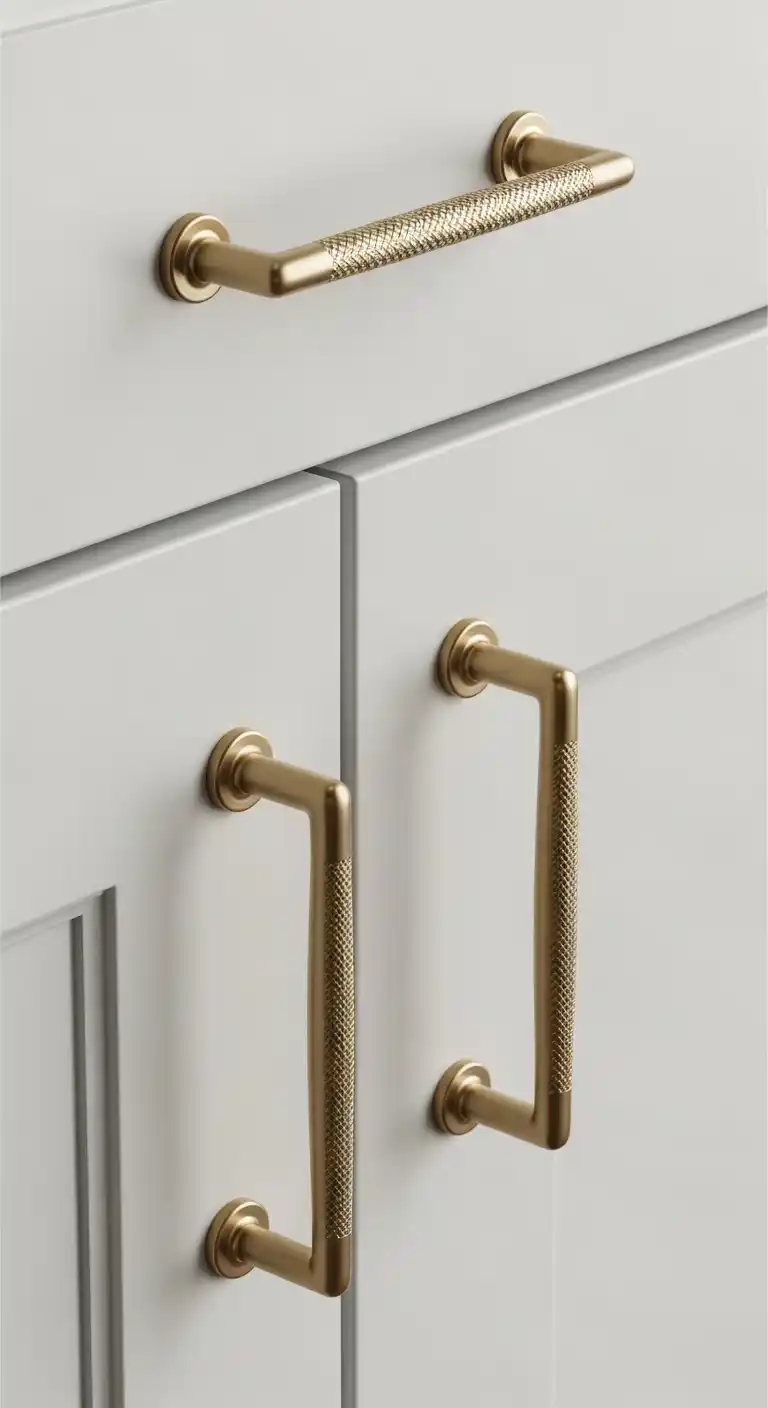
Hardware plays a crucial role in defining the overall style of transitional kitchen cabinets, providing both functionality and aesthetic appeal.
Selecting handles, knobs, and pulls in finishes like brushed nickel, matte black, or gold helps unify the kitchen’s visual theme.
Simple, elegant designs complement shaker or flat-panel cabinet styles, while textured options add subtle depth and character.
Hardware also affects usability, so ergonomic designs with smooth movement and durable materials enhance everyday convenience.
By carefully choosing cabinet hardware, homeowners can elevate the kitchen’s transitional style without overwhelming other design elements.
11. Glass Inserts and Mullion Doors for Elegant Details
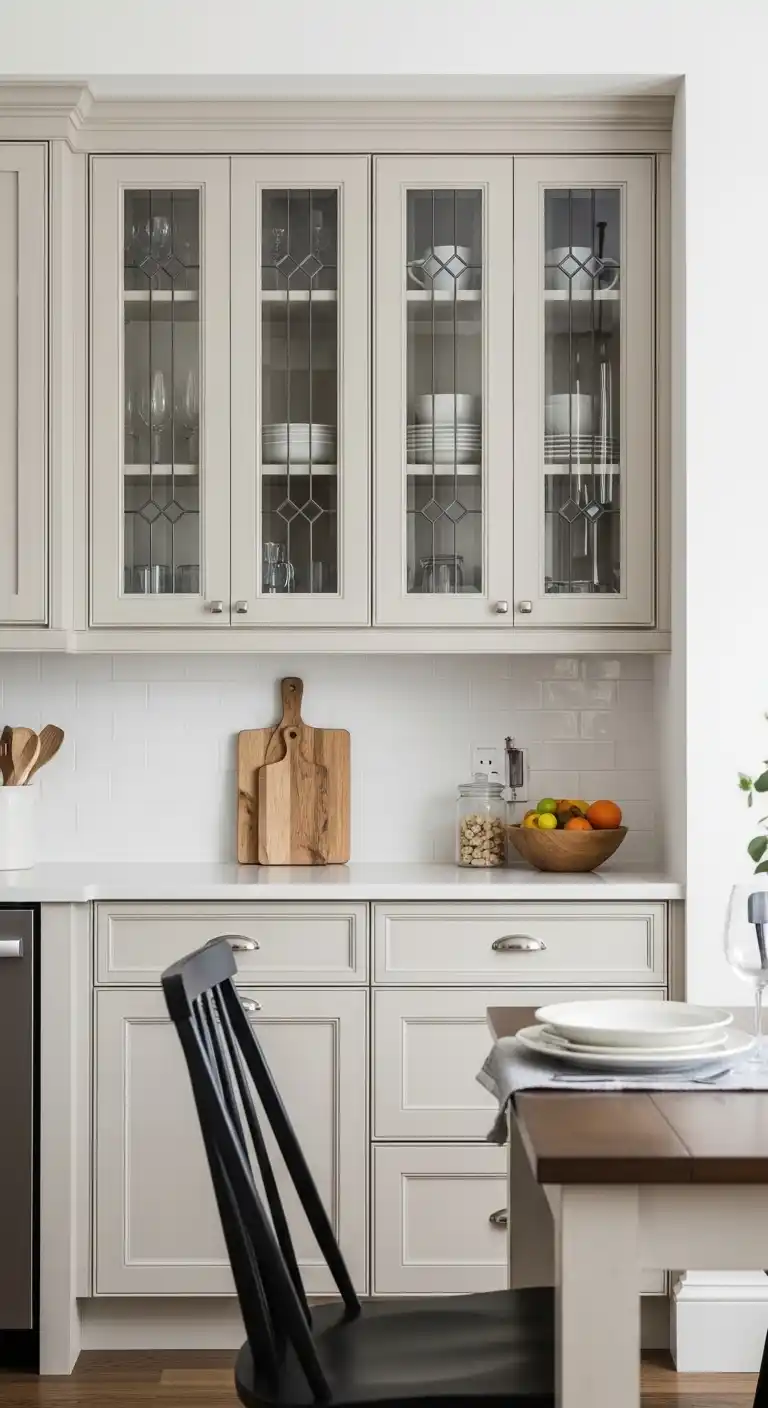
Glass inserts and mullion doors introduce visual interest while keeping the transitional balance between traditional charm and modern simplicity.
Decorative glass patterns or divided panels allow homeowners to showcase selected items while maintaining a clean, organized look.
These design elements add sophistication to the kitchen and highlight key cabinet areas, such as above the sink or near dining zones.
Pairing glass inserts with neutral or two-tone cabinets ensures consistency in style and avoids overwhelming the overall aesthetic.
They enhance light distribution and create a sense of openness, making kitchens feel more inviting and stylish.
12. Crown Molding for Classic Charm
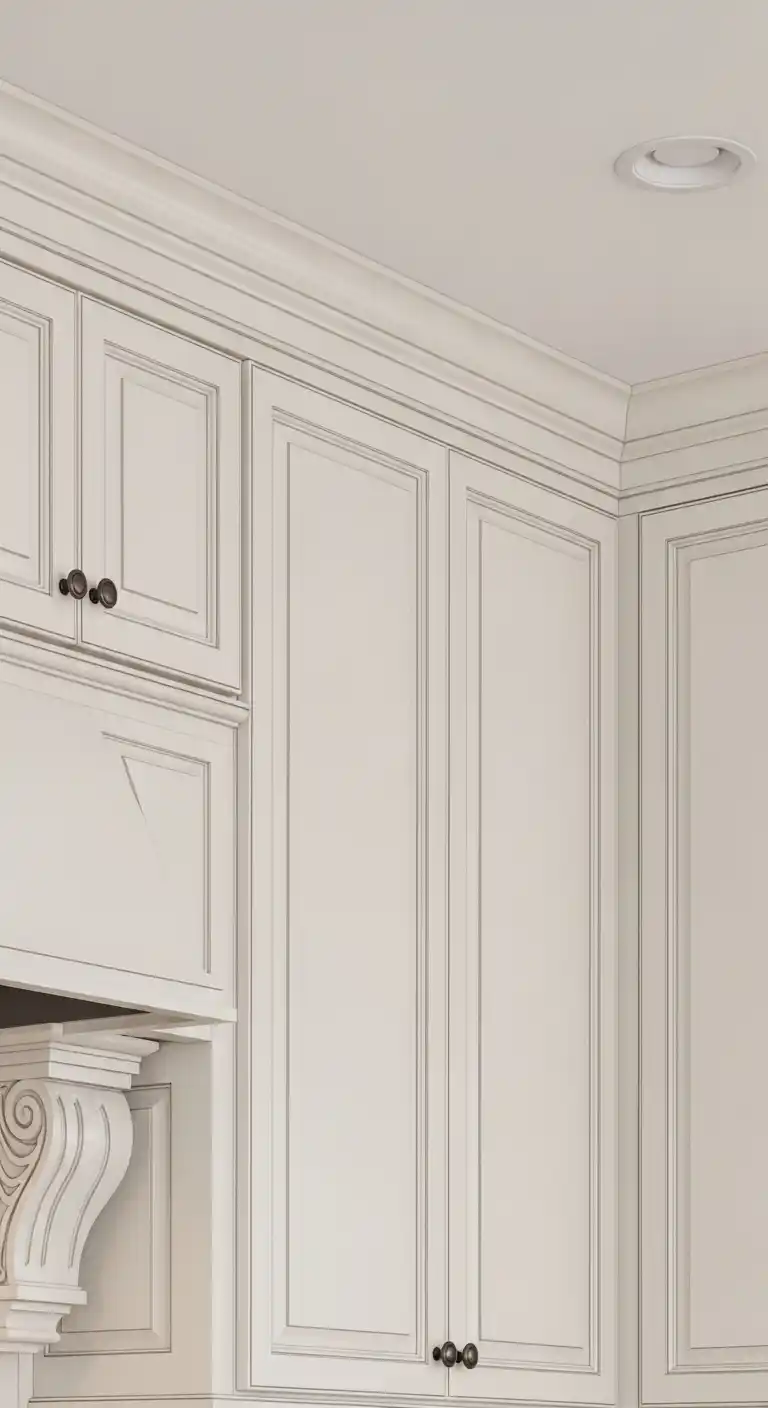
Crown molding provides a refined finishing touch to transitional cabinets, enhancing vertical lines and emphasizing architectural detail.
It complements both contemporary and traditional cabinetry by subtly connecting cabinets with the ceiling.
Choosing proportional molding ensures that it enhances the kitchen’s appearance without making it feel crowded or heavy.
Molding can be painted to match cabinet colors or highlighted with subtle contrast to draw attention to elegant design elements.
Adding crown molding transforms ordinary cabinets into polished, sophisticated pieces that elevate the overall kitchen style.
13. Under-Cabinet Lighting for Practical Elegance
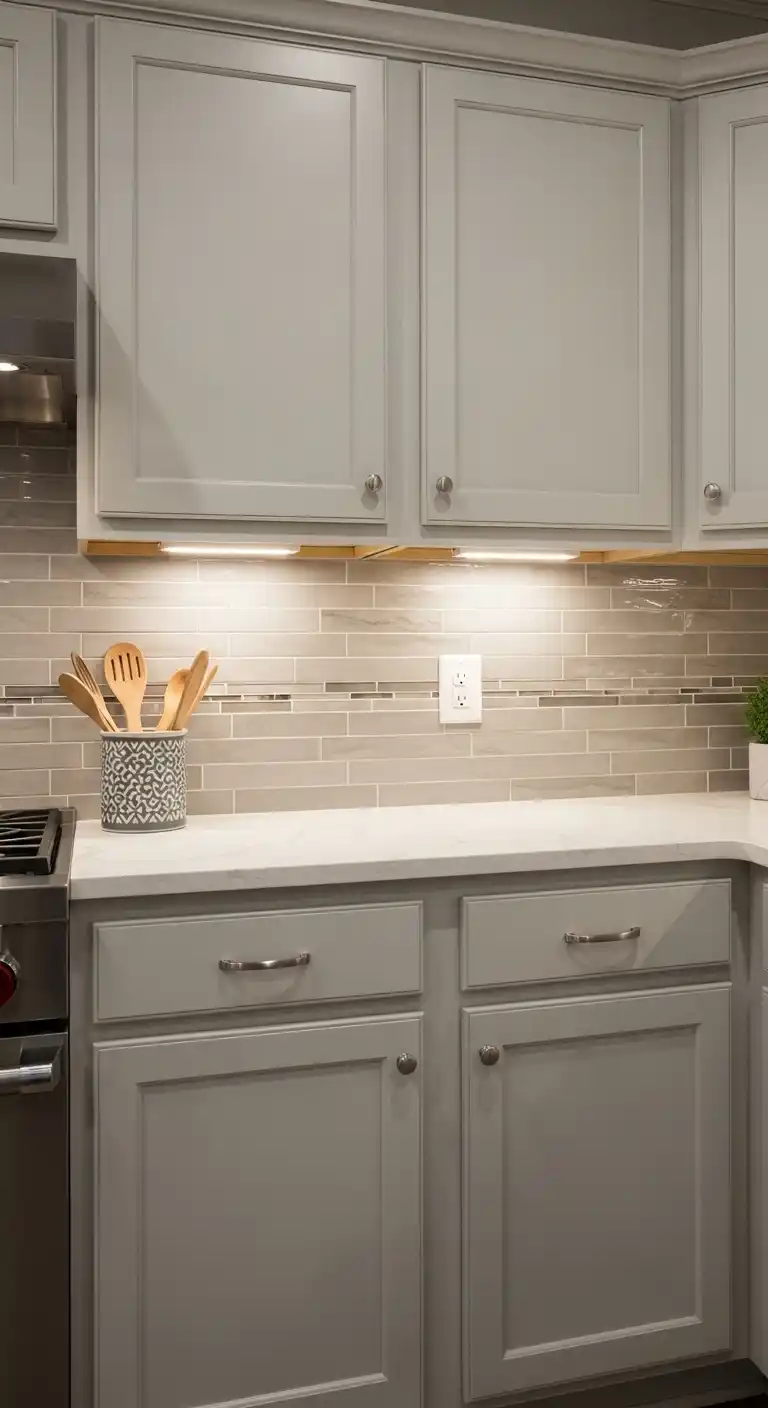
Under-cabinet lighting improves kitchen functionality while highlighting the beauty of transitional cabinets and countertops.
It creates task-specific illumination for cooking, chopping, and cleaning without adding harsh overhead glare.
LED strips or puck lights are energy-efficient options that provide adjustable brightness and color temperature.
Properly installed lighting enhances visual depth, showcasing cabinet finishes and highlighting backsplash textures.
It combines practicality and aesthetic appeal, making kitchens feel more welcoming, functional, and modern while supporting transitional design principles.
14. Cabinet Color Pairing with Backsplashes
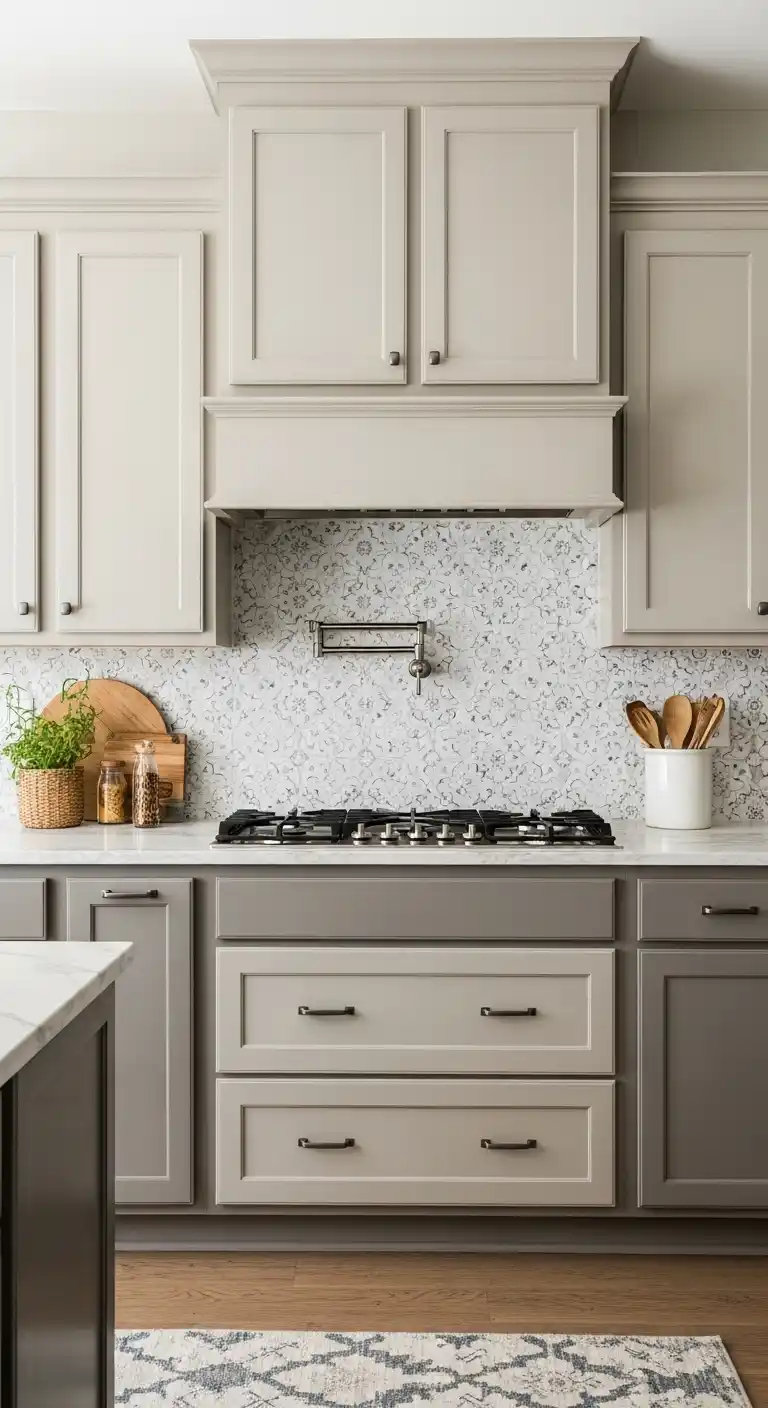
Selecting cabinet colors in harmony with kitchen backsplashes ensures a cohesive and visually appealing transitional design.
Neutral cabinet tones pair well with bold or patterned backsplashes, creating contrast without disrupting the overall balance.
Two-tone or accent-colored cabinets can be coordinated with subtle backsplash designs to enhance style while maintaining elegance.
Homeowners can experiment with complementary colors, textures, or materials to elevate the kitchen’s visual depth and personality.
Thoughtful pairing prevents visual clutter and ensures that both cabinets and backsplashes enhance, rather than compete with, the overall kitchen aesthetic.
15. Soft-Close Hinges for Modern Convenience
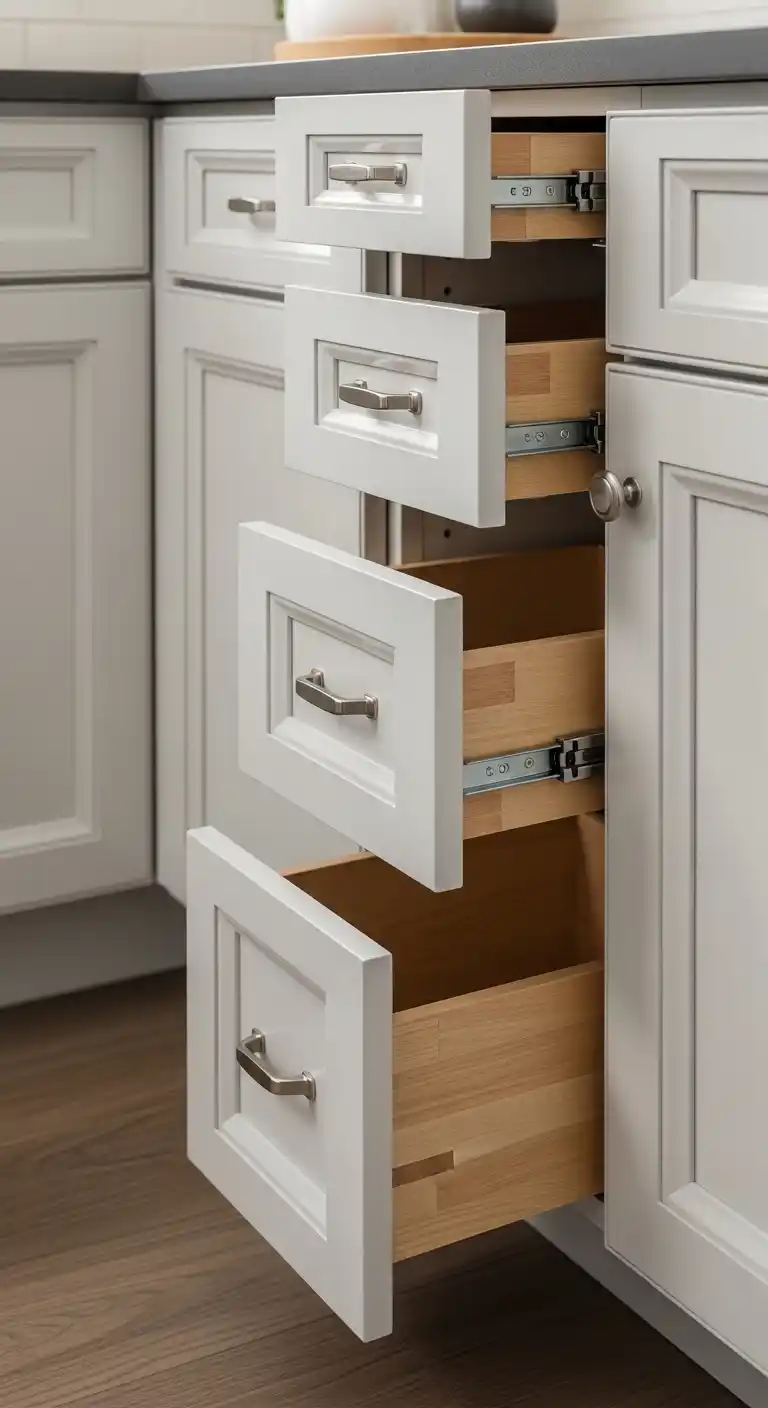
Soft-close hinges add a practical, modern feature to transitional kitchen cabinets by preventing doors and drawers from slamming shut.
This mechanism reduces wear on cabinet doors while providing a quieter, smoother operation that improves everyday usability.
Homeowners appreciate the convenience, especially in busy kitchens where multiple people may be accessing drawers and cupboards simultaneously.
Soft-close hinges also enhance the perceived quality of cabinets, contributing to a higher-end, polished look that complements transitional design.
Installing durable hinges ensures long-term functionality while protecting cabinetry from damage, maintaining both aesthetics and performance.
These small hardware upgrades elevate the kitchen’s user experience, combining practicality with subtle design sophistication.
16. Tall Cabinets for Maximum Vertical Storage
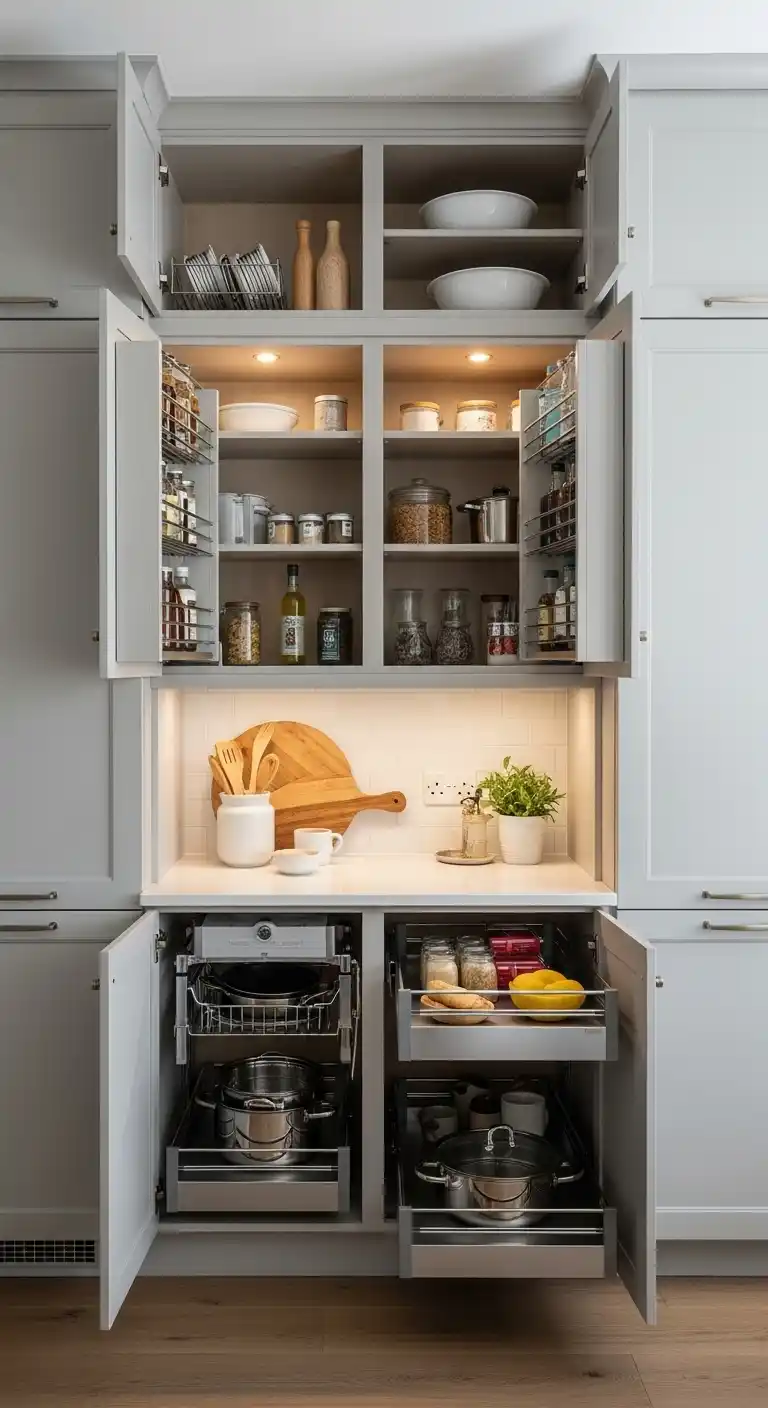
Tall cabinets maximize vertical storage by utilizing space up to the ceiling, making kitchens more efficient and organized.
They are ideal for storing items not frequently used, like seasonal cookware or bulk pantry supplies, while keeping them accessible when needed.
This design balances aesthetics and functionality, especially in smaller kitchens where every inch of storage matters.
Homeowners can combine tall cabinets with adjustable shelves, pull-out racks, or integrated lighting for optimal usability.
Choosing finishes and colors consistent with the transitional style ensures that tall cabinets enhance the kitchen’s overall elegance.
By expanding storage without overcrowding the space, tall cabinets improve workflow and maintain a clean, polished appearance.
17. Cabinet Lighting Features for Display Areas
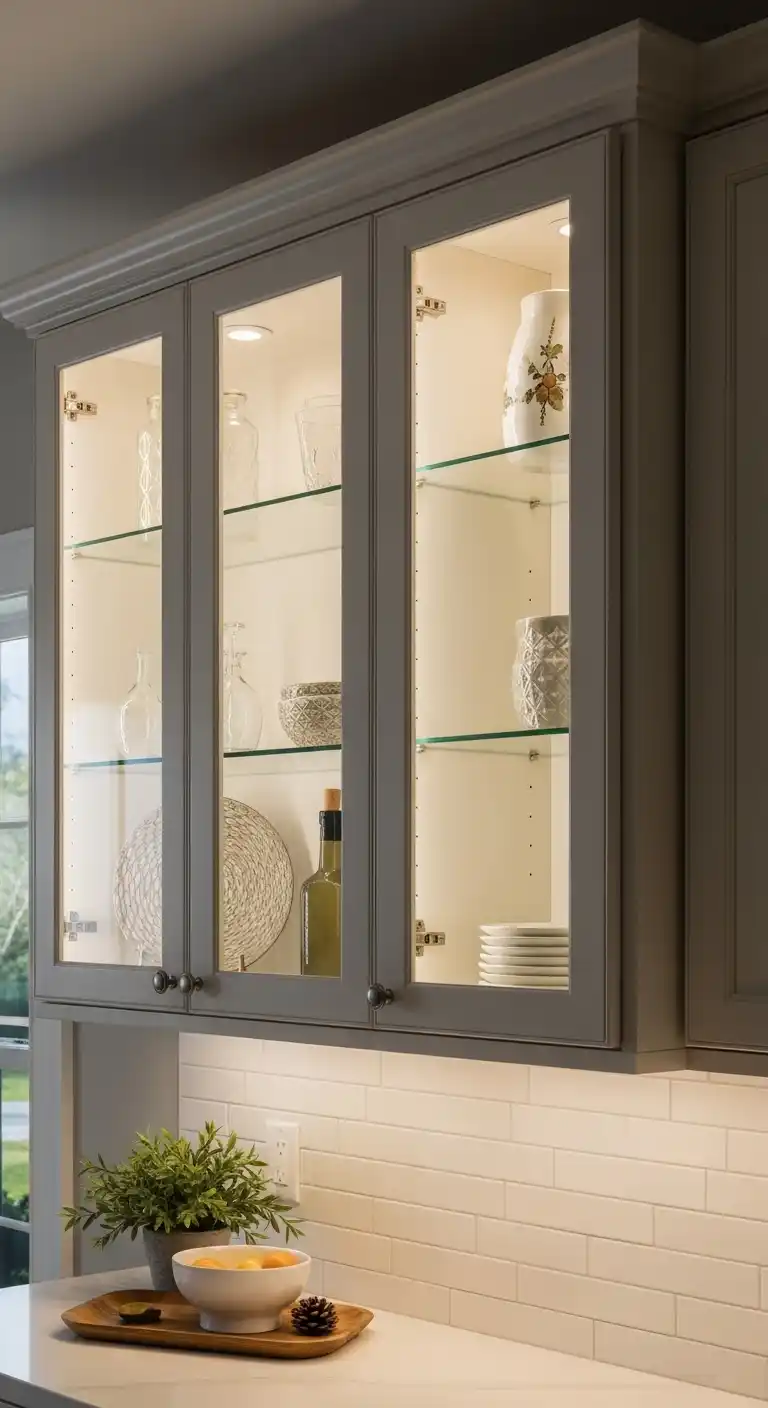
In-cabinet lighting enhances display areas in transitional kitchen cabinets, highlighting glass-front doors or open shelving.
Subtle LED strips or small spotlights illuminate the contents while creating a warm, inviting ambiance in the kitchen.
This feature combines functionality and aesthetics, allowing homeowners to showcase decorative items without cluttering the countertop.
Lighting can be dimmable or motion-activated for convenience, supporting both practical needs and design appeal.
Properly positioned lights draw attention to textures, finishes, and color contrasts, enriching the transitional style.
It also contributes to a more dynamic kitchen environment, making storage and display both beautiful and purposeful.
18. Integrated Appliances in Transitional Cabinets
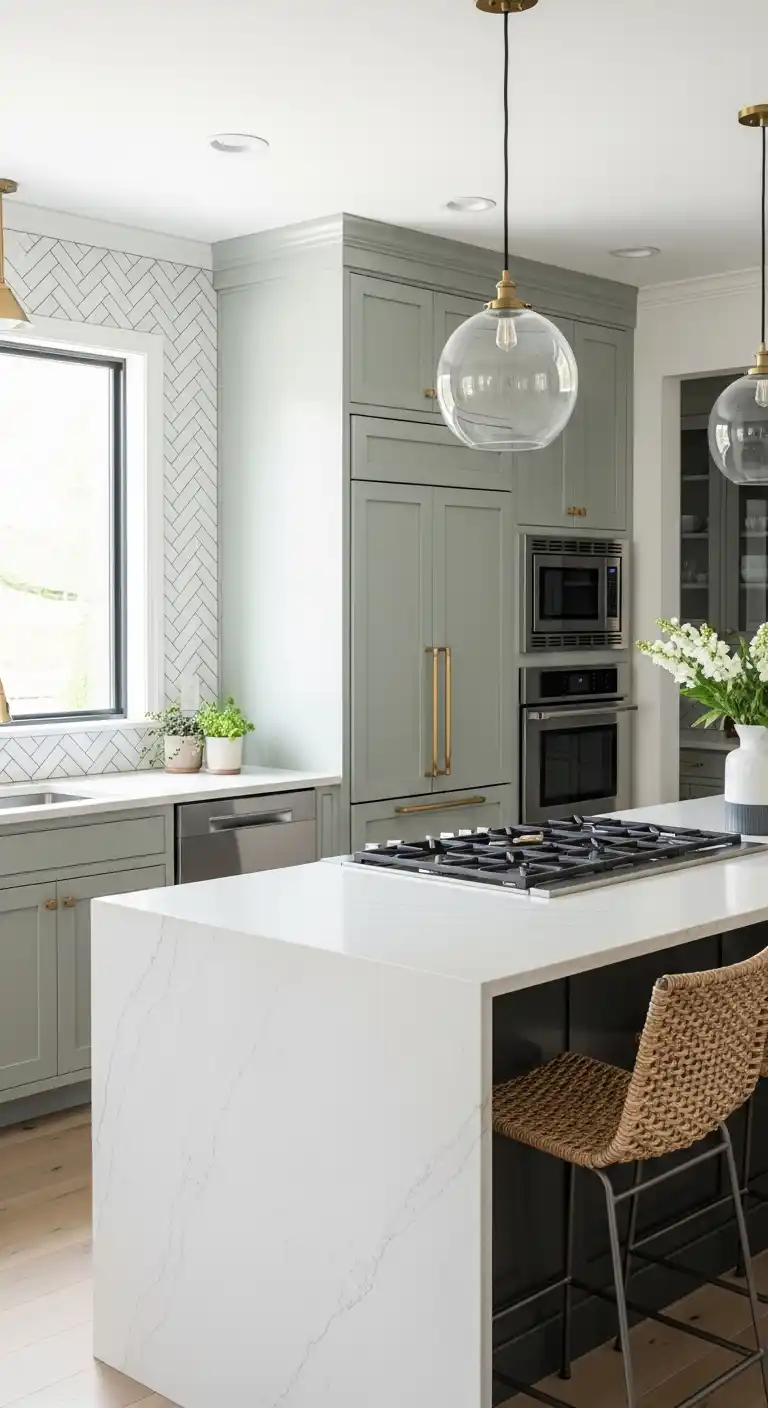
Integrating appliances into transitional cabinets creates a seamless, cohesive kitchen design, hiding large machines behind cabinetry panels.
Dishwashers, refrigerators, and microwaves blend with the cabinet layout, maintaining clean lines and visual continuity.
This approach improves workflow by keeping appliances within easy reach while preserving counter space and kitchen aesthetics.
Integrated designs also prevent kitchens from feeling cluttered, supporting the transitional balance between modern efficiency and classic charm.
Choosing matching finishes and hardware ensures appliances do not disrupt the overall cabinet style.
Integrated appliances enhance both practicality and elegance, making kitchens more functional and visually unified.
19. Textured Cabinet Finishes for Depth
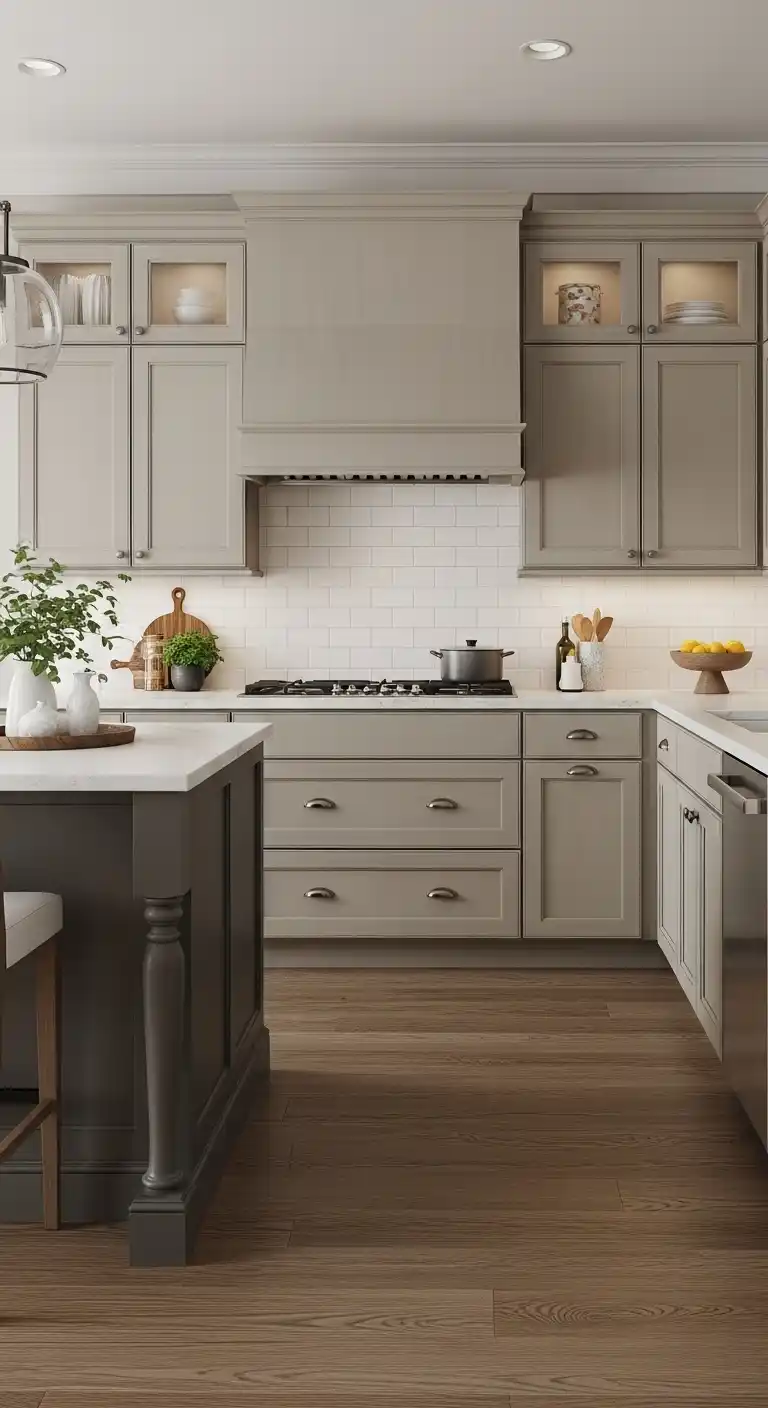
Textured cabinet finishes, such as painted, wood-grain, or matte surfaces, add depth and character to transitional kitchens.
They create subtle visual interest while complementing other design elements, like countertops, backsplashes, and flooring.
Textured finishes also help conceal minor scratches or fingerprints, maintaining a polished, well-kept appearance over time.
Homeowners can mix textures for accents, such as a smooth island paired with wood-grain upper cabinets, creating a layered, dynamic design.
These finishes enhance warmth and sophistication, reinforcing the transitional style without overwhelming the kitchen’s balance.
By combining texture with color and hardware, homeowners achieve elegance, practicality, and visual harmony.
20. Cabinet Islands with Storage Versatility
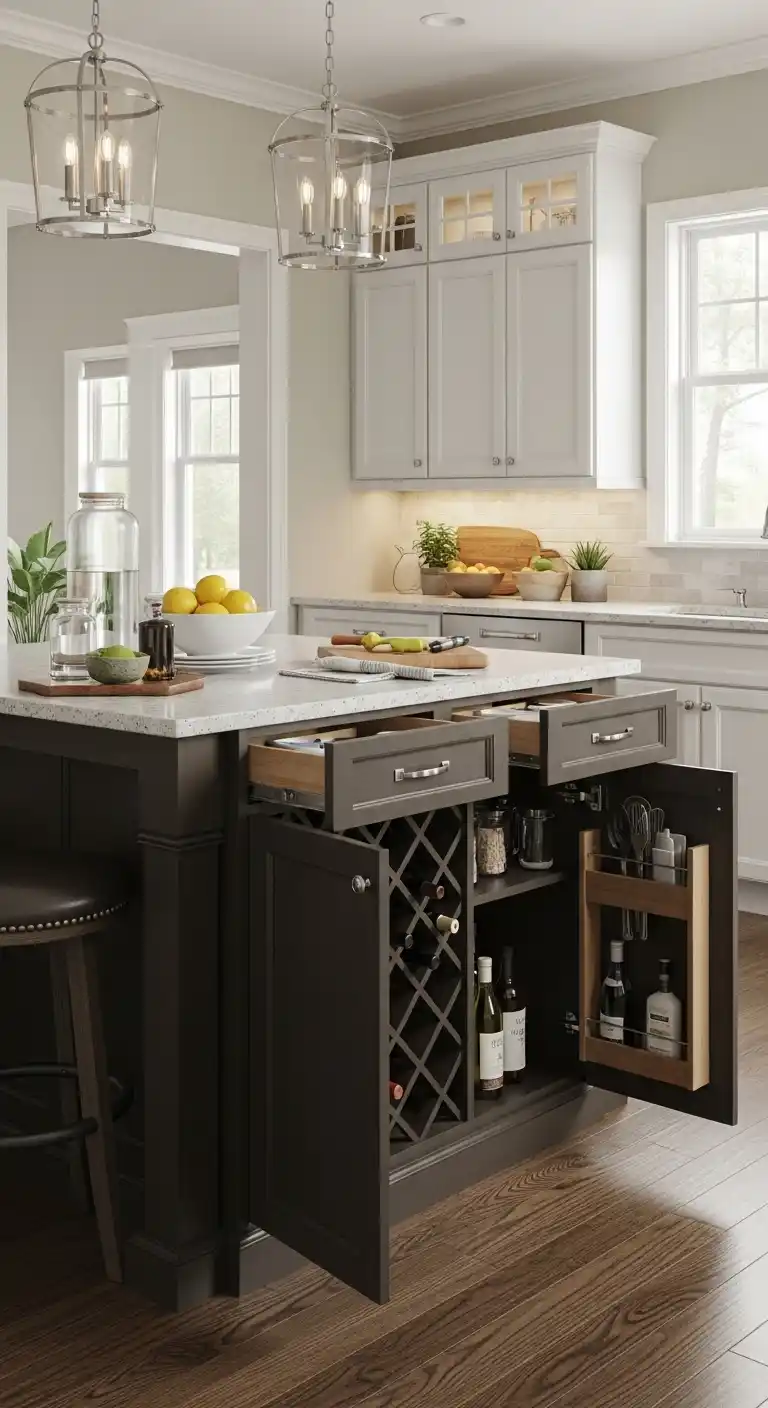
Kitchen islands with cabinets provide multifunctional storage, seating, and workspace in transitional kitchens.
They can include drawers, shelves, wine racks, or hidden compartments, maximizing functionality without cluttering the main kitchen area.
Island cabinets allow homeowners to store frequently used tools, utensils, or pantry items for easy access during cooking.
This design also creates a central hub for family gatherings, meal prep, or casual dining.
Selecting finishes and colors that complement surrounding cabinetry maintains transitional balance while making the island a standout feature.
A well-designed island combines practicality and style, enhancing both the functionality and visual appeal of the kitchen.
21. Eco-Friendly Cabinet Materials
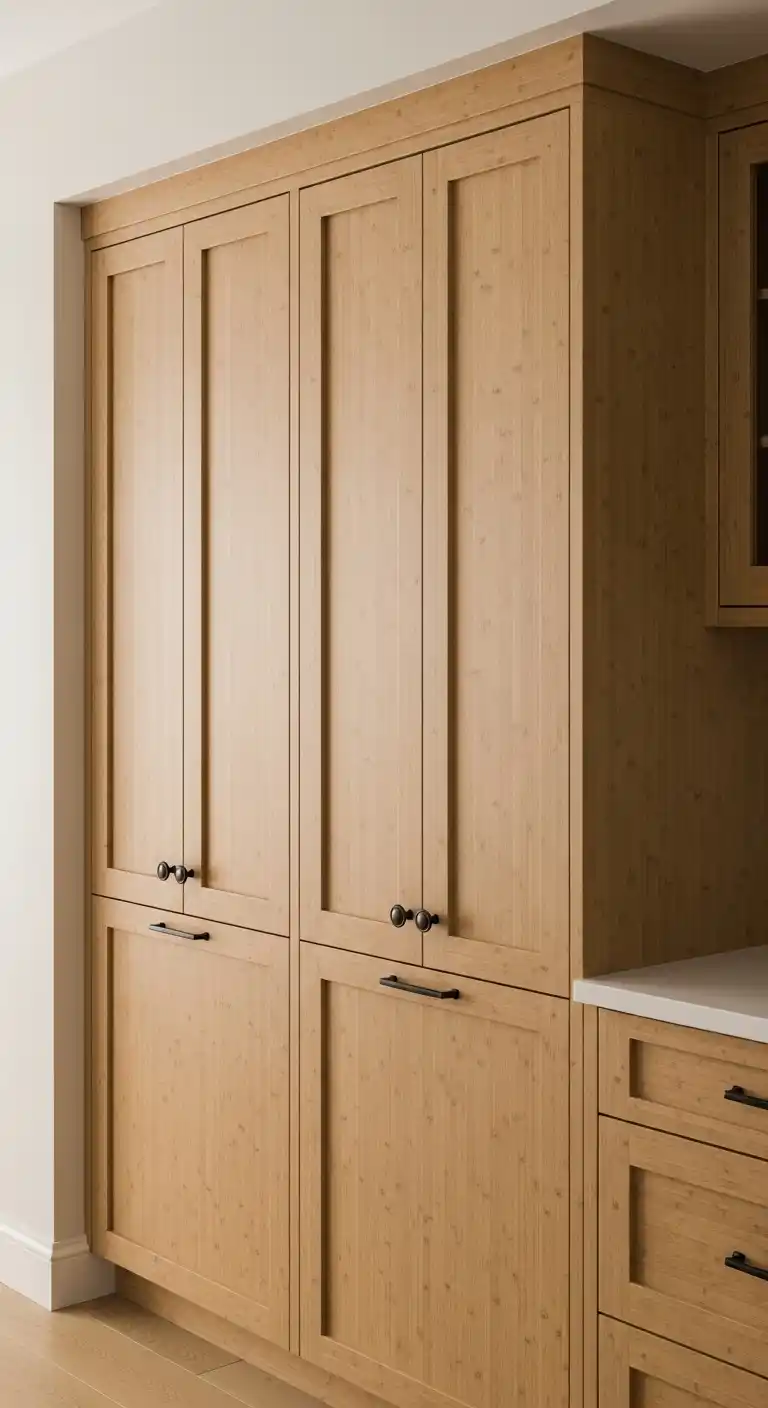
Eco-friendly materials such as sustainably sourced wood, bamboo, or recycled composites provide an environmentally conscious option for transitional cabinets.
These materials reduce environmental impact while maintaining durability, functionality, and aesthetic appeal.
Homeowners can select finishes that preserve natural textures or offer painted surfaces for more versatile design options.
Sustainable materials also align with modern design trends while respecting traditional craftsmanship, supporting the transitional style.
Proper maintenance ensures long-lasting performance, allowing kitchens to remain stylish and functional without compromising sustainability.
Eco-friendly cabinets appeal to homeowners who value quality, elegance, and environmental responsibility.
22. Cabinet Organization Systems for Efficiency
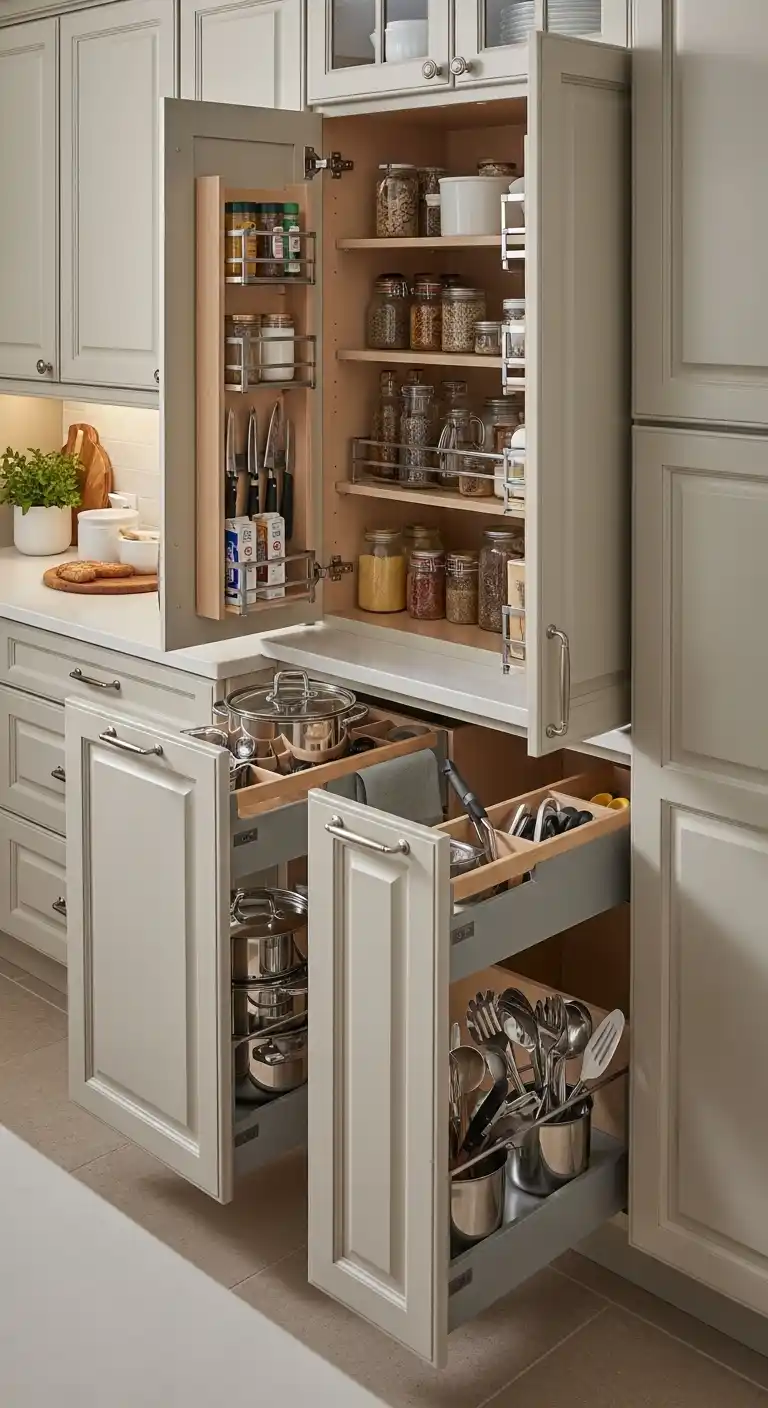
Organization systems, including pull-out drawers, dividers, and lazy Susans, maximize storage efficiency in transitional kitchen cabinets.
They make it easier to access items, maintain order, and reduce clutter in both drawers and cupboards.
Customizable solutions allow homeowners to tailor storage to their specific cooking habits and kitchen layout.
These systems improve workflow, ensuring utensils, cookware, and pantry items are easy to find and store.
By combining functional organization with stylish design, cabinets remain both practical and visually appealing.
Well-planned systems enhance the overall usability of the kitchen, supporting a smooth cooking and entertaining experience.
23. Cabinet Lighting with Smart Home Features
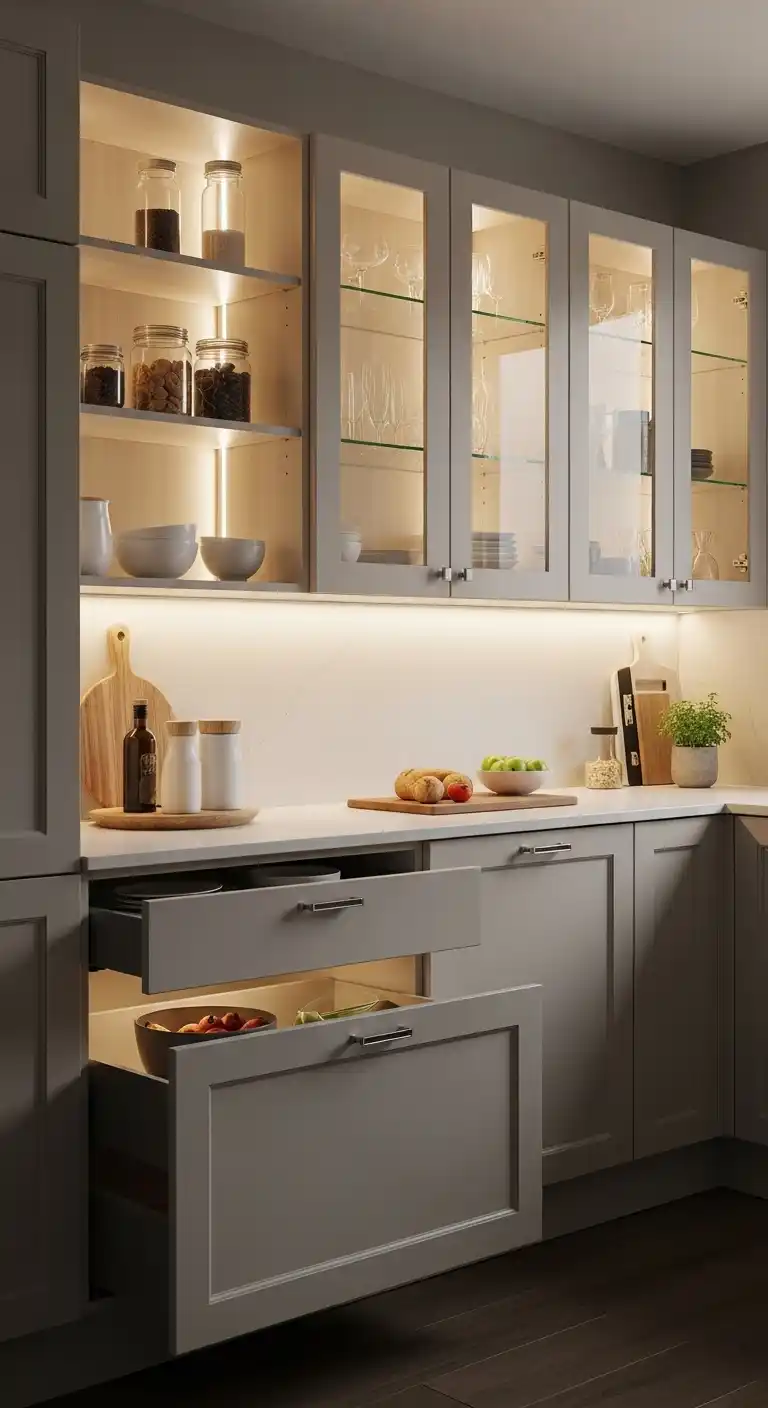
Smart cabinet lighting allows homeowners to control illumination through apps, voice commands, or timers for convenience and efficiency.
LED strips can adjust brightness or color temperature, enhancing the kitchen’s ambiance while highlighting cabinet features.
Smart lighting reduces energy usage and improves safety by providing adequate illumination for food prep areas.
It also emphasizes key design elements, such as glass-front doors, textured finishes, or display shelves.
Integrating smart features supports a modern transitional kitchen that combines technology, practicality, and style seamlessly.
This addition appeals to homeowners seeking convenience without sacrificing elegance.
24. Minimalist Cabinet Designs for Open Kitchens
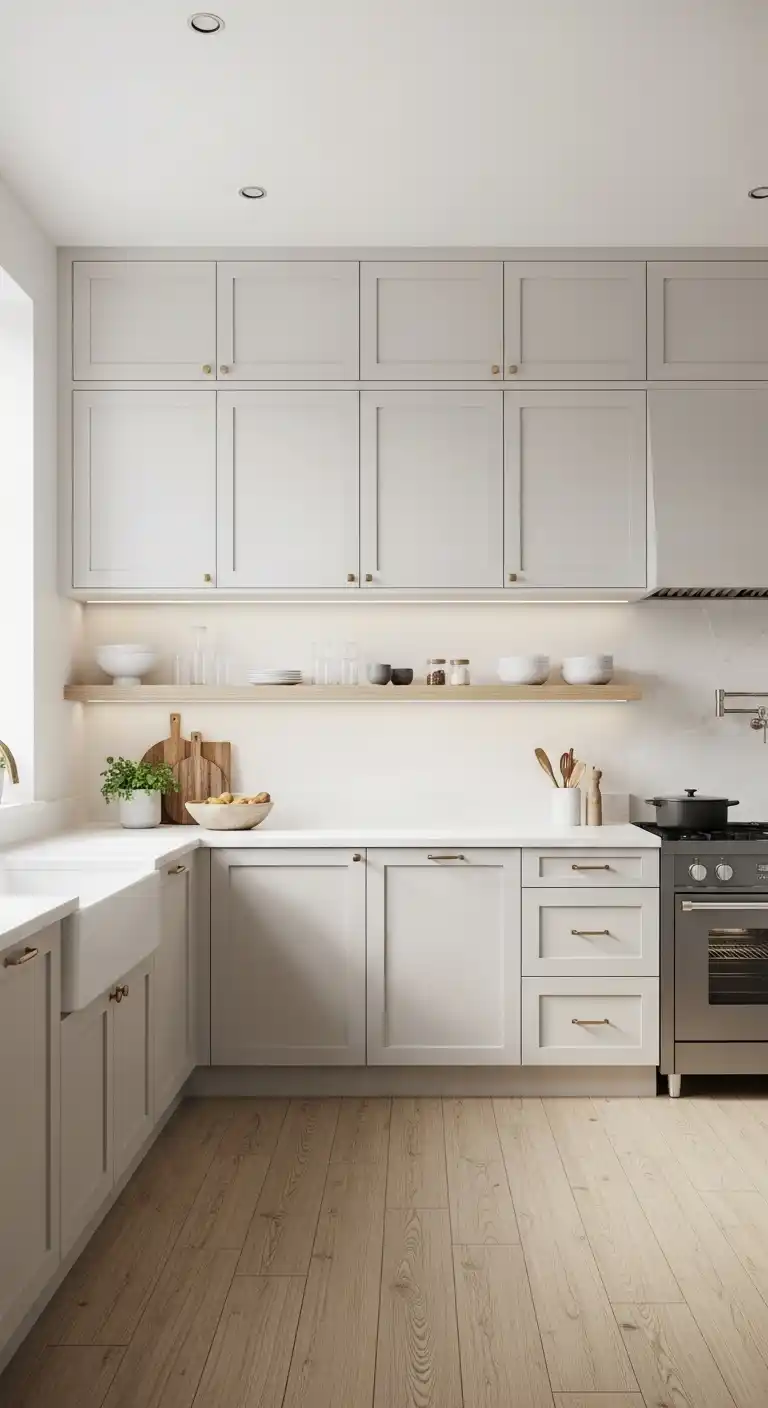
Minimalist transitional cabinets emphasize clean lines, subtle details, and uncluttered surfaces, creating an open, airy kitchen environment.
They work well in smaller spaces, making rooms feel larger and more inviting while maintaining transitional balance.
Flat-panel or shaker-style cabinets with simple hardware reinforce the minimalist aesthetic while retaining warmth and character.
Minimalist designs encourage efficient organization, preventing excess items from disrupting the kitchen’s appearance.
These cabinets can be combined with floating shelves, under-cabinet lighting, or integrated appliances for a cohesive, contemporary look.
By keeping elements streamlined, homeowners achieve elegance and practicality in every corner of the kitchen.
25. Textured Hardware for Subtle Contrast
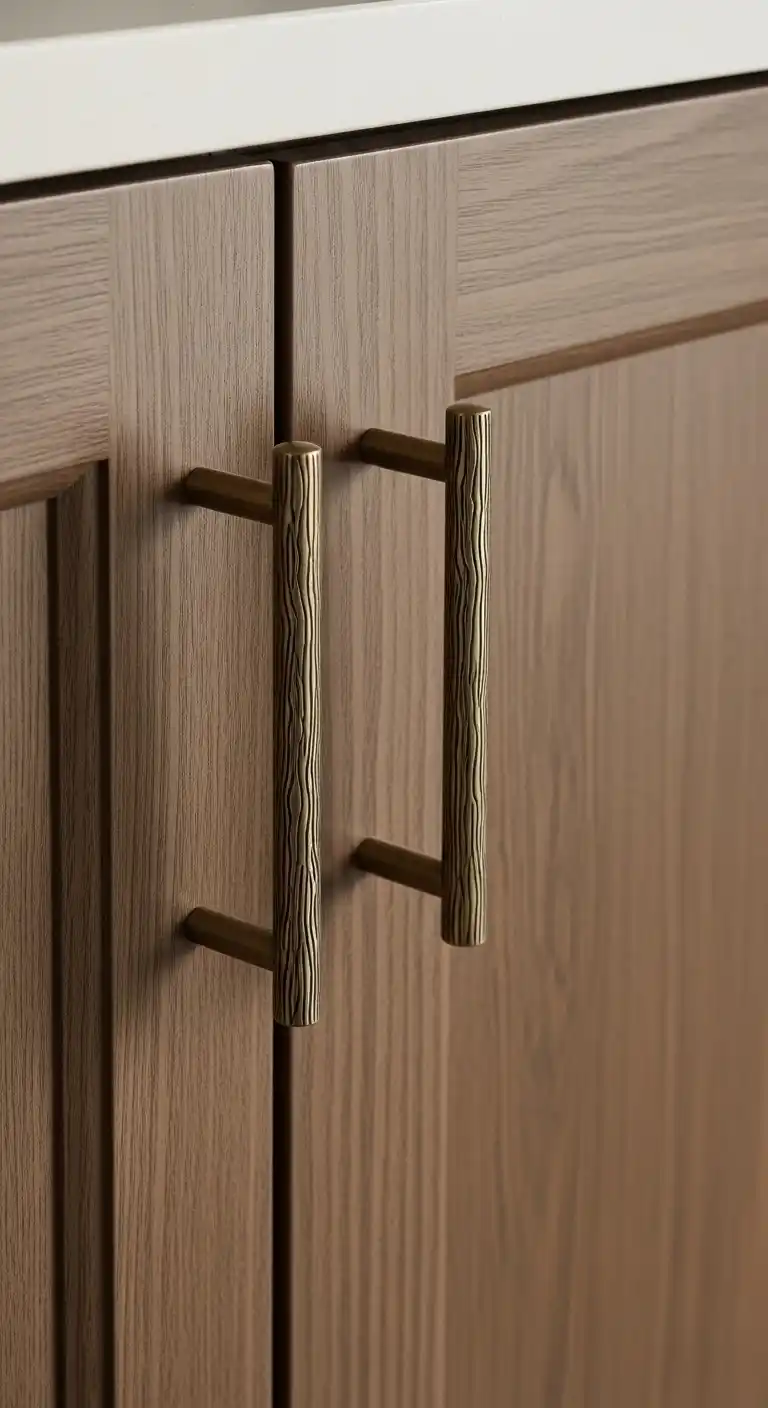
Textured knobs and pulls add subtle contrast to transitional cabinets, complementing finishes and adding visual interest without overpowering design.
They enhance tactile experiences while reinforcing the cabinet’s character, particularly in shaker or two-tone designs.
Textured hardware pairs well with mixed-material cabinets, glass inserts, or wood-grain surfaces, emphasizing details thoughtfully.
This approach allows homeowners to introduce personality while maintaining cohesion with overall kitchen aesthetics.
Careful selection of metal finishes, shapes, and sizes ensures hardware complements rather than competes with cabinetry features.
Textured accents subtly elevate kitchen style while enhancing usability and elegance.
26. Corner Cabinets for Maximizing Space
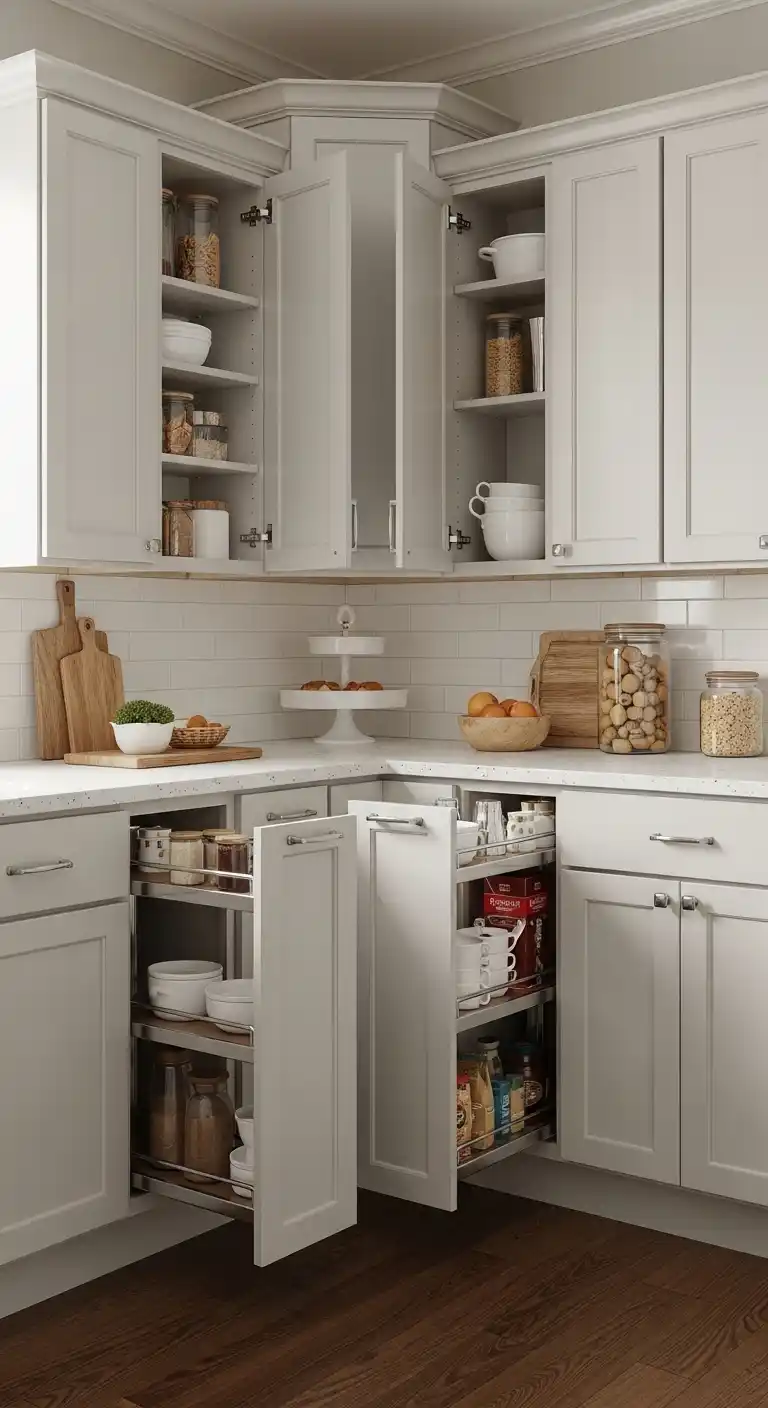
Corner cabinets optimize hard-to-reach areas, improving storage capacity and functionality in transitional kitchens.
Design solutions like lazy Susans, swing-out shelves, or pull-out units make items stored in corners easily accessible.
They reduce wasted space, keeping kitchens organized and preventing clutter in busy areas.
Corner cabinets can be paired with adjacent base or wall units, maintaining clean lines and transitional balance.
Choosing durable materials ensures smooth operation and longevity while supporting practical use for heavy cookware or pantry items.
Well-designed corners enhance both efficiency and aesthetics, ensuring no space is left unused in the kitchen.
27. Cabinet Colors That Age Gracefully
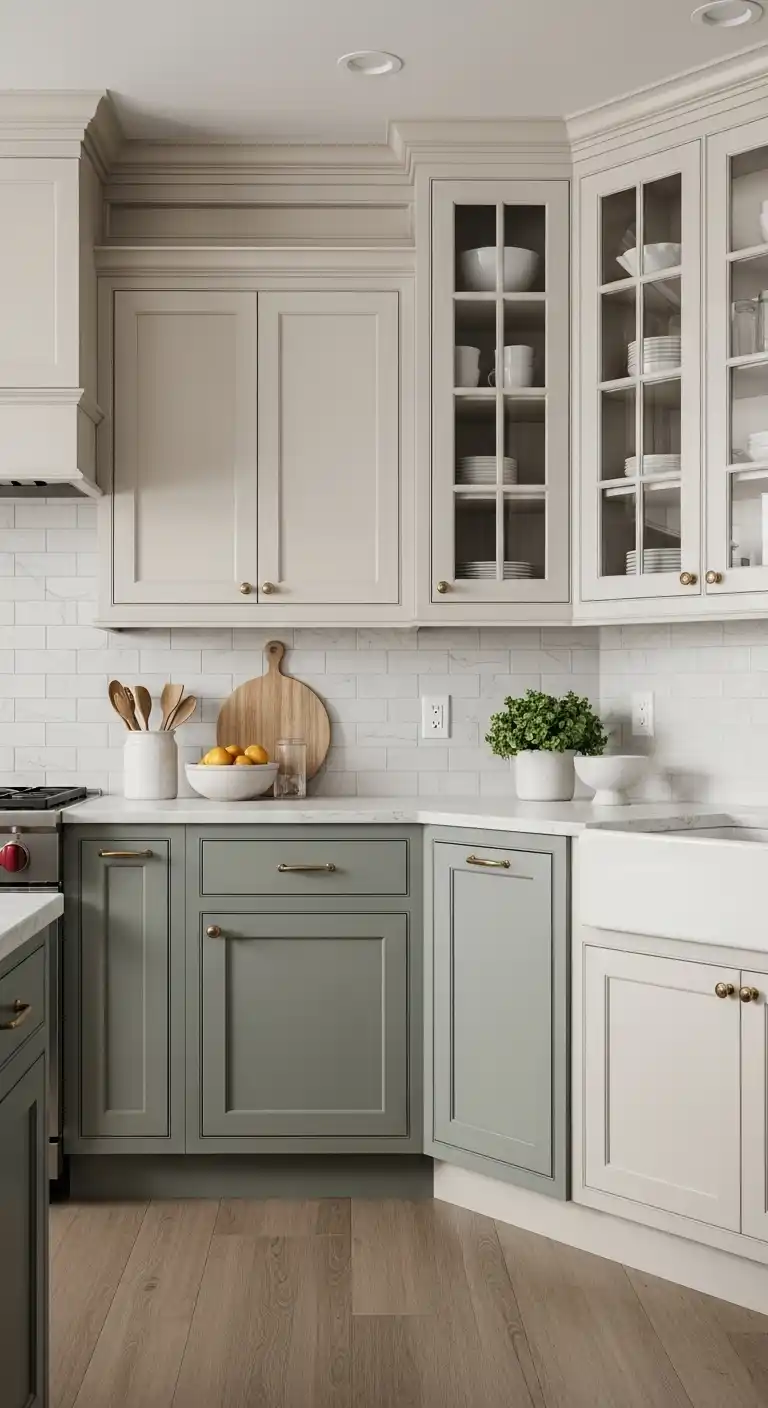
Selecting cabinet colors that remain stylish over time ensures a transitional kitchen stays elegant and modern for years.
Soft grays, muted greens, cream, and warm beige are examples of shades that balance timeless appeal with subtle visual interest.
These colors complement countertops, flooring, and backsplash materials while accommodating future décor updates without requiring costly changes.
Aging gracefully also means resisting trends that may quickly feel outdated, focusing on hues that maintain neutrality and versatility.
By prioritizing long-lasting colors, homeowners can create a cohesive, stylish kitchen that remains practical, beautiful, and welcoming.
Innovative Storage Solutions Beyond Cabinets
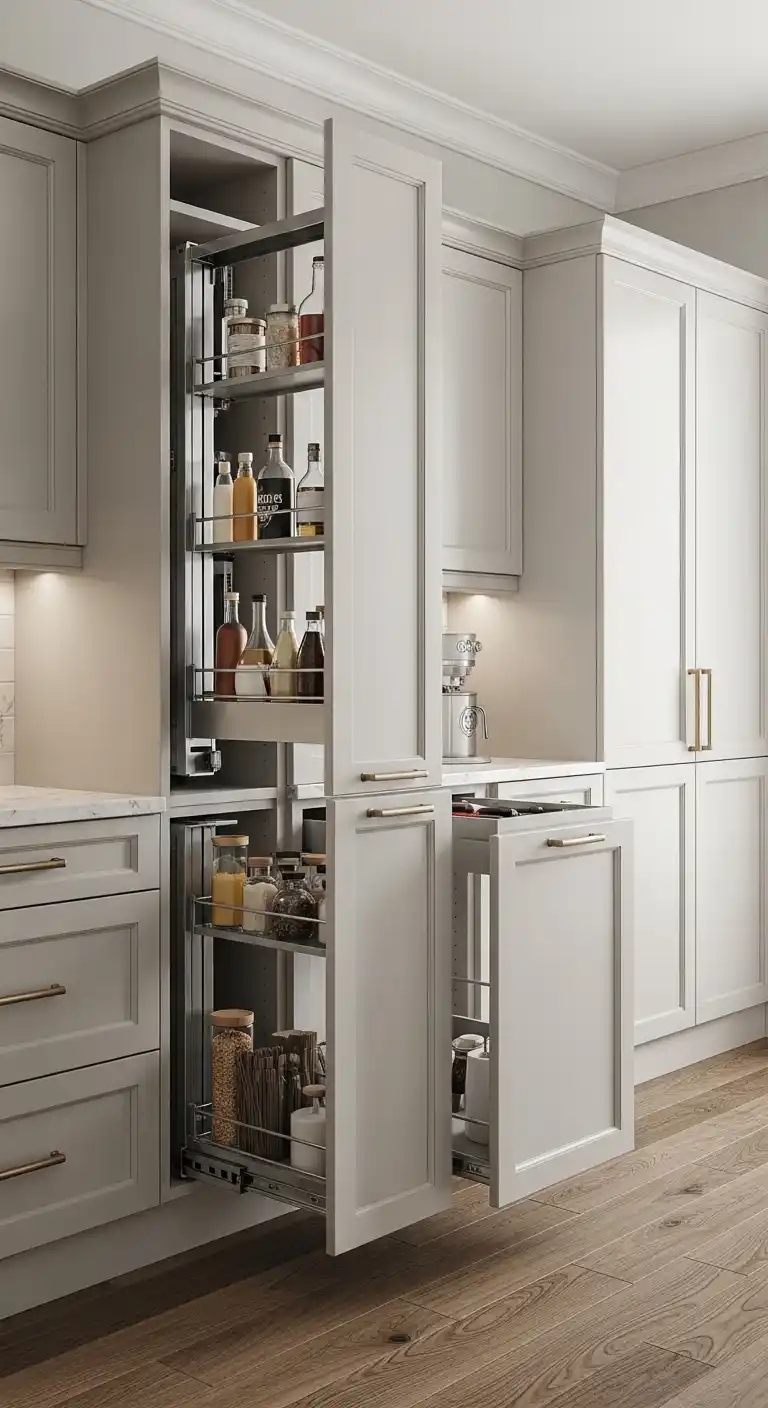
Beyond traditional cabinetry, homeowners can enhance storage with pull-out pantry units, hidden drawers, and modular organizers.
These solutions make the kitchen more functional while preserving a clean, transitional aesthetic.
Integrating these elements supports workflow efficiency, keeping essential items within reach without cluttering countertops.
Flexible designs allow customization based on kitchen size, family needs, or lifestyle habits.
Such innovations maintain the balance of elegance and practicality, ensuring the kitchen remains visually appealing and highly functional.
Maintaining Your Transitional Kitchen Cabinets
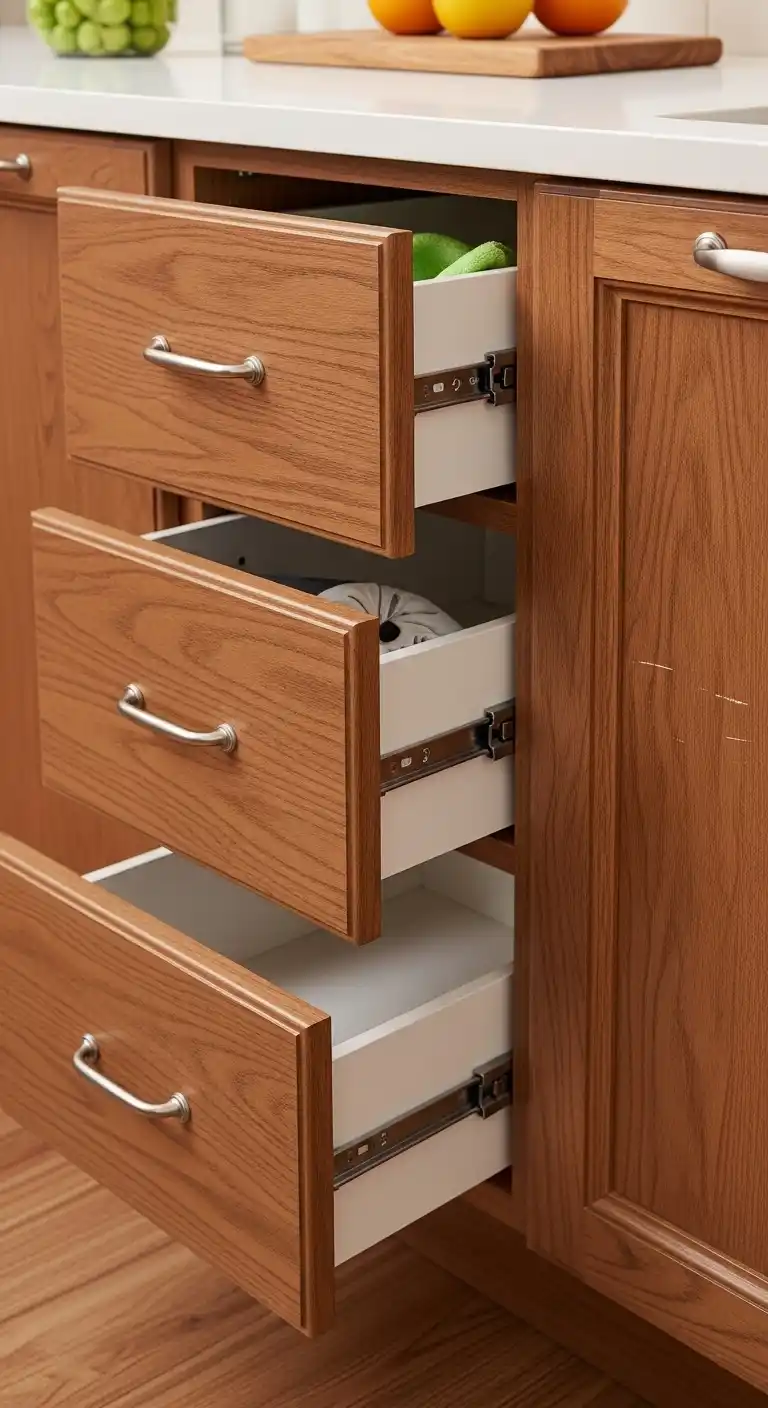
Maintaining transitional cabinets ensures they remain beautiful, durable, and functional over time.
Regular cleaning with mild, eco-friendly solutions protects finishes without causing damage or discoloration.
Hardware should be checked periodically, ensuring hinges, pulls, and drawer slides remain secure and operate smoothly.
Minor scratches or dents can be repaired with matching touch-up kits to maintain a polished appearance.
Routine maintenance helps extend cabinet lifespan, preserving both the aesthetic and practical value of your kitchen investment.
Key Takeaways
Transitional kitchen cabinets combine the elegance of traditional designs with the clean lines of contemporary styles, offering versatility and timeless appeal.
The 27 ideas discussed provide inspiration for color, material, hardware, storage, and lighting choices to create a functional and stylish kitchen.
Smart organization, innovative lighting, and careful maintenance further enhance cabinet efficiency and longevity.
By selecting designs, finishes, and features thoughtfully, homeowners can achieve a harmonious kitchen that balances aesthetics and practicality.
Transitional kitchen cabinets remain a long-lasting, flexible choice, making them an ideal solution for homeowners who value both style and usability.