Which Type of Tiles is Best for Kitchen Floor? A Comprehensive Guide

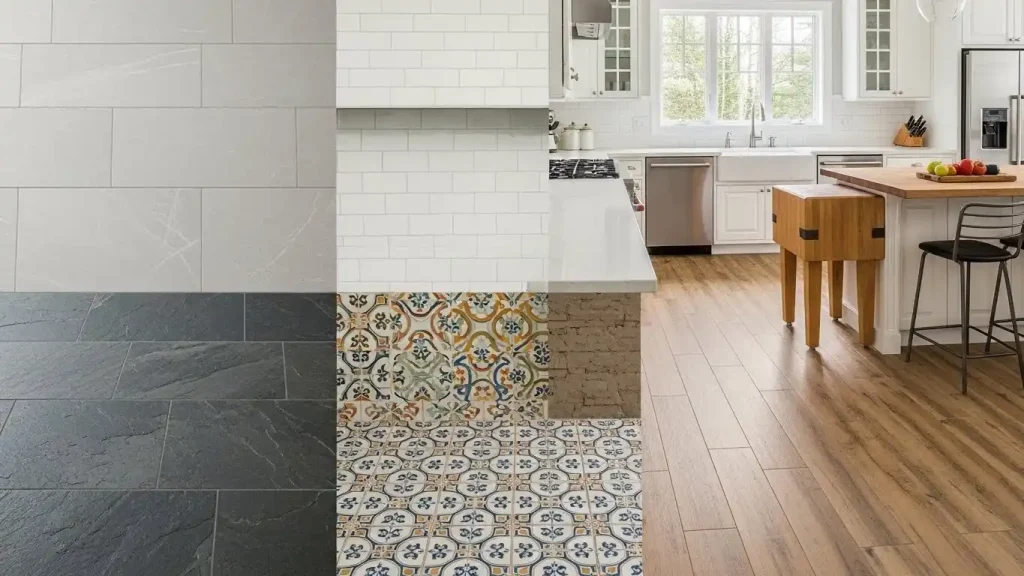
The kitchen is often referred to as the heart of the home. It is a place of culinary creativity, family gatherings, and late-night snacks.
Porcelain tile is the optimal kitchen flooring choice due to its high density, low porosity, and exceptional resistance to moisture, stains, and heavy wear. Its superior durability and ease of maintenance make it more practical for high-traffic cooking environments than ceramic or natural stone alternatives.
Between heavy foot traffic, accidental spills, dropped cast-iron pans, and the constant moisture from cooking and cleaning, your kitchen floor takes a beating.
When renovating or building a new home, one of the most critical decisions you will face is selecting the right flooring.
In this comprehensive guide, we will break down the top contenders, evaluate their pros and cons, and help you determine which material fits your lifestyle, budget, and aesthetic preferences.
Understanding the Demands of a Kitchen Floor
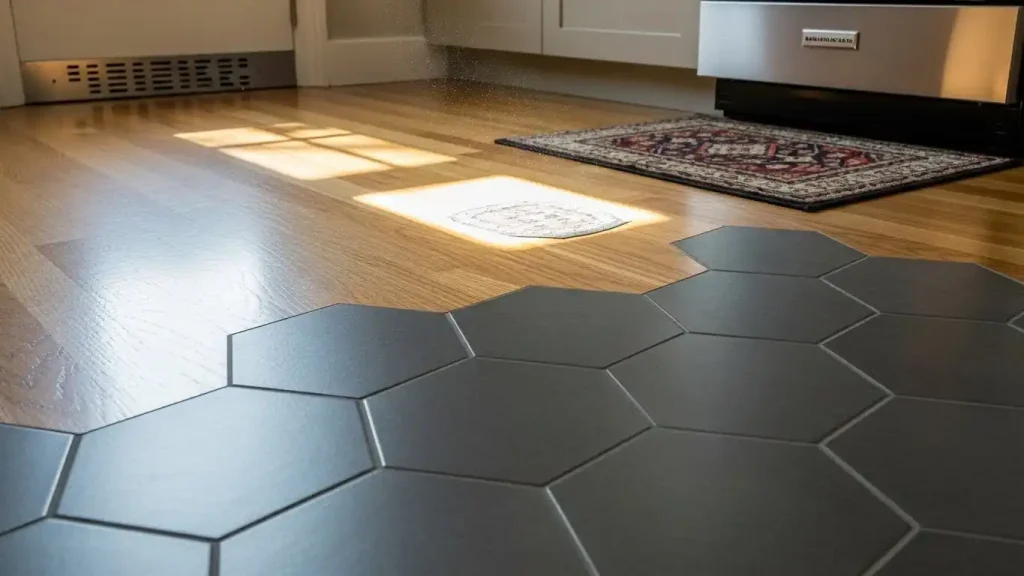
Before we dive into specific materials, it is essential to understand what makes a “good” kitchen tile.
Unlike a bathroom floor (which prioritizes water resistance) or a bedroom floor (which prioritizes comfort), a kitchen floor must balance several factors:
- Durability: It must withstand the weight of heavy appliances and the impact of dropped items.
- Water Resistance: Spills are inevitable. The tile should not absorb liquids or warp when wet.
- Slip Resistance: Safety is paramount, especially in a zone where water and grease might end up on the floor.
- Ease of Cleaning: You want a surface that can be wiped down quickly without requiring specialized, expensive chemicals.
- Aesthetics: It needs to complement your cabinetry, countertops, and backsplash.
1. Porcelain Tile: The Gold Standard
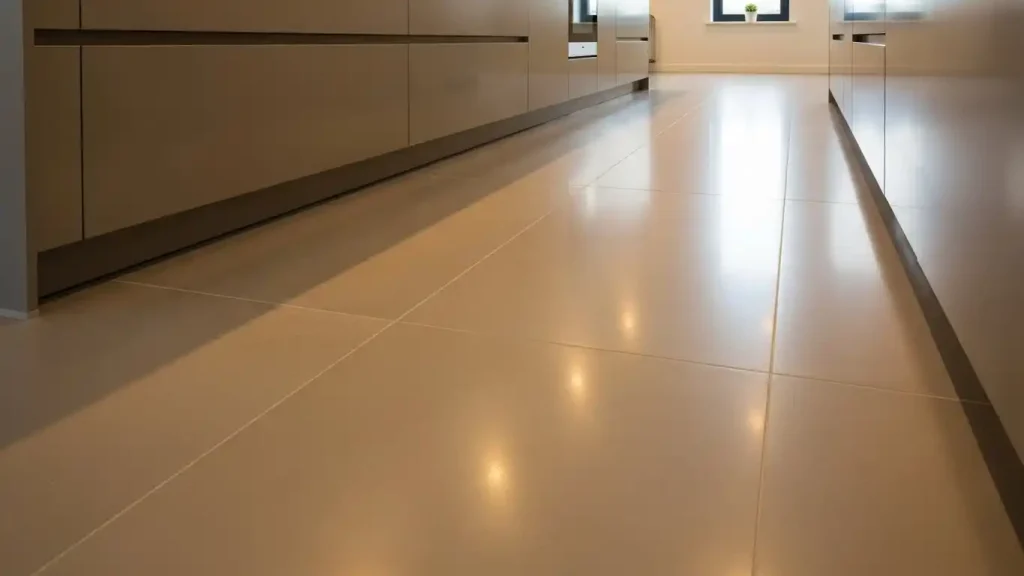
If you are looking for the absolute best all-rounder, many experts agree that porcelain is the answer to the question of which type of tiles is best for kitchen floor.
Why It’s Great:
Porcelain is a subtype of ceramic tile, but it is fired at much higher temperatures, making it denser and less porous. This process results in a tile that is incredibly hard and nearly impervious to water.
One of the standout features of porcelain is “through-body” color. This means the color goes all the way through the tile.
If you happen to chip a porcelain tile, the damage is much less noticeable because the color underneath matches the surface.
Pros:
- Extremely durable and scratch-resistant.
- Highly moisture-resistant (absorption rate of less than 0.5%).
- Available in endless styles, including those that mimic wood, marble, and concrete.
Cons:
- More expensive than standard ceramic.
- Difficult to cut and install (requires professional tools).
- Cold and hard underfoot (though great for radiant heating).
2. Ceramic Tile: The Budget-Friendly Classic
Ceramic tiles are a staple in kitchen design. While similar to porcelain, they are made from a slightly different clay mix and fired at lower temperatures.
Why It’s Great:
Ceramic is softer than porcelain, making it easier for DIY enthusiasts to cut and install.
It is also significantly more affordable, making it an excellent choice for large kitchens or budget-conscious renovations.
Pros:
- Very affordable.
- Wide variety of colors and patterns.
- Easier to install than porcelain.
Cons:
- More porous than porcelain (requires glazing to be water-resistant).
- The color is usually only on the surface; a chip will reveal the red or white clay underneath.
- Can crack under extreme temperature changes or heavy impact.
3. Natural Stone: The Luxury Choice
For those looking to add a touch of timeless elegance and unique character, natural stone is a top-tier option. This category includes marble, granite, travertine, and slate.
Why It’s Great:
No two stone tiles are exactly alike. If you want a kitchen that feels organic and high-end, natural stone is unmatched.
Granite, in particular, is incredibly hard and resistant to scratches, making it the most “kitchen-friendly” of the stones.
Pros:
- Increases home resale value.
- Stunning, unique aesthetics.
- Extremely long-lasting if maintained properly.
Cons:
- High Maintenance: Most natural stones are porous and must be sealed regularly (every 6–12 months) to prevent staining.
- Cost: Both the material and the labor for installation are expensive.
- Slippery: Polished stone can be very dangerous when wet.
4. Quarry Tile: The Industrial Workhorse
You may have noticed thick, unglazed, reddish-brown tiles in commercial kitchens or rustic farmhouses. These are quarry tiles.
Why It’s Great:
Quarry tiles are made from unrefined clay and fired at high temperatures. They are naturally slip-resistant due to their slightly abrasive texture and are incredibly tough.
If you want a “pro-chef” look or a Mediterranean vibe, this might be the best type of tiles for your kitchen floor.
Pros:
- Naturally slip-resistant.
- Extremely durable and hidden-grime friendly.
- Gives a warm, rustic appearance.
Cons:
- Limited color palette (mostly reds, browns, and grays).
- Can be porous if not sealed properly.
- The texture can make them slightly harder to deep-clean than smooth porcelain.
5. Luxury Vinyl Tile (LVT): The Modern Alternative
While technically not a “ceramic” tile, Luxury Vinyl Tile (LVT) has disrupted the flooring industry. It is designed to look exactly like stone or ceramic but is made from high-grade PVC.
Why It’s Great:
If you find porcelain too cold or hard on your joints, LVT offers a “softer” feel. It is 100% waterproof, making it a fantastic choice for kitchens prone to spills.
Pros:
- Completely waterproof.
- Warmer and more comfortable to stand on for long periods.
- Very easy DIY installation (click-lock systems).
Cons:
- Does not add as much value to a home as real tile or stone.
- Can be scratched by heavy furniture.
- Shorter lifespan compared to porcelain.
Key Factors to Check Before Buying

When you are at the showroom trying to decide which type of tiles is best for kitchen floor, don’t just look at the color. Check the technical specifications:
The PEI Rating
The Porcelain Enamel Institute (PEI) rating measures the hardness and durability of the tile’s glaze.
- Class 1-2: Best for walls or bathrooms.
- Class 3: Suitable for residential floors with light to moderate traffic.
- Class 4-5: Best for kitchens and high-traffic areas. Aim for PEI 4 for your kitchen.
The COF (Coefficient of Friction)
This measures how slippery the tile is. For a kitchen floor, you want a COF rating of 0.60 or higher when wet to ensure safety and prevent slips.
Water Absorption Rate
As mentioned, porcelain is king here. Ensure your kitchen tile has a low absorption rate to prevent stains from soaking into the body of the tile.
Design Trends: What’s Hot in Kitchen Flooring?
Choosing the material is only half the battle; you also need to choose the style. Currently, the market is seeing a shift toward:
- Large Format Tiles: Using 24×24 or even 24×48 inch tiles reduces the number of grout lines, creating a seamless, modern look that is also easier to clean.
- Wood-Look Porcelain: This allows you to have the warmth and beauty of hardwood in the kitchen without the fear of water damage or warping.
- Patterned Encaustic-Style Tiles: These add a pop of personality and a vintage feel to the kitchen, often used as a focal point in the center of the room.
- Checkered Patterns: The classic black-and-white (or marble-and-slate) checkerboard is making a huge comeback in transitional and modern-traditional kitchens.
Maintenance Tips for Kitchen Tiles
No matter which tile you choose, proper maintenance will extend its life.
- Seal Your Grout: The tile itself might be waterproof, but the grout is not. Use a high-quality grout sealer to prevent grease and food stains from turning your white grout gray.
- Avoid Harsh Chemicals on Stone: If you choose natural stone, avoid acidic cleaners (like vinegar or lemon-based sprays), as they can etch the surface.
- Sweep Regularly: Small grains of sand and dirt act like sandpaper under your shoes. Regular sweeping prevents the finish from dulling over time.
The Verdict: Which Type of Tiles is Best for Kitchen Floor?
So, after weighing all the options, which type of tiles is best for kitchen floor?
- For the Busy Family: Porcelain is the winner. Its combination of extreme durability, water resistance, and low maintenance makes it the most practical choice for a household with kids, pets, and heavy cooking.
- For the Budget-Conscious: Ceramic or Luxury Vinyl Tile offer the best bang for your buck while still providing a beautiful finish.
- For the Luxury Home: Natural Stone (Granite or Slate) provides a level of prestige and unique beauty that synthetic materials simply cannot match.
Ultimately, the best tile is the one that fits your specific needs. Consider how much time you want to spend on maintenance, your long-term budget, and how long you plan to stay in your home.
By choosing a high-quality tile with the right PEI and COF ratings, you can ensure your kitchen floor remains beautiful and functional for decades to come.