Tiny House Kitchen Storage Ideas: 16 Ways to Store More in Less Space

Reach for one pan, and three more slide out. Every tiny house cook knows that sound. A kitchen this small cannot hide clutter, so each shelf, hook, and drawer must earn its place.
The sixteen tiny house kitchen storage ideas below come from real small kitchens, and each one fixes a problem. Some free up counter space. Others turn bare wall or dead corner into room for spices, mugs, and pans.
Start with the zone that annoys you most. Read through, grab the fixes that match your layout, and stop shuffling jars around. Your kitchen will feel calmer, and dinner will start faster.
Plan Your Tiny Kitchen Storage Before You Buy Anything
Storage fails when it ignores how you cook. A few minutes of planning saves money and keeps daily tools within reach. Run through these checks first.
- Map your zones: Mark where you cook, prep, wash, and store dry food.
- Measure the height: Note the gap between counter, shelf, and ceiling before you shop.
- Sort by use: Keep daily items at hand height and rare items up high.
- Check the depth: Shallow shelves suit jars, while pots need deeper homes.
- Test one fix: Try a single rack or rail first, then add more.
1. Tiered Wooden Stand for Jars and Canisters
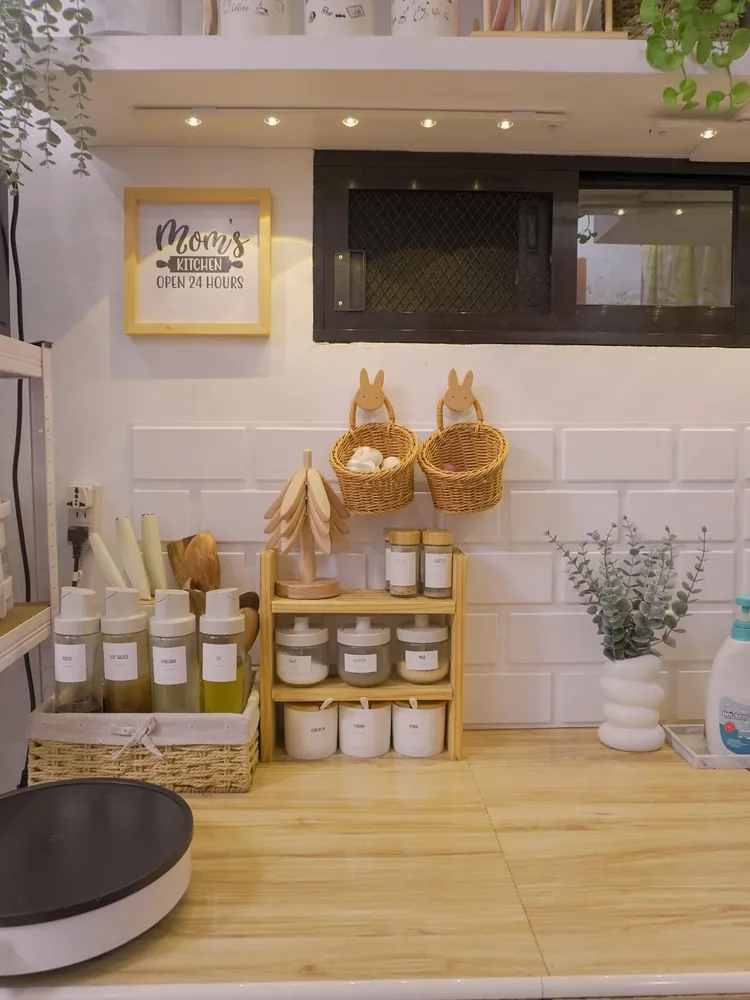
A two tier wooden stand turns a small patch of counter into storage for eight containers. Glass jars with wood lids sit on the steps. White canisters fill the base. Small white labels face forward, so you grab the right one fast.
Smart tiny house kitchen storage ideas like this one stack instead of spread. The stand sits against a white brick tile wall, so the light wood stands out without crowding the room. Nothing hides behind anything else.
Pump bottles for oils and sauces wait nearby in a lined wicker basket. That basket moves off the counter in seconds when you need the space. Pick matching jar sizes first, because uniform jars make the shelf look calm.
2. Wall Mounted Spice Rails Beside the Sink
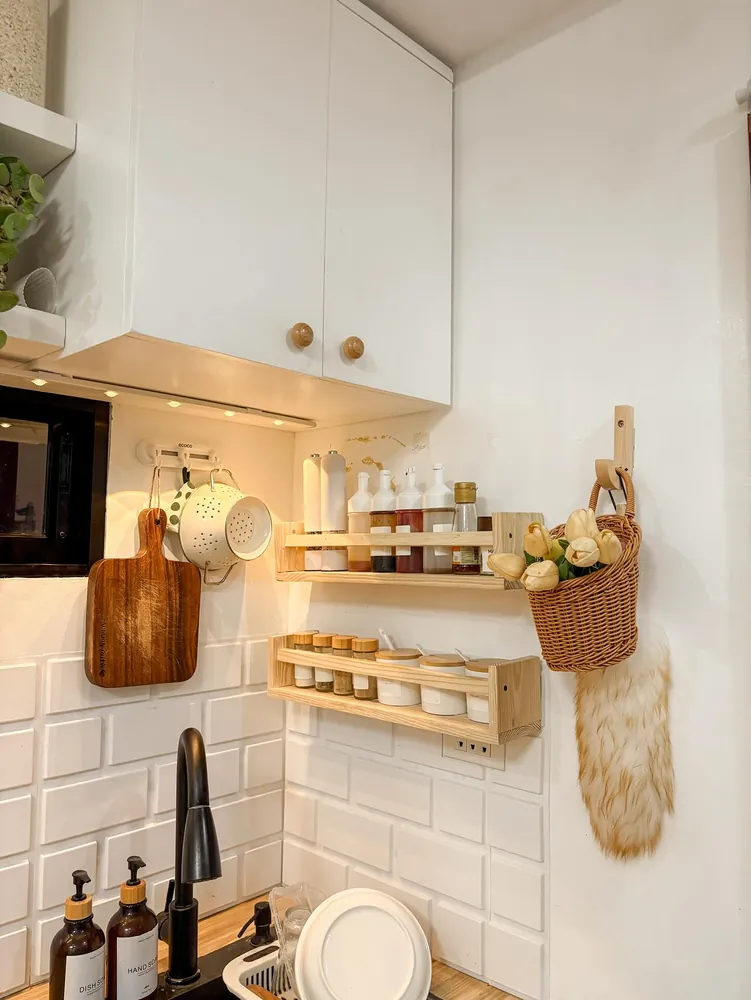
Storage formula: slim wood rails, a hook strip, and one hanging basket.
Two slim rails sit stacked on the wall beside the sink. Bottles and shakers fill the upper rail. Small lidded jars line the lower one. Each shelf is shallow, so nothing steals walking room.
Hooks under the cabinet hold a colander, and a wood cutting board hangs beside it. Both stay dry and ready. A woven basket on a wall peg catches loose items, and here it holds tulips.
Fit note: Leave a hand width between the lower rail and the outlet so plugs and cords stay clear. Mount the rails at eye level, so you read each bottle without bending.
3. A Divided Drawer Right Under the Cooktop
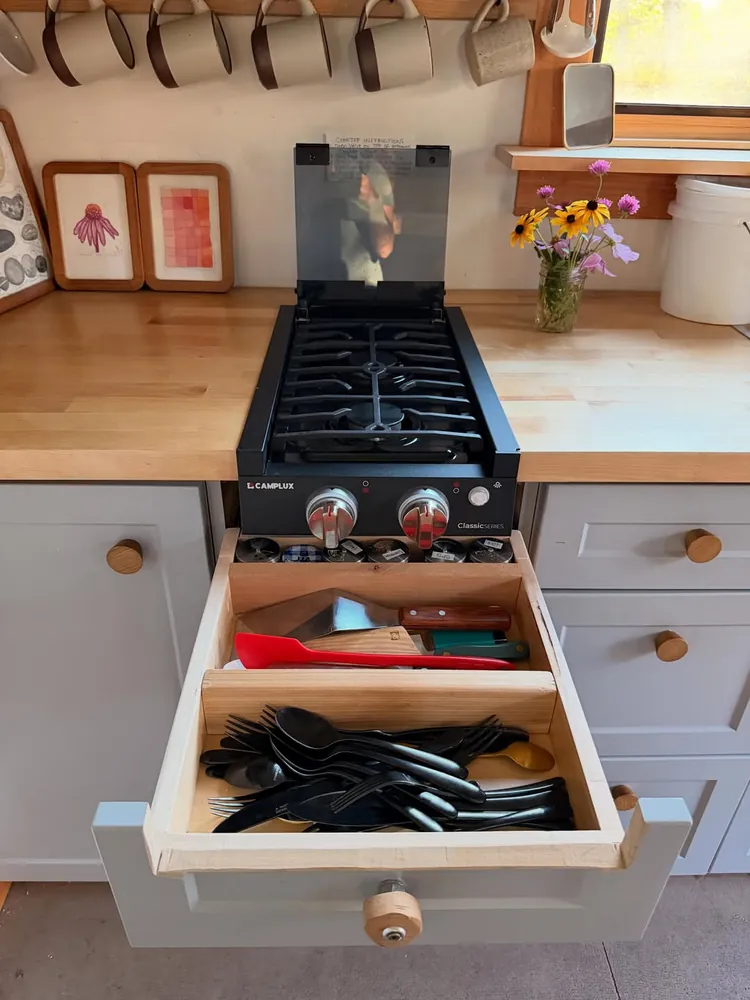
Copy the look:
- Drawer: A shallow wood divider splits tools from cutlery.
- Top tray: Spatulas and kitchen tools lie flat and in view.
- Lower tray: Black forks and spoons nest together.
- Finishing touch: Round wood knobs match the butcher block counter.
Cooking happens one step from this drawer. Reach down for a spatula, and the burners are right there. Spice tins line the back edge, so seasoning needs no cabinet trip. Cutlery rests in the lower tray, away from pan tools.
Make it easier: Cut one divider from scrap wood and test it with your longest spatula before adding a second. Mark the spice lids with a dot of tape if the tins look alike.
4. Labeled Glass Jars and a Hook Rail for Dry Goods
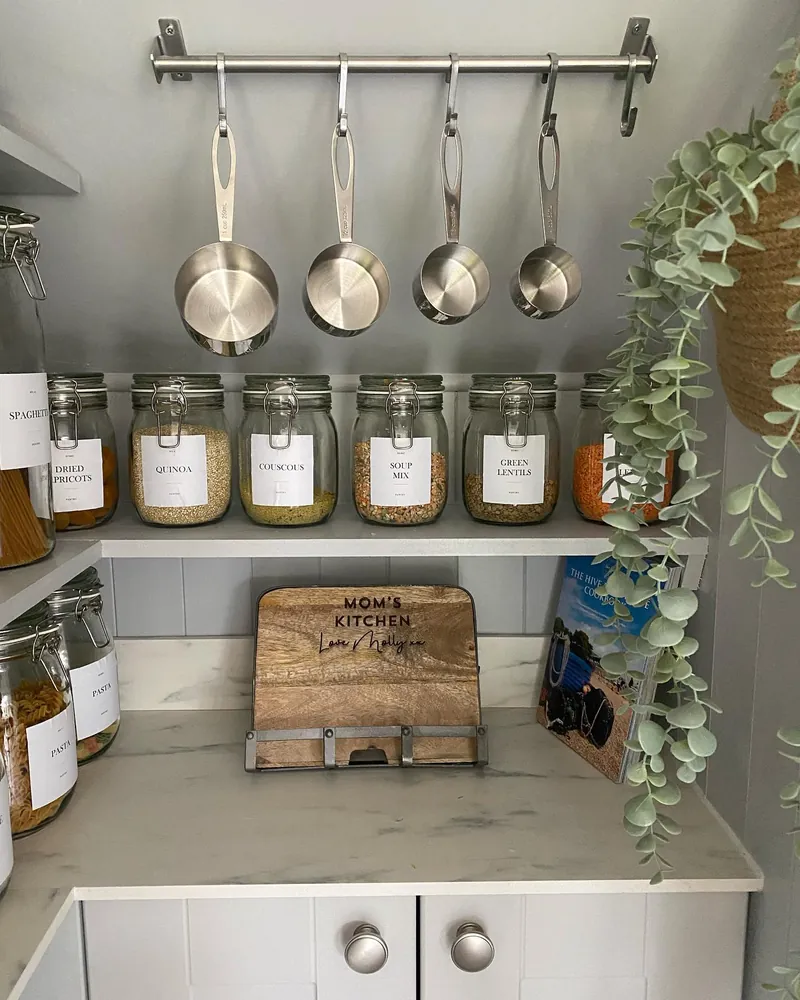
Clear jars with metal clips turn a pantry shelf into a tidy row. Printed labels name each grain, from quinoa to green lentils. Dry goods storage in a tiny house kitchen gets easier when every jar has a name.
Why it works:
- Glass shows what runs low before it runs out.
- Matching jars line up flat and waste no shelf height.
- A steel rail keeps four measuring cups at eye level and off the counter.
Weight note: Light cups suit a rail like this. Heavier pans need screws set into a wall stud. Hang the cups closest to the jars, since you measure grains right beside them.
5. A Glass Front Cabinet That Works Like a Pantry
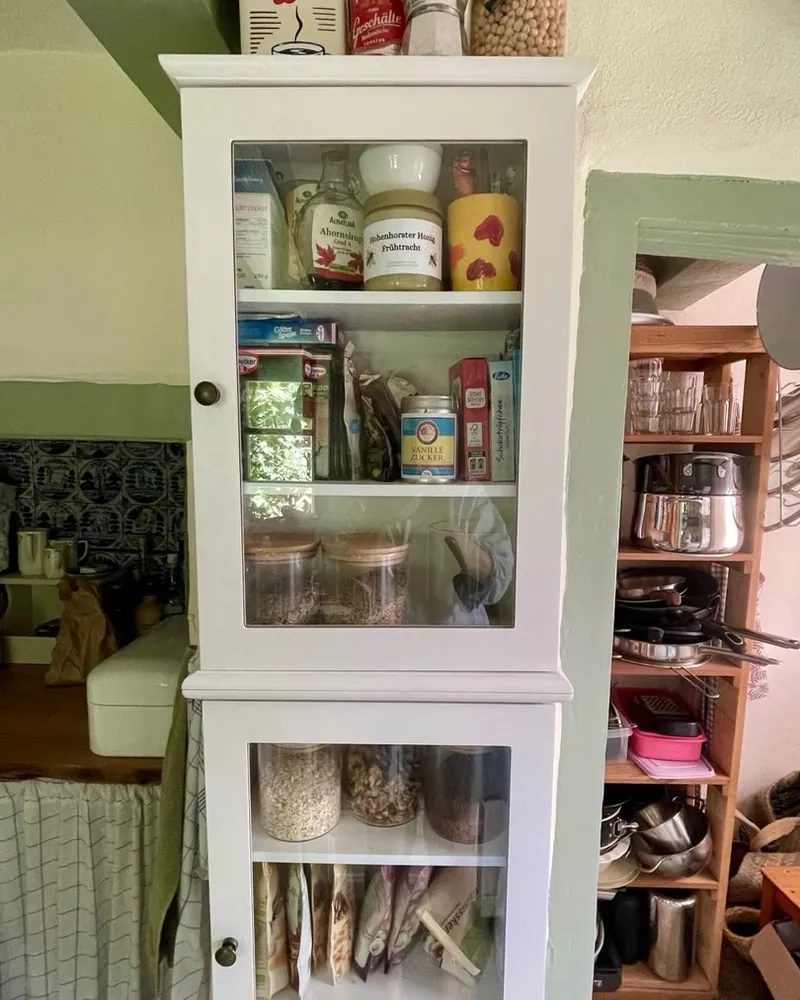
Best for: tiny kitchens with a free wall and no pantry.
A narrow white cabinet with glass doors stands where a pantry would go. Upper shelves hold syrup, honey, and boxed goods. Lower shelves hold wide jars of oats and nuts, with snack bags tucked below.
Glass lets you scan the shelves in one glance, so you stop buying duplicates. The cabinet top adds a bonus shelf for jars you use less. Beside it, an open wood rack keeps pans and glasses within reach.
Budget swap: Decant cereal and flour into matching jars over time. Doors made of glass show everything, so uniform containers calm the view.
6. Tall Dark Cabinets That Climb to the Ceiling
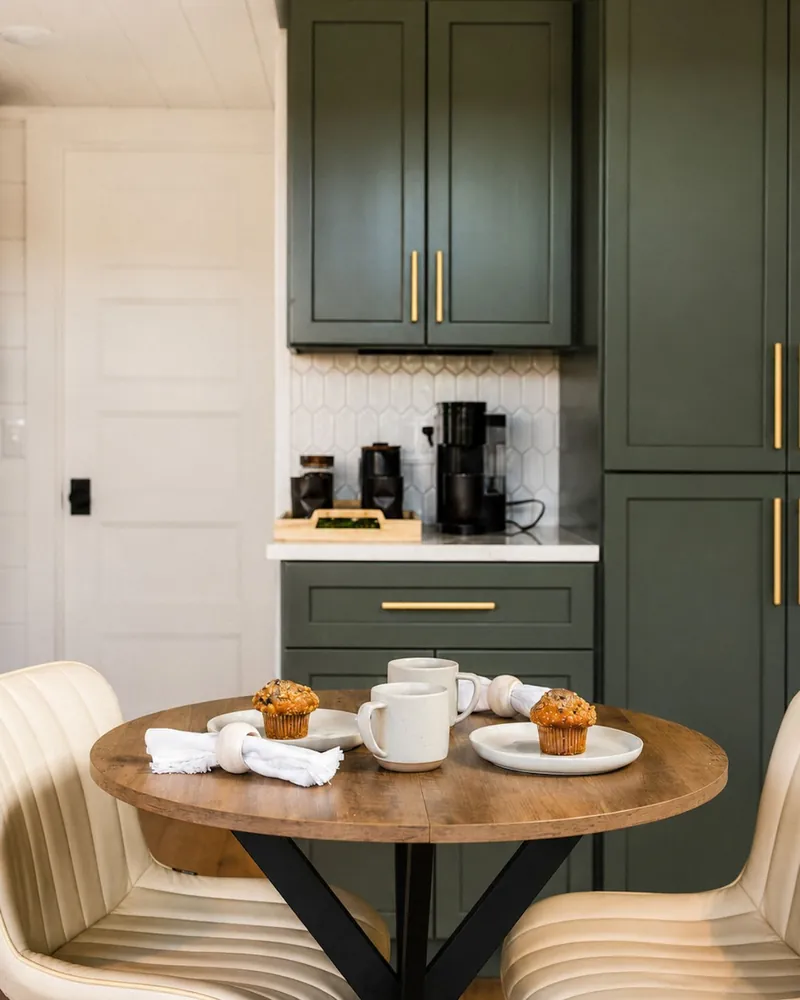
Look up before you look sideways. Tall green cabinets climb to the ceiling and hold more than a short row ever could. Height gives the biggest return among tiny house kitchen storage ideas. Slim bar pulls keep every door easy to open with one hand.
Color note: Deep green lets tall doors blend into the wall instead of looming over you.
Style note: Brass adds warmth and draws a clean line against the white hex tile.
Workflow note: A small wood tray holds the coffee extras, so you wipe one spot instead of the whole counter. The tall cabinet beside it can hold spare beans and filters out of sight.
7. Open Shelves With a Hook Rail Above the Counter
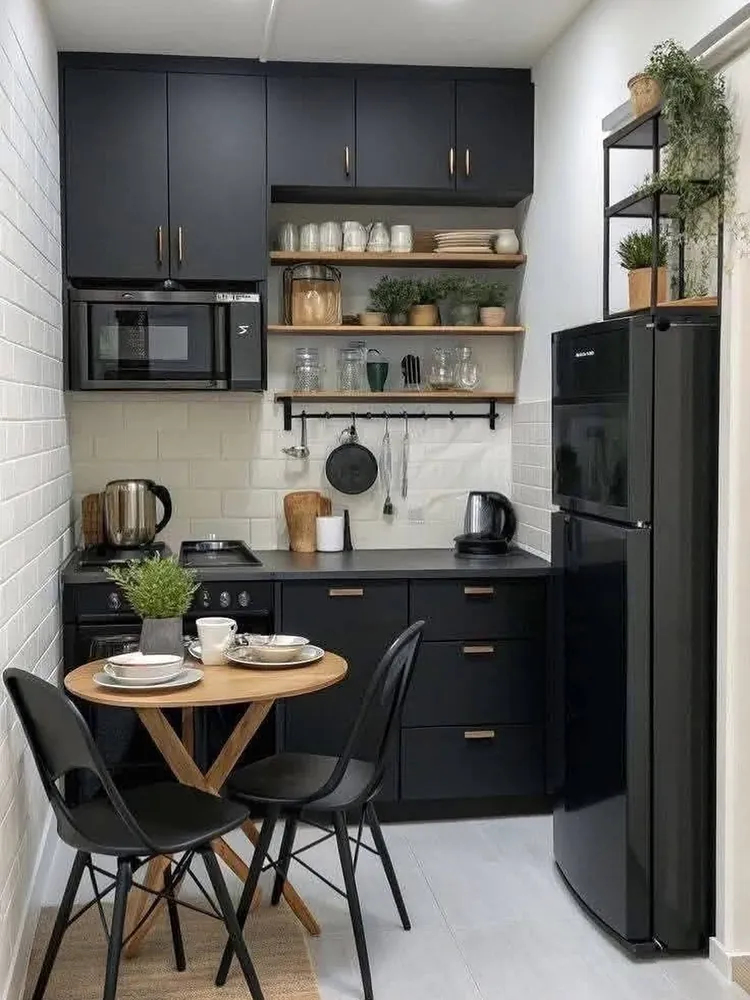
Layout formula: closed cabinets up high, open shelves in the middle, hooks at eye level.
Black upper cabinets hide the clutter you do not want to see. Three open wood shelves hold mugs, plates, jars, and herb pots right where you cook. A black rail under the bottom shelf carries a pan and tools on hooks.
Open shelves only work when you edit them. Keep what you use daily and nothing else. White tile behind the display makes each piece stand out, so a few jars look styled instead of crowded.
Proportion note: Choose shelves shallow enough that cups sit in one row. Deep boards pull items back where you cannot reach.
8. Wire Risers Inside the Upper Cabinet
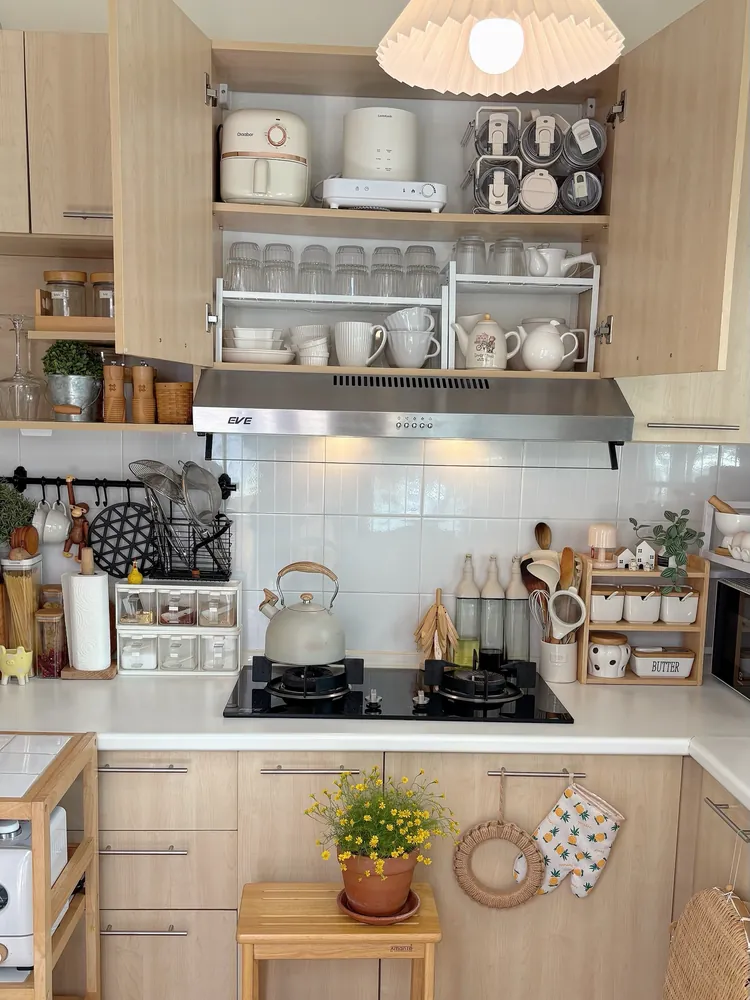
The detail to steal:
- Riser: A white wire shelf adds a second level for cups and bowls.
- Top board: Air fryer and rice cooker sit above, off the counter.
- Rail: Hooks under the cabinet hold mugs, a sieve, and a trivet.
- Finishing touch: One oven mitt hangs from a drawer pull.
Cabinet shelves waste air. Wire risers fix that by giving cups and bowls a second level. Teapots sit to the side, where a hand finds them fast. Glasses stand in rows, so you see every one.
Care tip: Wipe risers and shelf boards every few weeks. Dust builds up fast behind the cups in a closed cabinet.
9. Stemware Holders and Mug Hooks Under Open Shelves
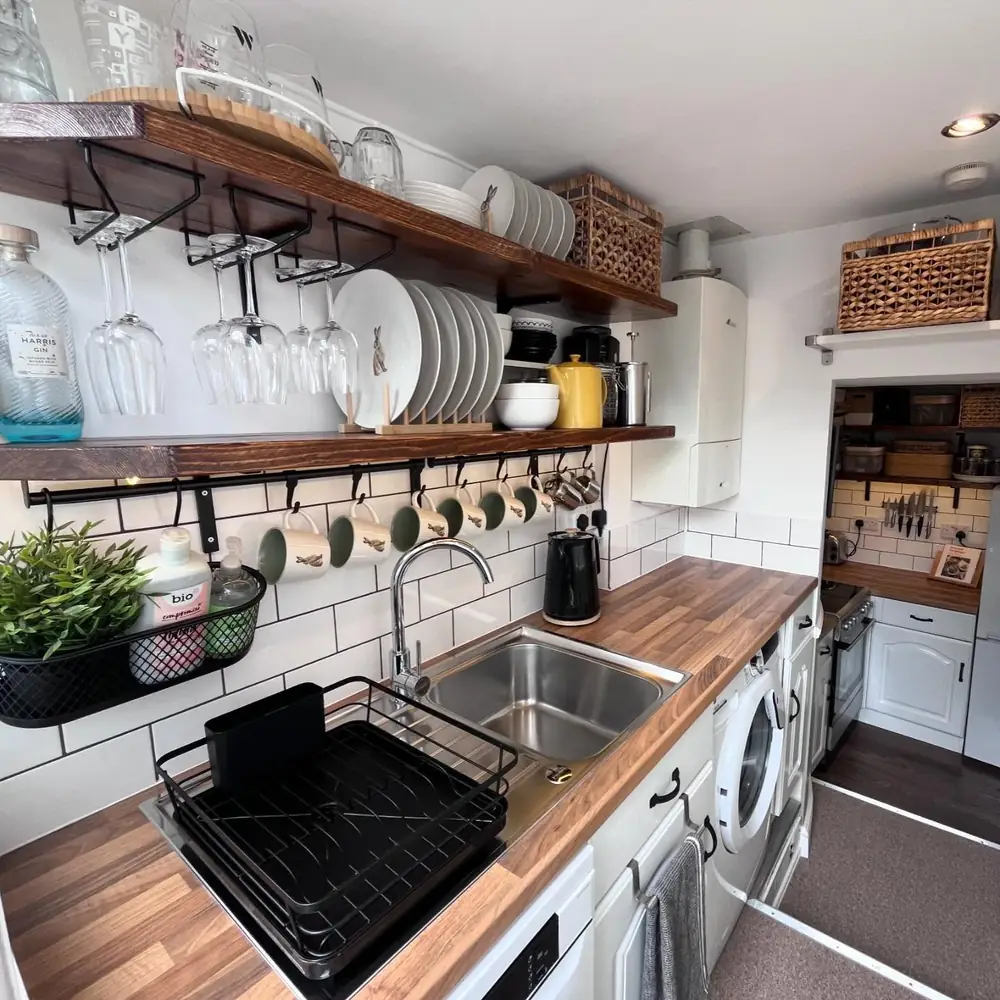
Two thick wood shelves float above the sink. Wine glasses hang by their stems from black wire holders under the top shelf. A rail below carries mugs on hooks, and a wire basket on the same rail holds soap and a small plant.
Compact kitchen storage gets smarter when you use the space under a shelf. Glasses and mugs keep their own spots, so cabinets stay free for food. Plates stand in a wooden rack on the lower shelf, which stops them sliding.
Everything here sits within arm’s reach of the sink. Wash a mug, hang it, and the drying is done. That small habit saves a trip to the cabinet every time.
10. Slide Out Racks Beside the Fridge
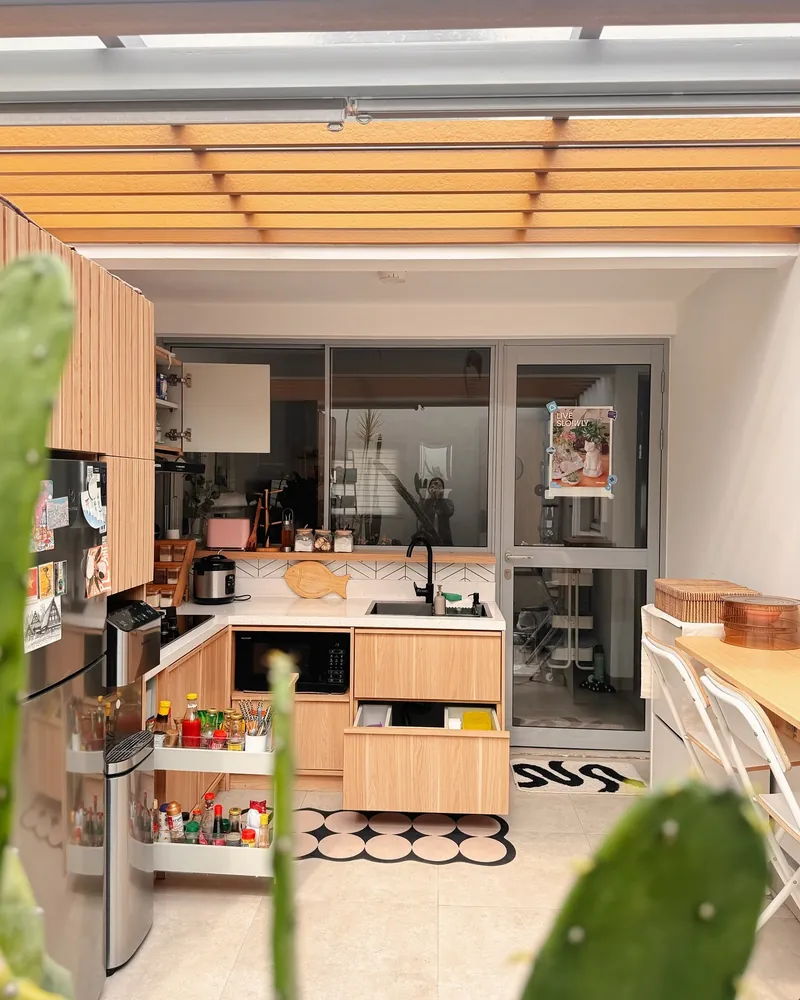
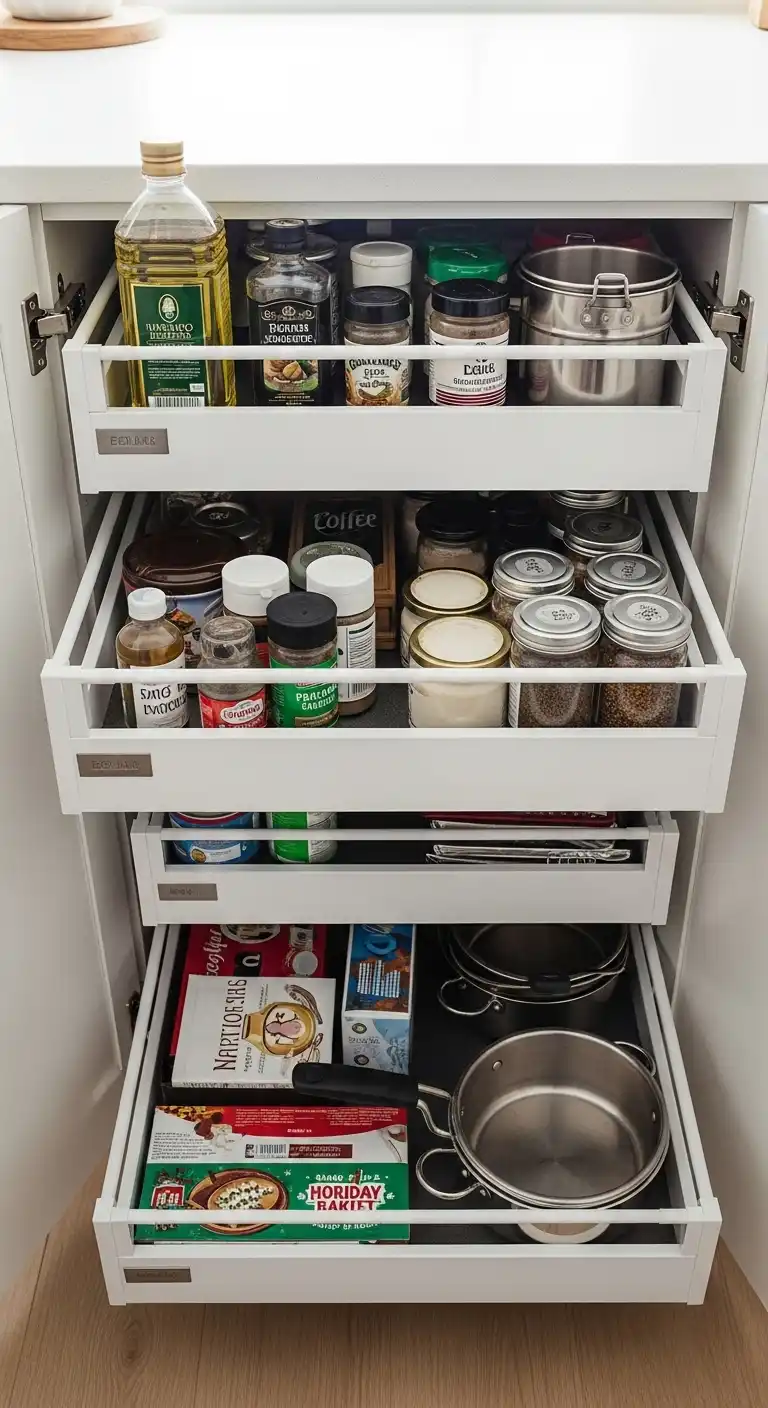
Beside the fridge, a narrow rack slides out like a drawer. Pulled open, it shows bottles, oils, and jars on three levels. Closed, it looks like part of the cabinet run.
Why it saves space:
- A thin cabinet fits where a standard shelf never would.
- Every bottle faces you, so nothing hides at the back.
- Tall items stand upright instead of lying on their sides.
One small change: Put daily sauces on the top level and refills on the bottom. Your hand will learn the two reach points within a week. Add a small tray on the lowest level to catch drips from oily bottles.
11. A Spice Rack on the Back of a Cabinet Door
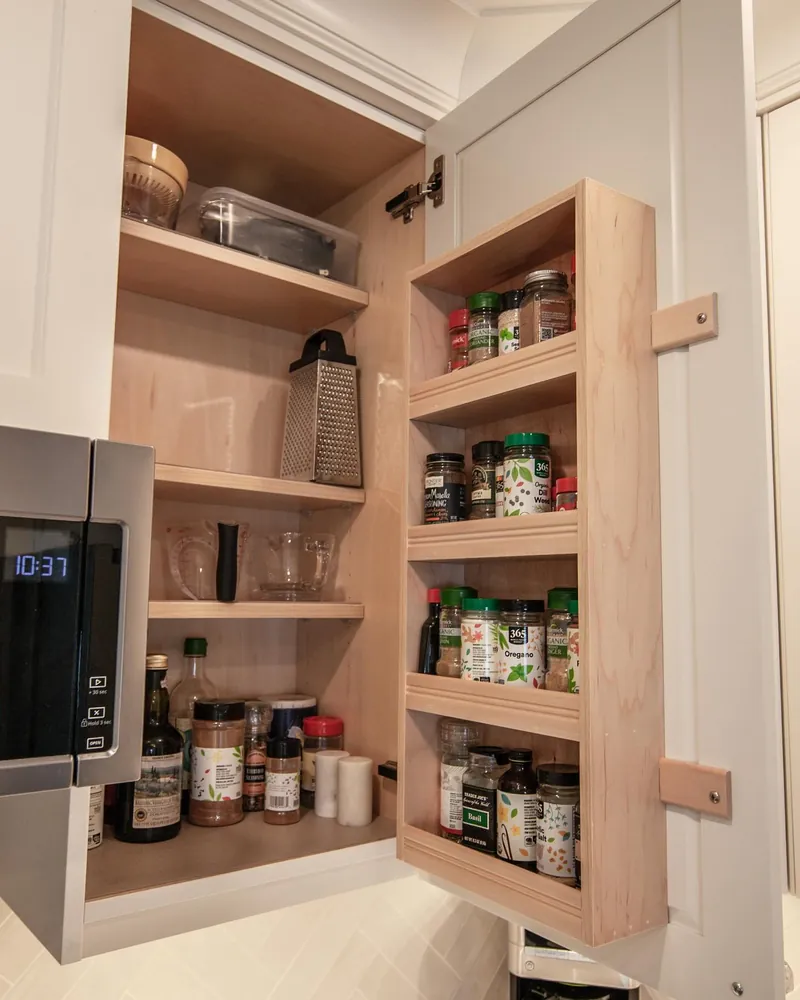
Here is one of the simplest tiny house kitchen storage ideas, and it hides behind a cabinet door. A shallow wood rack with four tiers holds nearly twenty spice jars. Small front lips stop them sliding.
Fit note: Check clearance first. The rack must clear the cabinet shelves when the door closes.
Install tip: Screw the side brackets into the door frame so the rack hangs steady under the weight of full jars.
Label tip: Turn the jar labels outward. You will spot oregano or basil at a glance. Sort them in alphabetical rows, and a new jar finds its spot without thought.
12. Corner Floating Shelves for Wasted Space
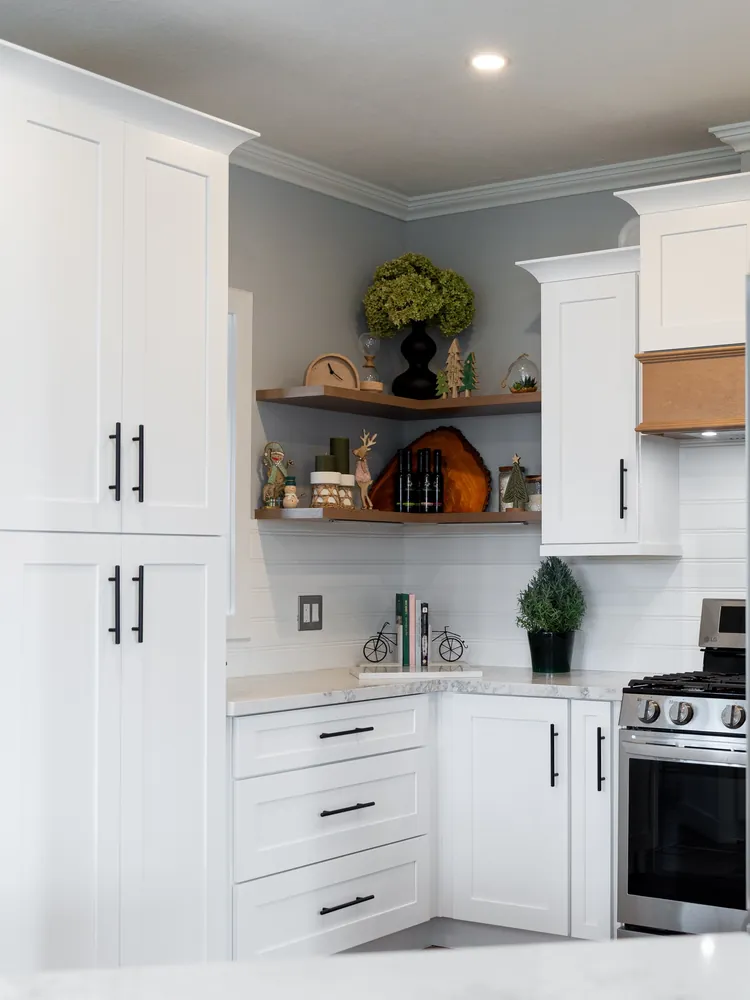
Where it fits: awkward corners that standard cabinets waste.
Two wood shelves wrap around the corner above the counter. Gray walls and white cabinets frame them, so the warm wood stands out. The shelves hold a clock, dark oil bottles, small trees, and a black vase with greenery.
Corners get skipped because standard cabinets reach them poorly. Shelves reach them fine. Below, three wide drawers and a tall pantry carry the heavy load, so the shelves can stay light.
Upgrade note: Swap some decor for daily items like oils and salt. Leave one third of each shelf empty so the corner never looks stuffed.
13. Wide Drawers Instead of Lower Doors
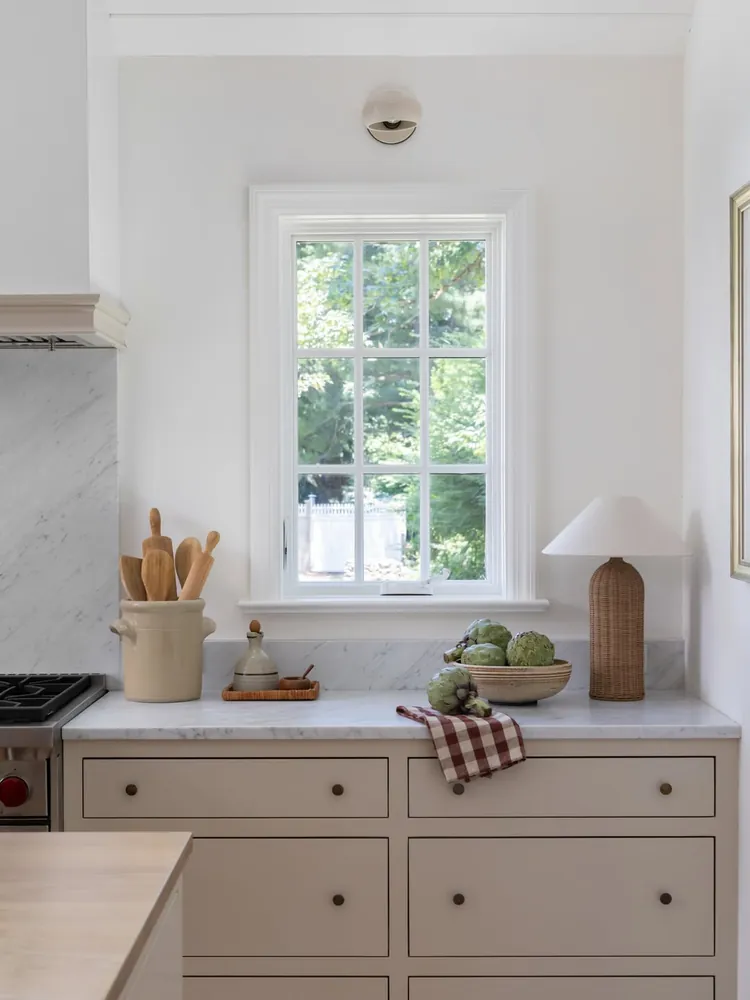
Deep drawers carry the load in this kitchen. Cream fronts run in two neat columns with small brass knobs. Pots, lids, and bakeware suit drawers like these, since they slide out flat and nobody kneels to hunt for a lid.
Counter clutter stays low. One ceramic crock holds wooden spoons, and a small tray gathers a cruet and a wooden dish. Everything else lives in the drawers. A bowl of produce and a gingham towel add color without stealing space.
Light pours in through the window above the counter. Because the surface is mostly clear, the room reads as calm instead of empty. Plan to keep it that way by giving every daily tool a drawer.
14. Floating Shelves With Matching Canisters
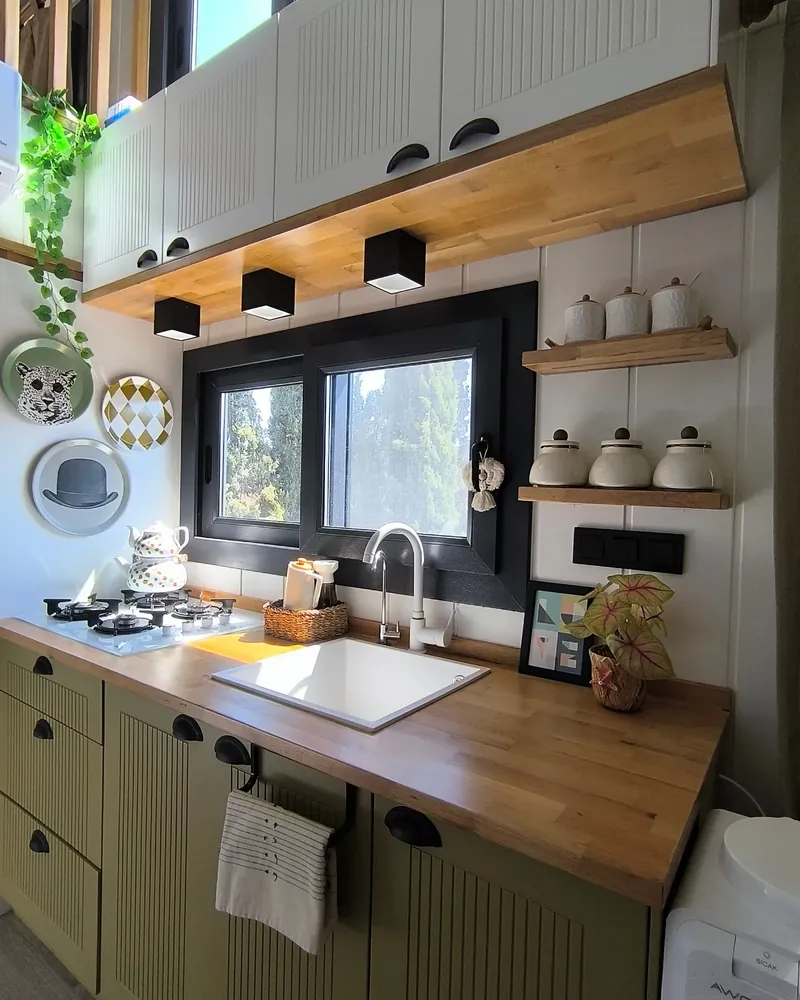
Build it like this:
- Shelves: Two short wood shelves hug the wall beside the window.
- Canisters: White ceramic jars with wood knob lids sit in matching rows.
- Lighting: Black spot lights hang under the upper cabinet.
- Finishing touch: A woven basket by the faucet corrals daily items.
Window sides are easy to overlook. Tiny kitchen organization improves when shelves repeat one shape and one color. Here the jars match, so the shelves read as one calm block. Dry staples stay sealed, and the lids keep dust out.
Texture note: Smooth white ceramic against warm wood grain adds contrast, so the shelves look planned.
15. Floating Shelves Above the Fridge
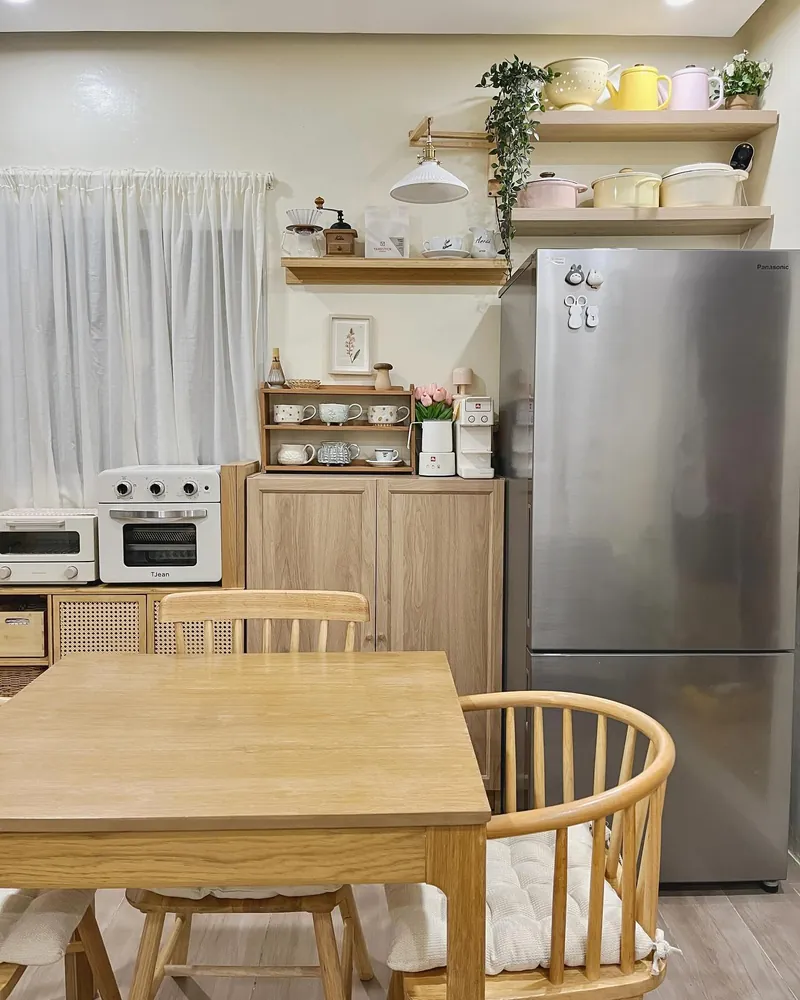
Setup formula: one fridge, two floating shelves, a row of colorful pots.
The space above a fridge usually collects dust. Here, two wood shelves turn it into display storage. Enamel pots, a colander, and a yellow kettle sit in plain view, ready when dinner starts.
A wood cabinet beside the fridge finishes the wall. Its top carries a mug rack and a small coffee corner. To the left, a rattan front unit holds two toaster ovens off the dining table.
Seasonal swap: Rotate heavy casserole pots to the shelf in winter and bring lighter kettles up front in summer. Keep the pots you use weekly on the lower shelf for easy reach.
16. A Freestanding Console and Skirted Sink
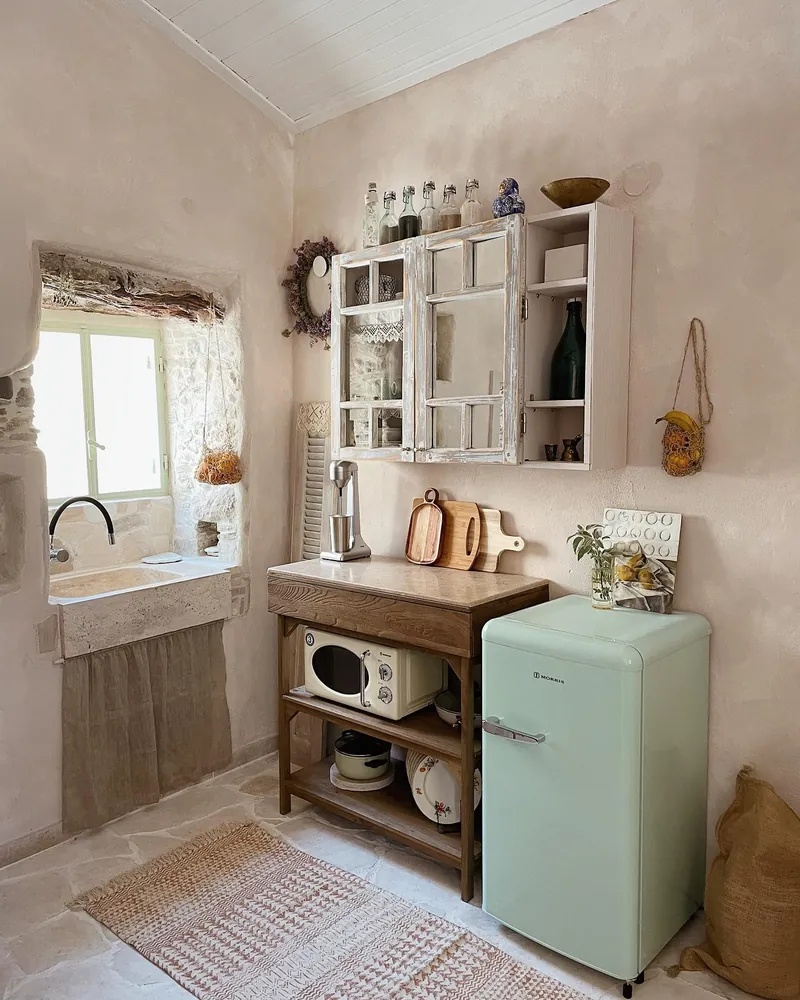
Not every tiny kitchen needs fitted cabinets. A freestanding wood console holds a microwave and plates on open shelves, and a linen curtain hides what sits below the stone sink. Flexible tiny house kitchen storage ideas like this one suit rentals and older homes.
Why it feels warm:
- Weathered wood and linen soften the hard stone.
- Open shelves show the plates, so storage doubles as decor.
- One mint fridge adds a small pop of color.
What to avoid: Do not hide leaky bottles behind a curtain. Check under the sink once a month. Load the console shelves lightly as well, since open frames flex under heavy cast iron.